
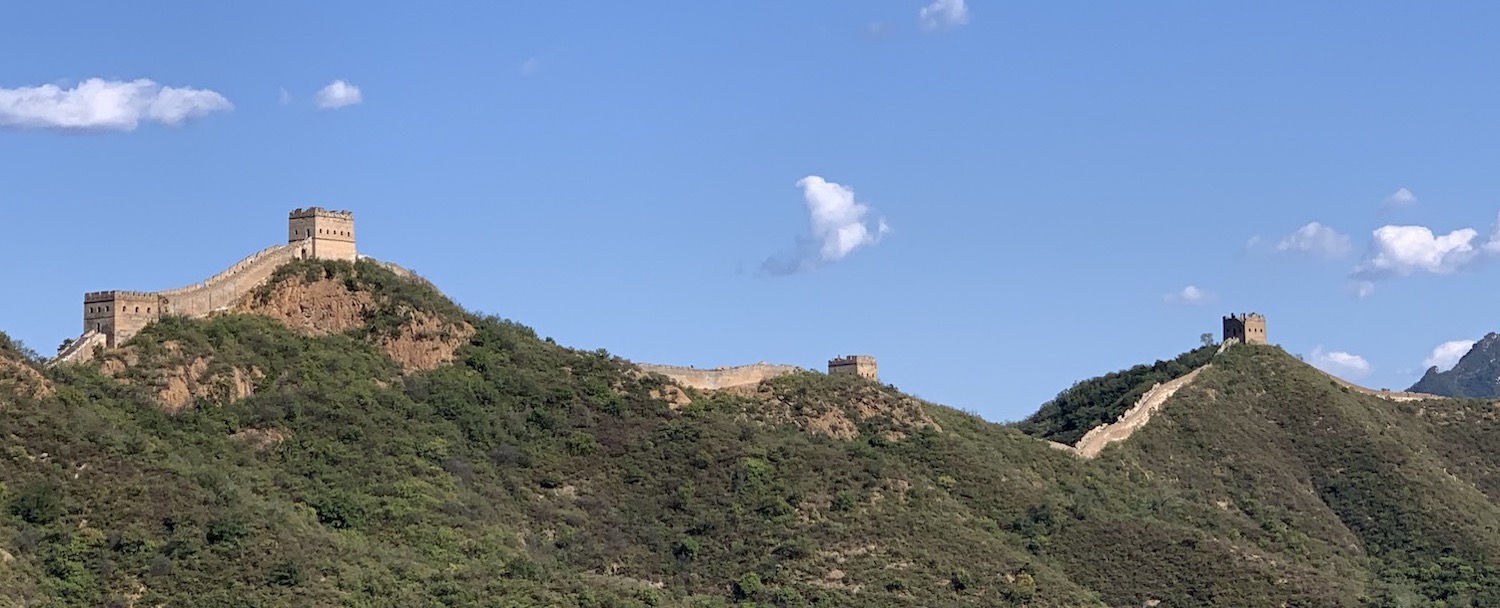
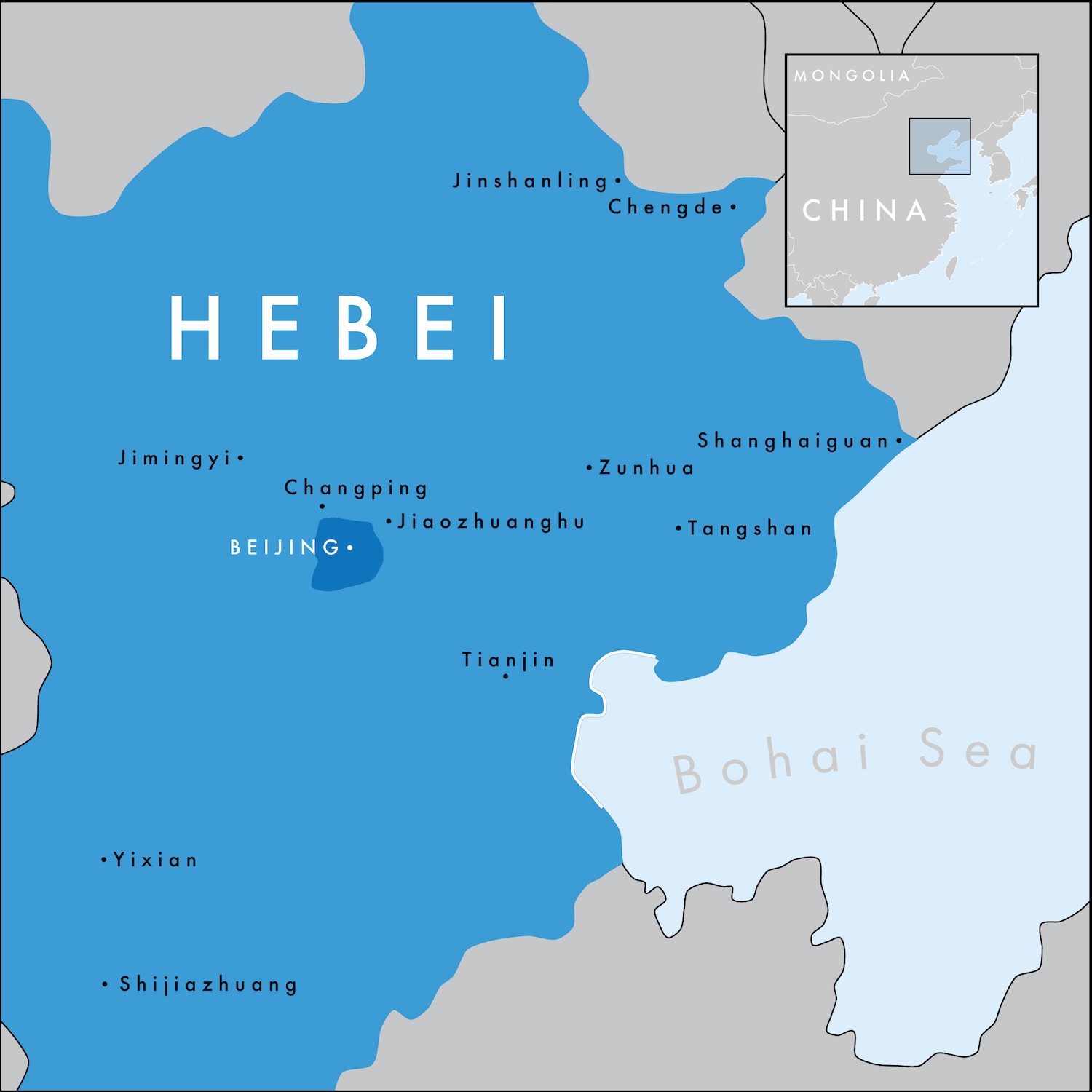
Hebei province completely encircles Beijing like a donut, so you might reasonably assume it is a popular destination for day-trippers and weekenders among tourists to the Chinese capital. Despite its magnificent attractions, however, apart from flying visits to the Great Wall, it is very much off the beaten track. That presents anyone with a modicum of get-up-and-go with a wonderful opportunity to discover these treasures without the hassle of crowds, and I have been exploring them on numerous visits over the past couple of years. Nǐ hǎo.
We know that Hebei (meaning “north of the river”, that is the Yellow River) was home to human ancestors going as far back as 700,000 years because fossil remains of “Peking Man” have been unearthed here. You can see them in the museum, and visit the caves where they were found at the nearby archaeological site, in Zhoukoudian, 50 kilometres south-west of Beijing. You need to show your passport to get in.
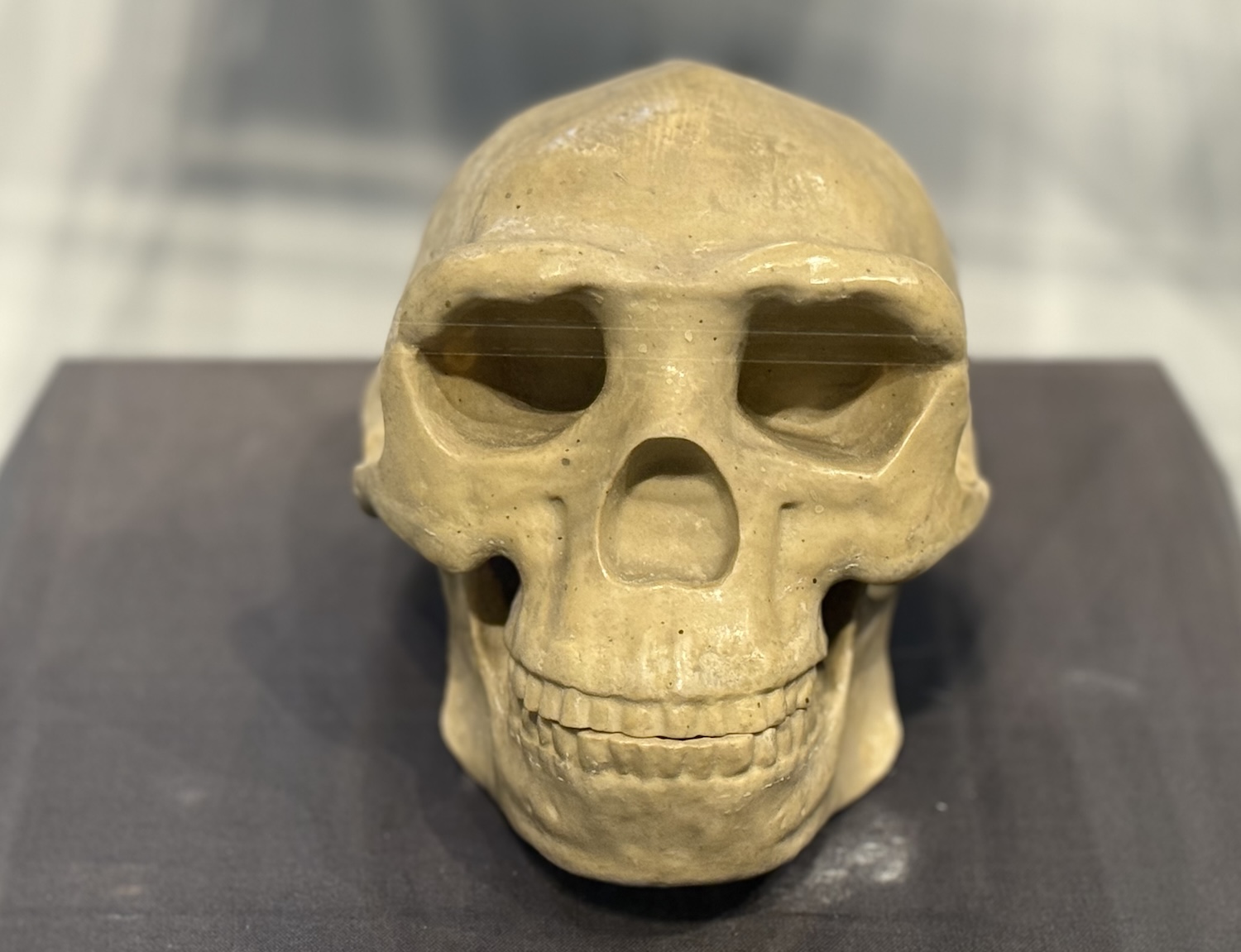
Peking Man is a UNESCO World Heritage Site, one of the 59 in China, second only behind the 60 in Italy. A significant proportion of those are here in Hebei.
The outstanding attractions are important sections of the Great Wall, the magnificent eighteenth-century Summer Palace and related temples of the Qing Emperors at Chengde, and the Imperial Tombs of the Ming and Qing Dynasties spread over three separate locations. In recent years, the Chinese government has put a lot of effort into restoring most of these to their full glory. In a complete reversal of Chairman Mao Zedong’s Cultural Revolution, which aimed to desecrate or even eradicate the past, President Xi Jinping is seeking to situate communist rule in lineage with the imperial regimes, even embracing Confucious from the sixth century BC. He is trying to portray today’s China as a single historic polity with a common cultural heritage. A deep dive into Hebei is a primer of all this past, both glorious and disastrous.
There is more contemporary history too. In Jiaozhuanghu, we can see the network of tunnels that villagers built in the 1940s as hideouts from which to resist any further Japanese encroachment during the Second Sino-Japanese War. The city of Tangshan is also not to be missed. Its centre is dedicated to the memory of those who lost their lives in the most destructive earthquake in history, when 300,000 people perished in 1976.
On top of all that, there are plenty of interesting excursions to important temples, pagodas, bridges, mountains, villages, memorials and sculptures around the provincial capital of Shijiazhuang. In particular, the mountain temple complex at Cangyan, and the Civil War site at Xibaipo, are both A-list attractions.
Although the metropolis of Tianjin is an enclave Development Zone and no longer technically governed by the province of Hebei, it is worth spending time and effort here too, for its contemporary Haihe riverfront and its nineteenth century colonial concessions. It is true that Shijiazhuang and Tianjin are two of the eight cities in this wider region that are among the top ten most polluted in China, though thankfully the others are of less interest to visitors.
Since the end of Covid, it has become much easier for foreigners to spend money in China. Cash is almost extinct, but as long as you link your home credit card to Alipay and/or Weixin Pay on WeChat you will be able to purchase almost anything. I have never had any security or payment issues with either.
However, it is still not possible for foreigners to rent cars in China. For short trips, taxis are cheap (and hard to tip as drivers usually try to give back any additional contributions) and easy to summon through DiDi. For longer trips I recommend using Tina’s Car Service (tinaguide on WeChat) or booking a train (oddly, business class is better than first) through China Railway.
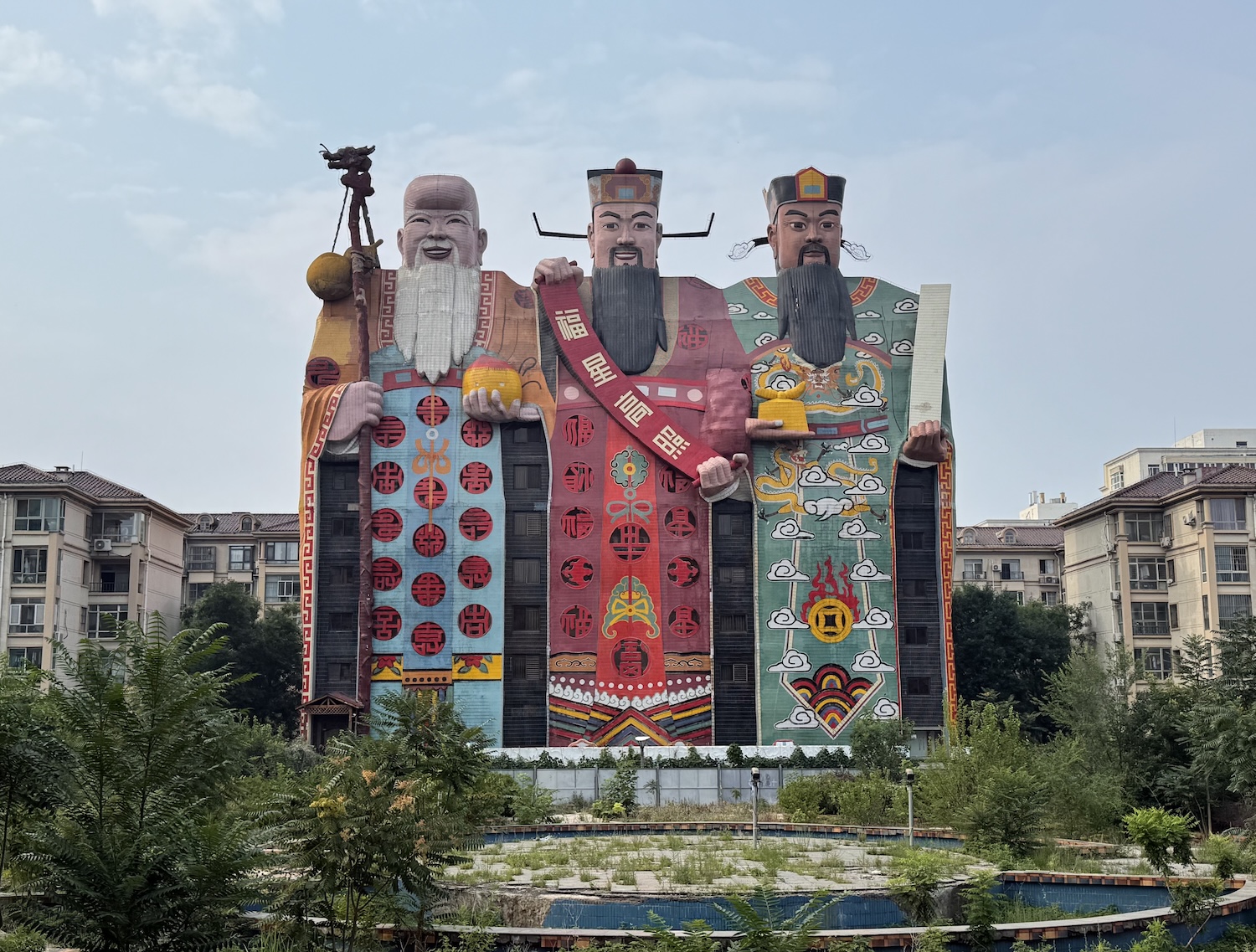
Nor are foreigners permitted to stay in some hotels in Hebei, simply because we are so rare that they are not equipped to handle alien registrations, a bureaucratic requirement in China. That, though, should be no excuse just to do daytrips from Beijing, because we can stay in plenty of others. One place we can sleep is the Tianzi Hotel, which is 45km due east of Beijing, just off the G102 Jingha Highway. Tianzi means “Son of Heaven” and this turn-of-the-millennium novelty, looming high above the neighbouring tower blocks of this scruffy suburb, portrays three giant Chinese gods: Shou, Fu and Lu. Understandably, it is often rated one of the most bizarre buildings in China, and indeed the world; when we came our driver could not stop smiling and took way more photos even than we did.
Foreigners are so rare here that we were the only ones at almost every site apart from the Great Wall. Contrary to Western stereotypes, the Chinese people we encountered – local tourists, hawkers, service personnel and so on – were frequently big characters overwhelmingly likely to be warm, welcoming, eager to test their few words of English, and more than happy to go out of their way to help. Xièxiè.
The region has cold, dry winters influenced by the Siberian anticyclone, and hot, humid summers due to the monsoons. In spring there can be occasional sandstorms blowing in from the Gobi Desert, but autumn is warm and pleasant.
The Great Wall
Only 140km, less than two hours by car, north-east from Beijing airport, on brand new tarmac through mile after mile of beautiful forest, Jinshanling is usually considered too far for those looking for a quick selfie at the Great Wall, which is obviously a UNESCO World Heritage Site. They tend to prefer Badaling or Mutianyu instead, where they then moan about the heavy crowds.
At Jinshanling, however, you can hike for hours along the ramparts almost completely undisturbed, ducking through restored watchtowers and taking in the panoramas as the walkways extend as far as the eye can see up and down faraway hills. On the afternoon we were here, we encountered no more than twenty other people, all locals.
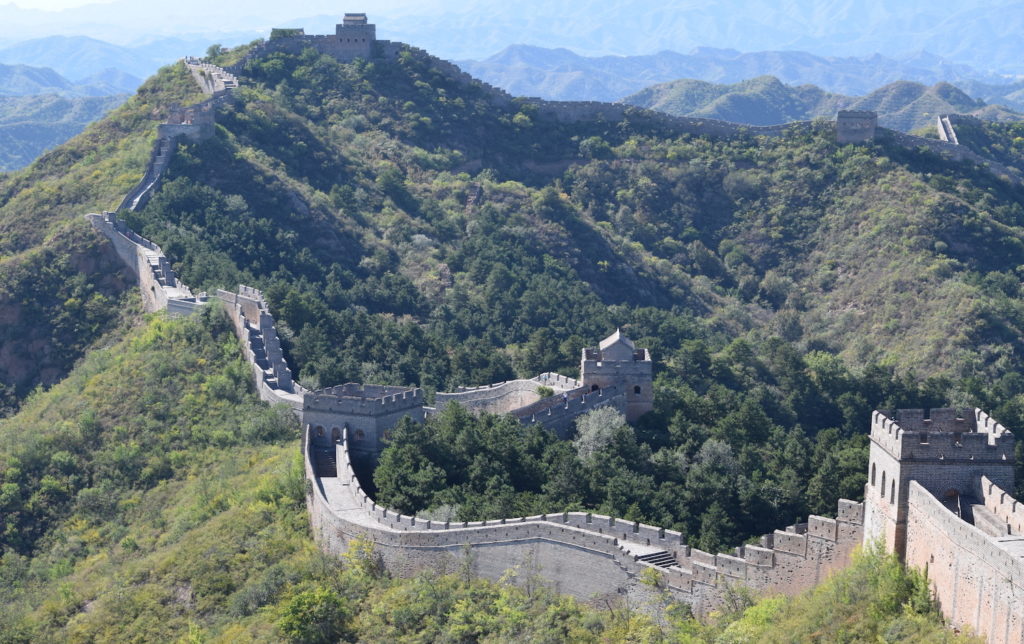
Sadly it is not true that the human eye can pick out the Great Wall from the moon, but it is not disputed that this is one of the finest sights on earth. The building of fortifications to protect Chinese northern territories from various nomadic peoples of the Mongolian steppe began as early as the seventh century BC. Selective stretches began to be stitched together by Qin Shi Huang, the first Emperor of China, in about 200 BC. Most of these early foundations have long been cleared and replaced, with watchtowers and troop barracks added over time. The most famous portions were constructed mostly by the Ming Dynasty between 1368 and 1644. The segment at Jinshanling was started by General Xu Da in 1368, and renovated by General Qi Jiguang in 1567.
Archaeologists estimate that because of the zigging and zagging, and the numerous offshoots, the Great Wall is more than 21,000km long. That is over half the circumference of the earth. The Jinshanling fragment is just over 10km.
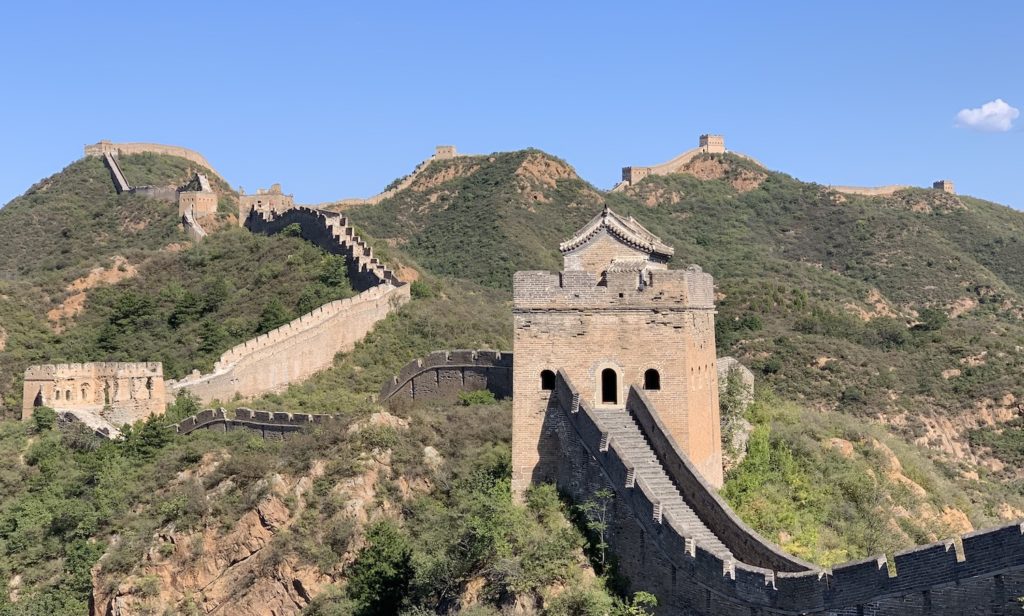
Cars drop at the Front Gate ticket office. Grab a golf-cart then a cable-car twenty minutes or so up the hill into the mountains. At the top you can turn right to the West Gate, or left to the East Gate. The Wall along here is 5 or 6 metres high, sometimes with side barriers though often they have crumbled away. There is a total of three beacon towers and 67 watchtowers – densely distributed at intervals of 50-100m – as the Wall snakes through five mountain passes. Local villagers set up stalls in the towers every so often to sell drinks, hats and “I climbed the Great Wall” T-shirts.
The other unmissable sections in Hebei of this extraordinary defence system are more than 300km south-east of Jinshanling.
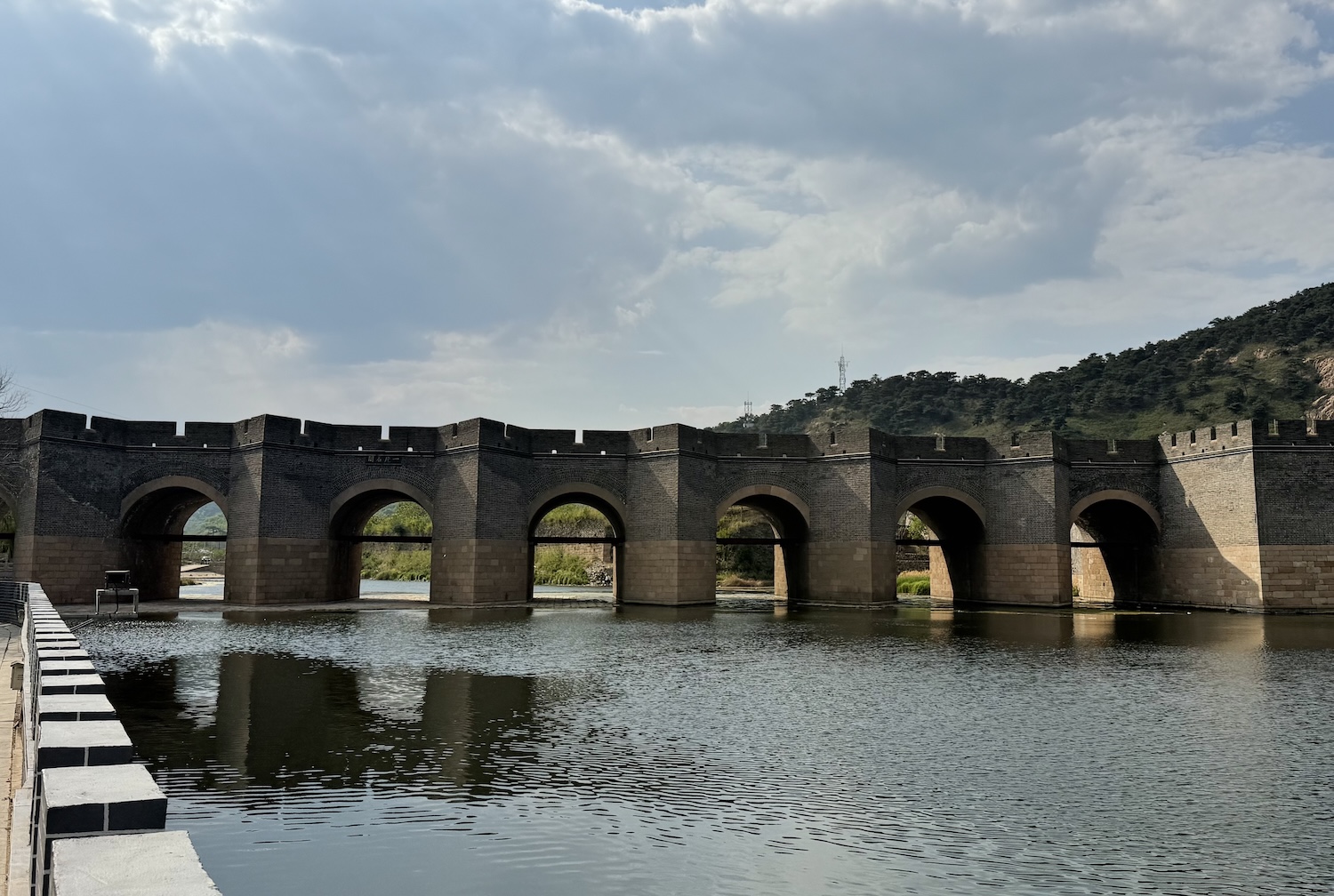
It was usually assumed that rivers were themselves natural barriers and therefore the Great Wall stopped on either side of them. The only portion to cross water, as a bridge, is at Jiumenkou, built in the Ming era in 1381 by General Xuda. It attracts surprisingly few visitors, probably because it is about four hours by car east from Beijing. There is a golf-cart here too, which trundles from the ticket office down to the Jiujiang River.
About half an hour away is the Ming garrison town of Shanghaiguan, on the east bank of the Shi River between the Yan Mountains and the Bohai Sea. The Wall was built here by the Ming to protect their Han people from the Manchu, whose ancestors had ruled north China during the Jin Dynasty between 1115 and 1234. It held good until 1644, when General Wu Sangui opened its gates in the desperate hope Manchu forces would come to help the Han-led Ming Dynasty suppress an uprising by rebel peasant leader, General Li Zicheng of the Shun clan.
However, this disastrous stratagem failed to prevent the overthrow of the Ming, the subsequent advent of short-lived Shun rule, and the ultimate establishment of Manchu leadership through the Qing Dynasty that lasted almost three centuries.
The most easterly point of the Great Wall is at Old Dragon Head, where it meets the sea on the beach. This iconic section was rebuilt in the 1980s as China tried to attract tourists for the first time after the Cultural Revolution and the death of Mao Zedong. The ticket office is next door to the magnificently named shop, Fruit Chain Brands Popular With Common People.
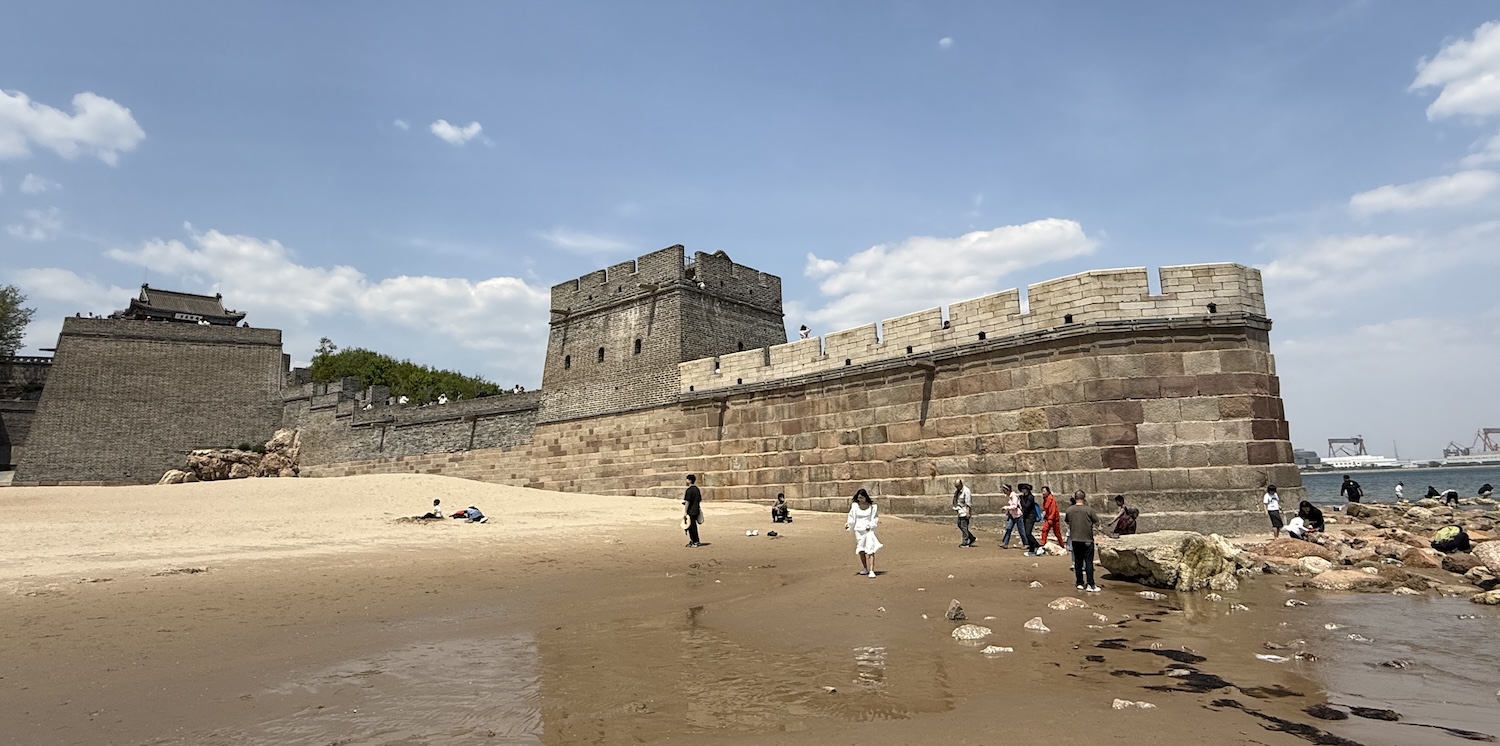
These days, the beach is usually full of such common people having fun in the surf, clothed from head-to-toe to avoid the sun. Until recently, this area was well-known as a summer retreat for senior Chinese Communist Party officials, who held many official events here. In fact, Mao himself had a resort here.
Jimingyi’s Post House
The only way in or out of Beijing from the north-west, even today, is on the road that links with Inner Mongolia that was first carved by Genghis Khan in the early thirteenth century. That passes through the mountains at the town of Jimingyi, which inevitably became a stop-off point for traders and messengers who needed to refresh their horses on their long journeys. For protection in this remote wilderness, a moat and walls were built around the settlement, creating what is known as a Post House.
By the time Kublai Khan founded the Yuan Dynasty in the late thirteenth century, there were an estimated 1,500 such Post Houses in China. Jimingyi is said to be the most complete and intact of them that remain today.
Jimingyi is 140km from Beijing. It is possible to walk the ramparts at the top of the wall, and wander the main street that connects the gates on either side. The buildings are a little dilapidated, though the numerous ancient courtyards (especially Hejia) and temples (notably Taishan) are an adventure.
There is a ticket office at each gate, which implies visitors are expected, though I doubt many, especially foreigners, have ever been here. There is a sign saying it is open from 9am to 5pm, though as this is a living village in the middle of nowhere I imagine you could just wander around at any time.
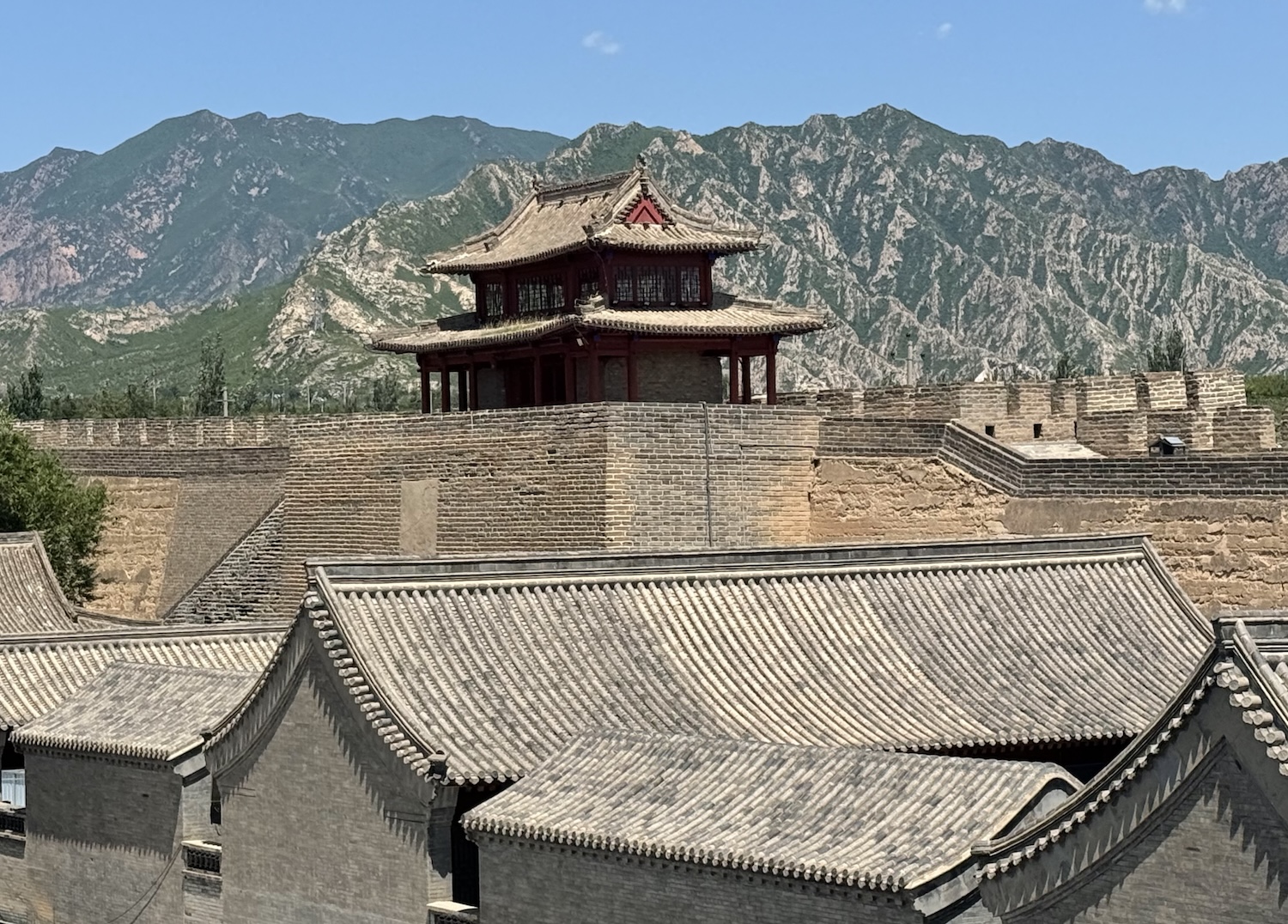
It is another 60km on into the wilderness to Zhangjiakou, a skiing resort that hosted several events for the 2022 Winter Olympics.
Chengde’s Summer Palace & Temples
Chengde is 260km north-east from Beijing. So unexpected are foreign tourists here that even at the magnificent five star Imperial Palace Hotel, just outside town and reputedly the best hotel in the north-east countryside, with 132 state bedrooms, including numerous presidential suites, seventeen restaurants and a banqueting hall as well as a shopping centre, there is no English language channel on the TV.
China has more than 160 cities with more than a million people. Chengde is not one of them, with fewer than half a million. So it is no surprise that it is so little known, or so often confused with Chengdu, in Sichuan, home of the giant pandas. Yet it is in a pretty location, on the banks of the Wulie River, surrounded by hillside forests, and it makes sense that in the eighteenth century this is where the Qing Dynasty decided to build their Summer Palace to escape the heat and humidity of Beijing. Today, it is another UNESCO World Heritage Site.
It took three generations of emperors to complete Bishu Shanzhuang, the Mountain Resort, between 1703 and 1792: Kangxi, Yongzheng and Qianlong. Although the main palace itself is relatively small, the grounds extend over 5.6 km², making this the world’s largest existing imperial garden, taking almost half of Chengde’s urban area. There are many pagodas, temples and lesser palaces scattered around, and because they reflect architectural styles found in different regions of China, it is said that you can see the whole of the country here in one visit.
The outline of the gardens mirrors the map of Chinese territory. In the north-west it is mountainous, and in the south-east there is a vast lake. Overlooking the whole scene, high on a hill in the national park, is Sledgehammer Peak, an odd rock formation from which you get great views.
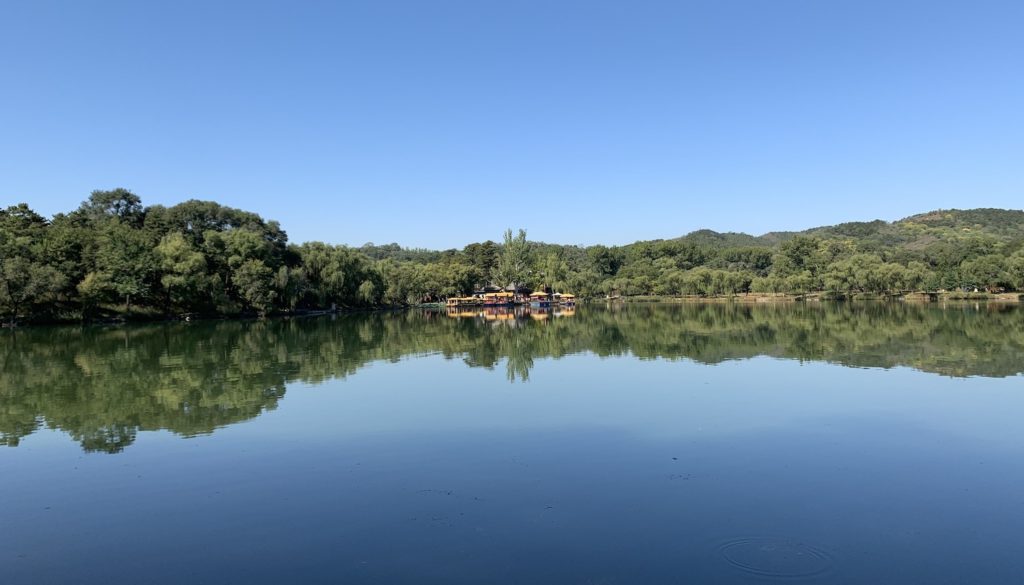
Even more striking are some of the Outlying Temples on the north-east hills. They were built in Han, Mongolian and Tibetan styles in order to make visiting dignitaries feel at home.
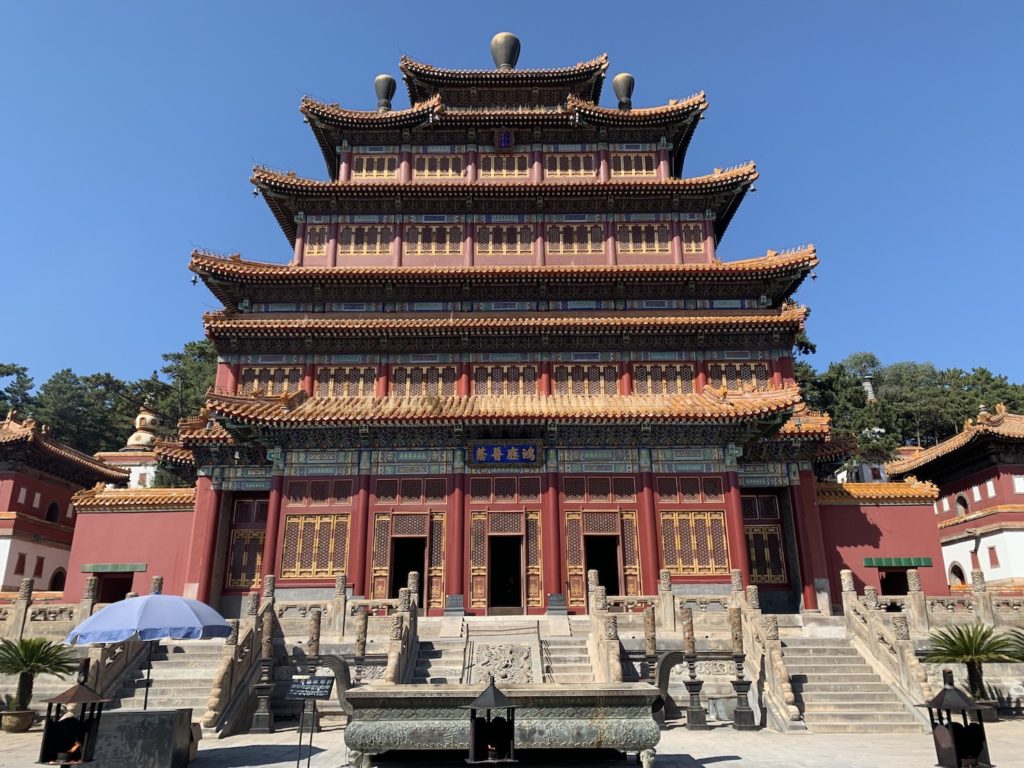
Putuo Zongcheng Temple is perhaps Chengde’s greatest masterpiece. For starters, its red and white walls, in geometric shapes, set against the blue sky, is very striking. And it is imposingly spread out high on a hill so it can be seen easily from far away.
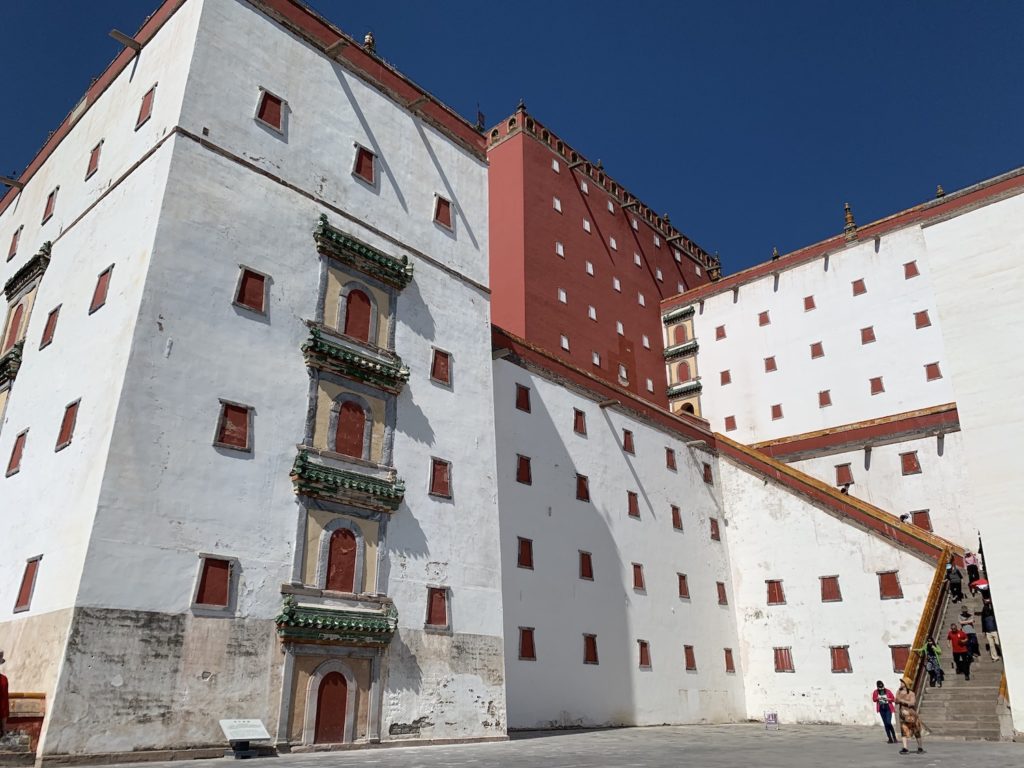
Built in 1767, it is modelled on the Potala Palace of Tibet, the revered residence of the Dalai Lama, constructed a century earlier. It covers 2.2km², and has sixty halls, the biggest in Chengde.
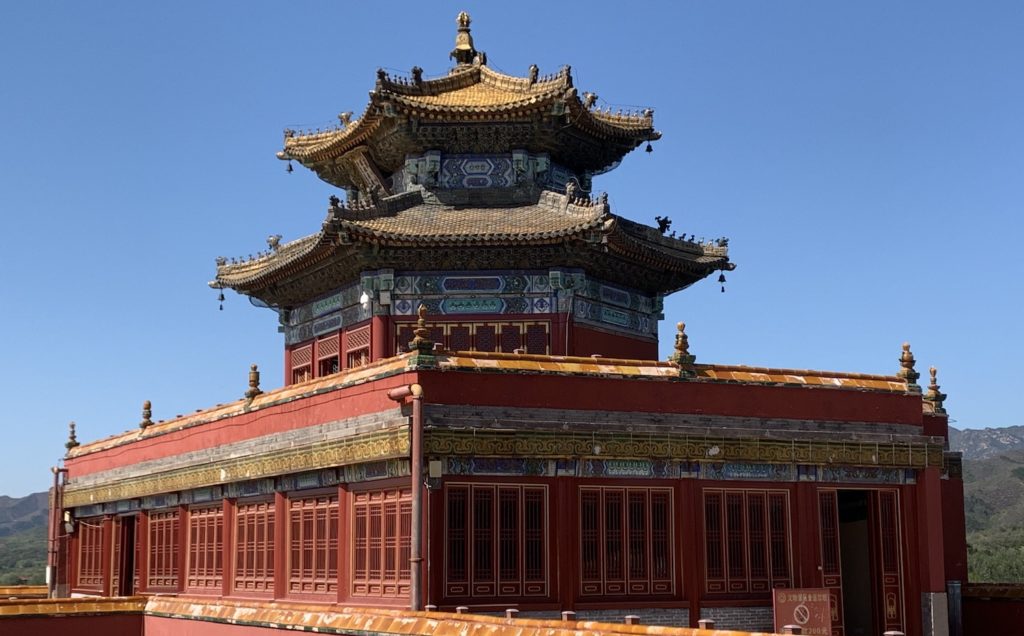
The other major temple is Puning, built in 1755 to commemorate the quashing of a tribal rebellion. It imitates the sacred Lamaist Samye Monastry in Tibet and entombed in its largest building is the world’s tallest wooden statue of Buddha.
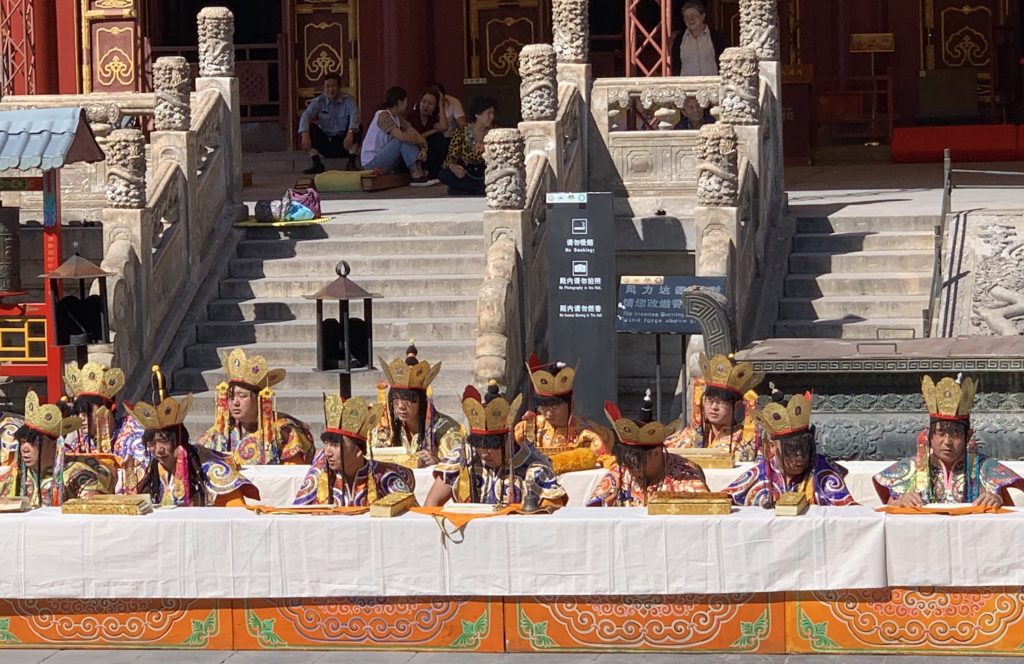
When we were here we were lucky enough to stumble upon a dramatic Buddhist ceremony in the courtyard, with monks in full garb, and villagers throwing themselves to the ground and offering sandalwood incense and flowers for burning to create the smoke they believe is a bridge between humans and spirits.
Right next door are the remains of Puyou Temple, put up in 1760 but burned down in 1964 when it was struck by lightning. Around town are five other minor sites. The sheer number of impressive and important buildings in such a small place makes unknown Chengde reminiscent of famous Kyoto in Japan.
Changping: Ming Imperial Tombs
Although the very first Ming Emperor, Hongwu, who died in 1398, is entombed near his capital, Nanjing, almost all of his fifteen successors are clustered together at an elaborate necropolis in Changping, just 40km north-northwest of central Beijing, at the foot of the rolling green Tianshou Mountains. Construction began here in 1409 and ended 250 years later when the Ming Dynasty collapsed.
During the Ming era, these Han graves were inaccessible to commoners. In fact, they were closed until the uprising of Shun rebel leader General Li Zicheng in 1644, when his army ransacked them before going on to capture Beijing.
They have since been restored, and some of what have become known formally as the Thirteen Tombs of the Ming Dynasty are open to visitors. Along with the two sites of Qing-era royal tombs, also in Hebei, which we will see later, they are of course a UNESCO World Heritage Site.
The starting point is the Shenlu or Sacred Way, representing the journey of the soul to heaven. Beyond a huge red gate there is a narrow 7km pathway lined with life-size statues of Bactrian two-hump camels, elephants and armed warriors, along which processions carried deceased emperors to their graves. There is a ticket office at the North Gate, where your driver can drop you before you bimble about for roughly a kilometre down to the South Gate, where your car will be waiting to collect you before moving on to the mausoleums themselves.
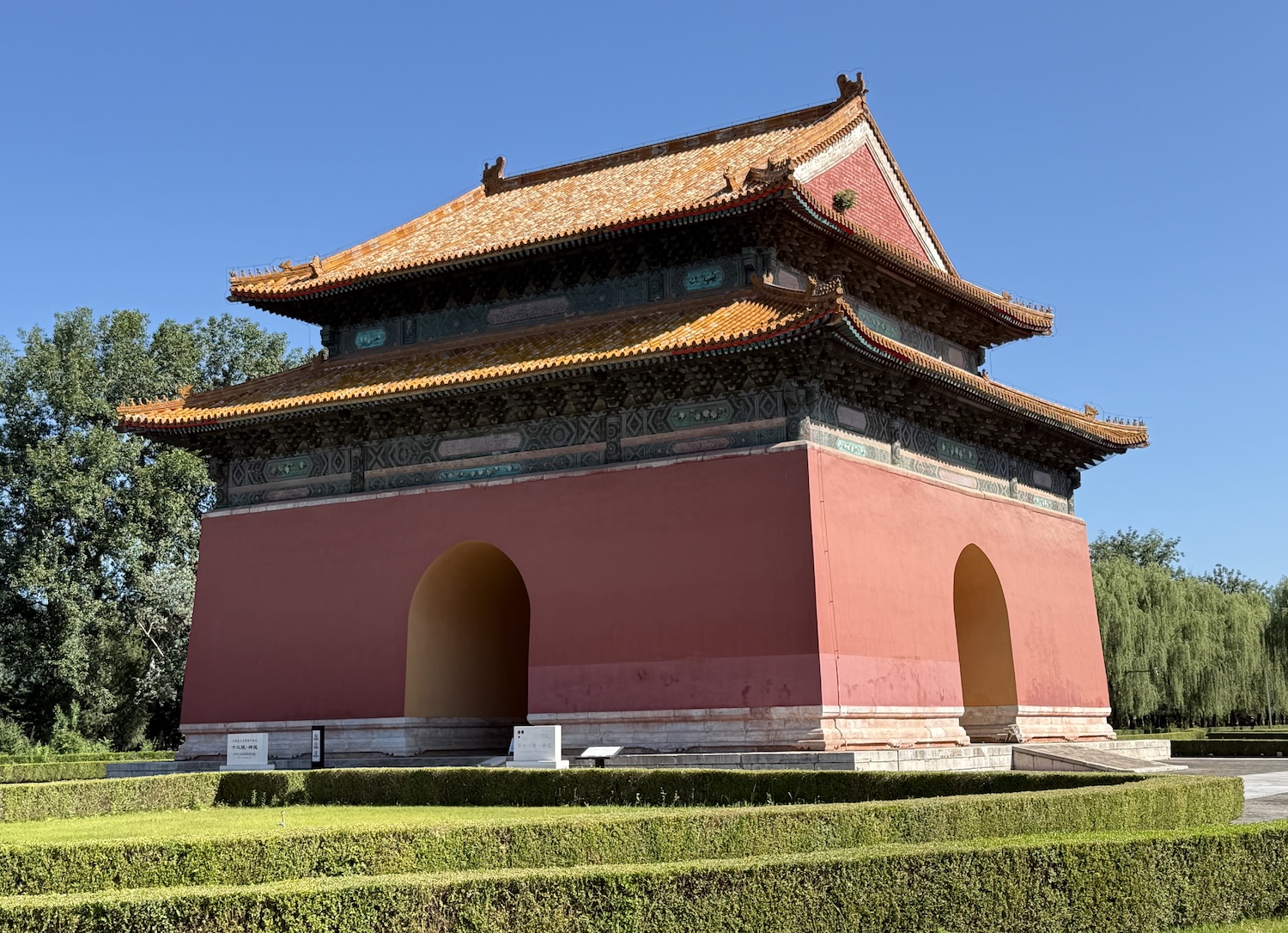
There are three tombs open to the public, and one ticket will grant you entry to them all even though they are treated as separate sites. There is no local transport, so your driver will have to ferry you the five or ten minutes between each of them.
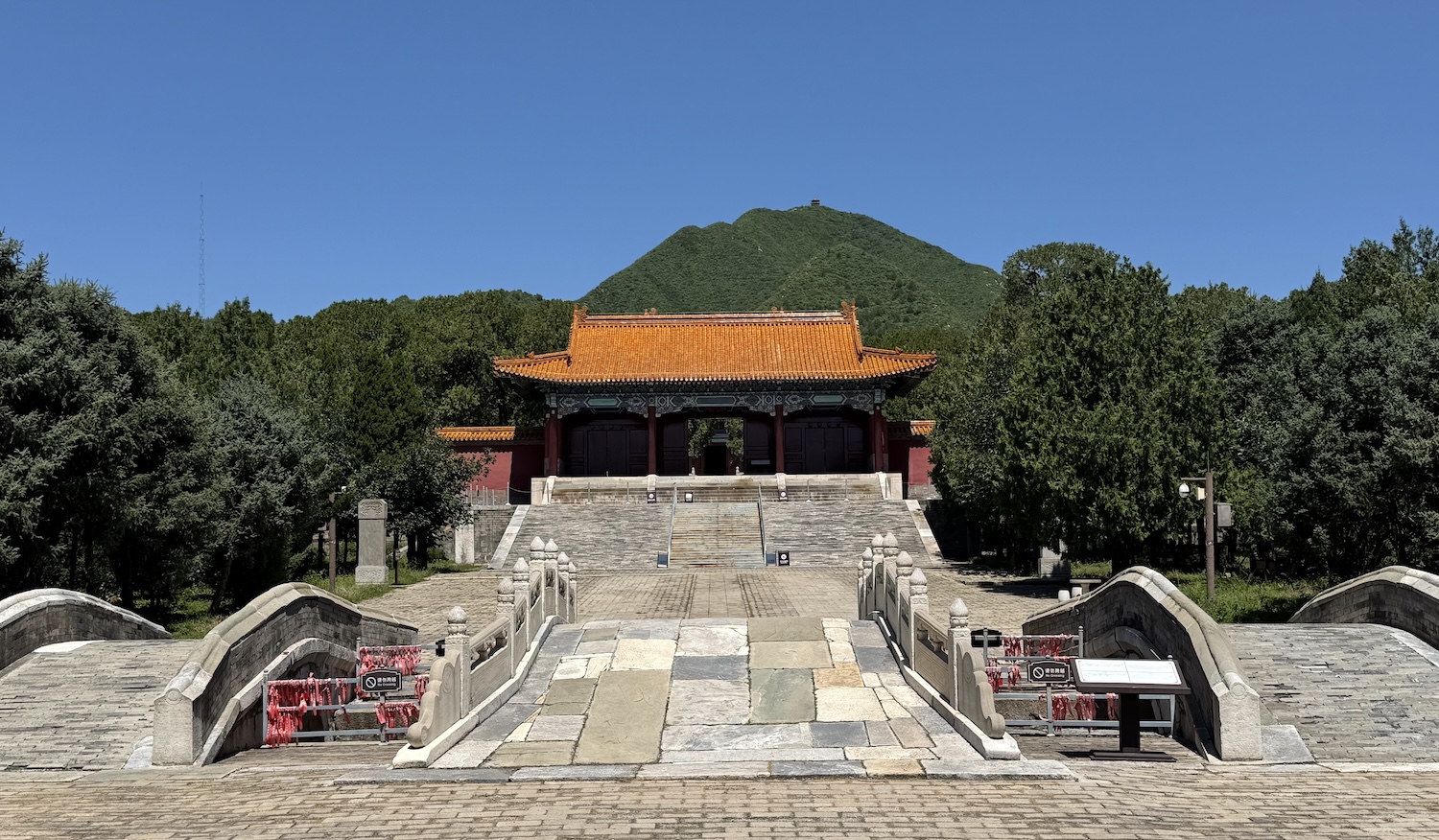
The foundation of the whole graveyard is the tomb of Yongle (whose memorial is known by his posthumous temple name, Changling), the third emperor, who died in 1424. Yongle has the most impressive structure at Changping, built on feng shui principles at vast scale. There is a colourful Front Gate, a Hall of Eminent Favour containing a large bronze statue of him, and the Soul Tower where he, his wife Xu and thousands of relics are buried. The buildings invariably have classic Chinese intricately-carved double-eaved hip-and-gable orange rooves.
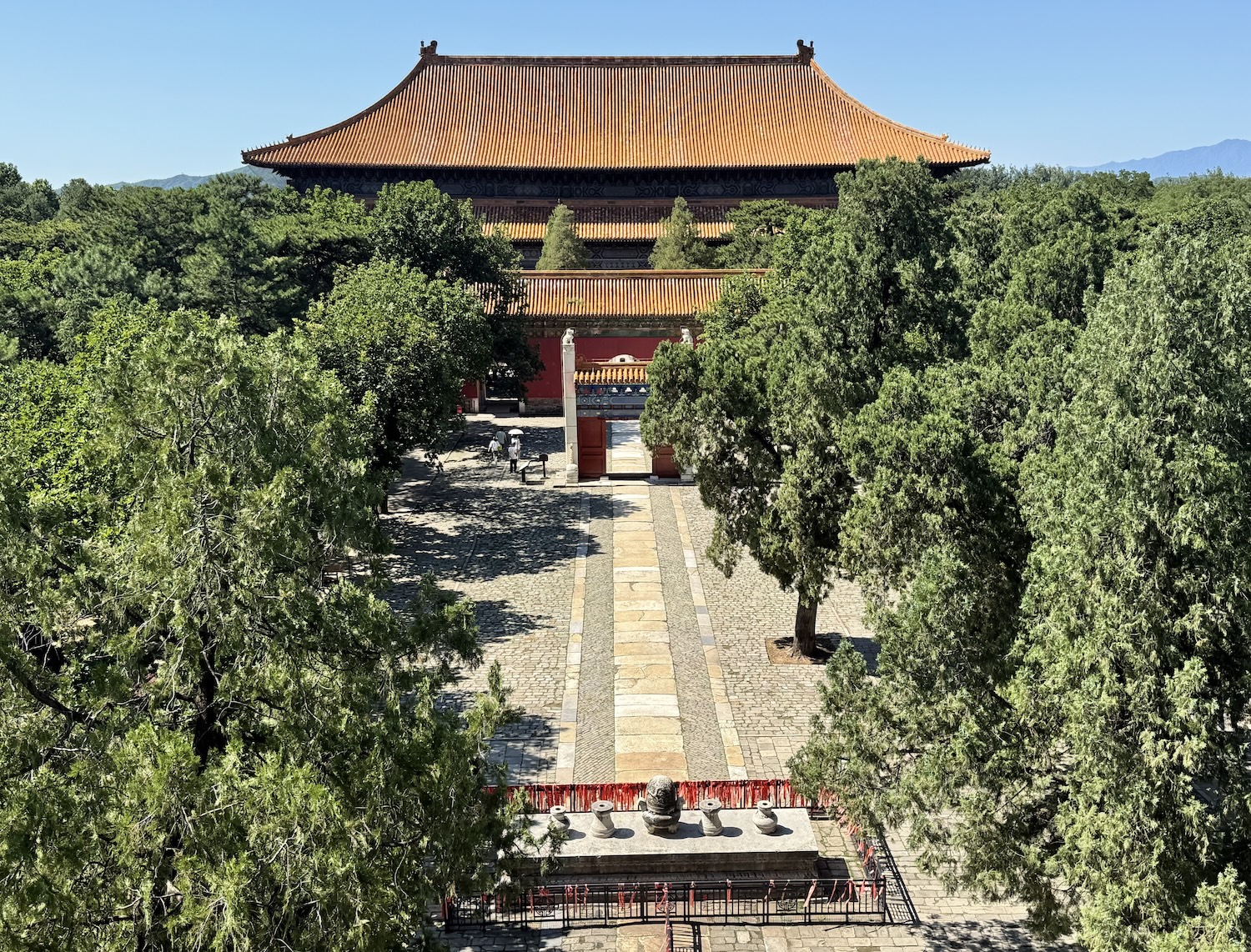
Zhu Zaihou (posthumously called Zhaoling) ruled between 1537 and 1572, when he returned a sense of austerity after the reign of his father, Jiajing, who had enjoyed Daoist rituals and disregarded traditional Confucian practices. He is one of the only emperors here to rest above the soil, in a crescent-shaped garden. However, most of the original structures were burned down during the Shun rebellion, and the buildings put up as replacements during the Qing Dynasty in the 1780s later collapsed. They were much more in the style of the Qing’s own imperial tombs, and what we see today are reconstructions of this second generation, which were erected in the 1980s.
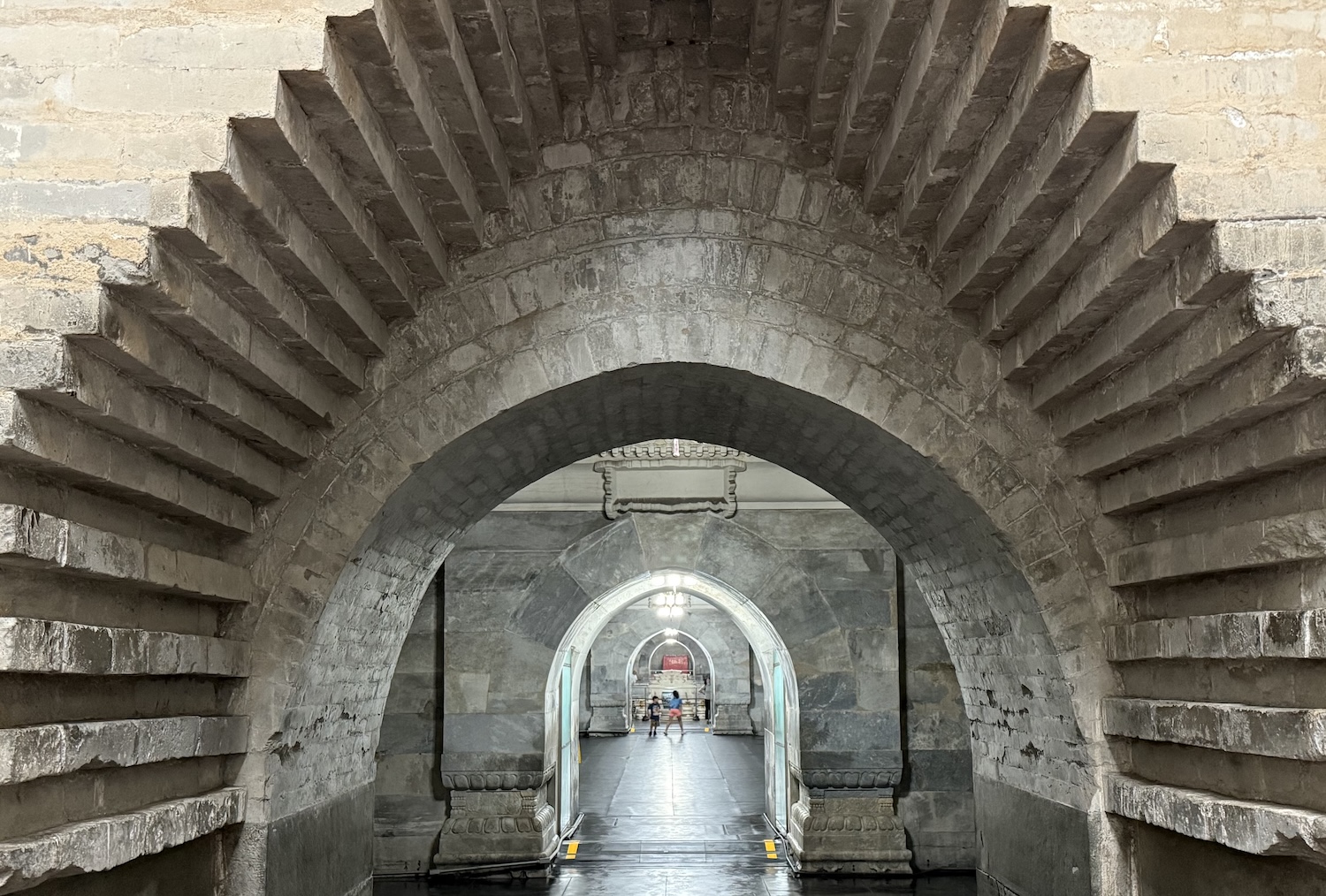
Most of the Ming emperors are buried underground in xuan gong, or dark palaces. We get the chance to experience that style at the tomb of Wanli (Dingling), who is laid between his two wives, 27m below the earth. This xuan gong took six years to build and is the first to be fully excavated. Wanli ascended the throne at the age of ten and reigned for forty-eight years, between 1572 and 1620, the longest serving of all Ming emperors.
Zunhua & Yixian: Qing Imperial Tombs
The Qing were Manchus from the north. They ruled the country from Beijing between 1644, following the collapse of the Ming empire and the failure of the Shun interregnum, and 1912, when they were overthrown by the Republic of China. Most of their leading emperors, and many other royal figures, are entombed at two locations almost 300km apart.
In a massive 80km² complex at Zunhua, 125km east of Beijing in the shadow of the Changrui Mountains, there are a total of 161 bodies: five emperors (Shunzhi, Kangxi, Qianlong, Xianfeng and Tongzhi), fifteen empresses, 136 imperial concubines, three princes and two princesses. Known as the Eastern Tombs of the Qing Dynasty, this is the best preserved and most impressive imperial burial ground in China.
At the ticket office, you have to board a little electric coach that takes you through the imposing main gate into the forest, down a lengthy avenue or Spirit Way lined by statues of camels, elephants and warriors, just like at the Ming Sacred Way, before dropping at the museum of Qing life.
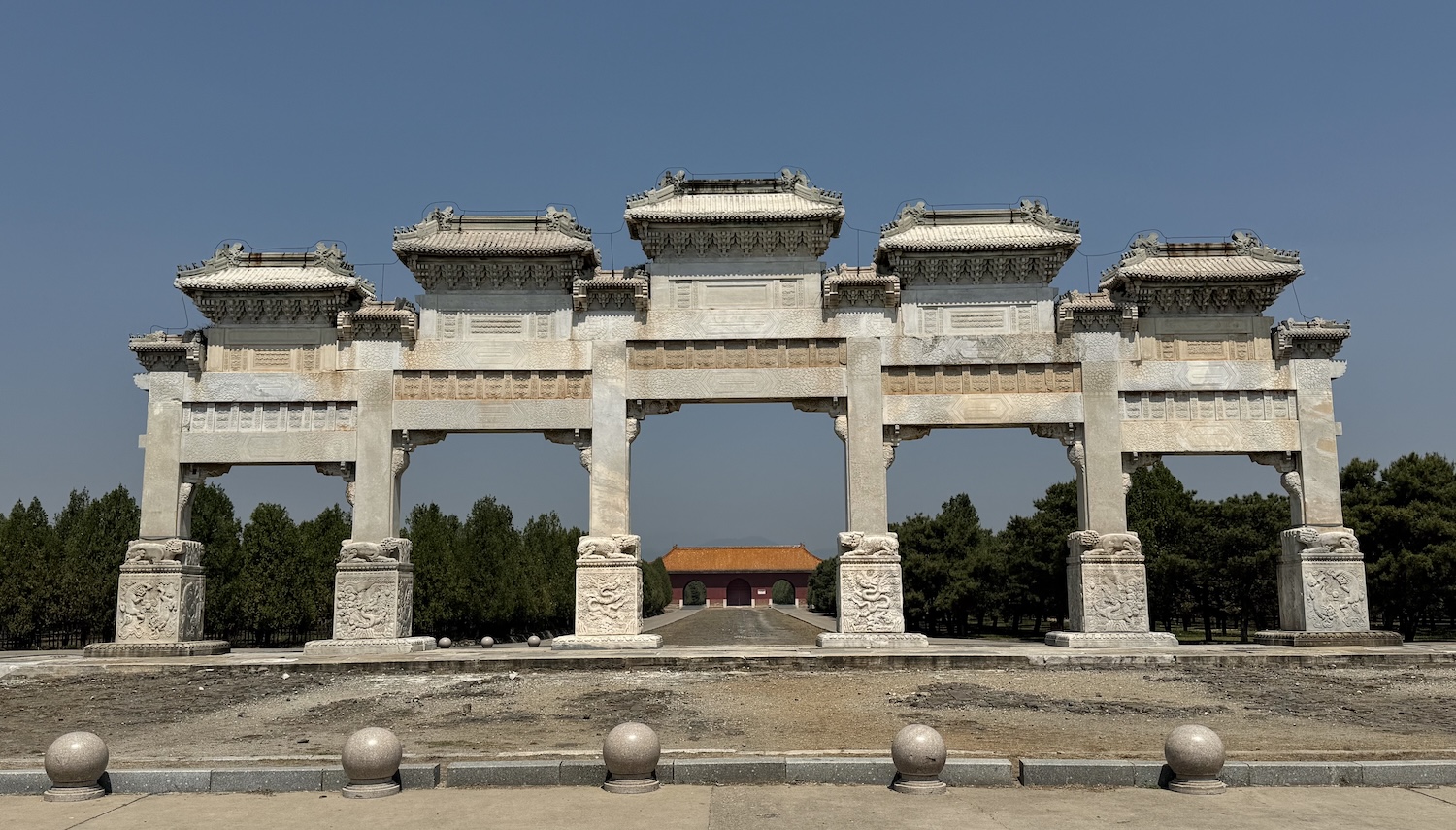
Here it is easy to flag a local unofficial guide who will drive you around the site, giving useful tips through their audio translation app, and leaving you to meander around on your own at each mausoleum. The memorials are all set out on similar lines, only with varying numbers of buildings and levels of intricacy: there is usually a white stone bridge over a moat that leads to a series of towers and pavilions before the main gate through an outer wall that leads to a large hall with a red roof and an underground palace.
The centrepiece is the tomb of the first Qing emperor to be interred here, Shunzi (Xiaoling). Breaking with Manchu traditions of cremation, two years after dying of smallpox in 1661, his body was brought here, encouraged by builders who hoped by constructing an elaborate mausoleum that successor emperors would also later commission their services, which they duly did.
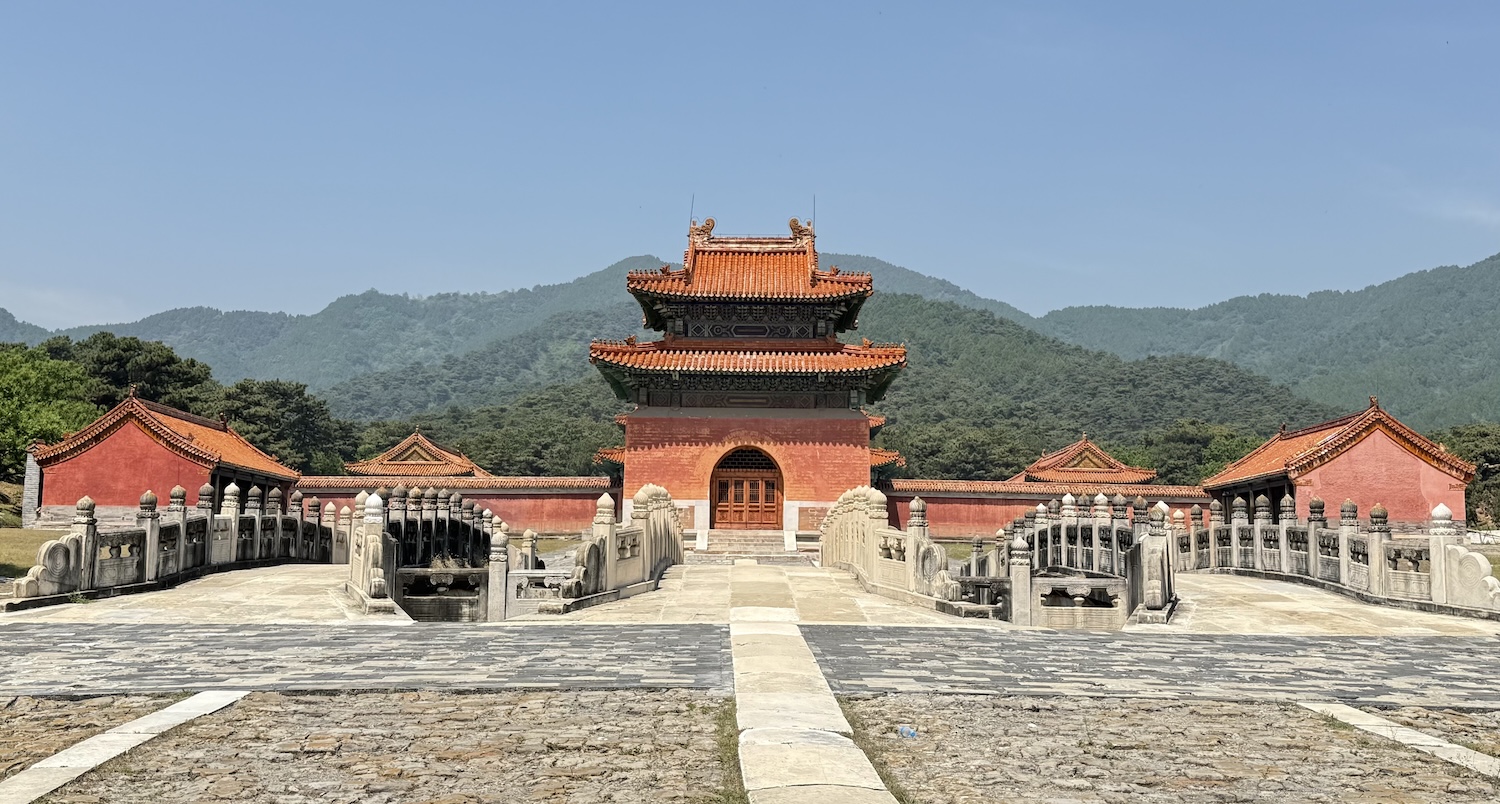
The longest-reigning emperor in Chinese history, at 61 years, was Kangxi (Jingling), third son of Shunzhi. He is also considered one of the greatest, because in the late seventeenth century he unified the country to include Mongolia, Tibet and Taiwan, and oversaw an exceptional period of political stability, economic wealth and cultural renaissance. Despite that, he insisted his mausoleum be comparatively understated.
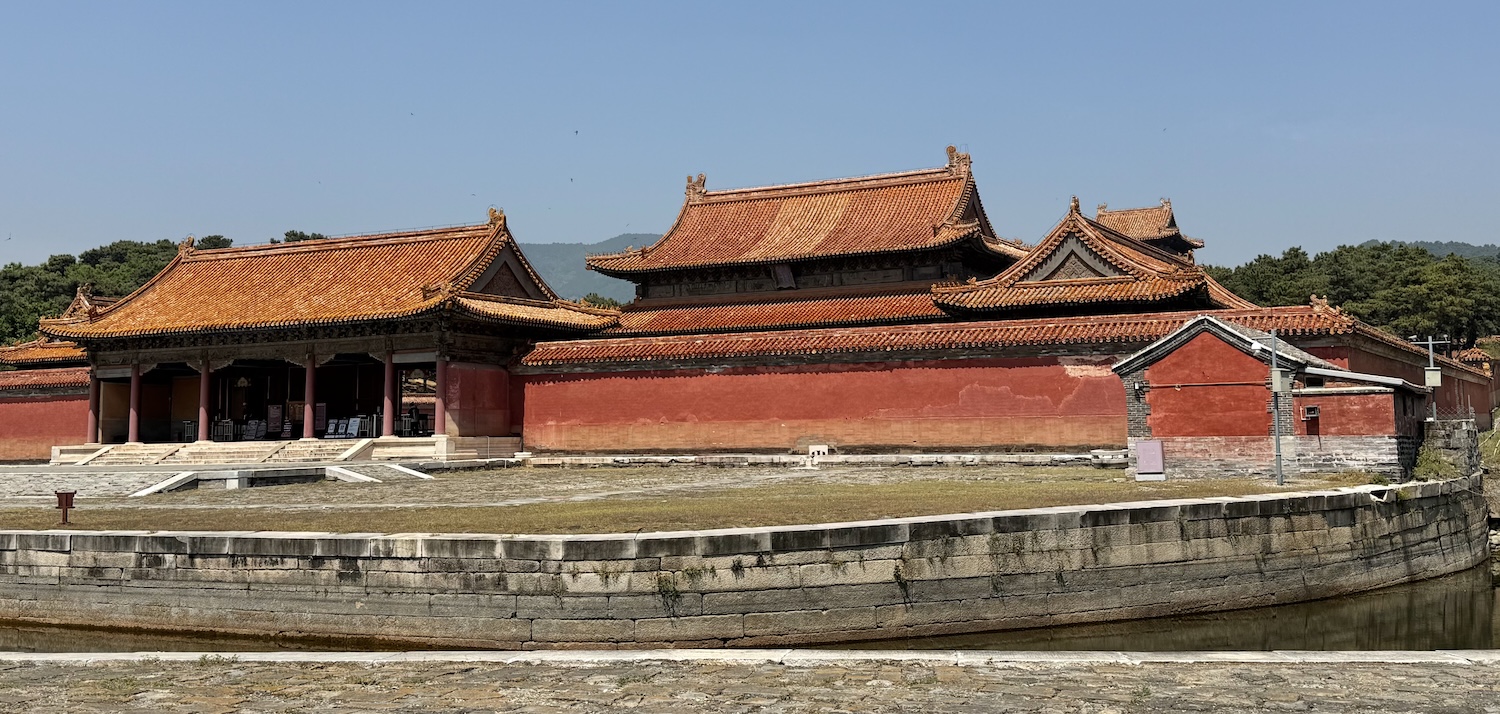
Of the other tombs, the most intriguing is not that of another emperor, but of Cixi (Dongling), a formidable noblewoman who effectively controlled the Chinese government for almost fifty years between 1861 and her death in 1908. Concubine to Emperor Xianfeng, mother of five-year-old Emperor Tongzhi, aunt of four-year-old Emperor Guangxu, and great-aunt of two-year-old Emperor Puyi, she ruled variously as Empress Dowager and as Regent.
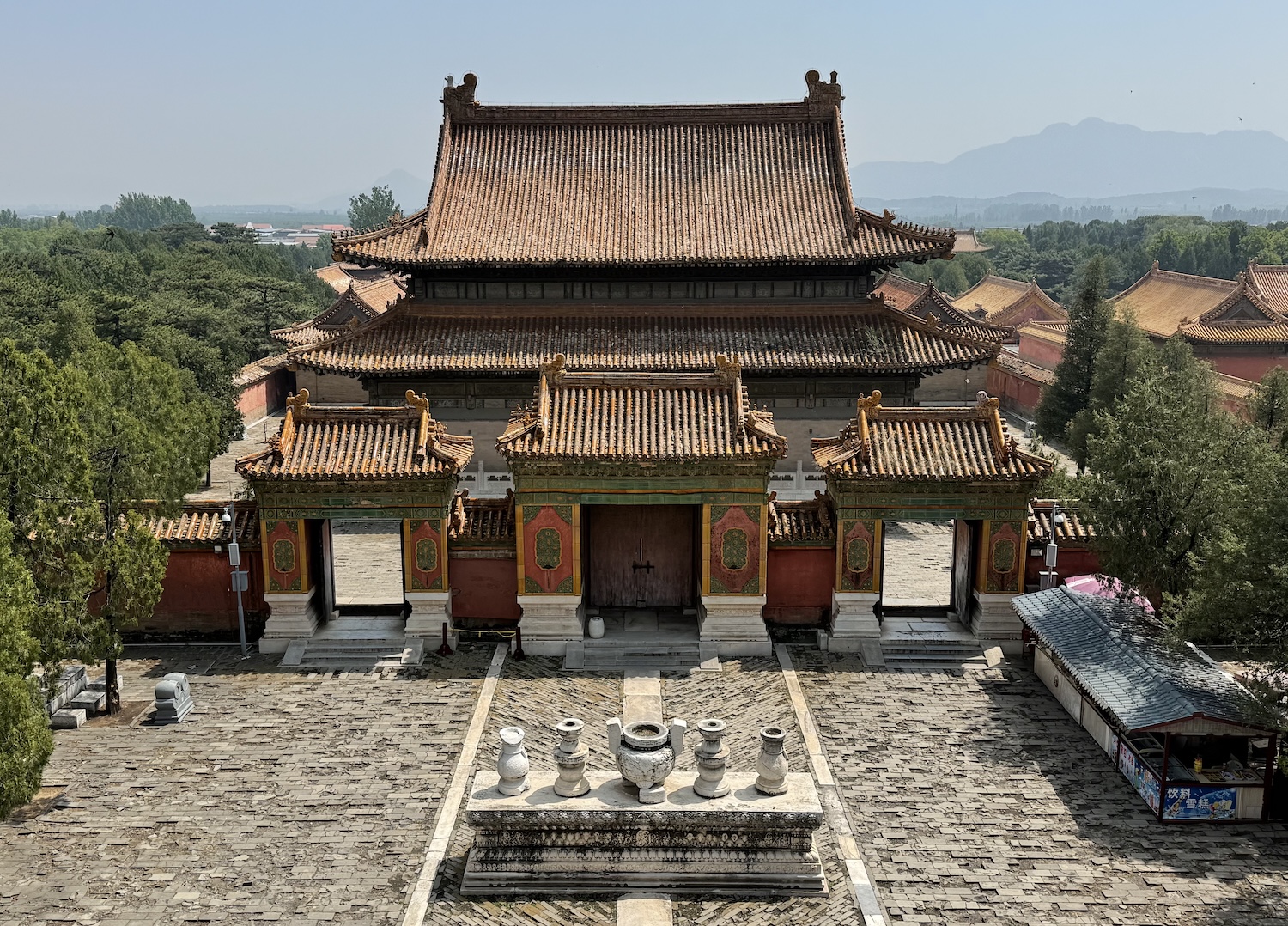
That is not all. There are another 76 bodies from the Qing royal court at a smaller site at Yixian, 150km south-west of Beijing in the foothills of Yongning Mountain. There is no grand spirit way leading to the mausoleums at the Western Tombs of the Qing Dynasty, but the main tombs are built in similar styles to those at Zunhua. Here there are four more emperors (Yongzheng, Jiaqing, Daoguang and Guangxu) along with nine empresses, as well as seven vaults for fifty-seven concubines, two princes and two princesses. Again, one ticket will get you access to them all, and your driver will need to transport you between them.
Yongzheng (Tailing), who died in 1735, was the first to break with Zunhua as he did not wish to lie next to his father, Kangxi. The fourth son of Kangxi, and the fourth emperor of the Ming Dynasty, Yongzheng ascended the throne after a prolonged and messy struggle for succession, though his thirteen-year reign is considered a period of relative peace and prosperity. His mausoleum is the grandest at Yixian, and its layout of bridges, palaces and underground vaults formed the model for others here to copy. Incidentally, his mother, Empress Renshou (Xiaogongren) also has a grand grave a few kilometres away.
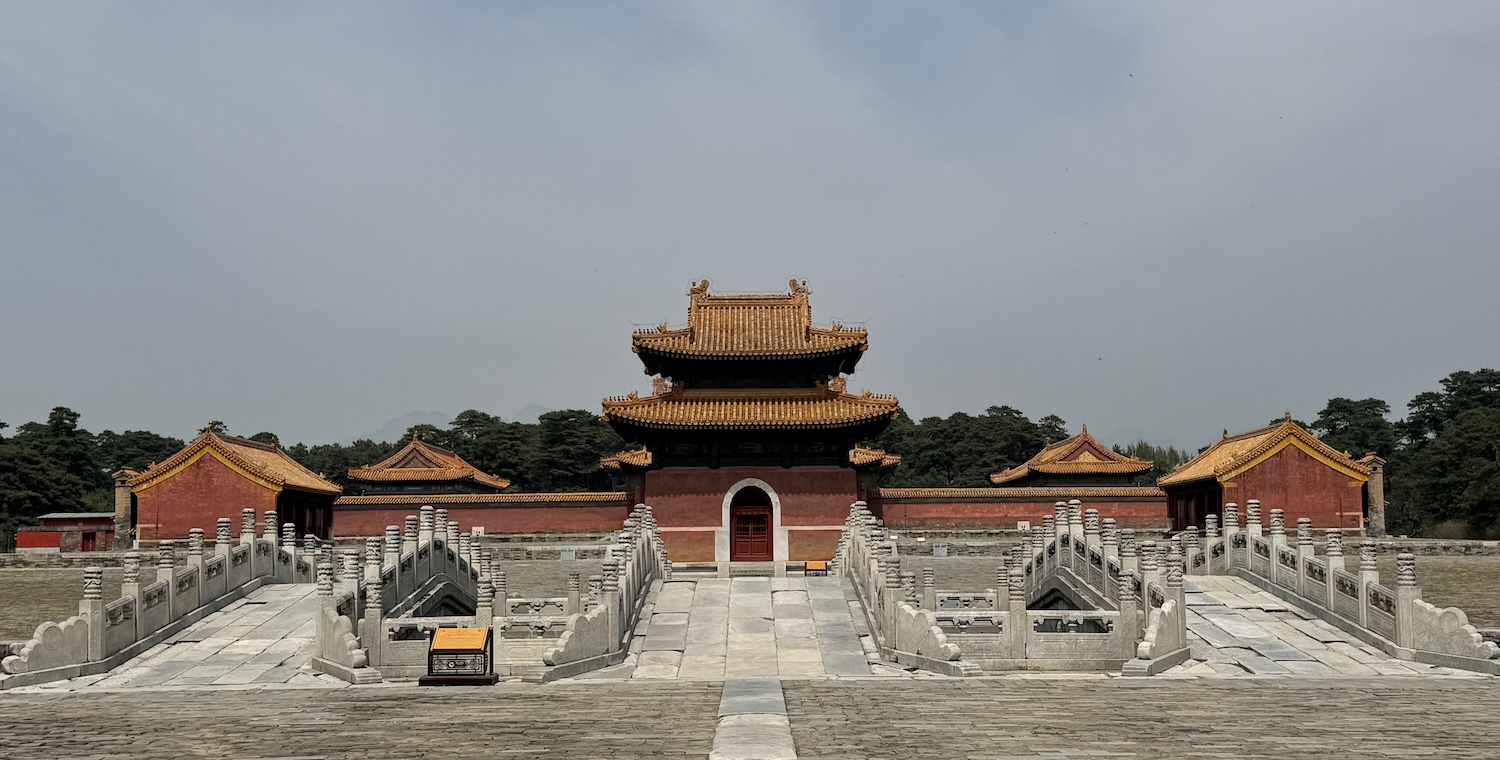
As Kangxi’s grandson, Yongzheng’s son Qianlong preferred a traditional resting place at Zunhua, as we have seen. However, Qianlong decreed that thereafter burials should alternate between the two sites, and although that pattern was not followed exactly to the letter, it did lead to the expansion of Yixian.
Jiaqing (Changling), the fifteenth son of Qianlong, died in 1820. His tenure is often seen by historians as the lost last chance to have prevented the Qing Dynasty from beginning the long slide away from power. His mausoleum is a slightly smaller replica of Yongzheng’s, though we can see it only from the outside as it is closed to the public.
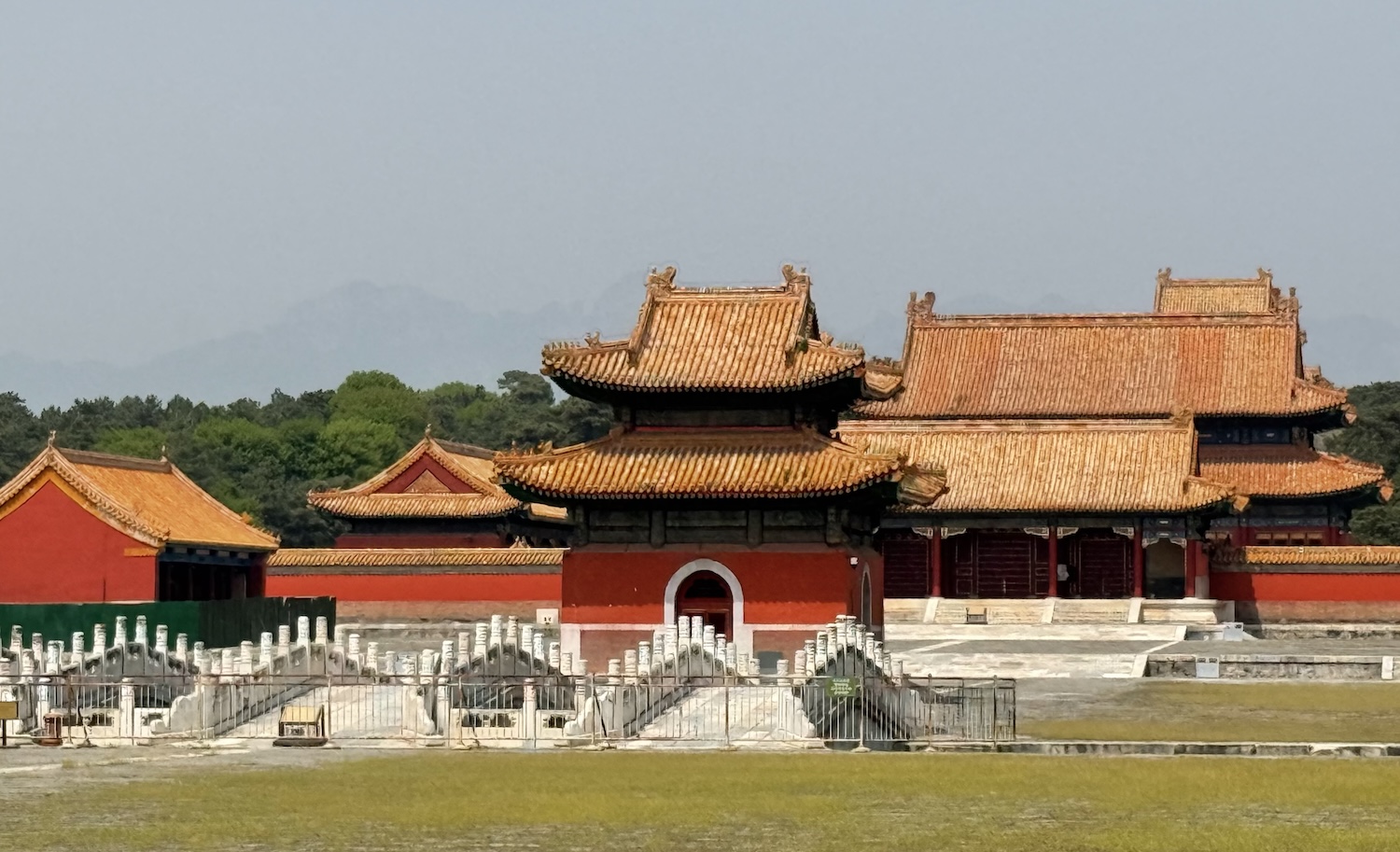
The reign of Jiaqing’s successor, Daoguang (Muling), was a disaster that begat the infamous Century of Humiliation. By the time Daoguang died in 1850, the Qing had been defeated in the First Opium War, lost Hong Kong, and become embroiled in the Taiping Rebellion. That was effectively a civil war, fought against the Heavenly Kingdom, led by a Hakka leader from Guangzhou but based in Tianjing, today’s Nanjing, who claimed to be a younger brother of Jesus Christ. It dragged on for fourteen years, with a greater loss of life than in all of World War One, and it was put down in the end only with the help of British and French forces. In light of those calamities, it is no surprise that Daoguang’s memorial, though still opulent, is the smallest and least lavish at Yixian, with a different design, no soul tower, square castle or stone statues, and located on its own in the far southwest of the group. He is buried with his two empresses, Xiao Mucheng and Xiao Quancheng.
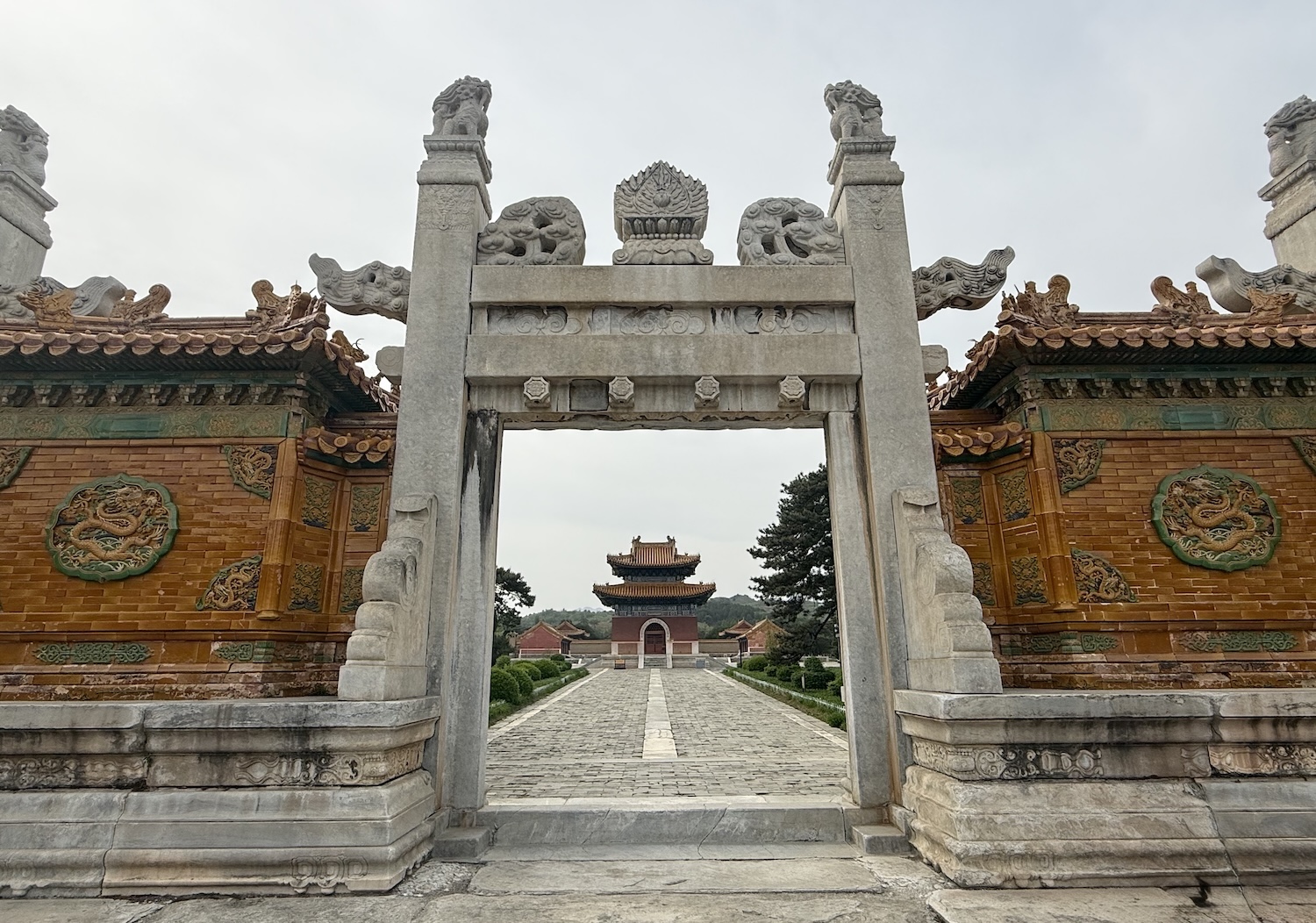
After Tongzhi died of smallpox in 1875 at the age of eighteen without a male heir, his mother the Empress Dowager Cixi manoeuvred her infant nephew Guangxu (Chongling) onto the throne. He ruled under her guidance until his death from arsenic poisoning in 1908, by which time the Qing had lost the Sino-French War of 1884-1885 and the First Sino-Japanese War of 1894-1895, and had been forced to watch helplessly as an Eight-Nation Alliance of foreign powers beat back the Boxer Rebellion before seizing and pillaging Beijing in 1901. For all that, this is the other highly impressive complex at Yixian, and its underground vault, containing both Guangxu and his wife Xiaodingjing, is the only one here that is open to visitors. It was robbed in the 1930s, but there seems to be no significant structural damage.
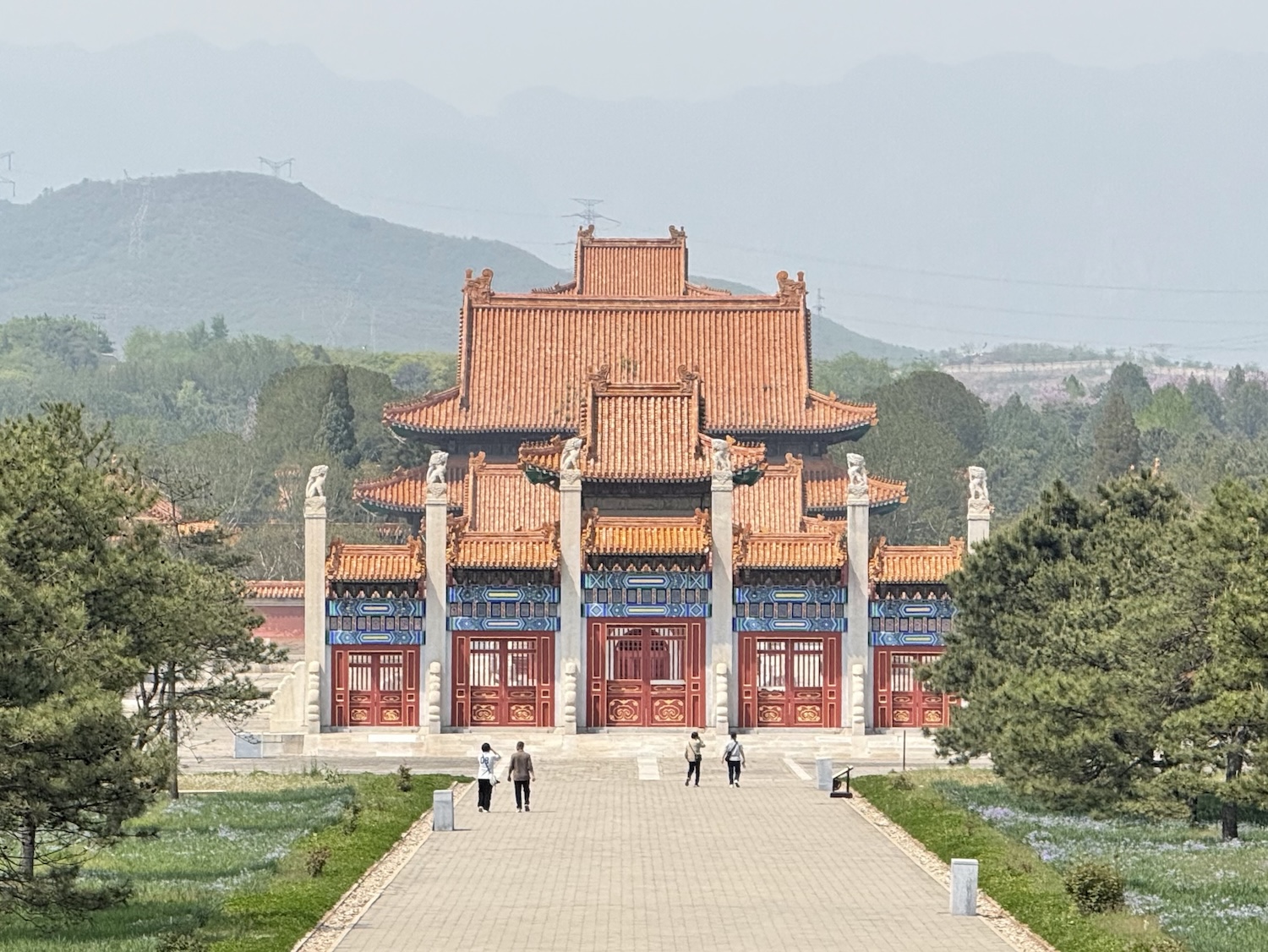
There is one last grave to visit. When Guangxu died, he too left no successor, so, again, Cixi seized control and anointed a two-year-old nephew of Guangxu. Puyi, the eleventh Qing Emperor, was forced to abdicate after four years on the throne in 1912 because of the Xinhai Revolution that ushered in the Republic of China, bringing to an end 268 years of Qing rule and almost four millennia of dynastic feudalism.
Puyi finally died in 1967, of heart disease, aged 61. His post-imperial life is told in the Bernardo Bertolucci epic film, The Last Emperor.
In 1967, the Cultural Revolution was just getting underway, so Puyi (who has not been granted the honour of a posthumous temple name) was cremated and placed in the Babaoshan Cemetery in Beijing alongside imperial concubines and eunuchs. In 1995, however, his ashes were transferred to Hualong Cemetery behind the tomb of Guangxu in the far northeast of Yixian. It is often referred to as a commercial graveyard, but that creates the false impression of a common-and-garden burial plot. In reality, it has its own enormous and elaborate gateway, in a totally different style to that of any other emperor, which is closely guarded to prevent anyone gaining access. Even photos of the gate are frowned on, so I had to sneak mine while the guard was distracted by my driver.
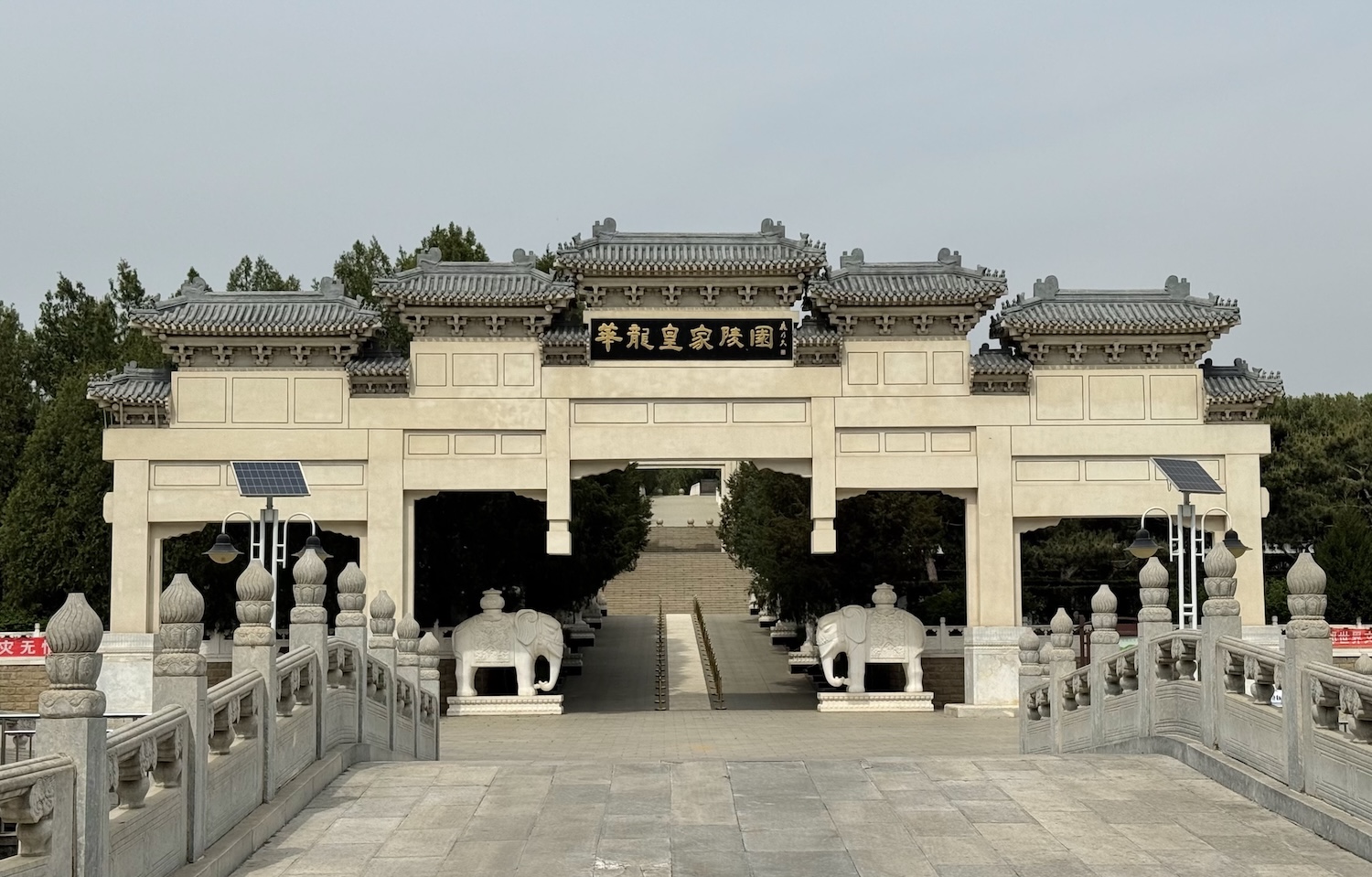
Journeying to all these magnificent mausoleums in gorgeous settings was great fun, but also a way to learn about the personalities and records of each emperor as well as appreciate better the differences between their dynasties. I visited Puyi’s last, and although his is not technically included in the Western Tombs collection, it obviously symbolises a pivotal moment in Chinese history. All told, I strongly recommend exploring all the Ming and Qing burial grounds I have flagged here.
Tangshan, Earthquake City
Tangshan is a city of 8m people in the north-east of Hebei, 240km from Beijing. It is a nondescript sort of place on a road to nowhere that attracts almost no foreign visitors. Which is a pity as it is of tragic geological and historic political significance.
On 28 July 1976, disaster struck 1km below the centre of Tangshan, at the time home to 1.2m residents, in the form of the deadliest earthquake sequence in recorded history. Two enormous movements, the first measuring 7.8 on the Richter Scale, and just hours later a second measuring 7.4, destroyed 95% of the buildings in the city, and killed an estimated 300,000 people, including 10,000 coal miners working underground. The numbers “devitalised”, as the museum here puts it, were twice as many as in Hiroshima by the atomic bomb in 1945.
The Memorial Park in Anti-Seismic Square is reminiscent of Hiroshima. At one end are the rotting remains of the casting steel workshop that was above the epicentre, left exactly as it was on that fateful day, and beside it is the terribly affecting museum. Starting here is a horrifyingly long and tall wall with 246,465 names of those killed, though it is believed there were at least 50,000 more victims who were never identified.
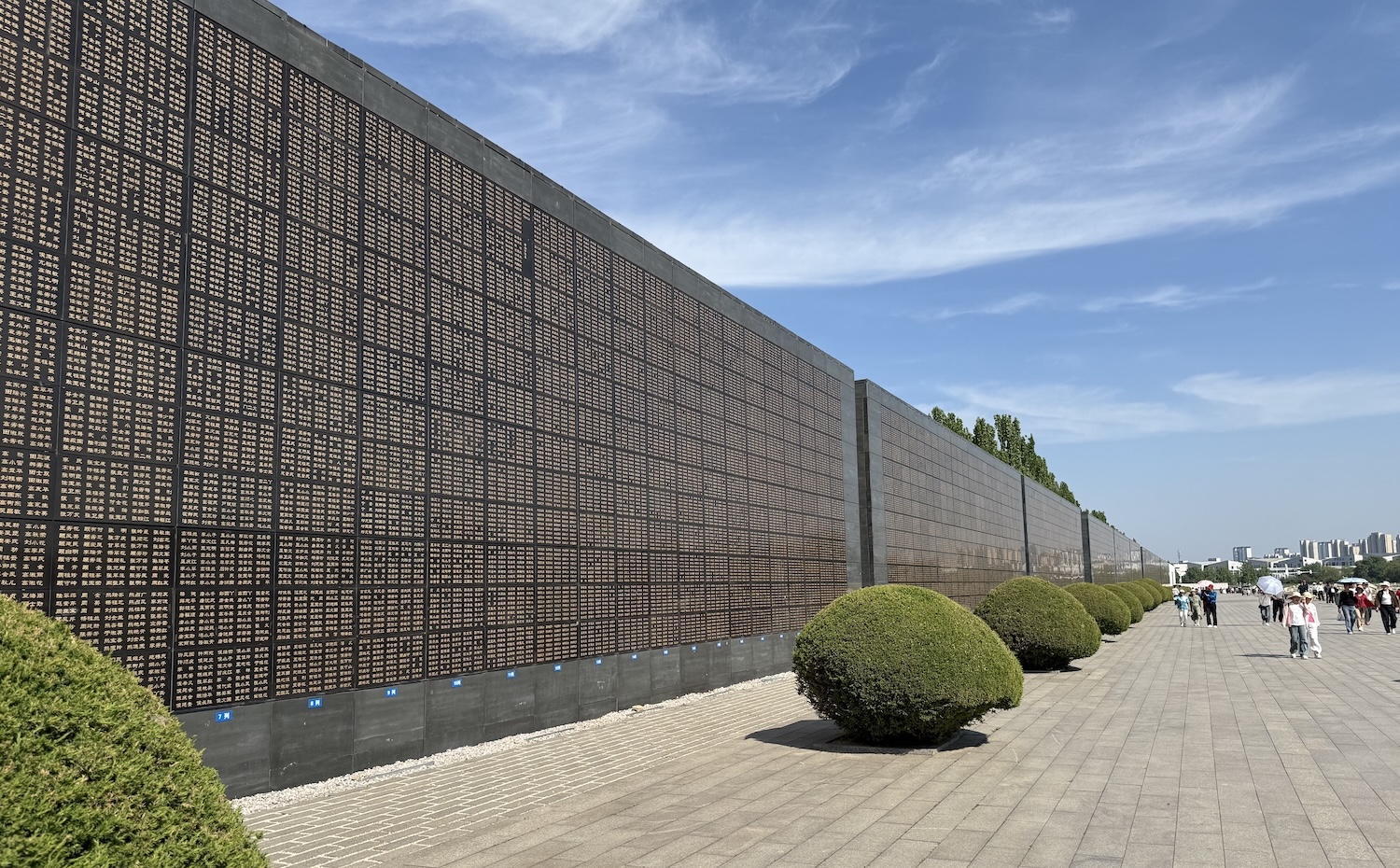
Traditional Chinese belief holds that natural disasters such as earthquakes always presage a change in the order of things, including the potential removal of the rulers of the day. Hence, towards the bitter end of the Cultural Revolution, the Communist Party commanded the science of seismology be seen as a test of ideological orthodoxy, to distinguish pure cadres from troublesome deviationists. That notwithstanding, by coincidence, the already ailing Chairman Mao Zedong died from a heart attack only six weeks after the calamity in Tangshan, on 9 September 1976.
This story may still not be over yet, because the Tangshan aftershock zone remains active even today. Earthquakes measuring 4.5 and above have occurred here as recently and frequently as 2012, 2016, 2019 and 2020.
Shijiazhuang & the Ancient South
Shijiazhuang, 300km south-west of Beijing, was made capital of Hebei when Tianjin was carved out as a standalone city in 1968. Over the past thirty years, it has more than quadrupled in size to over 11m people as a consequence of industrial development. It is by no means a magnet for tourists, and indeed few hotels here can take foreigners, though the Wanlimiao and Locomotive neo-lit hyper-active pedestrian streets are fun and about the only roads around not heaving with electric scooters and one-seat three-wheel cars.
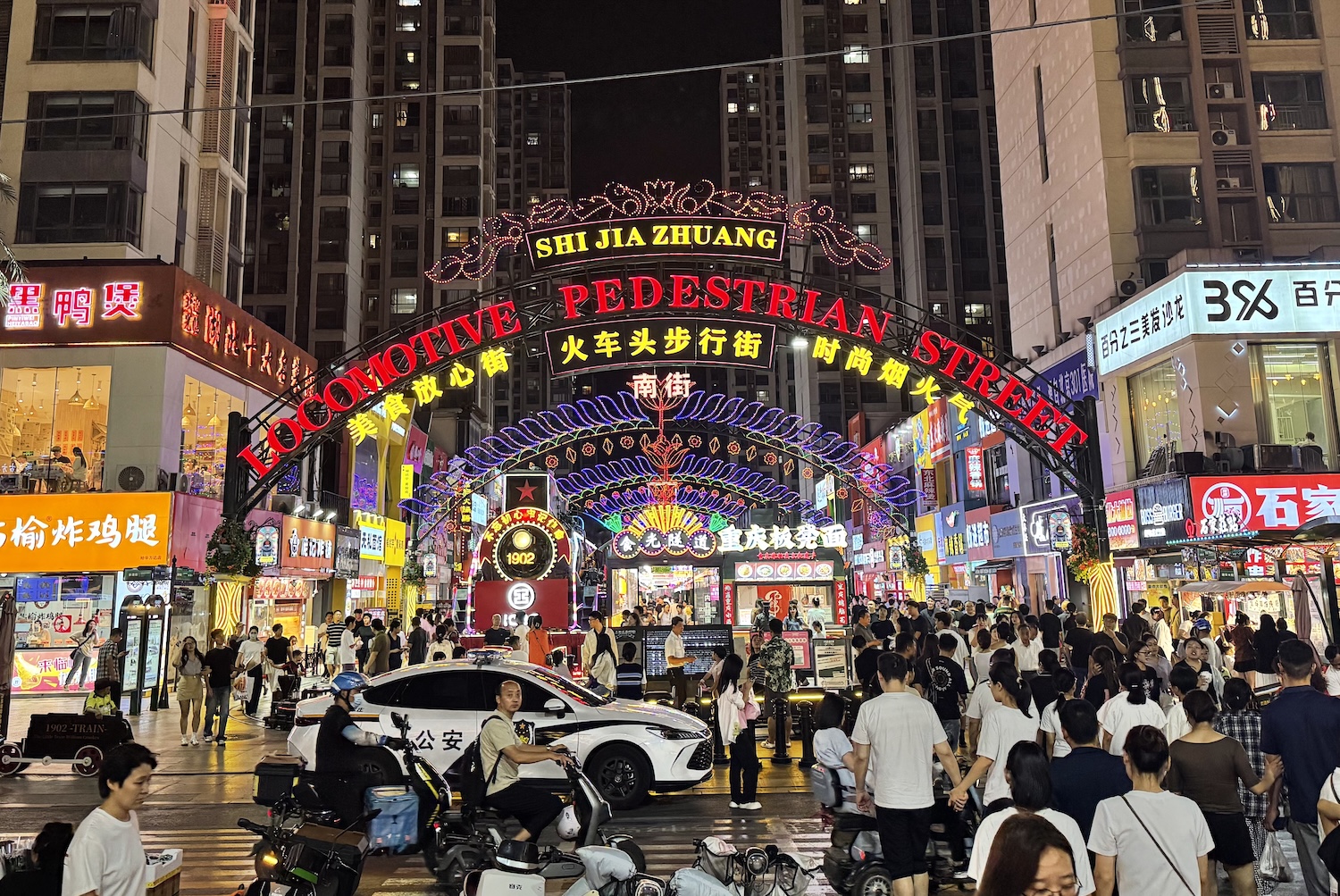
The main reason for coming here is to access the cluster of sites, including the mountain temple complex at Cangyan, the Communist Party’s Civil War HQ at Xibaipo, and the ancient so-called Four Treasures of Hebei, which circle the city. There is a local airport, bigger and newer than in most European capitals, and the InterContinental is a decent base. We explored them leisurely in a clockwise direction, starting in the north, over three days.
Just 25km above Shijiazhuang, across the Hutuo River, Zhengding is affectionately and literally known as the town of “nine buildings, four pagodas, eight great temples and twenty-four golden archways”, all inside a massive restored protective wall. Some of these are in ruins, though the star turn, Longxing Temple, is in excellent condition. It is a huge site and contains a 23m-high cast-iron statue of Guanyin, the Thousand-Armed Thousand-Eyed Bodhisattva, which dates from the Song Dynasty in 971, and is the first of the Four Treasures.
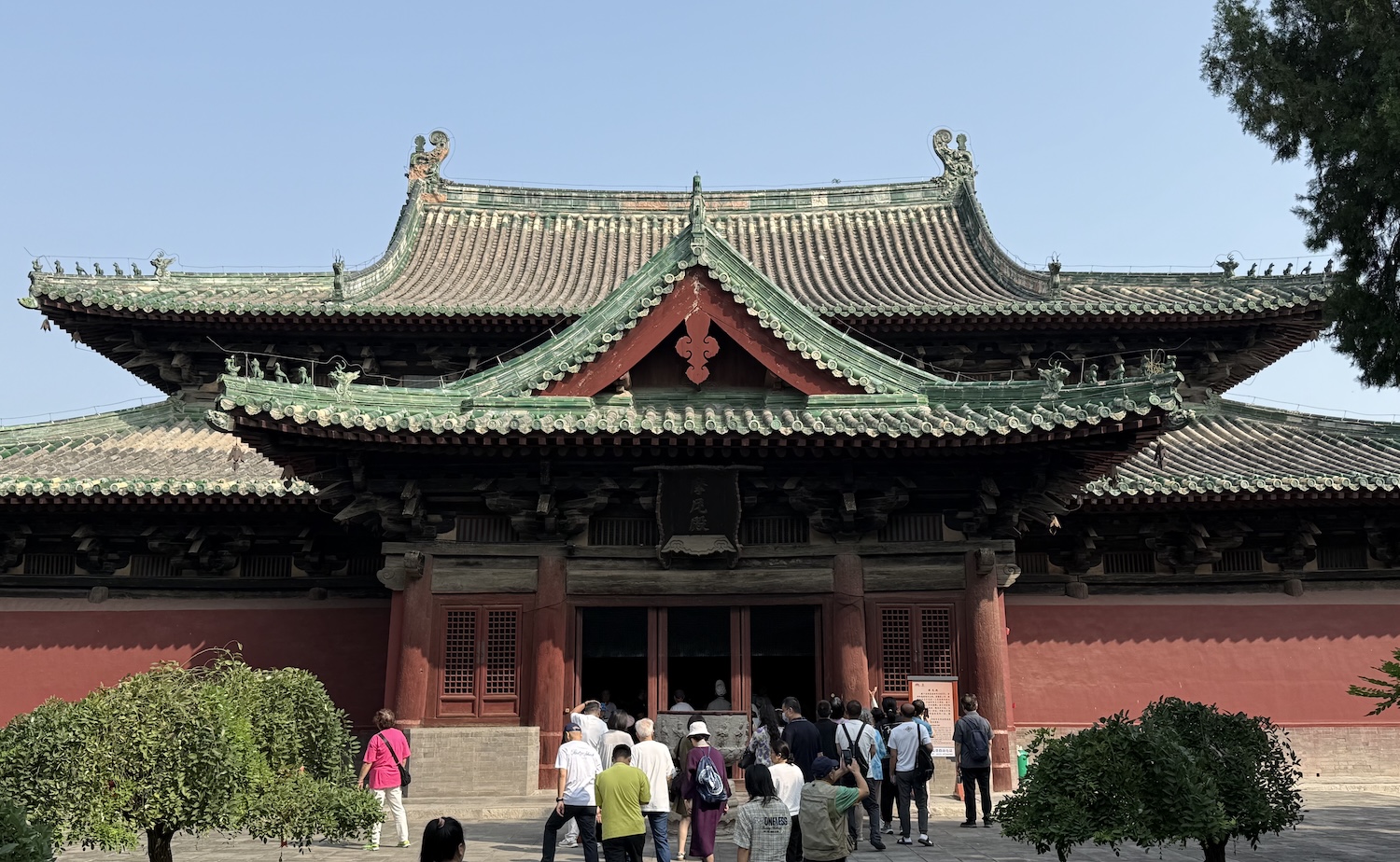
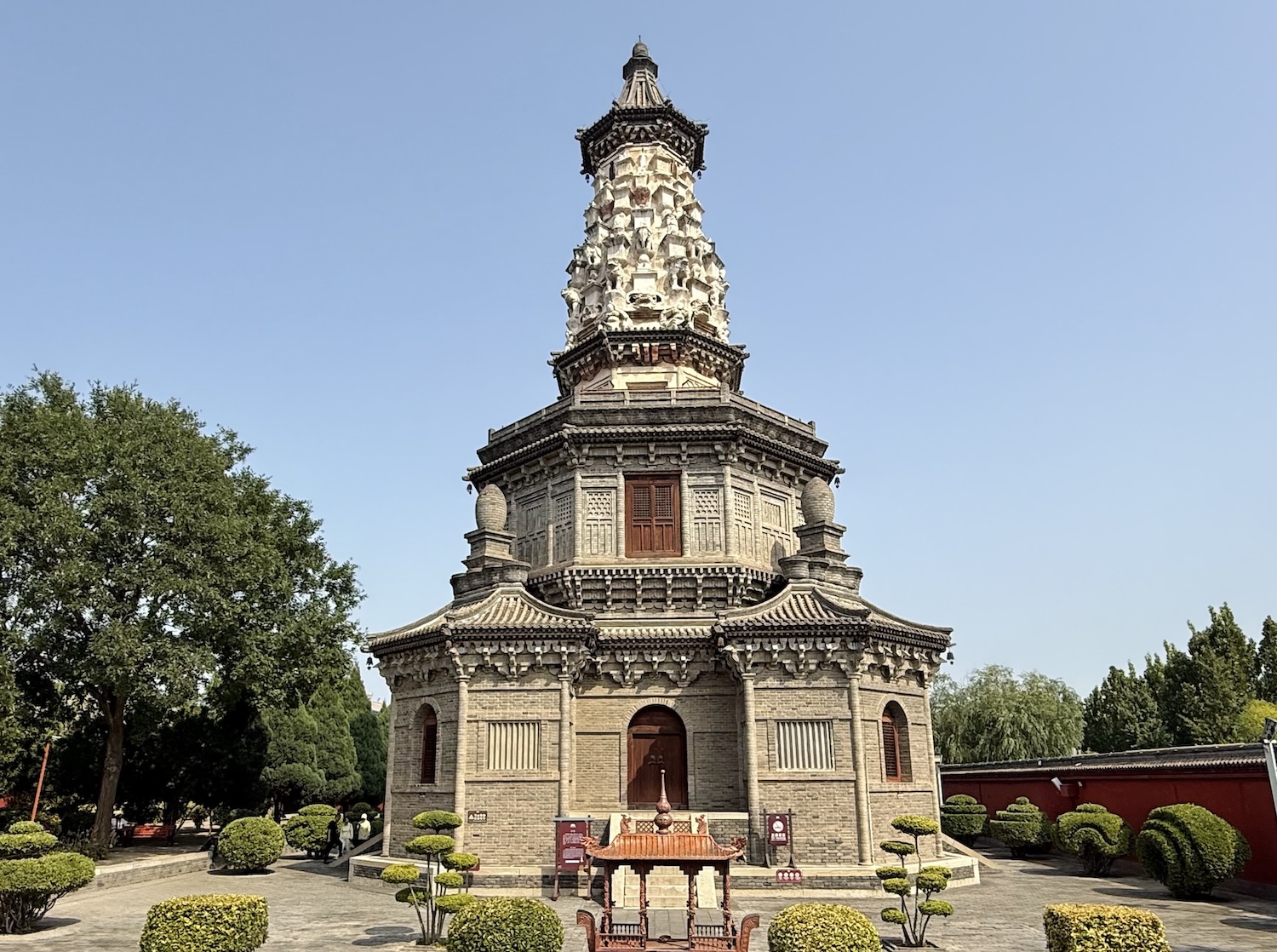
The standout pagoda in Zhengding is the four-storey octagonal Huatai, which is all that is left of the Guanghui Temple. Known as the Flower Pagoda because of its resemblance to a bouquet, it was built in the Tang period and restored in the Jin era.
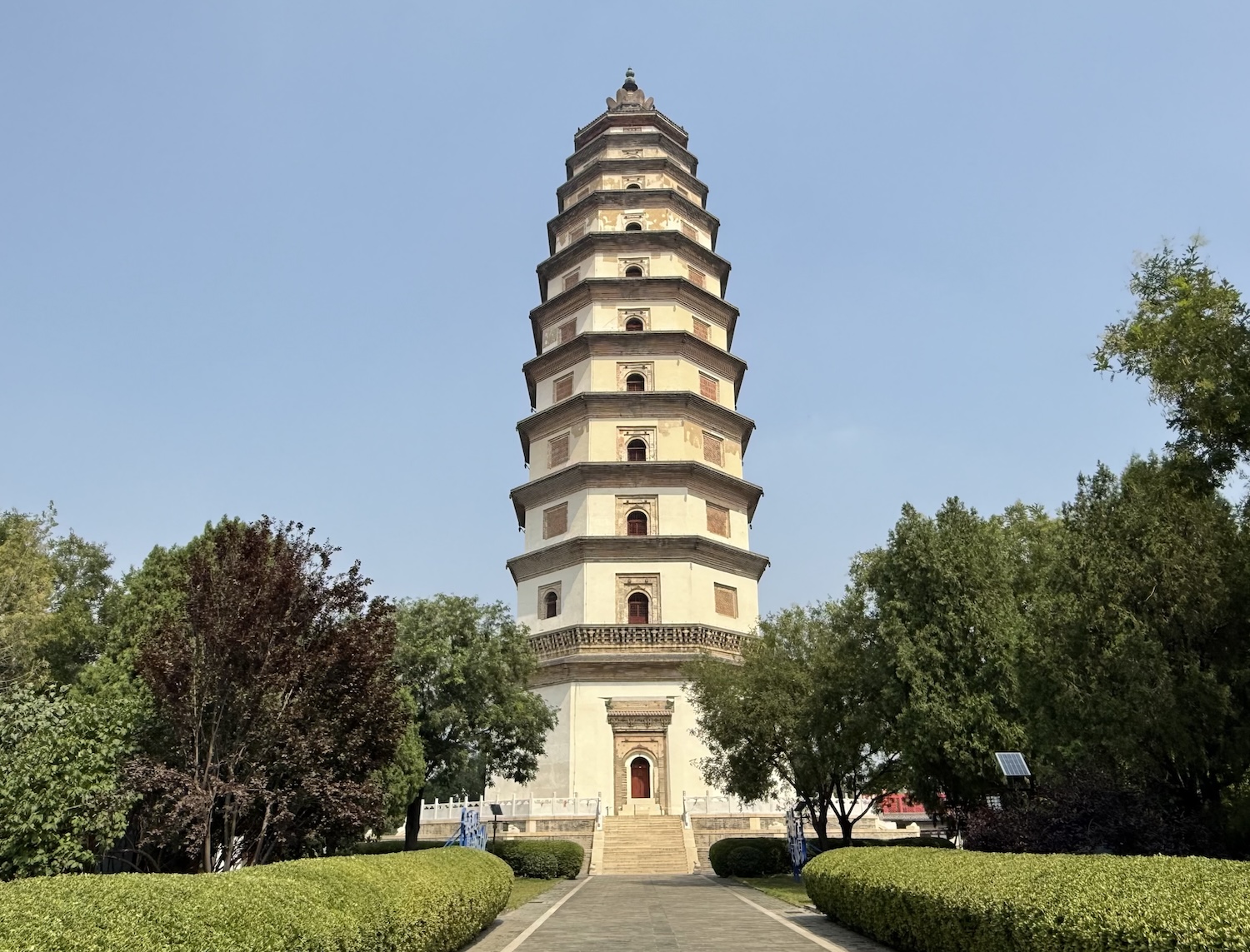
It is 60km northeast from Zhengding to Dingzhou for the Kaiyan Temple. Another Song relic, construction took half a century and was completed in 1055, though most was destroyed under early Qing rule. The only remaining structure is the eleven-storey octagonal 84m-tall Liaodi Pagoda, and that has been repaired so many times it looks brand new. It is the second of the Four Treasures, the tallest extant ancient pagoda in China, and the tallest brick pagoda in the world.
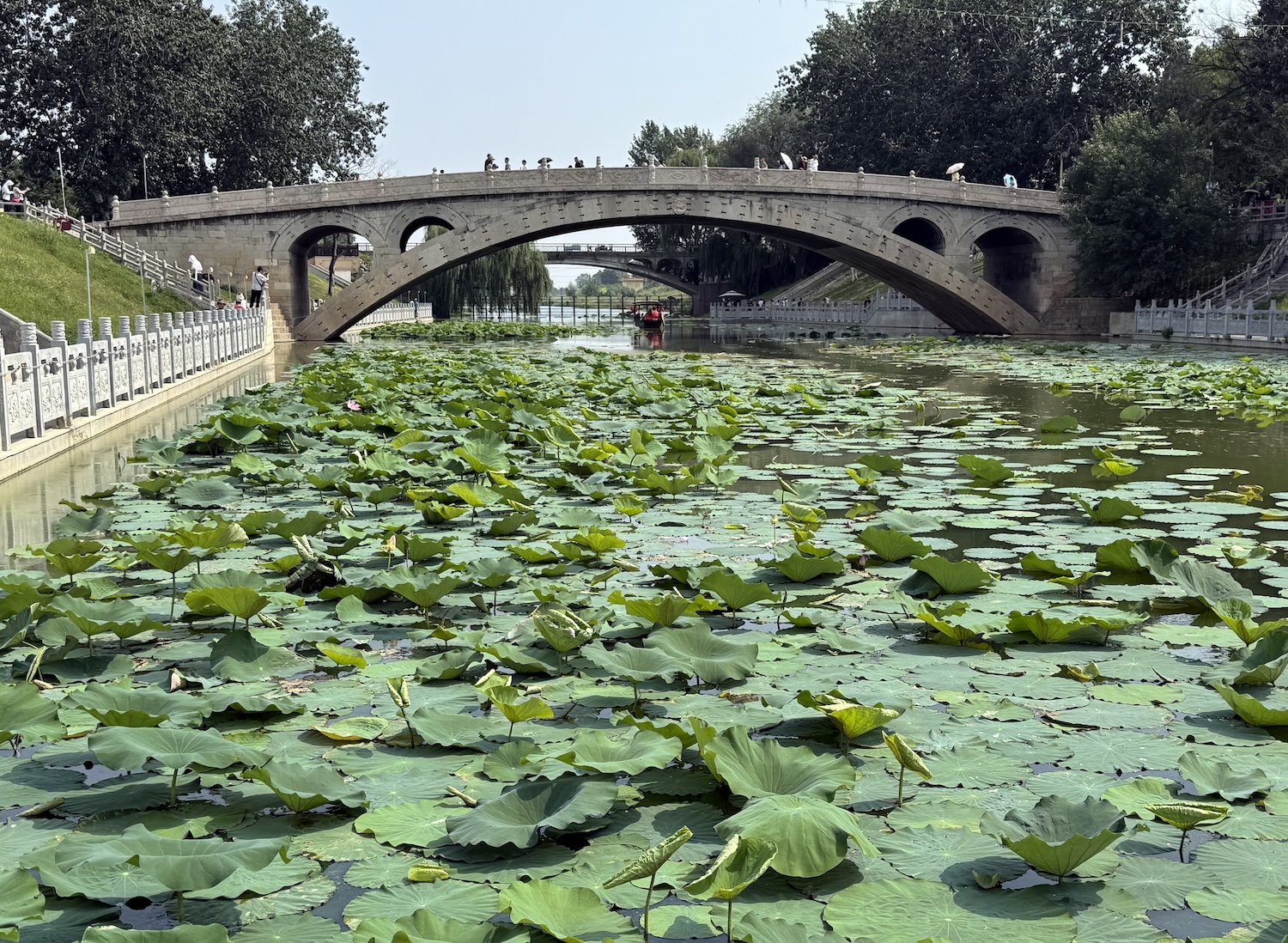
About 100km south of Dingzhou is Zhaoxian. China’s oldest surviving bridge, Anji, the third of the Four Treasures, has been straddling the waterlilies on Xiaohe River here for 1,400 years, having originally been completed by the Sui Dynasty. These days it is a popular – and lovely – place for local people to come for a stroll and a picnic.
Roughly 90km west of Zhaoxian, a drive through farmland plains that gradually twists and turns up into the Taihang Mountains, stands Cangyan. If you come to Shijiazhuang for no other reason, come for this. It is easy to spend half a day or more here.
Cangyan Mountain is part of the colossal Taihang Range, which runs south from here for over 400km into Shanxi province, with an average elevation of almost 2,000m. Cangyan is both beautiful and relatively accessible, and hence has been used as the backdrop for numerous films and TV shows, most famously Crouching Tiger, Hidden Dragon in 2000.
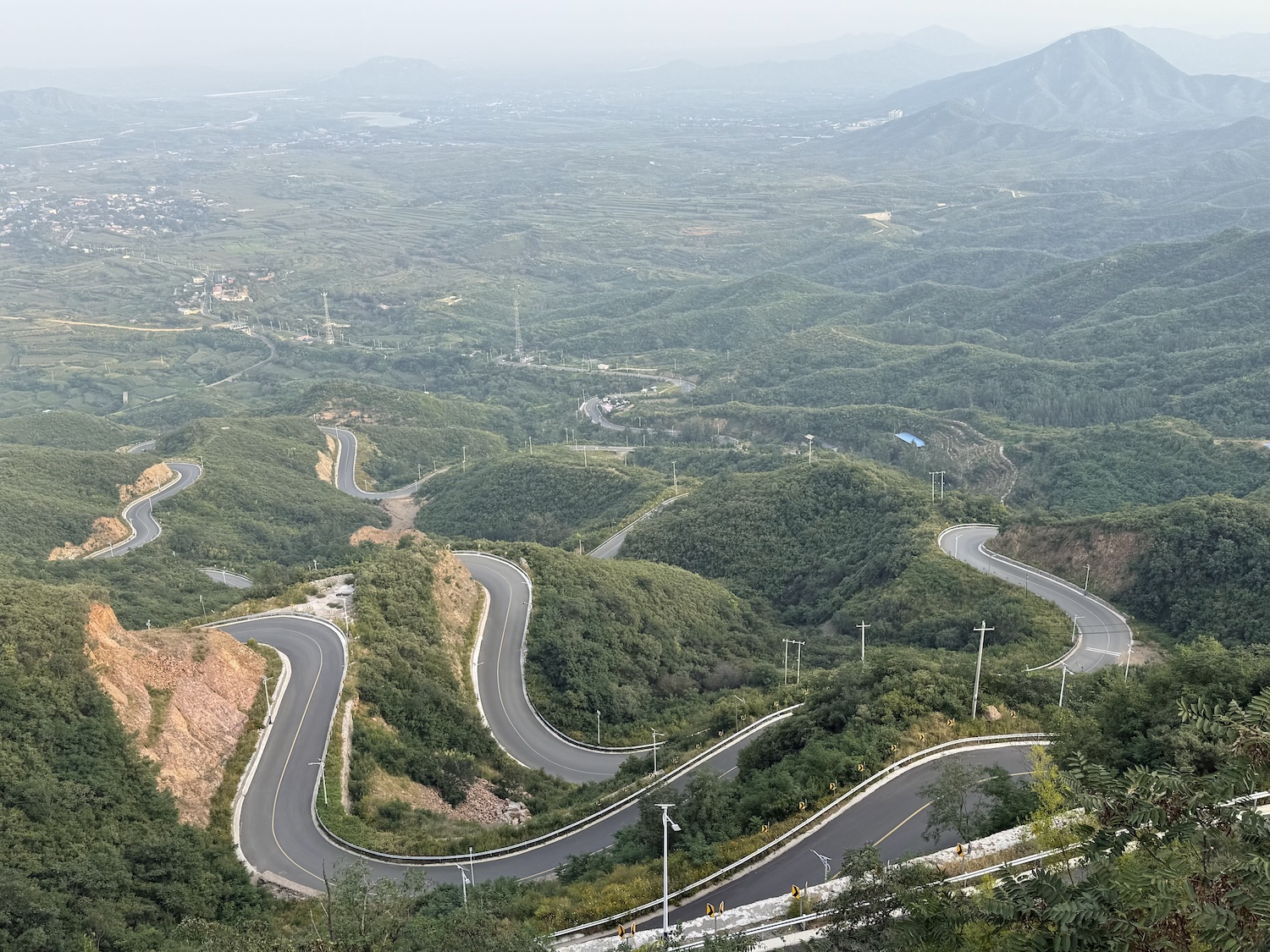
Cangyan is forested with sandalwood and cypress trees, and on its cliff-faces are scores of ancient temples. If you keep driving up Shicang Road, on beautiful hairpin bends, until it runs out at the pretty village built around the gigantic Renjoy Hotel, you will see a cable-car station. It is a fifteen-minute journey to the summit, which is understatedly signposted a “scenic area”, from where there are dazzling views back over the valley.
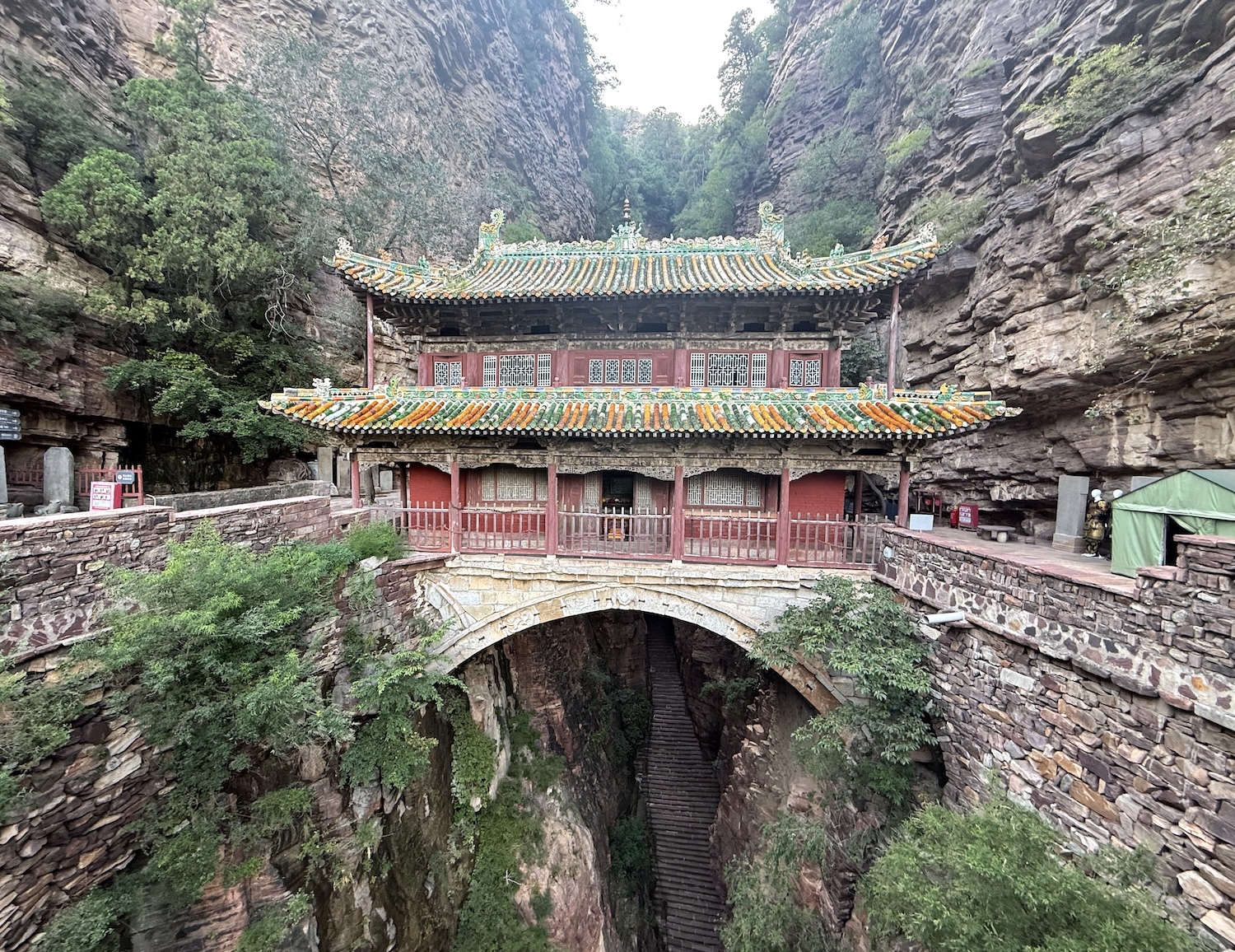
At the top, there is a pathway around the horseshoe end of the gorge, where there are numerous shrines of the Fuqing Complex, sometimes called Fortune Celebration or Hanging Palace, which was bolted onto the side of the mountain in the early seventh century and became a favourite of the daughter of Sui Emperor Yang. This path weaves all the way back down to the bottom, a walk of an hour or so, past pagodas and icons all the way. It goes to, and then underneath, the central landmark on Cangyan: Bridge Tower Hall. This extraordinary construction of 365 stone blocks spans the gorge, 15m across and 50m above ground.
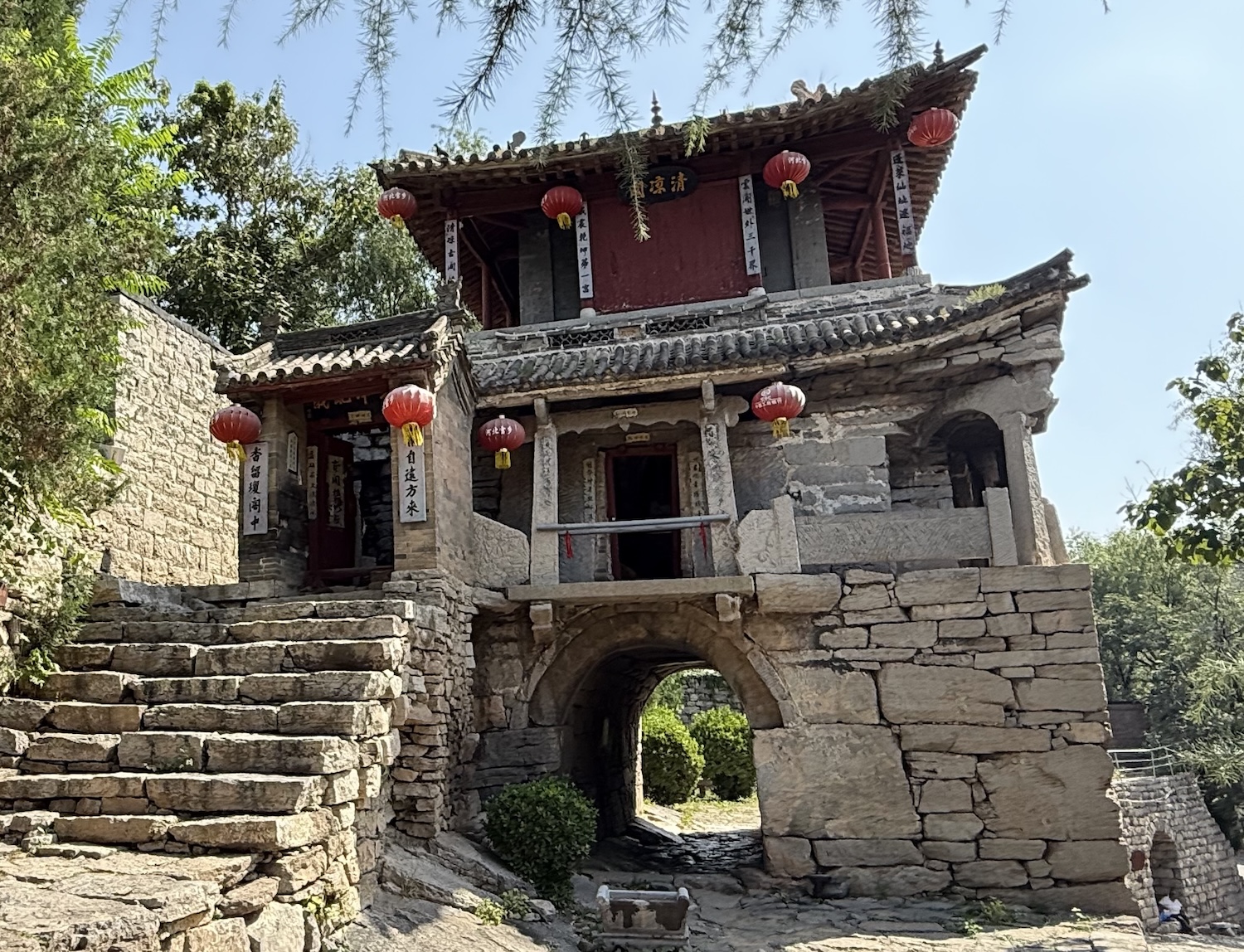
Continuing across the hills, around 30km northwest of Cangyan Mountain is Yujiacun village. There are several different entrances, each with a ticket office and some with a visitors’ centre. Despite the preponderance of maps and signs along the way – some even in English – this is a maze of broken-cobblestone narrow-alleyways up and down hills in which it is easy to get lost. So before setting off for a wander around this gorgeous ancient settlement, made entirely of stone, inside and out, I advise you to put a pin in Google Maps at whichever car park your driver is waiting.
Despite its biscuit-tin-lid picturesqueness, this is not just a tourist attraction. It is a living home in which people go about their everyday business. Yet they seem quite happy to allow visitors to nose about their beautifully preserved temples, pavilions and ancestral halls, taking endless selfies of their museum-standard courtyard-houses that date from Ming and Qing times. A lovely way to while away a few hours.
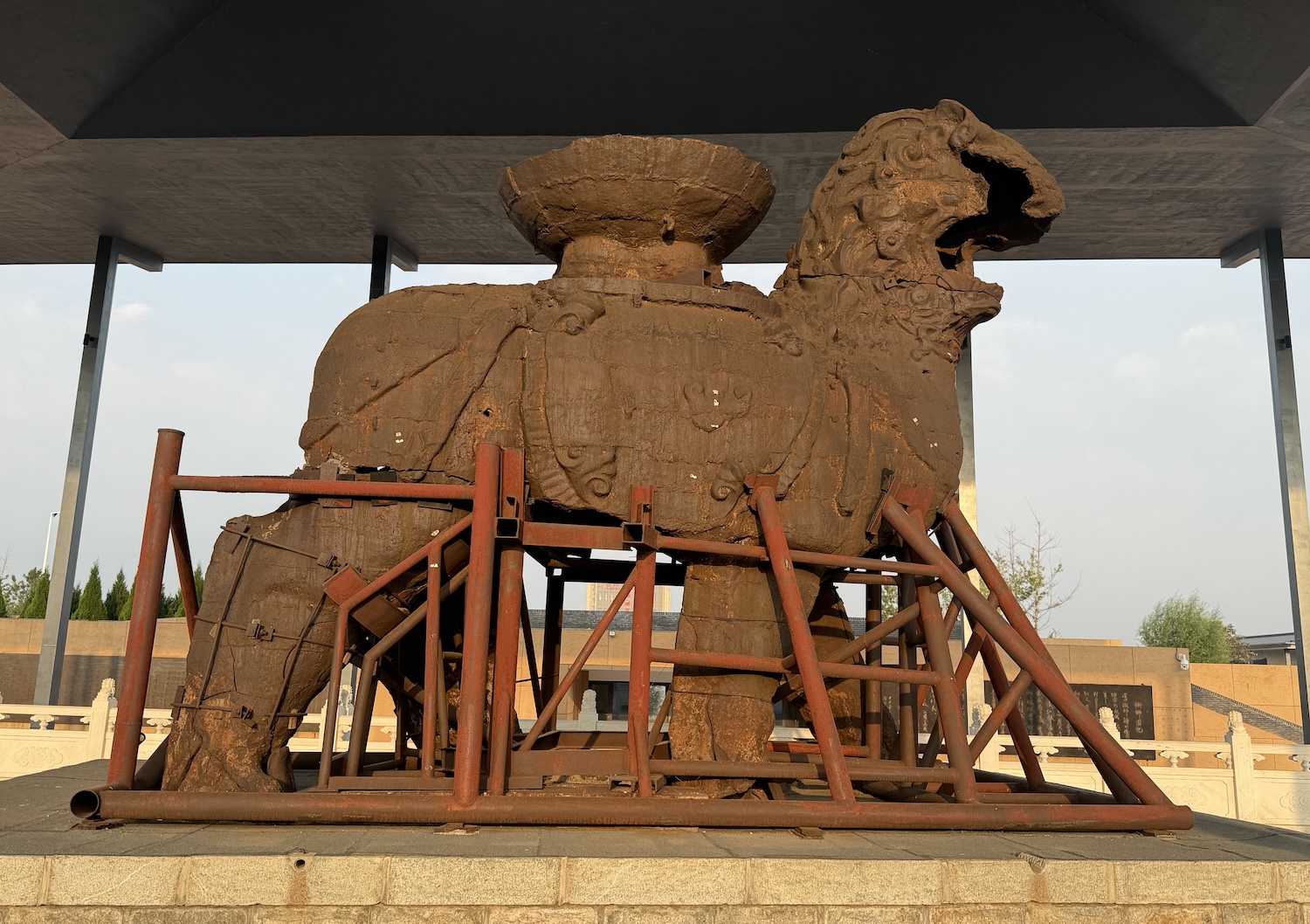
Almost 100km north of Yujiacun is another village in the hills, of less unusual construction but of more historic significance. Xibaipo, on the north shore of Gang Nanshuiku reservoir, is the other big-ticket appeal of a visit to Shijiazhuang. This is where Chairman Mao Zedong and his inner circle relocated in the spring of 1948 to command the decisive stages of the Chinese Civil War, the War of Liberation as it is officially known here, before moving to Beijing for the last push and to proclaim the People’s Republic of China on 1 October 1949.
To recap briefly, the Xinhai Revolution of 1911 overthrew not just Emperor Puyi, but it also put an end to almost four thousand years of dynastic rule. The new Republic of China was established on 1 January 1912 under provisional president Sun Yat-sen, who to this day is universally regarded as the founder of modern China. However, within six weeks he was obliged to concede power to Yuan Shikai, leader of Puyi’s Army, who sought to restore imperial decree. After a failed Second Revolution by Sun’s supporters in 1913, Yuan dissolved the National Assembly, outlawed the nationalist Kuomintang, which had led the Xinhai Revolution, and declared himself emperor. This triggered a rebellion that forced him to abdicate after just 83 days and plunged the country into chaos. From 1916, China was divided between competing warlords for twelve violent years.
In 1923, Sun established a rival regime in Guangzhou, and forged the First United Front, an alliance between the Kuomintang and the Communist Party, backed by the Soviet Union, with the aim of reunifying China. However, Sun died of cancer in 1925 and was succeeded by his acolyte Chiang Kai-shek, who from 1926 to 1928 led the Northern Expedition, a military campaign that nominally reunited China under a nationalist government based in Nanjing. Meanwhile, in 1927, after the Kuomintang suppressed communists in the Shanghai Massacre, and Chiang purged leftist nationalists in his own party, China fell into Civil War.
After Japan invaded Manchuria in 1931, the Kuomintang routed the Red Army, forcing the famous retreat of the Long March between October 1934 and October 1935 that brough Mao Zedong to leadership prominence. However, internal hostilities were mostly paused after Japan assaulted China more widely in 1937, when Chiang was compelled to form a Second United Front with the Communists. He led a joint military resistance right through until the end of the Second World War, when the Civil War immediately resumed.
Thanks to corruption in the Kuomintang leadership, and better military tactics by the smaller, poorer armed and rurally based Red Army, the Communists began to get the upper hand. It was at this point, between May 1948 and March 1949, that the Central Committee of the Communist Party, and the Headquarters of the People’s Liberation Army, relocated to Xibaipo. Mao, by now Party Chairman, and his two closest associates, Zhou Enlai, Chief of Staff, and Ren Bishi, Political Commissar, all lived here during that critical period.
Xibaipo is often seen as the birthplace of the new China as it was here they agreed the policies of their future regime, at the Second Plenary Session of the Seventh Central Committee, and it was from here they commanded the Three Great Campaigns – at Liaoshen, Huaihai and Pingjin – that won the war. As you know, Chiang and the Kuomintang leadership subsequently fled to Taiwan, creating a whole new source of geopolitical tensions.
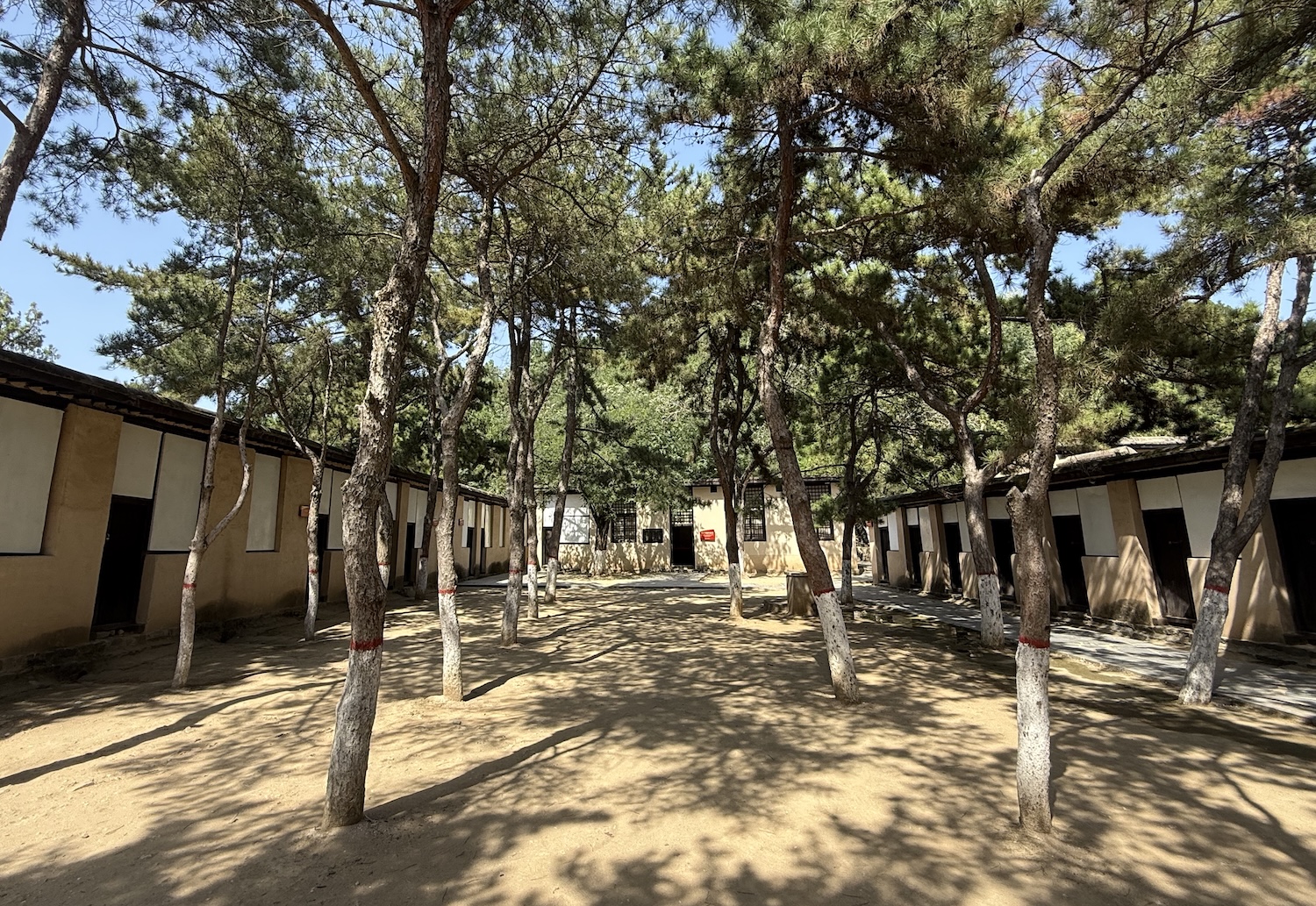
These private quarters and meeting rooms are now all open for public visits in what is officially rated an AAAAA tourist attraction. There is a veritable avalanche of local tour buses that pull up at the main car park and empty into little electric carts that ferry Chinese sightseers ten minutes up the road where there are dozens of little brown brick buildings and several underground tunnels amid the forest. I doubt very many foreigners ever come here, which is a real pity.
A ten-minute walk towards the reservoir leads to an enormous exhibition – sadly only in Chinese – charting the official history of victory. Around it are numerous memorials and statues, including a 40m-tall obelisk inscribed with Mao’s famous poem, The Long March. It was all built in 1978, after the Chairman’s death, when Deng Xiaoping started opening China to the world.
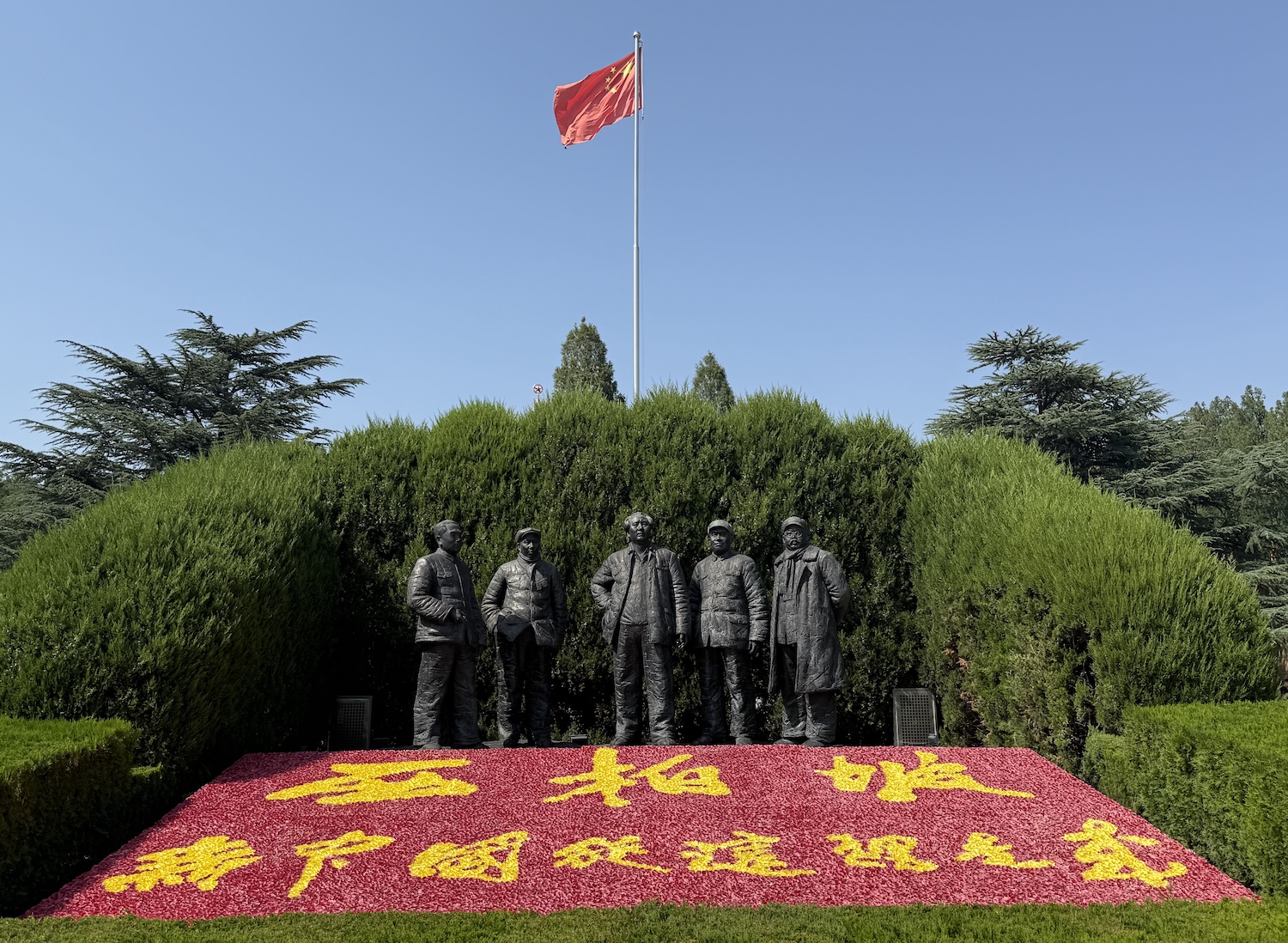
From Xibaipo, it is 75km back southeast to the northwest outskirts of Shijiazhuang. Pilu Temple, dating to the Tang age in the ninth century, is not especially architecturally interesting, but its murals, added in the Ming period in the fourteenth century, are treated as national jewels. Not only are they revered for their exquisite painting and gilding techniques, but also they have unusually diverse content, with Buddhist, Confucian and Taoist figures all depicted.
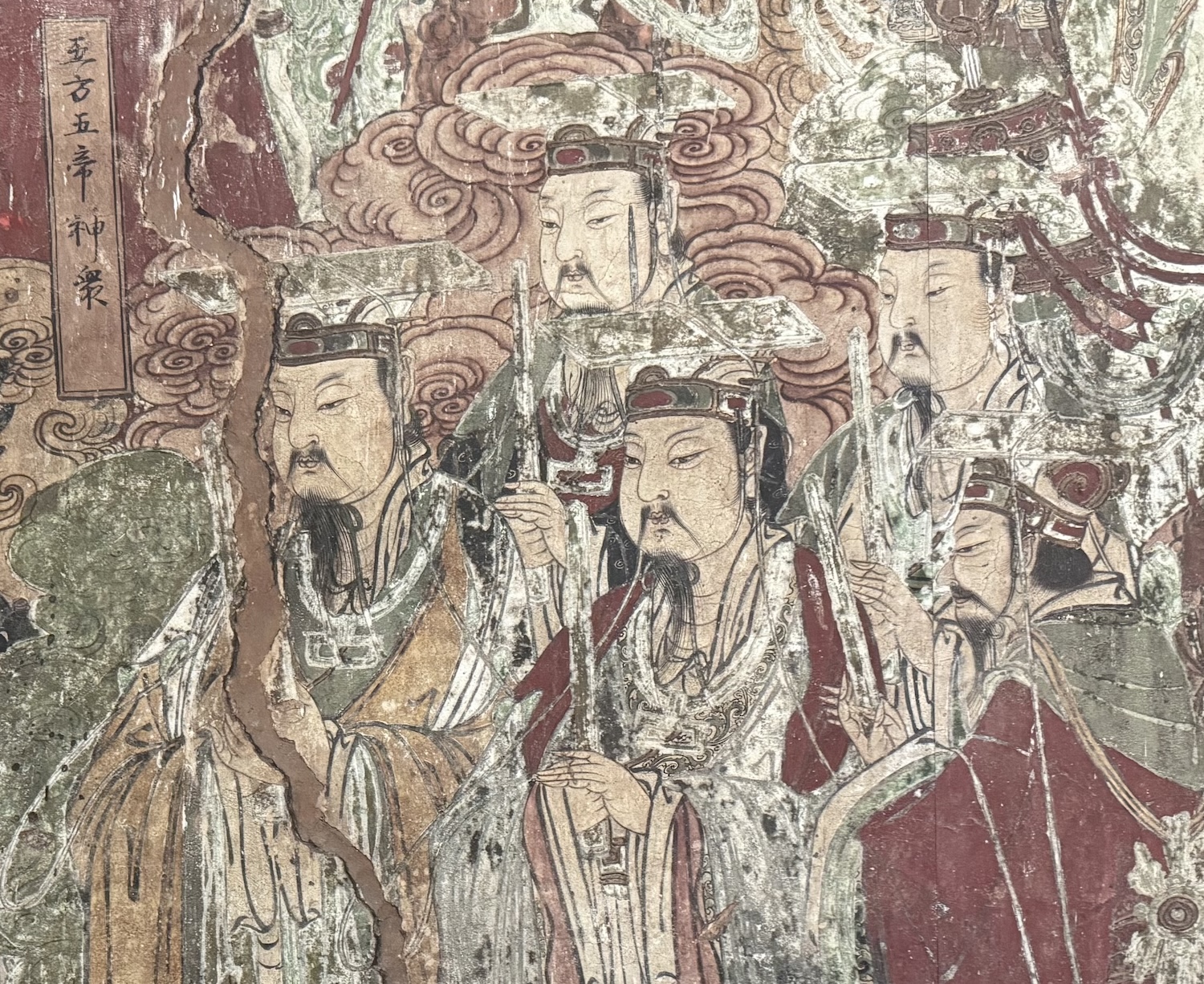
The last of the Four Treasures of Hebei is a bit further away, 230km east of Shijiazhuang, in Cangzhou. This cast-iron sculpture, the oldest in China and the largest in the world, known as the Iron Lion, dates from 953, weighs 40 tonnes, and stands 6m high. It is rather rusted and dented now, not least from too many repairs, and kept under a roof in the centre of a park behind a ticket office that like most of these sites is open from 8.30am to 5pm every day.
Jiaozhuanghu’s Tunnels
After the Japanese invasion of Manchuria in 1931, alarm spread through the villagers of Hebei. Within a decade, the residents of Jiaozhuanghu, 70km northeast of central Beijing, had gone so far as to build an 11.5km network of tunnels they could use to launch primitive guerrilla tactics to resist any further Japanese incursion.
An 800m section of these Jiaozhuanghu Tunnels is open to visit at the Warfare Site in the town, which also has a highly inventive museum built into some of the original dwellings. The narrow passageways were accessed from concealed entrances dug under ovens and beds and so on, even from Niangniang Temple, similar to in the film The Great Escape, and they feature offshoots that open into command posts, meeting rooms and hidden gun holes.
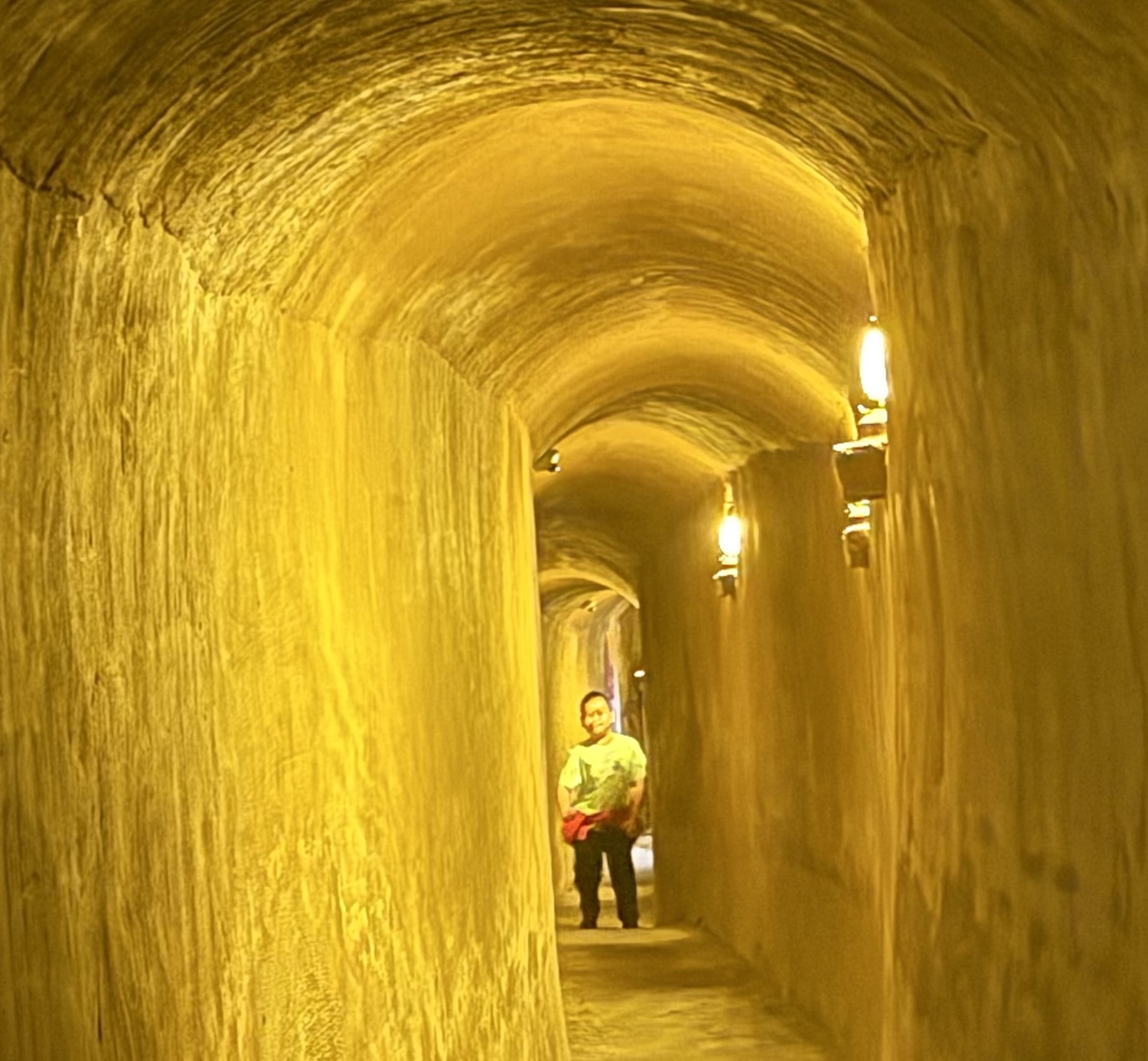
The museum, which claims the tunnels were used in more than 150 separate battles, concludes with this uplifting peroration: “The revolutionary struggles of the people of Jiaozhuanghu are a vivid epitome of how the CPC united and led the Chinese people to achieve the great success of the New Democratic Revolution through arduous battles and countless hardships.” A perfect upsum on which to end our tour through the history of Hebei.
(Please note the Jiaozhuanghu Tunnels are different to the Underground City of Dixia Cheng, a separate network of bomb shelters built in Beijing during the Cold War of the 1970s in case of a nuclear conflict with the Soviet Union. These were also opened to the public after 2000, though they have been closed since 2008 for reasons unknown.)
Tianjin Metropolis
Tianjin, which translates literally as “the port that emperors use”, is only 120km south-east of Beijing, just half-an-hour by high-speed train. It is the fifth largest city in China, home to 15m people, and well worth a visit. We came for a long weekend in the summer when it was throbbing with Chinese tourists, though we saw only a handful of foreigners in the whole metropolis.
A good way to start is to take an hour-long boat tour along the Haihe River, from which you will see old men swimming, fishing, and rolling their T-shirts to reveal their Beijing Bellies, and young women posing for selfies in their long-peak vizors under colourful parasols, while hundreds of people on electric motorbikes zoom up and down the bankside pathways, usually without helmets but often while smoking cigarettes. The imposing colonial-style buildings that face the river on both sides, some original and some recent imitations, are neon-lit golden and spangly at night, foregrounding the modern skyscrapers beyond them that are taking over the city.
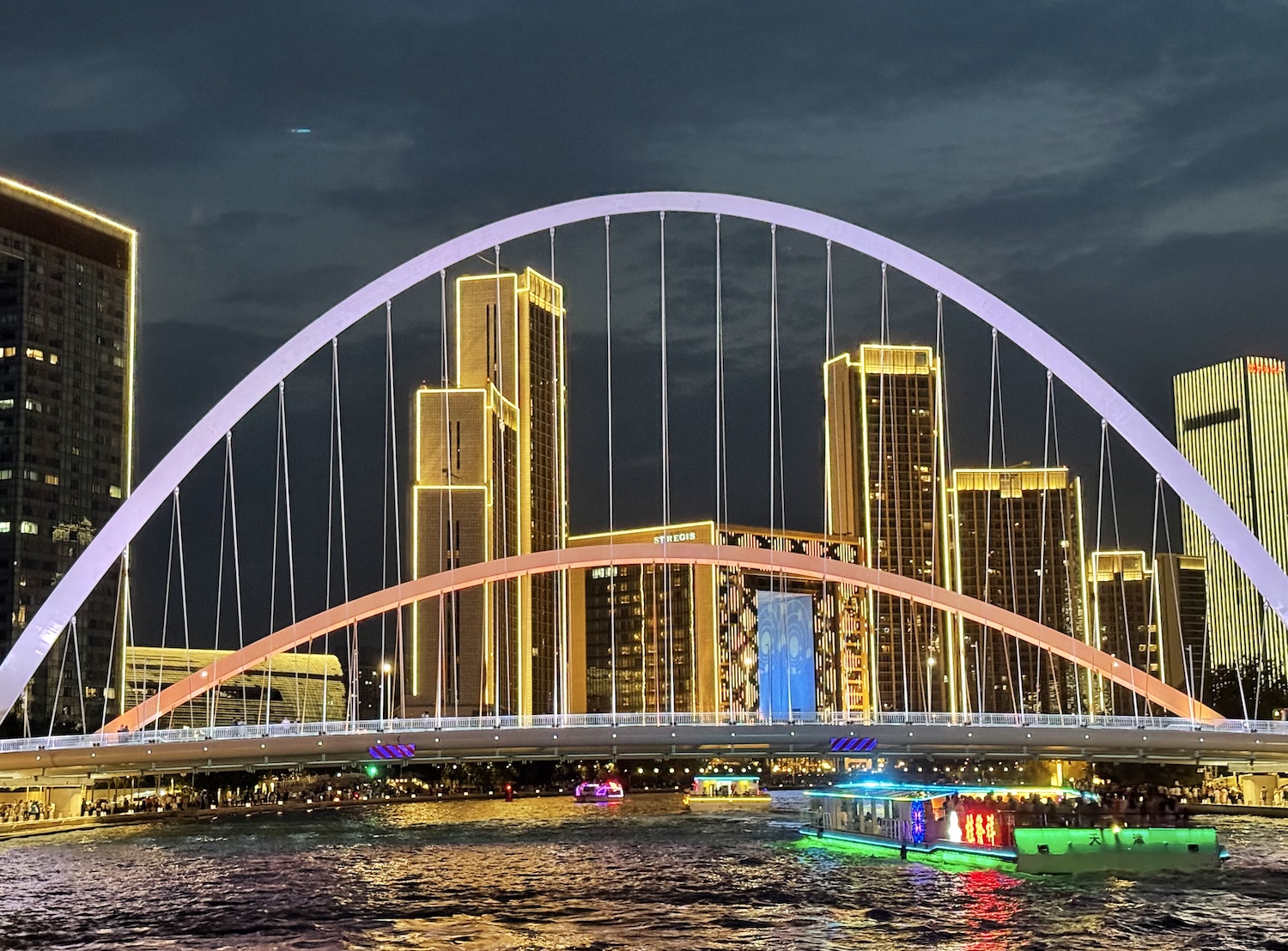
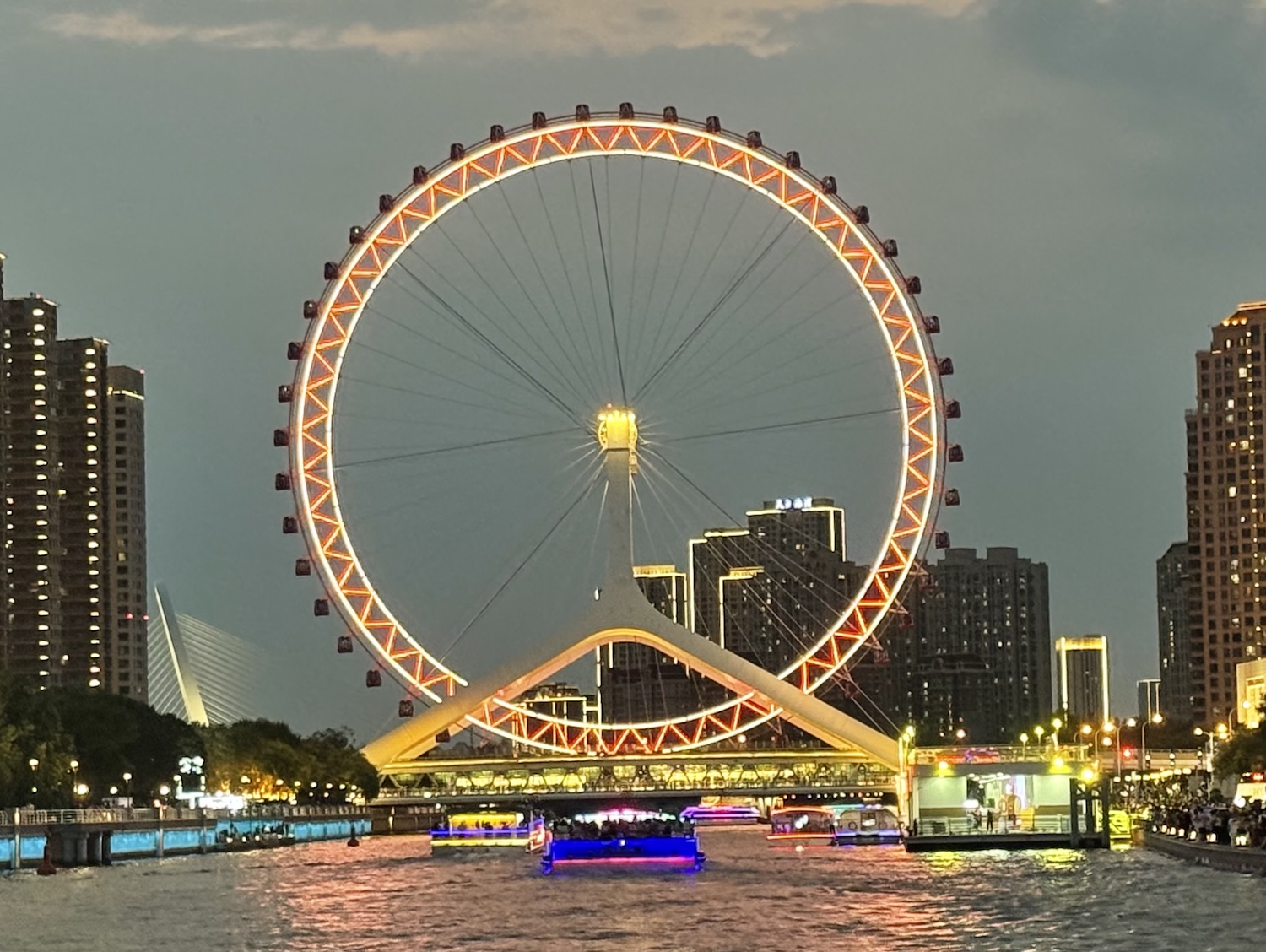
At the northern end of the river is the Tanjin Eye, a Ferris Wheel straddling the Haihe where locals come to relax on the steps down to the water. Incidentally, the Grand Canal also passes through Tianjin. This is the longest artificial waterway in the world, starting at Jicheng in Beijing, then flowing for 1,776km through Hebei and Tianjin as well as Shandong, Jiangsu and Zhejiang provinces all the way to Hangzhou beyond Shanghai, connecting the Yellow and Yangtze Rivers. The oldest sections date to the fifth century BC, but they were first joined together during the Sui Dynasty of 581-618 AD, and it was all significantly restored and its route altered between 1271 and 1633. The Grand Canal enters Tianjin from Tongzhou before heading south along the course of the Yongding River, a tributary of the Haihe.
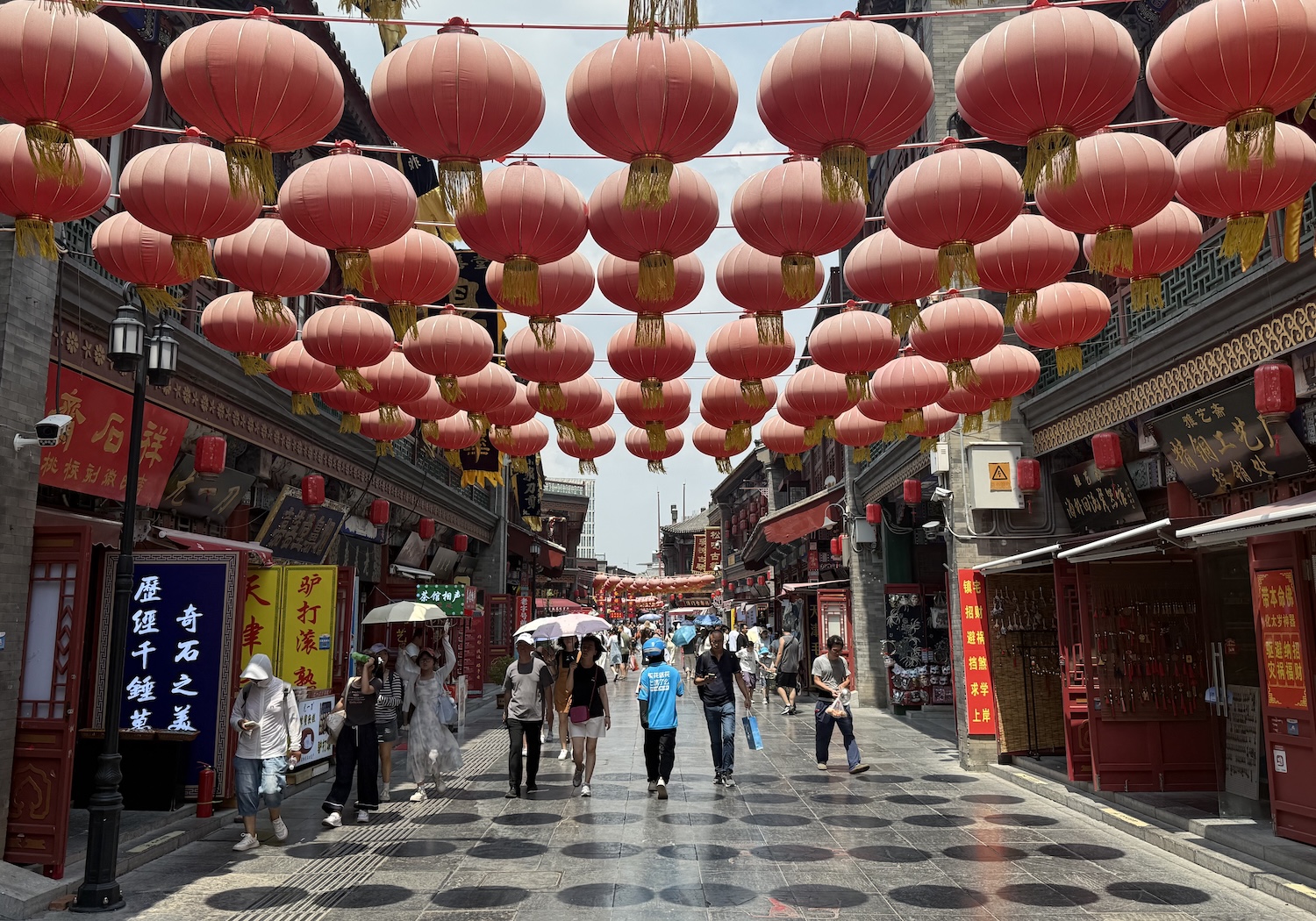
Tianjin was founded as a walled city in 1404 to help protect the emerging powerhouse of Beijing, which became the imperial capital less than twenty years later. The only remnants of that original settlement are in the area around literal-named Ancient Cultural Street, to the north on the west bank of the Haihe. This Old Town has been turned into a flashy district of food stalls and souvenir shops specialising in Mao statues, Mao posters and Mao’s Little Red Book.
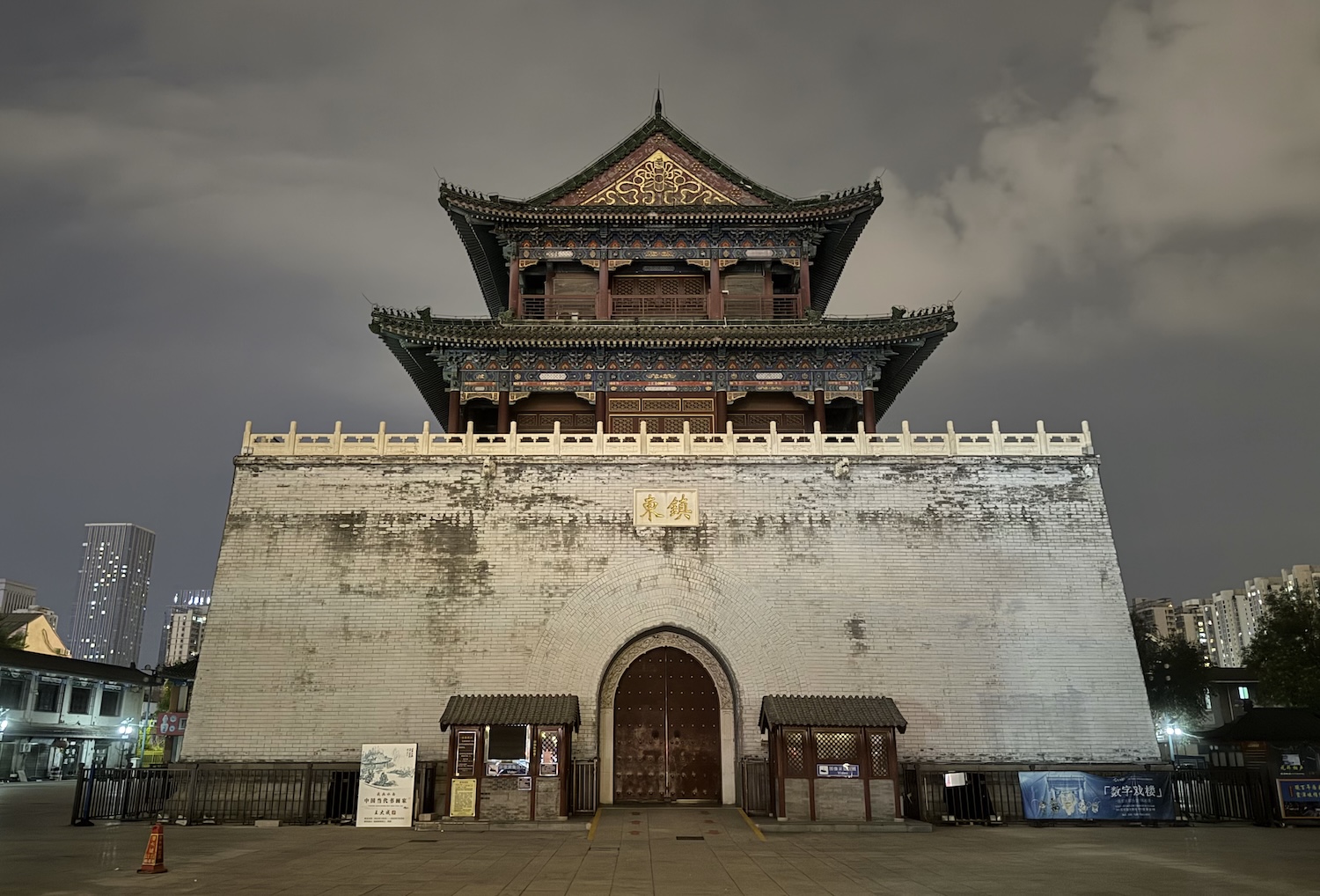
Also around here is the Drum Tower, which is actually a bell tower. It was originally built under the Ming Dynasty, though it was destroyed during the Cultural Revolution, so what we see today was put up in 2001 to honour the past. Opposite the Drum Tower is the Guangdong Guildhall, built in 1907, where at the centre of a courtyard complex is a wooden theatre for Peking Opera performances on weekend afternoons.
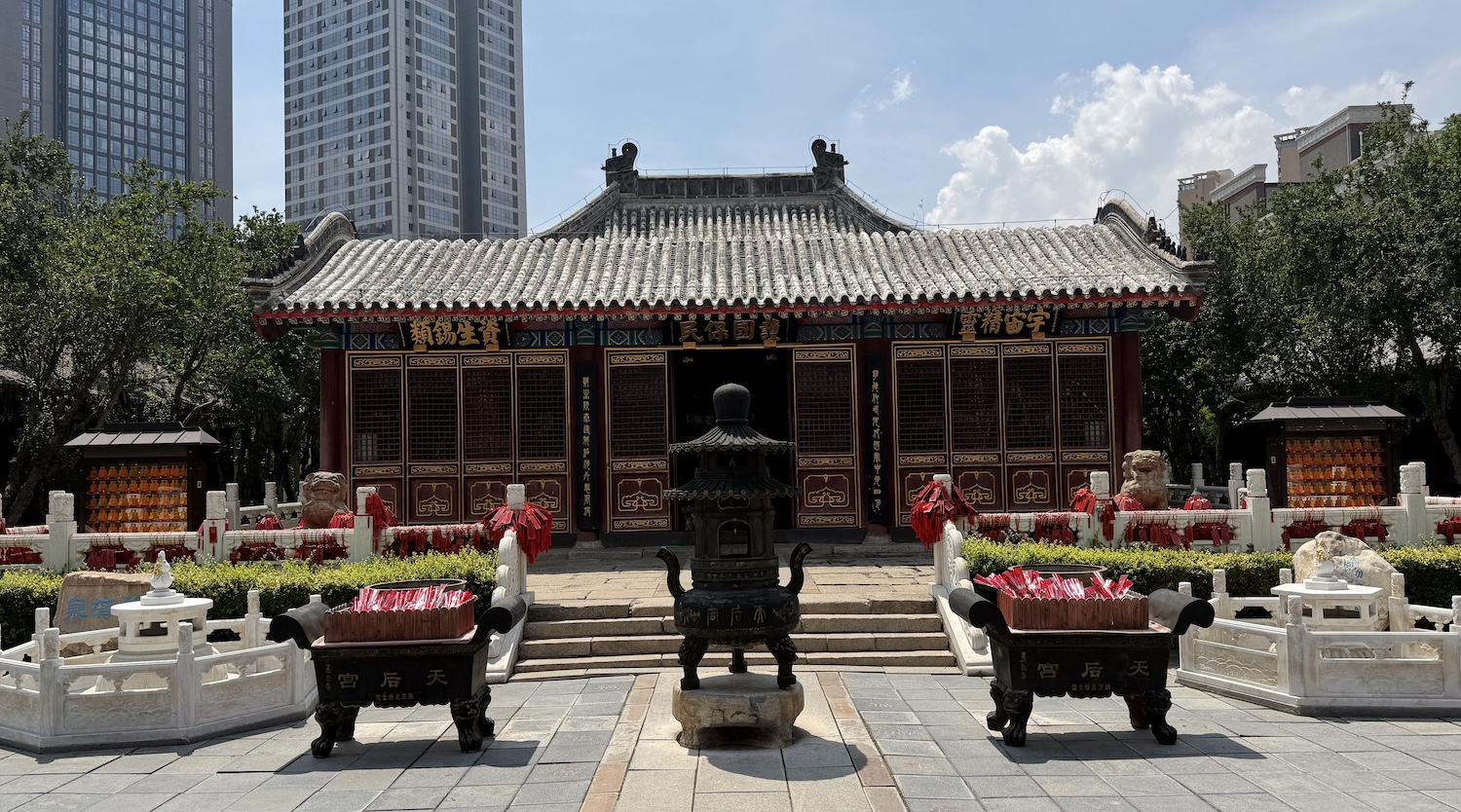
The standout building around here though is the Palace of the Queen of Heaven, the oldest extant structure in Tianjin, predating the settlement’s founding. This Taoist temple was erected in 1326 and is dedicated to Mazu, the goddess of the sea.
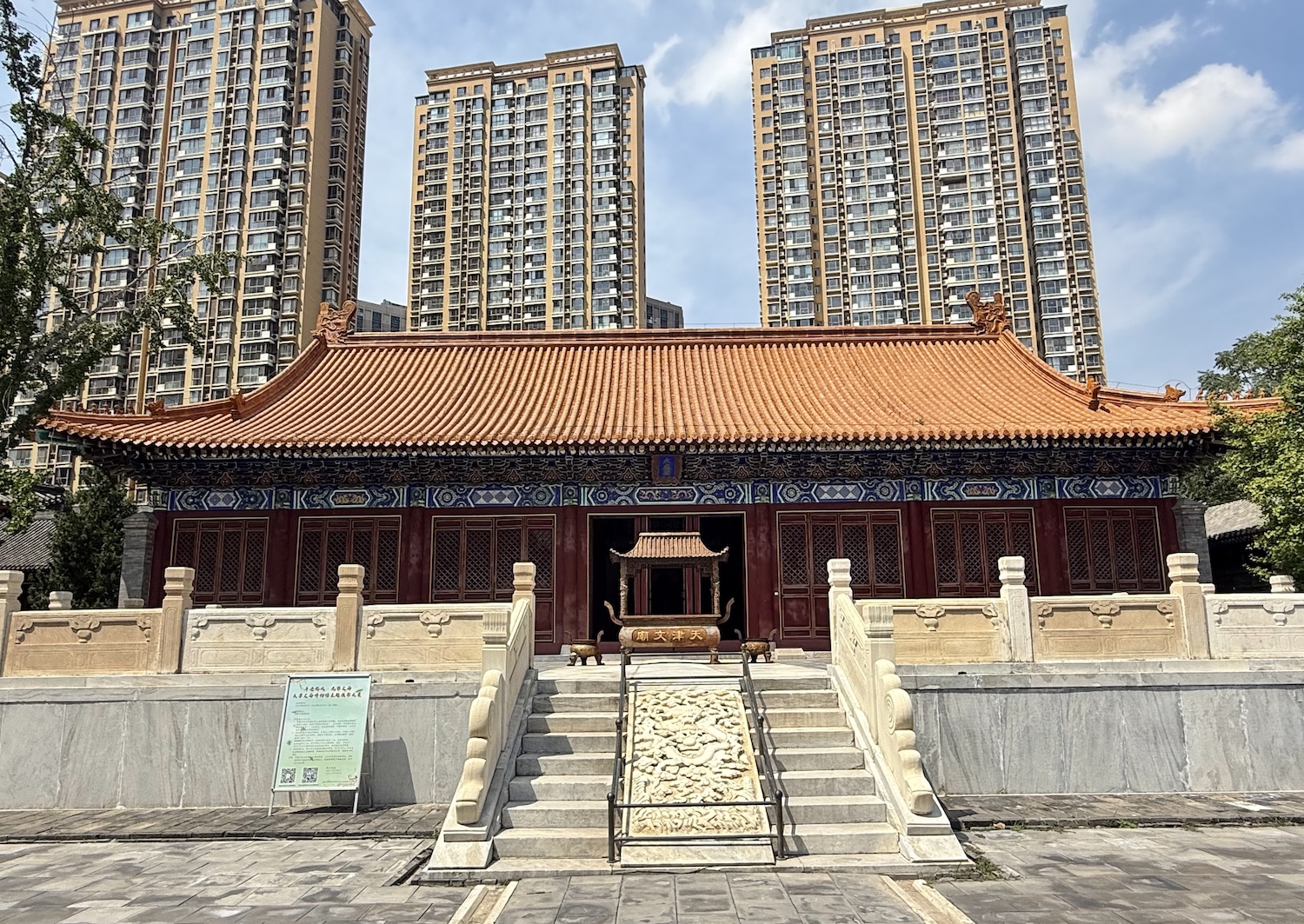
Close by is another ancient shrine, the Confucian Temple. The prefecture structure was opened in 1436, and the county building was added in 1734, making it two for the price of one.
Tianjin thrived and expanded in the years after China lost the Second Opium War in 1860, when the Qing Dynasty was forced to establish several Treaty Ports, from which the European conquerors were able to trade opium and other goods. This was by far the biggest of them in the north of the country.
The British and French generated affluence and resentment in equal measure, so wealthy Tianjin also became a hotbed of anti-Imperialist sentiment. French priests and nuns were attacked in the historic Tianjin Incident of 1870. That was followed by the famous Boxer Rebellion that raged from 1899 to 1901. It was organised not by boxers at all, but in fact and more logically by martial arts practitioners, led by the magnificently named Militia United in Righteousness. It was put down by the Eight-Nation Alliance, which inflicted the humiliations of occupying and looting Beijing as well as levelling the 1404 walls of the Old Town of Tianjin as they claimed they needed a clear view to keep better watch for trouble.
Colonial territorial concessions had been granted initially to Britain and France after 1860, but by the turn of the twentieth century they had also gone to Japan, Germany, Russia, Italy, Belgium and the Austro-Hungarian Empire. These lands were all occupied by Japan at the end of 1941, and finally formally returned to China only in 1943, though complete control was delayed until the end of the Second World War and the defeat of the Japanese Imperial Army.
The concessions were mostly in the district of Wu Da Dao, to the south of the city on the west bank of the Haihe. Here the foreign powers all built their own barracks, prisons, schools, hospitals and churches, so in this dense network of streets we find a jumble of British mansions, French châteaux and Bavarian villas. Today, there are local maps and signposts to guide your walk in this highly polished neighbourhood, with many plaques marking significant examples of the “historical and stylistic architecture” of the area.
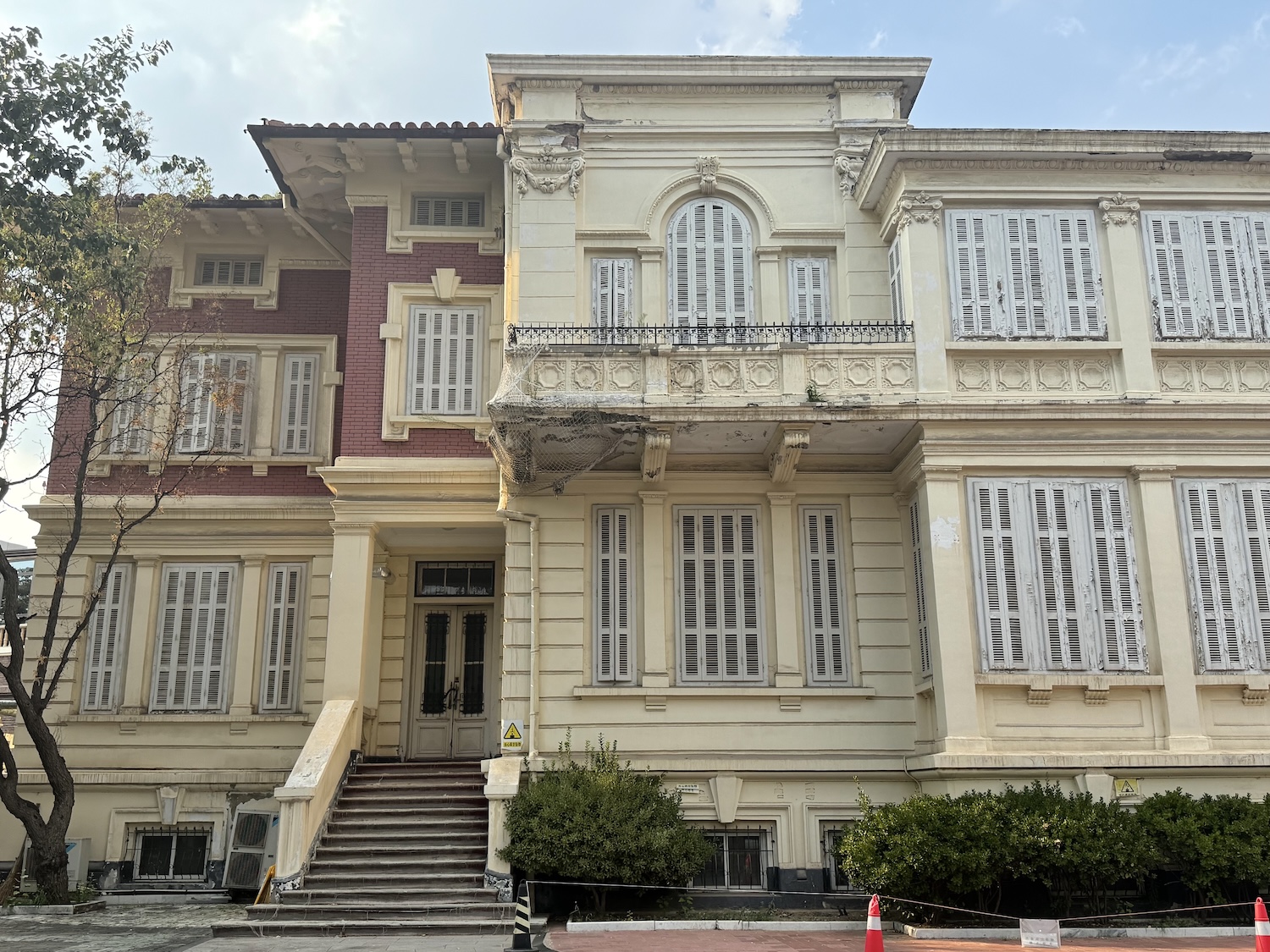
These days, Wu Da Dao, or literally the Five Grand Avenues, is also full of atmospheric restaurants. The most cherished is the main branch of the Goubuli chain, established in 1858 and particularly lauded for its excellent steamed buns, called baozi.
Also here is Er Duo Yan, renowned for its “ear-hole sticky rice cakes”. All gold leaf, intricate metalwork and extravagant chandeliers, this 1892 landmark is one of only two restaurants in Tianjin honoured by Black Pearl, the Chinese equivalent of the Michelin Guide. The other is the Jin House, a Cantonese also in over-the-top décor, in the Four Seasons Hotel.
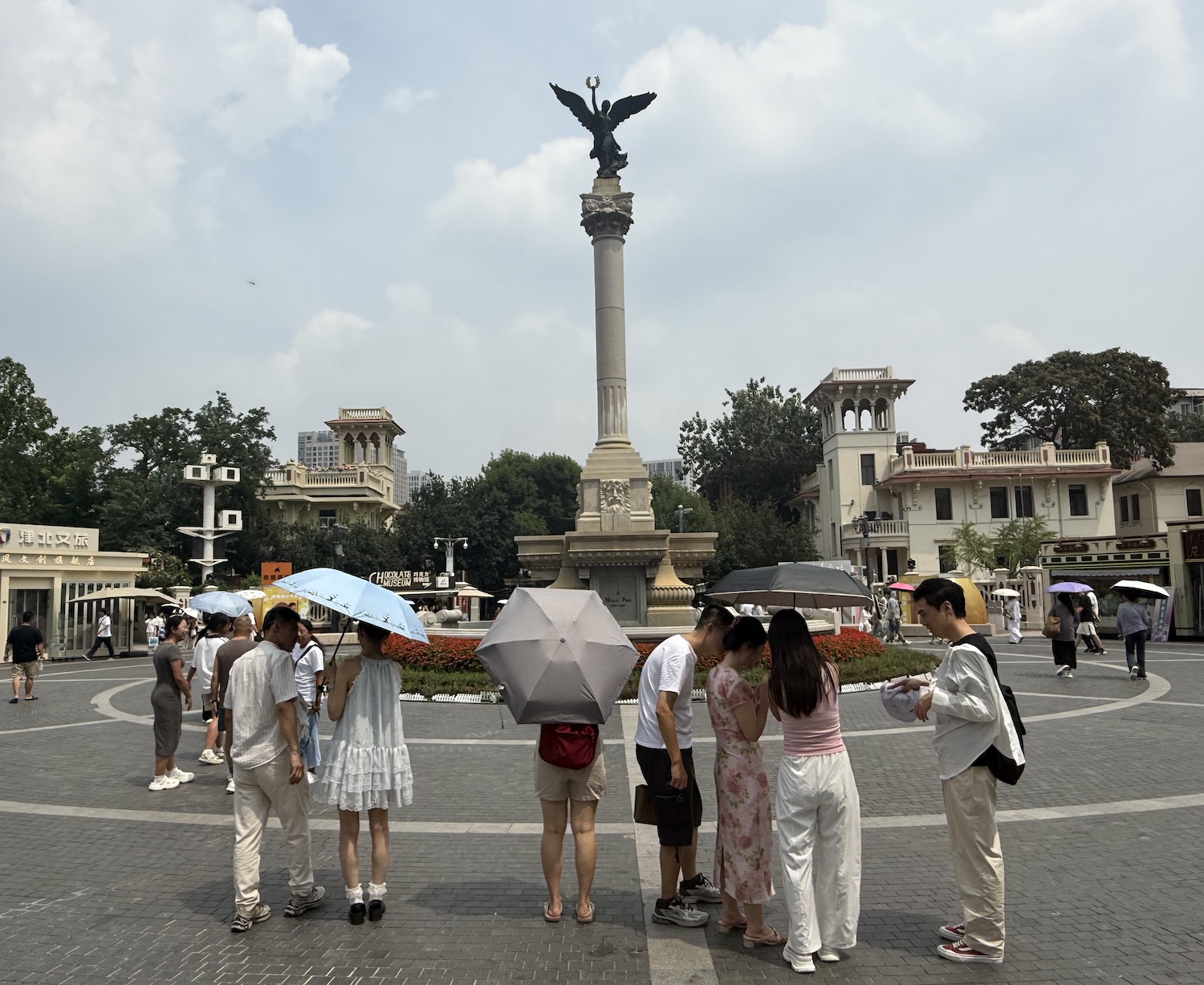
Another popular district for eating and drinking is north of the Railway Station and the Millennium Clock Tower, to the east of the Haihe. Originally the Italian concession, this is now called the “Italian-style area” (though very much with Chinese characteristics). It is centred on Marco Polo Square (Marco Polo had been in China with Kublai Khan of the Yuan Dynasty between 1271 and 1295) and Dante Square (there is no evidence that Dante Alighieri ever came to China). These days this nest of streets is home to cheesy spaghetti outlets as well as oodles of well-lit Chinese restaurants and bars.
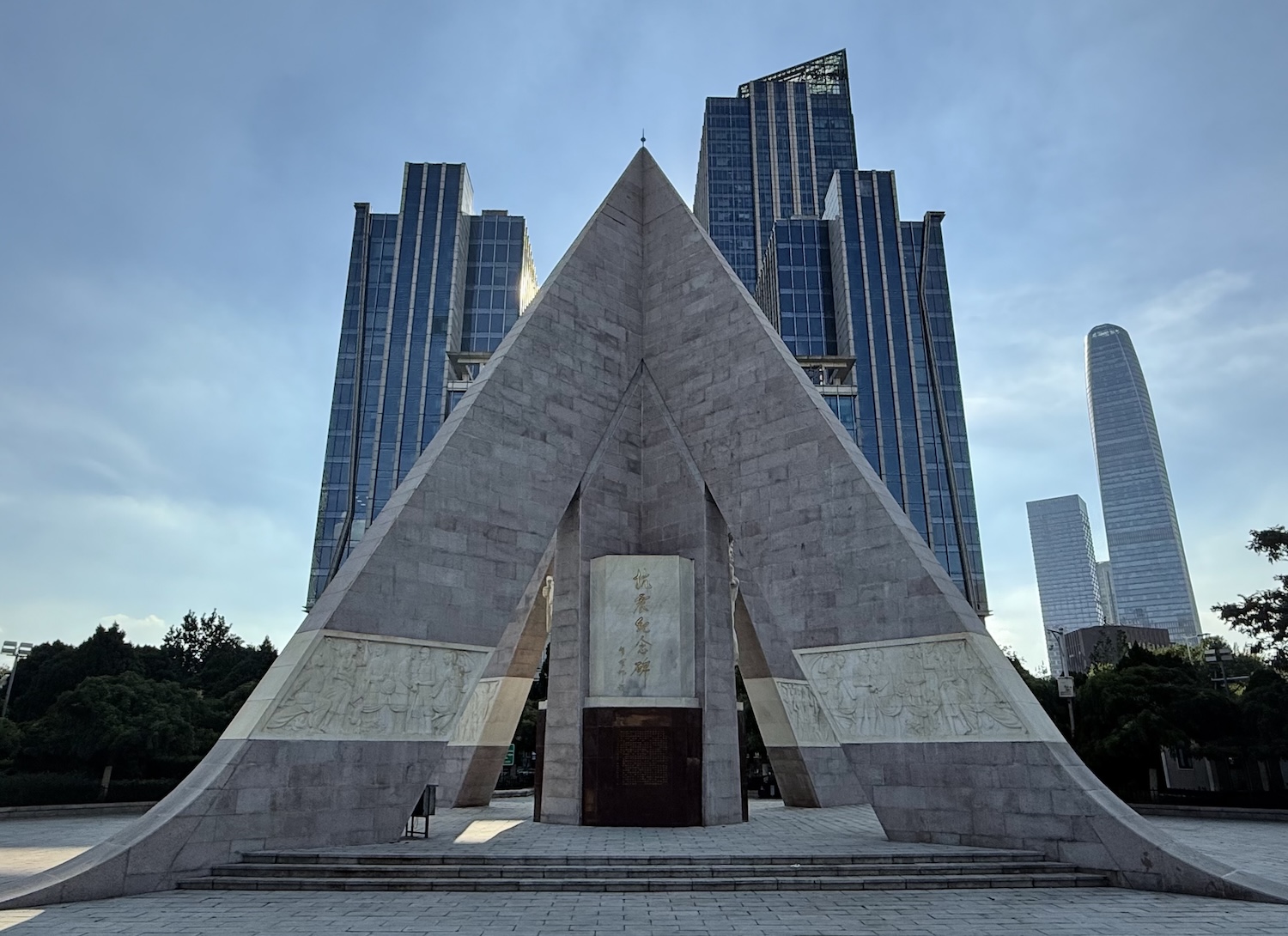
Some of these and other buildings in the city were damaged by the 1976 earthquake, which killed 24,000 people here, 140km from the epicentre in Tangshan. There is a memorial to its victims near Wu Da Dao.
The modern centre of Tianjin is based around two pedestrianised drags south of the Old Town. Heping Road, where you will find the likes of Apple, the NBA store and countless other international brands, could be in any world city and feels a little soulless. Binjiang Avenue, on the other hand, is always buzzing with teenagers at the big Chinese brand outlets such as Anta sports and Mi electronics, drafted in by hawkers at the shop doors up step-ladders with sandwich-boards and yelling into megaphones.
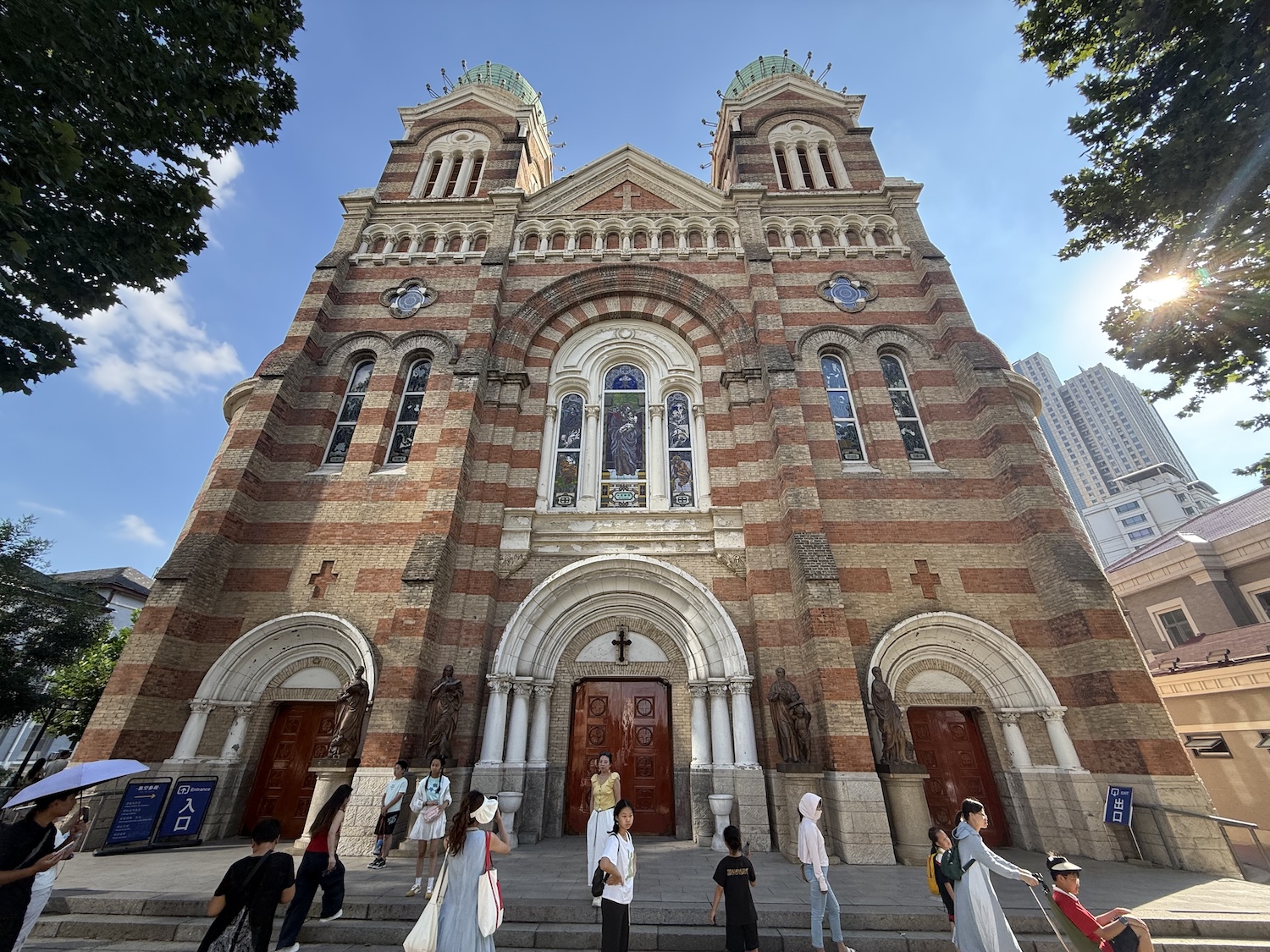
Amid this chaos is the tranquillity of St Joseph’s Cathedral, shipped lock, stock and barrel from France in 1916.
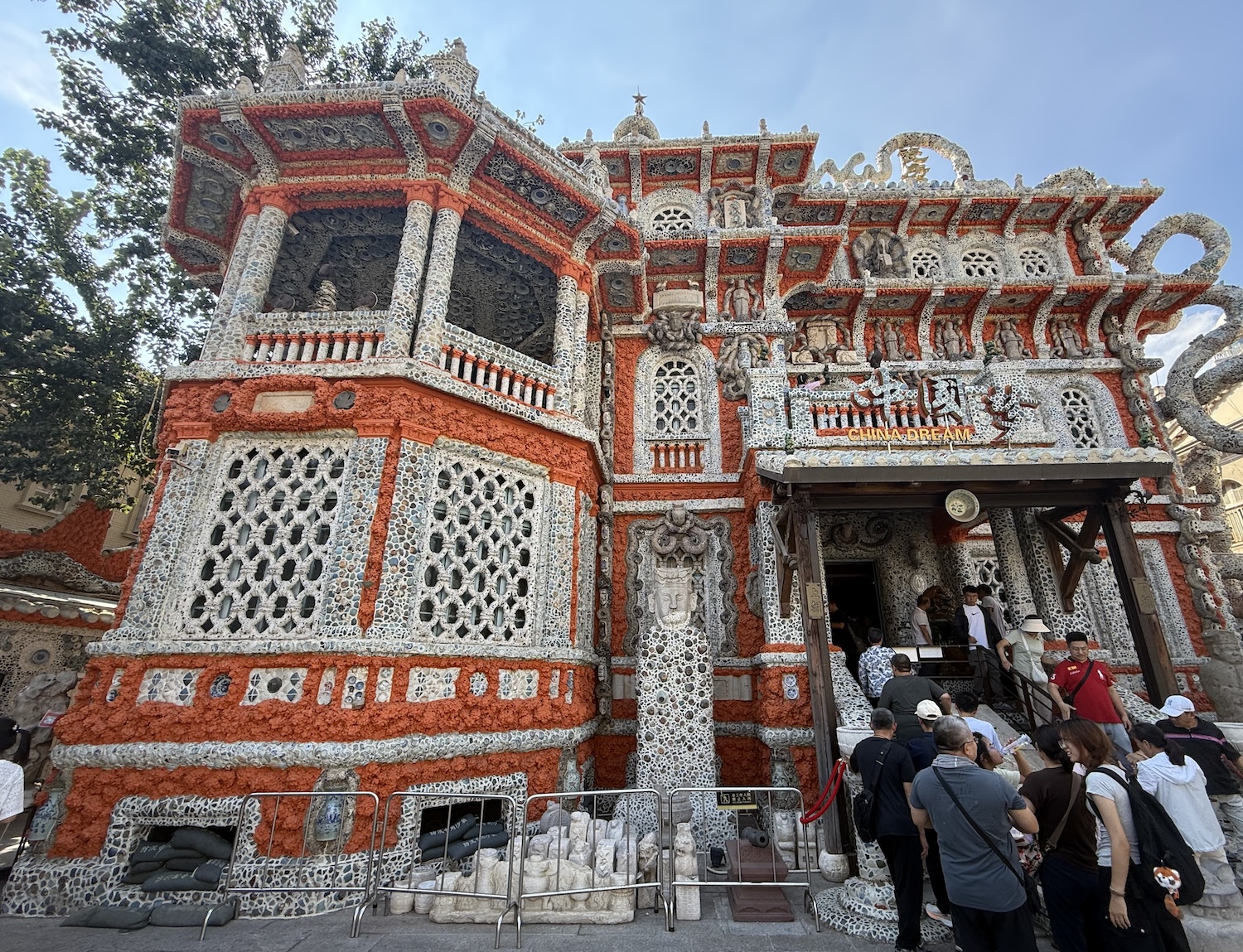
Also here is the China House. Built in a French style in the 1920s, it was acquired at the millennium by a Chinese artist who covered it in exquisite porcelain decorations, inside and out, thereby turning it into a locally revered art work that swarms with visitors.
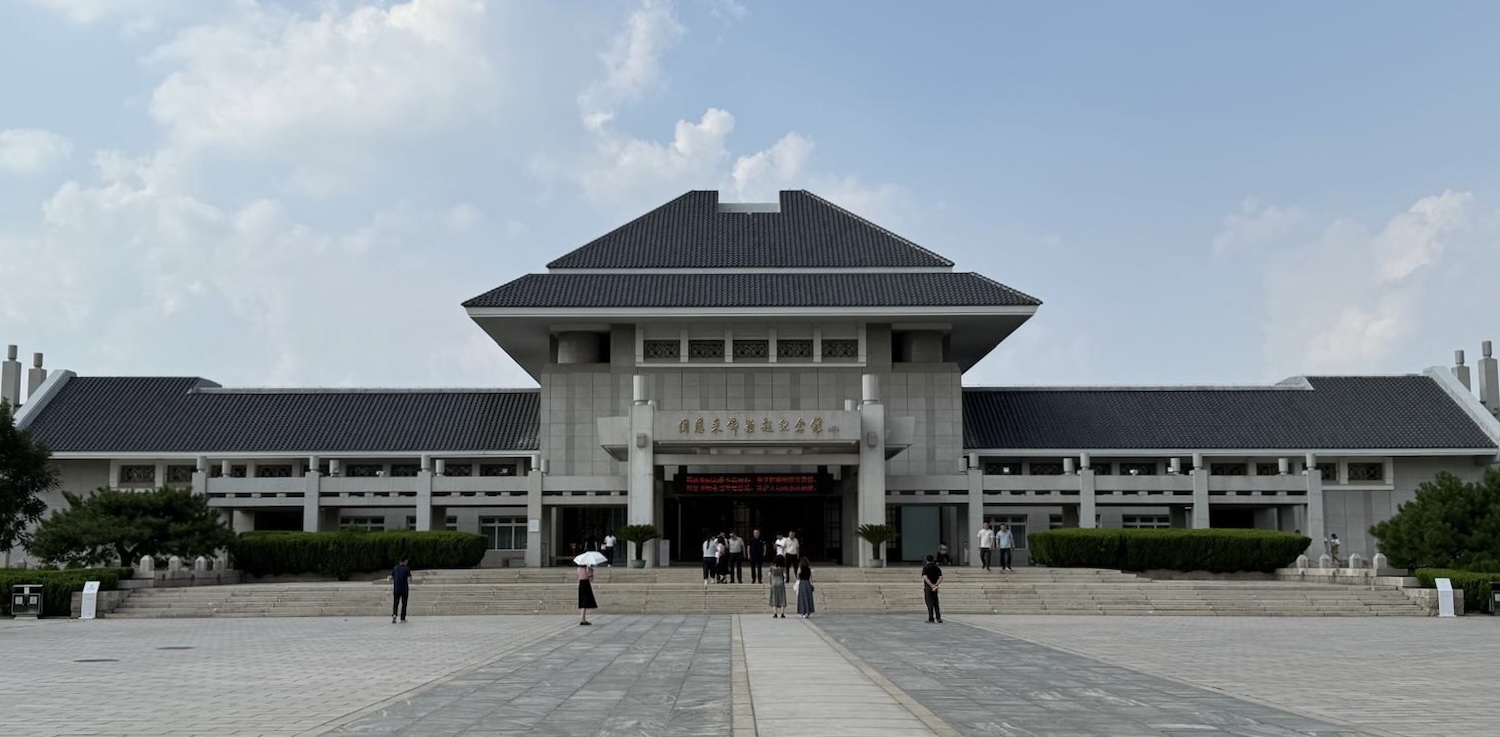
In the southern suburbs, not far from the elegant TV Tower, is the country’s principal memorial to Zhou Enlai. Though not especially famous in the West, Zhou is one of the most significant figures of the Communist Revolution. We last came across him at Mao’s side in the bunkers at Xibaipo, outside Shijiazhuang, during the Civil War in 1948-1949. He went on to serve as the first Premier of the People’s Republic of China, effectively Mao’s deputy, from 1954 until his death from natural causes in 1976. The memorial is devoted to Zhou and his wife, Deng Yingchao, who were both cremated, so it is less a mausoleum and more a museum, spread over three floors in a large garden. Deng was a powerful communist figure in her own right, too, serving for many years on the Politburo of the CCP.
Tianjin has an unusually excellent selection of high-end hotels. On the river there are three that are highly recommended: the Astor, China’s oldest foreign-run lodgings, opened in 1863 by a British missionary; the Shangri-La, which is reliably superb as in all Chinese cities; and the St Regis, with a terrace ideal for its signature Lapsang Souchong Bloody Mary. In the Old Town is the Pan Pacific, and in Heping is the Ritz Carlton.
Binhai New Area
Tianjin has been a standalone administrative metropolis since 1968, and it was made a Development Zone in 1984 as part of the economic reforms of Deng Xiaoping. Since then, business and industrial centres have sprung up in the Binhai New Area on the coast of Bohai Bay, where more than half the Fortune 500 now have bases in the emerging downtown and at the nearby container port, the largest in north China.
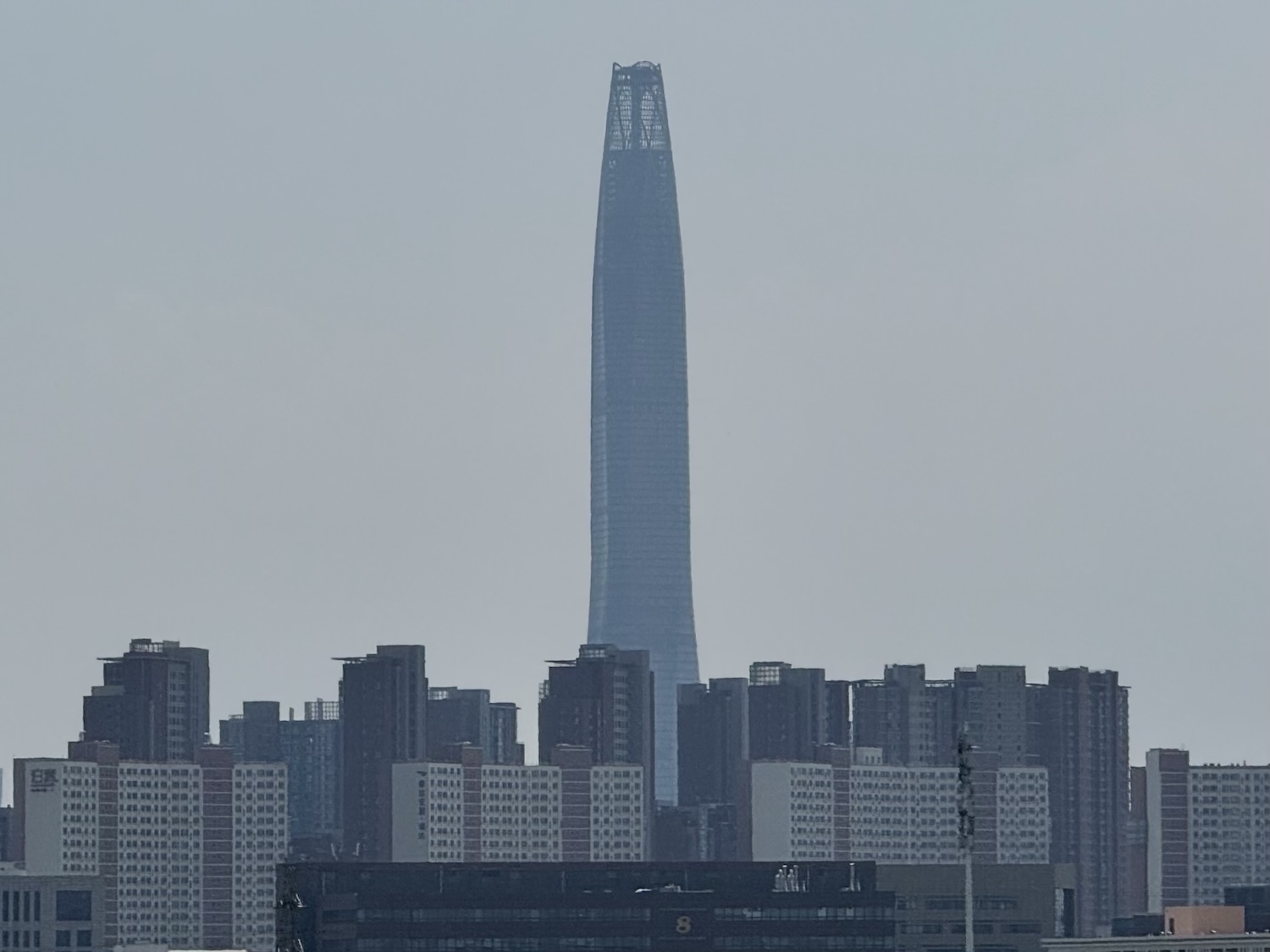
Although the downtown area is small and charmless, it has one tall poppy, the CTF Finance Centre. Opened in 2019, at 530m it is currently the joint-third highest building in China and the joint-eighth in the world. It dwarfs the nearby skyscrapers and the International Convention and Exhibition Centre, which hosts the “Summer Davos” organised by the World Economic Forum every June, a magnet attracting world leaders and business titans to balance similar forums in Switzerland and Saudi Arabia. The place to stay out here is the InterContinental.
Binhai is treated as an eastern suburb of Tianjin, though it is in fact 60km away and far from contiguous as there are oceans of green space between the urban centres. The best way to get to Binhai from Tianjin is by cab, and for curious visitors there are three noteworthy points of interest.
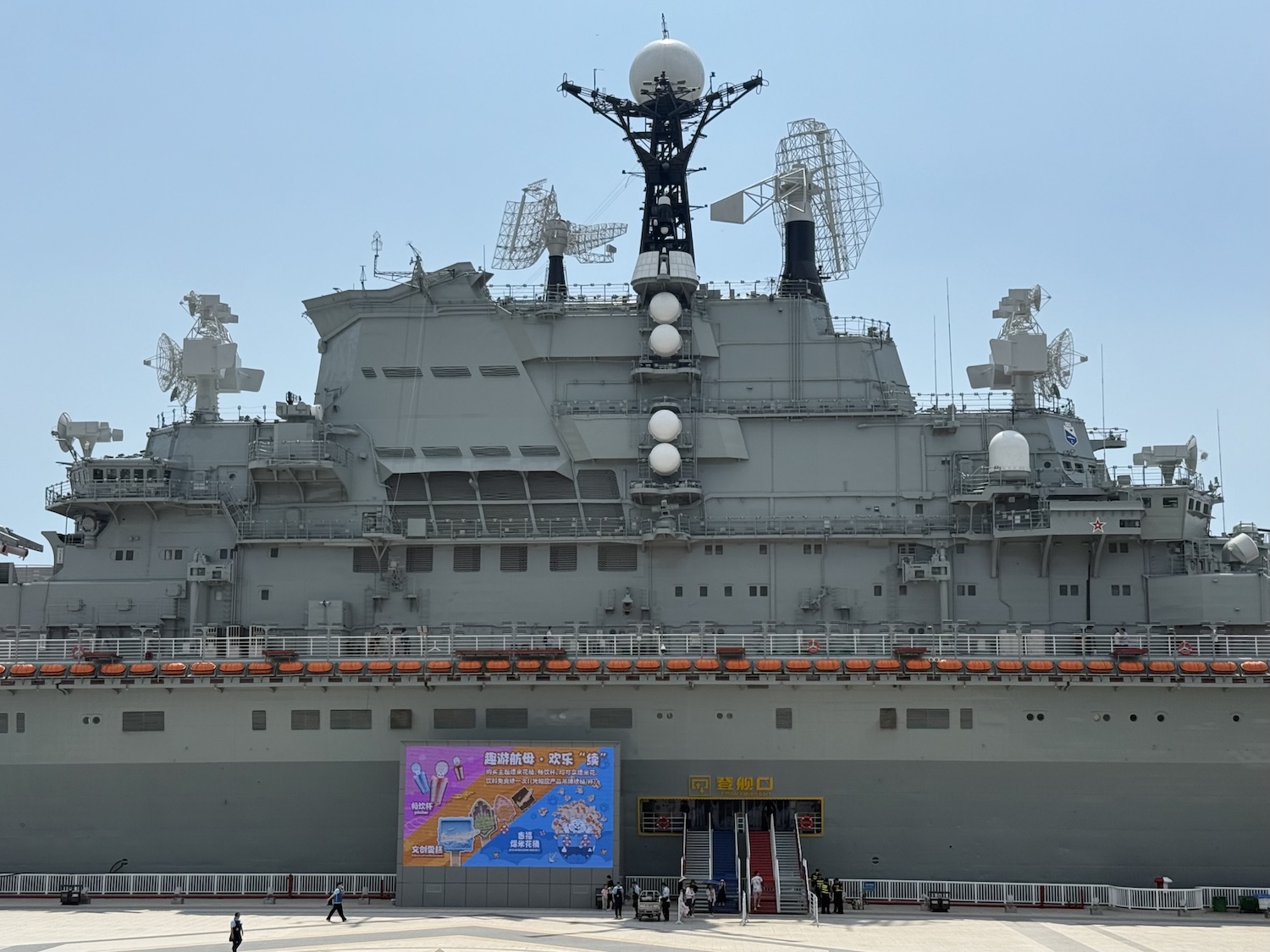
To the north is a bizarre bubble of Russia. Beyond the massive ticket office shaped in homage to St Bazil’s in Red Square, at the end of a Main Street straight out of Disneyland, but with stores selling vodka and Matryoshka Dolls, and theatres showing Cossack dancing, is a theme-park of Russian military hardware. There are T-72 tanks and MiG-29 fighter planes in the square, as well as a submarine and an aircraft carrier in the water, which can be explored by foot and by gyrocopter. As this piece in Vintage Aviation News explains authoritatively, the Kiev aircraft carrier was the flagship of the Soviet Navy throughout the 1980s Cold War. When we were here, the vessel, and the whole park, were crawling with local visitors, though we seemed to be the only non-Chinese around.
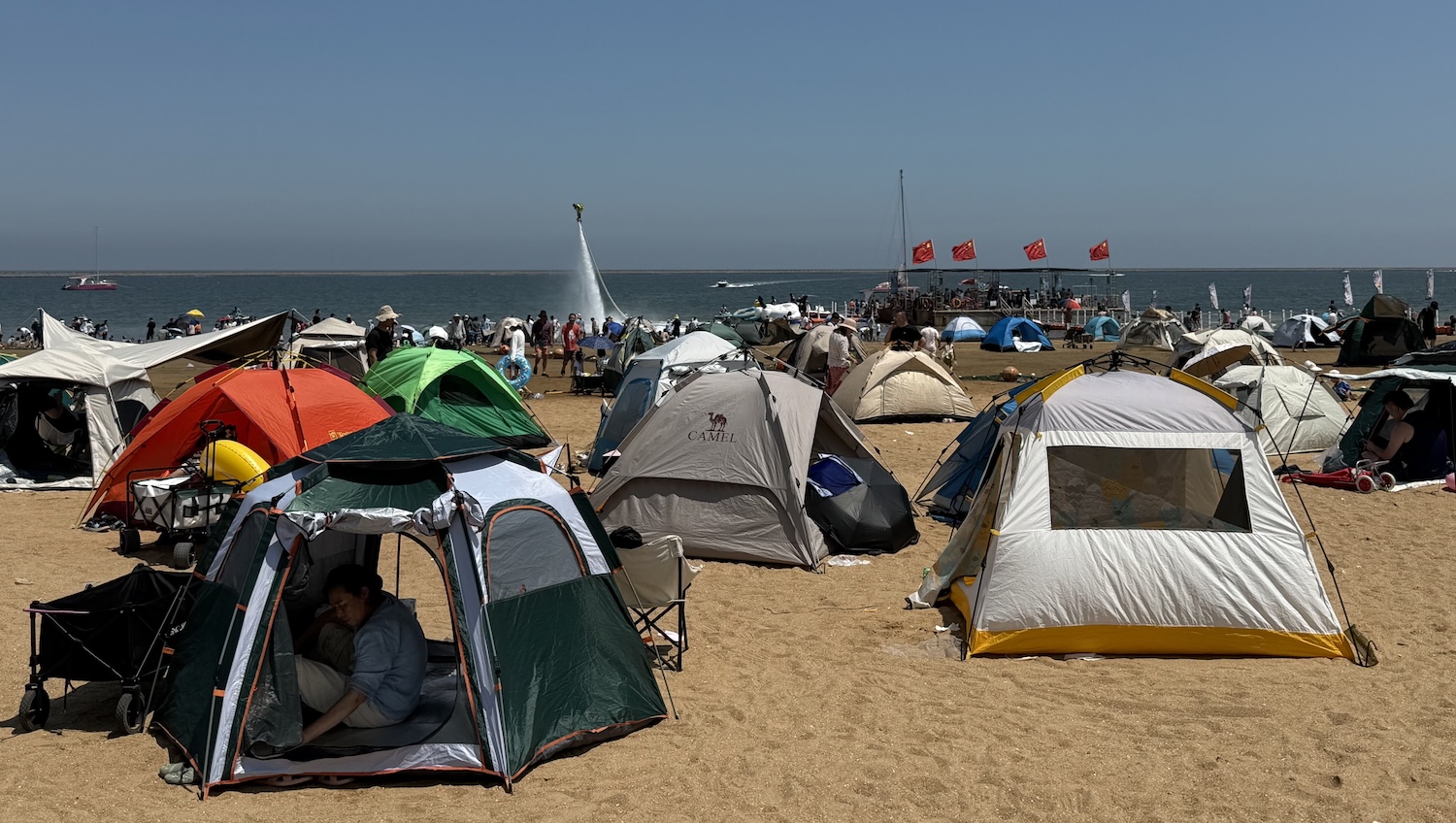
About 30km south is Dongjiangwan, the biggest artificial beach in China, which opened in 2021 after nearly 200,000 tonnes of sand was shipped in from Fujian. With a couple of resorts, and lined by street food stalls and Chinese flags, on summer weekends the beach is peppered with little tents and gazebos. Local people, covered head-to-toe for protection from the baking sun – summer temperatures reach 35°C – enjoy all manner of water sports including flyboarding and parasailing.
Another 30km south again, on the Haihe River estuary, are the Taku Forts. The first castle was built here in the 1520s to protect Tianjin from Japanese pirates, and further fortifications were added in the 1810s to guard against invasion by Western imperial powers. After the First Opium War, in the 1840s and 1850s a system of six large wood-and-brick forts was constructed, though they were severely damaged during the Second Opium War, and they were dismantled altogether when the Eight Nation Allied Forces attacked China during the Boxer Rebellion. All that remains today are the tiny ruins of Dagukou Fort, where there is a little museum.
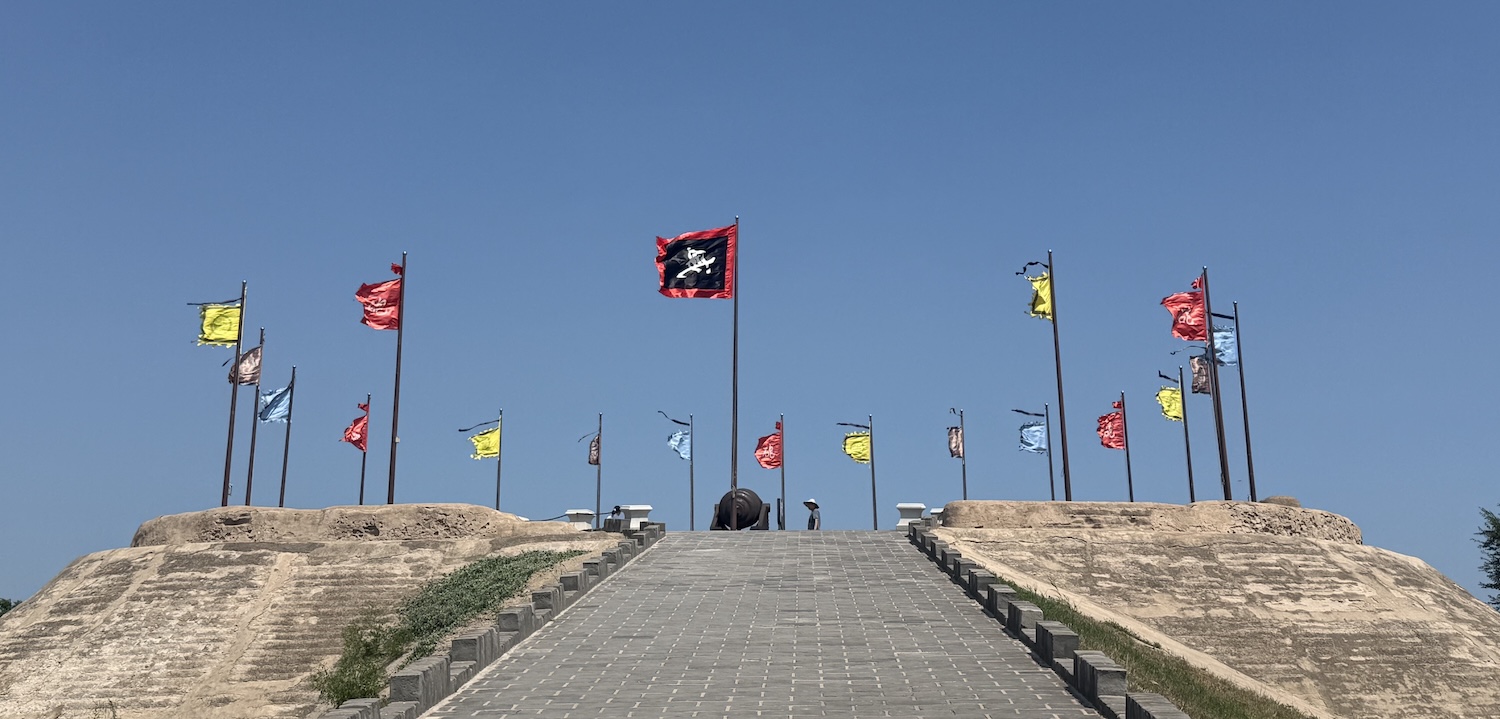
For a province so close to, and so easy to access from, Beijing, Hebei is woefully under-visited. I hope from this article you can see that it has some fascinating attractions, ancient and modern, that are well worth the effort. It provides crucial pieces of knowledge that aid our understanding of the complex jigsaw puzzle that is China, historic and contemporary. Bú kèqi.