
If you time it right, the highlights of Papua New Guinea include the magnificent Independence Day celebrations in Port Moresby, the capital, and extraordinary festivals of indigenous tribes in body paint, flamboyant headdresses and traditional costumes in the Highlands, notably at the Goroka Show, which is also home to unique birds-of-paradise. Plus, there is world class scuba diving on spectacular Outer Islands in the Bismarck Sea, such as New Britain and New Ireland. All with the chance to engage with warm and welcoming people in one of the most isolated and forgotten cultures on earth.
If Papua New Guinea were an ordinary country, all this would comfortably make it one of the outstanding destinations on the planet for adventure travellers. But it is far from a normal nation, and its extra spice in fact makes this probably the most exotic and exciting place I have ever been. Gutpela dei.
Even for daredevil explorers, Papua New Guinea, which shares the second-largest island in the world (after Greenland) with the Indonesian territory of West Papua, can look like a black hole on the map. Off the top of their heads, many people would likely associate PNG, as it is widely known, with headhunting, cannibalism, violent gangs and a general lack of safety and security. In other words, they might think there is nothing much to see here and anyway it is too dangerous to even bother trying.
As usual, a deeper dive teaches us that this is far from the whole story of this final frontier destination.
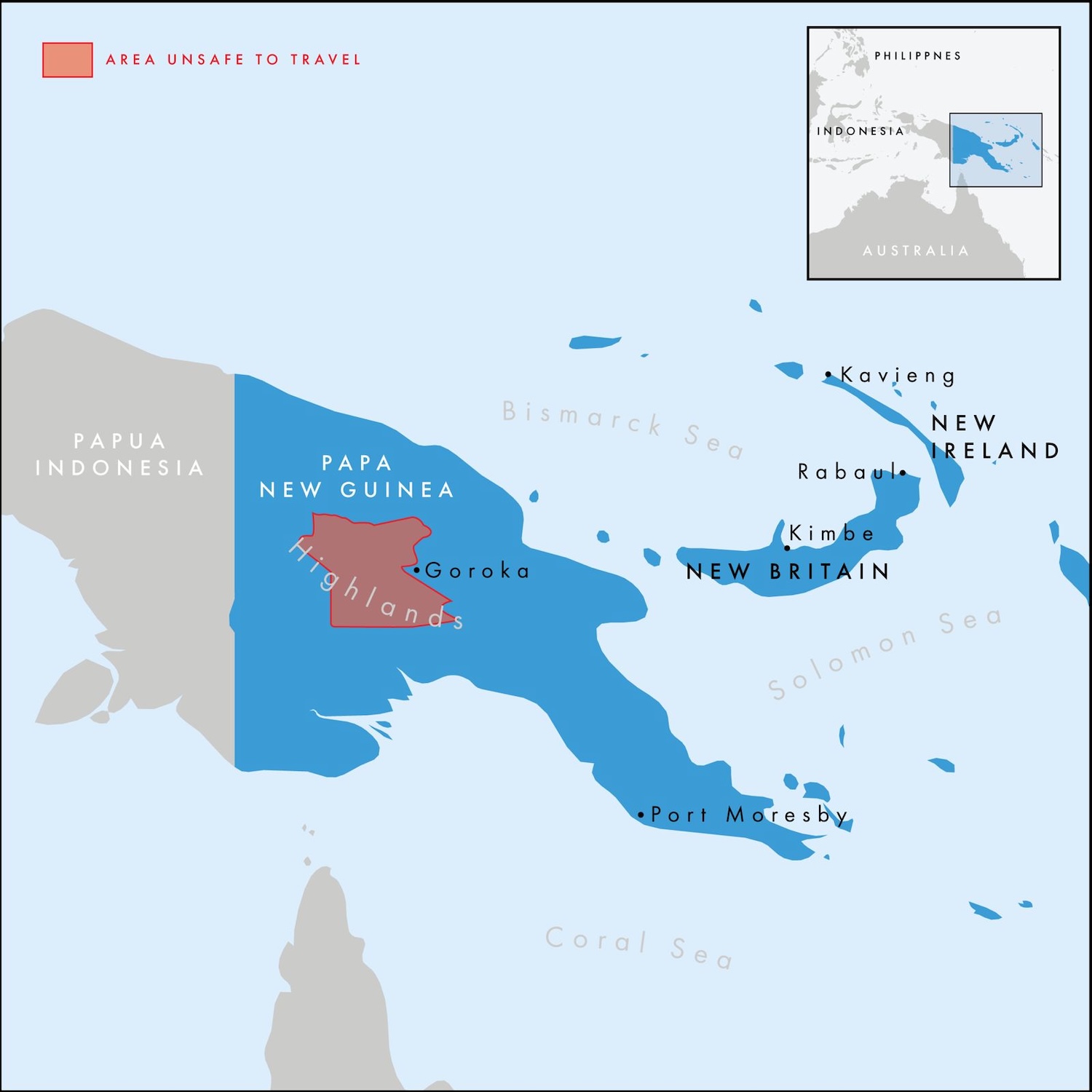
First, is it safe? It is true that many governments, including the British Foreign Office Travel Advice, warn against all but essential travel to parts of PNG. That obviously sounds scary, but in reality, this applies primarily to a relatively small area in the centre of the Highlands on the main island, where lawless intertribal fighting makes it impossible to visit. In neighbouring parts of the Highlands, especially where the major festivals occur in the summer and autumn months, it is quite safe, especially if you are accompanied by a local guide with insights and contacts.
Parts of Port Moresby are totally off-limits due to the violence of urban gangs called Raskols. However, we found most of the city feels safe, and encountered no trouble at all, in fact nothing but friendly smiles and constant handshakes, though it is best to avoid going out in the dark or on your own, just in case.
In the Outer Islands, we invariably travelled in hotel vans with two or three security guards. Apparently, locals do not want trouble with foreigners, and the prospect of community retribution, likely immediate and vicious, helps deter all but randomly angry drunks at night. On one occasion, we witnessed the police in action, indiscriminately “belting” or whipping a small crowd.
These risks are serious but manageable. You are more likely to be bothered by annoyances such as baggage handlers stealing stuff from your luggage than violent crime, and you are sure to confront occasional disruptions to the supply of utilities, including electricity and water, which I guess are all part of the sense of adventure.
The greatest challenge might simply be treating any normal injuries or sicknesses that could arise anywhere, given the isolated locations and the absence of modern health facilities. Hence, it is worth ensuring your travel and medical insurance covers repatriation in the event of any emergencies. In fact, diving centres may well insist on it. You can get such short-term cover from DAN. Also, malaria is prevalent but easily prevented, so just make sure to bring the relevant prophylaxis pills.
In summary, Papua New Guinea sounds a lot spookier when you are sitting in the comfort of your own home than you are likely to feel once you are here. It is not for the faint of heart, but as long as you follow common sense – do not go where you are told not to, be especially vigilant at night, and ensure you have a local guide whenever possible – you should be fine.
Second, is it worth it? There are no guidebooks, no tour operators, and almost no foreign visitors so there are very few blogs, which makes it hard for outsiders to know what they could see and do. About the best reference material is this official site of the Tourism Promotion Authority, and I hope my article will persuade you that Papua New Guinea is absolutely magical.
The big tickets are exceptional: the Independence Day celebrations in Port Moresby, the Goroka Show, and the scuba diving. Best of all are the encounters with people so stoical and positive in the face of terrible difficulties. Plus, there are wonderful everyday oddities. For instance, when we pulled into a petrol station to fill up, a man walked through with two pigs on string like he might dogs on leashes. On another occasion, in a supermarket, in September, we were at the till paying a woman in a grass skirt, face paint and a massive feathered headdress when the PA system started playing Jingle Bells.
I have so far explored 129 countries, and I don’t mean just staying a night to get a passport stamp. I counted them just now using the list of 206 places eligible for the Olympics, which is slightly more than the 193 states recognised by the United Nations. I am often asked which is my favourite, and I usually reel off about twenty I couldn’t choose between. But now I might have found a strong contender.
It is important to appreciate that the tourism industry here is hardly even nascent. Your guides will not be experienced or polished, though they will be committed. And you will face all kinds of complex dilemmas that bring home how hard it would be to bring large numbers of visitors to a country so remote, especially in the Highlands. Locals often engage in behaviours you might thing wrong, and are so unused to dealing with foreigners it is easy for them to be exploited. I don’t know how you will feel about chiefs who kill birds-of-paradise to use their feathers for headdresses, or parents who earmark the life partner of their children as young as five or six, thereby forcing them into arranged marriages, but they are part of the traditional culture and we come here to learn not to judge.
The dry season is May to October, and it is wet the rest of the year. The very best time to come therefore is to coincide with a major festival and/or Independence Day in September. While it is a lovely 30°C in the Outer Islands during the dry season, it can be chilly in the Highlands, especially at night.
It is surprisingly easy to get into PNG. From Asia, there are direct flights to Port Moresby from Manila, Singapore, Hong Kong and Guangzhou, plus several destinations in Australia as well as Fiji and the Solomon Islands.
The citizens of many countries, including Britain, are permitted to arrange Visas On Arrival, though I strongly recommended everyone should get an Immigration & Citizenship Authority Easy Visitor Visa as it makes entry smoother and quicker. You need to apply at least a month in advance, it costs US$50, and it lasts for six months.
In addition, it helps to submit a PNG Digital Arrival Card seventy-two hours before arrival rather than queue to fill out a form in the airport.
Once here, it is less easy to get around. For longer distances we are reliant on the schedule of internal flights operated by PNG Air (not bad) and Air Niugini (by reputation not good, though we had no trouble). There are not that many destinations and their timetables are thin, sometimes flying to and from somewhere no more than once a week. It is worth also flagging they are all strictly precise on baggage allowance; PNG Air does not allow a gram more than 7kg of hand baggage, and in addition to a small fee to take any bag in the hold, they will charge you on top for anything over 16kg. They may also confiscate any spray cans, no matter how small, including deodorant and mosquito repellent, in the hold. There are often no scanners, so everything is checked by hand, and once through that, make sure you are able to lock your bag. Oh, and the planes are often/usually late, over-booked, and cancelled at short notice, to all of which all I can say, again, is that it all adds to the sense of intrepid frontier travel.
There are ferries between some places in the Outer Islands, though the safety record of these saltwater meris, as they are known, is poor. Incidentally, meri is the word for a woman.
There are few highways, and those that do exist are usually badly pot-holed. Given the security concerns mentioned above, it would be foolhardy for foreigners to rent a self-drive car, though it is possible. You are in any case likely to take one-to-two hour cab rides from time to time, driven on the left.
By the way, there is usually Wi-Fi in the major hotels and resorts, though of course around the country data is patchy and never more than 4G.
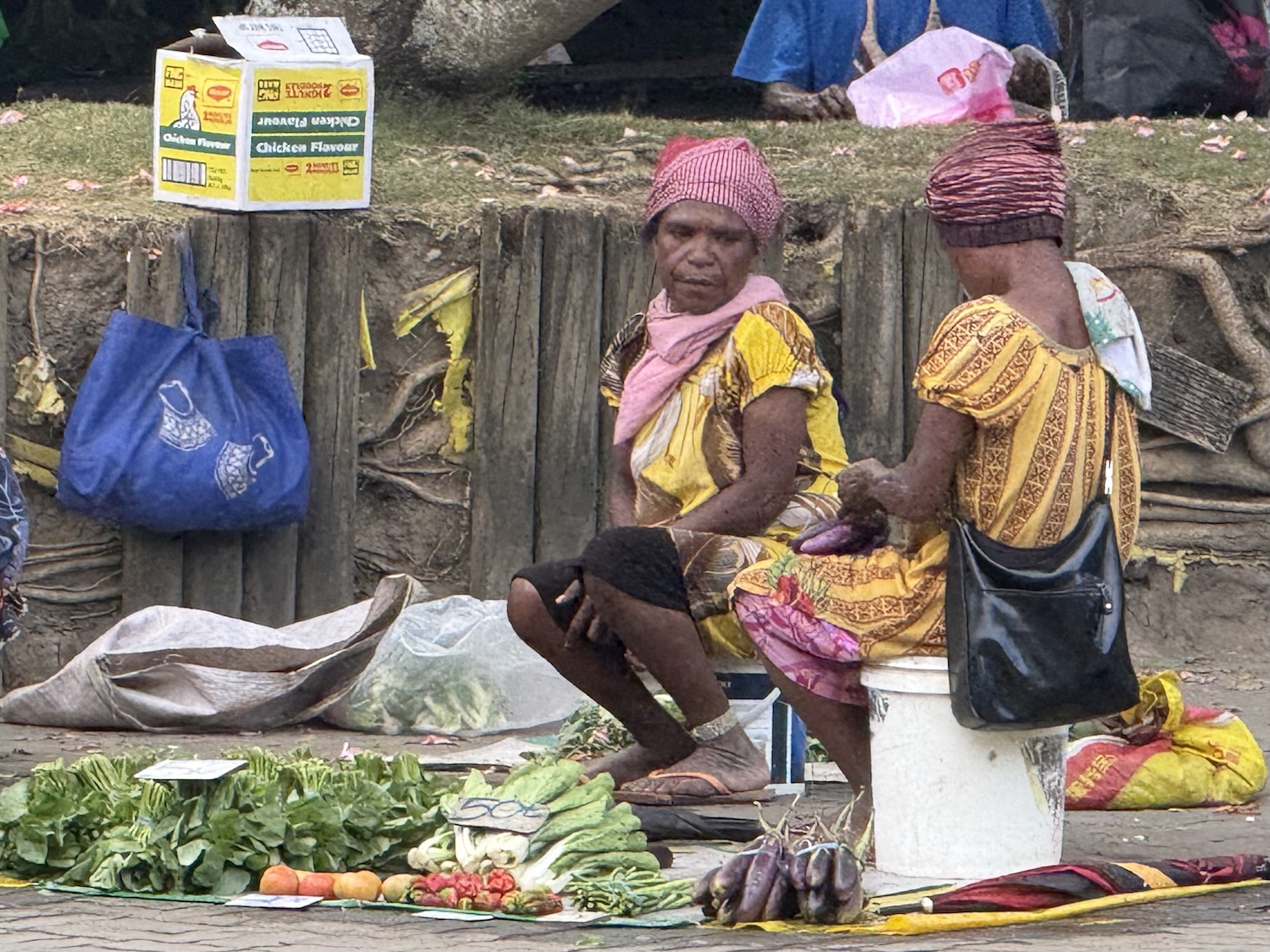
Papua New Guinea is achingly beautiful, and heartbreakingly desperate. A little more than 10 million people live here. The median income is US$150 a month, about 80% lack reliable electricity, 60% lack safe drinking water, and a third are illiterate. Almost everyone I met said they feel let down by their government, which they believe to be riddled with corruption, and they know for a fact they have been abandoned by the rest of the world.
Things have got worse recently. The impact of Covid-19 – seen as a “white people’s disease” – has been devastating. At the time, many were left with zero income, and some told us they survived only by personally spearing fish in the ocean. Because Australia was closed for so long, the prime source of visitors dried up, clearing out the emerging diving industry, which has not been replaced. Now, since Trump attacked Iran, petrol prices have shot up, creating an affordability crisis that Westerners could hardly imagine.
The PNG kina currently exchanges at PGK5 to €1. Resorts and diving are not cheap, not least to cover their remote expenses, but for foreigners of course most everyday goods are inexpensive.
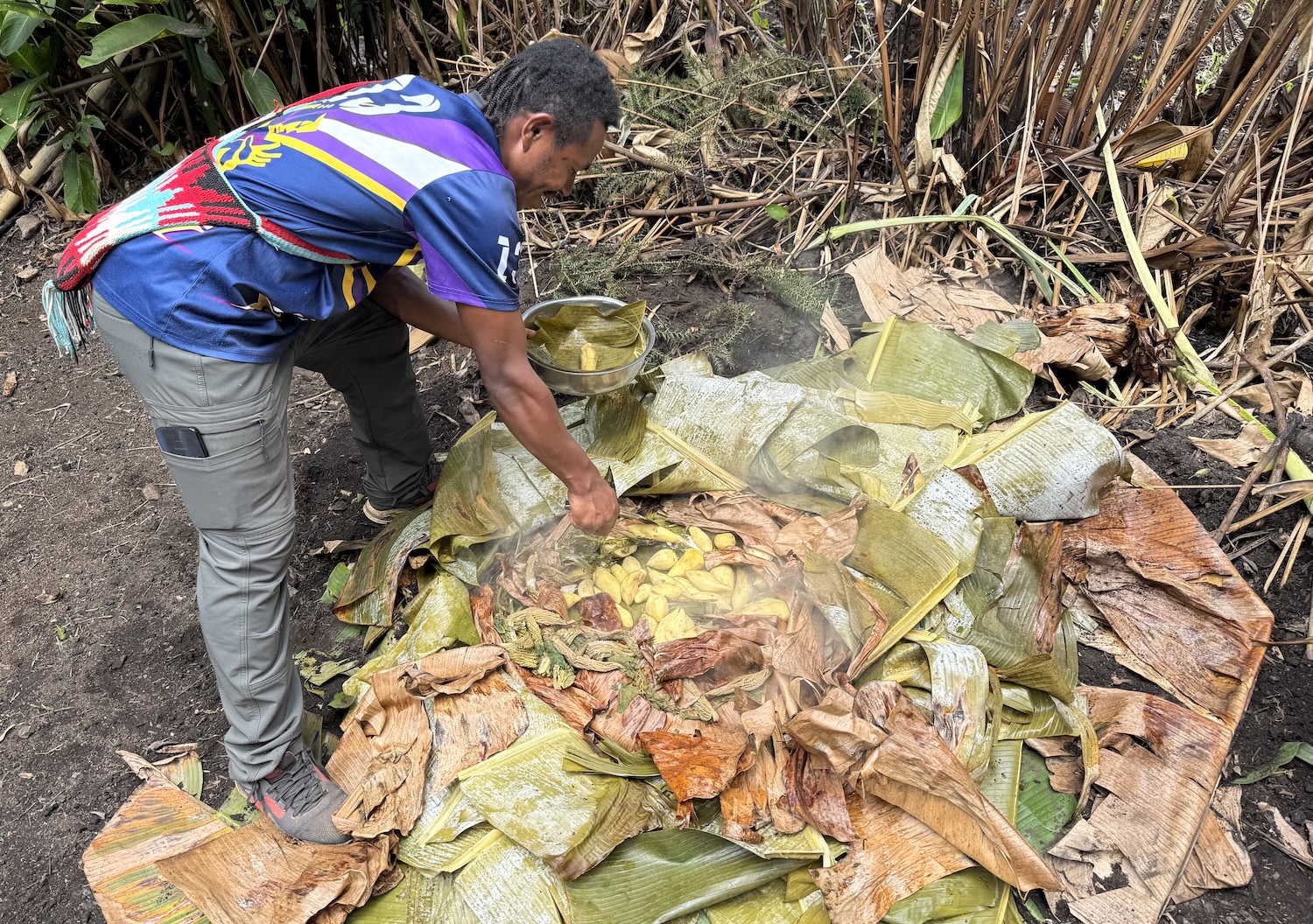
There are fresh bananas, mangos and pineapples all over, though with the minimum wage at PGK5 an hour, many local people cannot afford them and often go days eating nothing but rice. Other food staples include coconut milk, of course, kaukau, sweet potatoes, and taro, another starchy root vegetable, often served with seafood or beef. Sago, a starch from palm trees, is used in dumplings and puddings. The national dish, for community feasts such as family events and cultural celebrations, is mumu, when layers of meat and root crops are layered onto white-hot stones under banana leaves in a pit in the ground.
All the usual narcotics are illegal, though apparently marijuana is rife in the villages. You can buy several local lagers, including Kundu, Niugini Ice and SP (South Pacific), with the excellent strapline “the beer you deserve”, though villagers usually favour banana- or pineapple-based home-brew known as jungle-juice, sometimes with additional methanol. There are also locally produced fruit wines, rums, tequilas, vodkas and whiskies that rip your heart out, usually sold in supermarkets in plastic bottles of various sizes. Please note that alcohol is not allowed for sale or consumption during the festivals.
Many people, mostly but not only men, prefer chewing betelnuts to keeping their front teeth, which is why so many gappy gums shine bright red. In urban centres, buai, as it is called, and the spitting of blood-red phlegm, is these days often restricted to cordoned areas along with smokers.
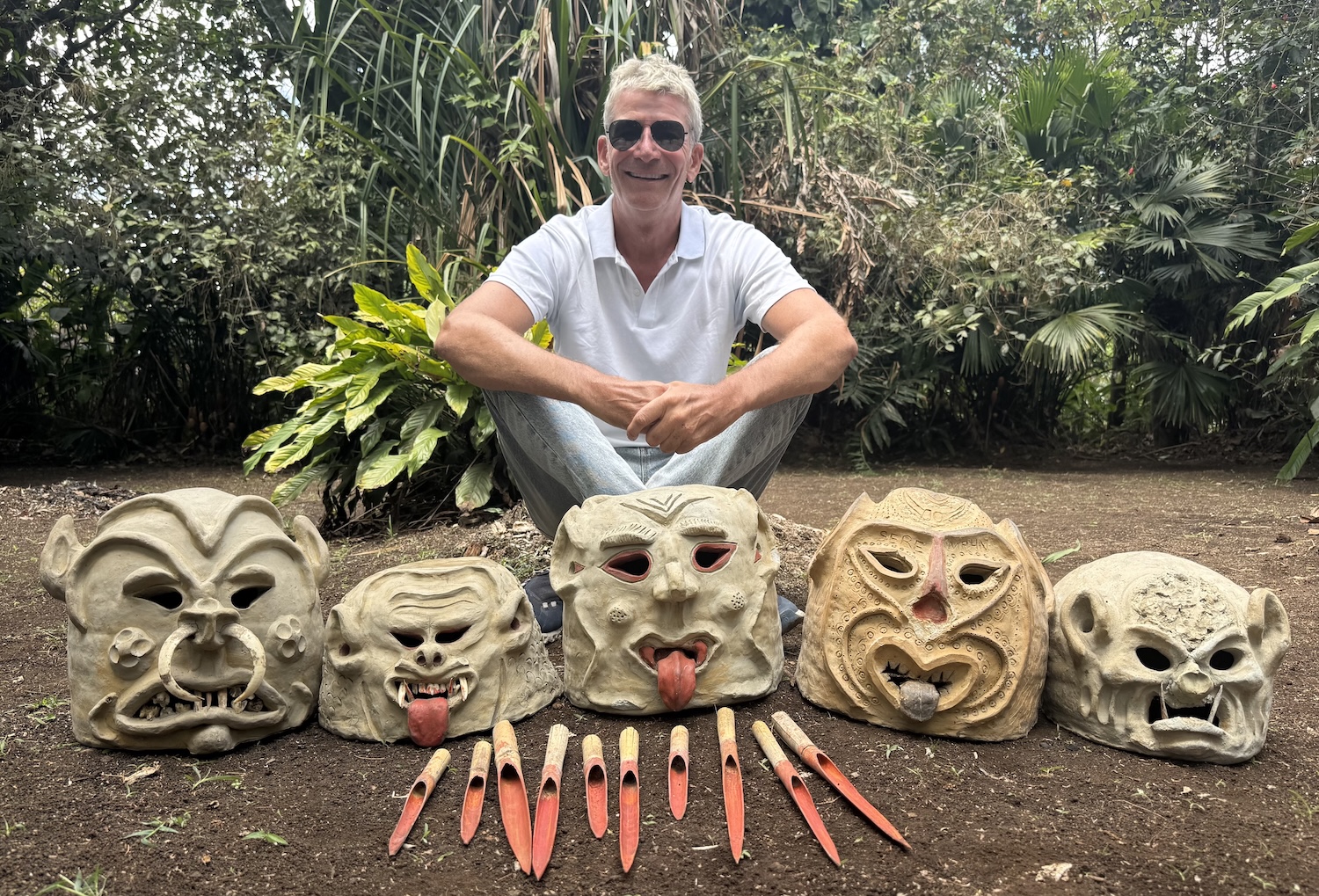
PNG has world class souvenirs, especially masks. Apart from those in the Highlands that can be bought from participants at the festivals, the most revered are from Sepik River, where large spirits are hung on the walls, especially of communal men’s houses, while smaller masks with curved noses are held in front of the face during dances at ceremonial events. In the Outer Islands, those from the Baining and Malagan tribes are highly prized.
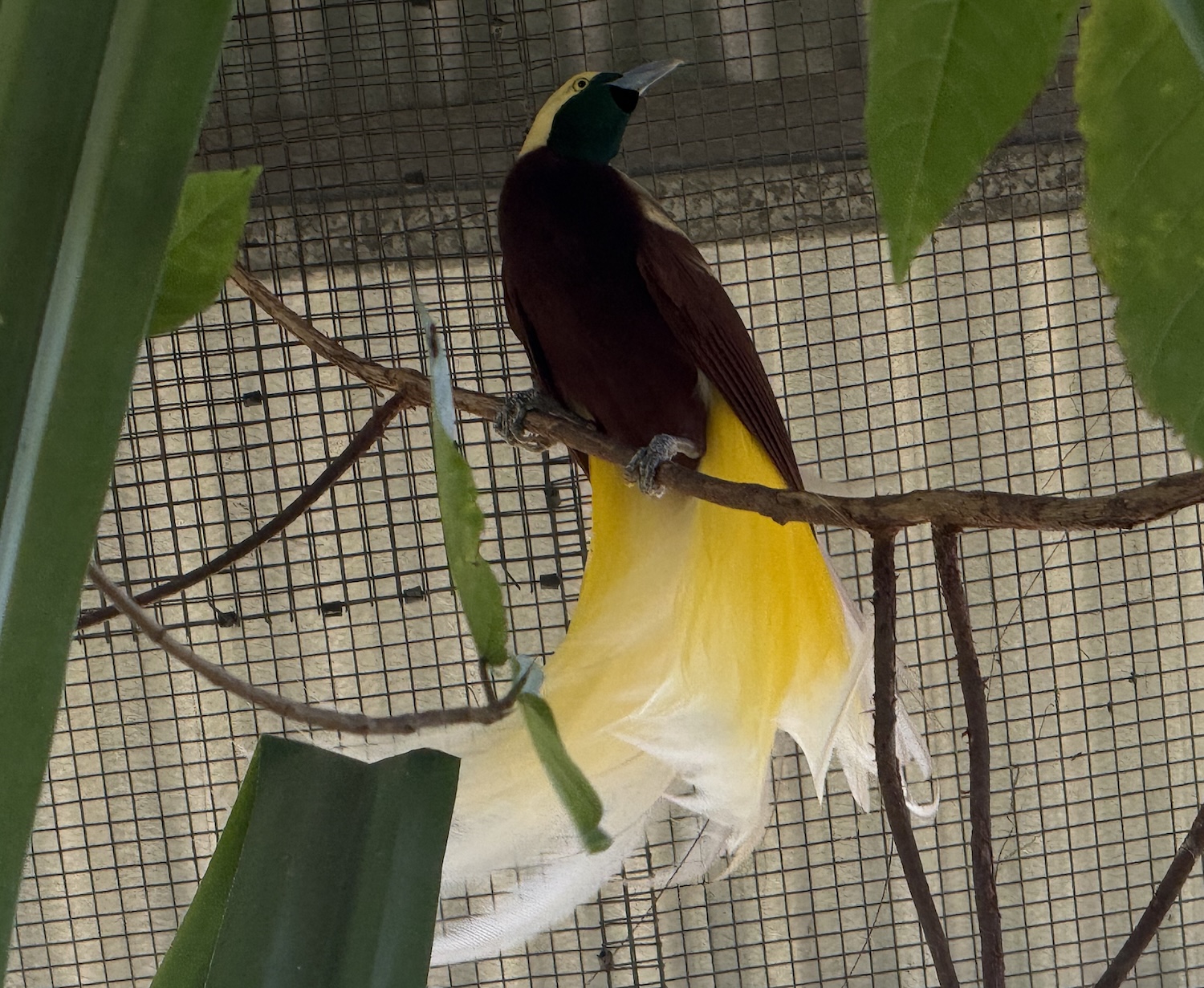
The national emblem is a bird-of-paradise. However, they are being killed in increasing numbers for their feathers to adorn tribal headdress and costumes. PNG is also home to the biggest butterfly and the biggest moth in the world.
Like a lot of countries in this region, the national sport is rugby, though unlike many in the Pacific the craze is for rugby league. PNG jointly hosted with Australia and New Zealand the men’s and women’s Rugby League World Cup tournaments in October 2026, a few days after we left, when there were adverts everywhere for it. While it is taught in schools, kids by the roadside can be seen playing it, and there are amateur games all over, sadly there are currently no professional teams. So New Guineans have been addicted to watching matches Down Under, with games often shown on TV in bars. However, from the 2028 season they will have their own team, the PNG Chiefs, who will join the Aussie National Rugby League.
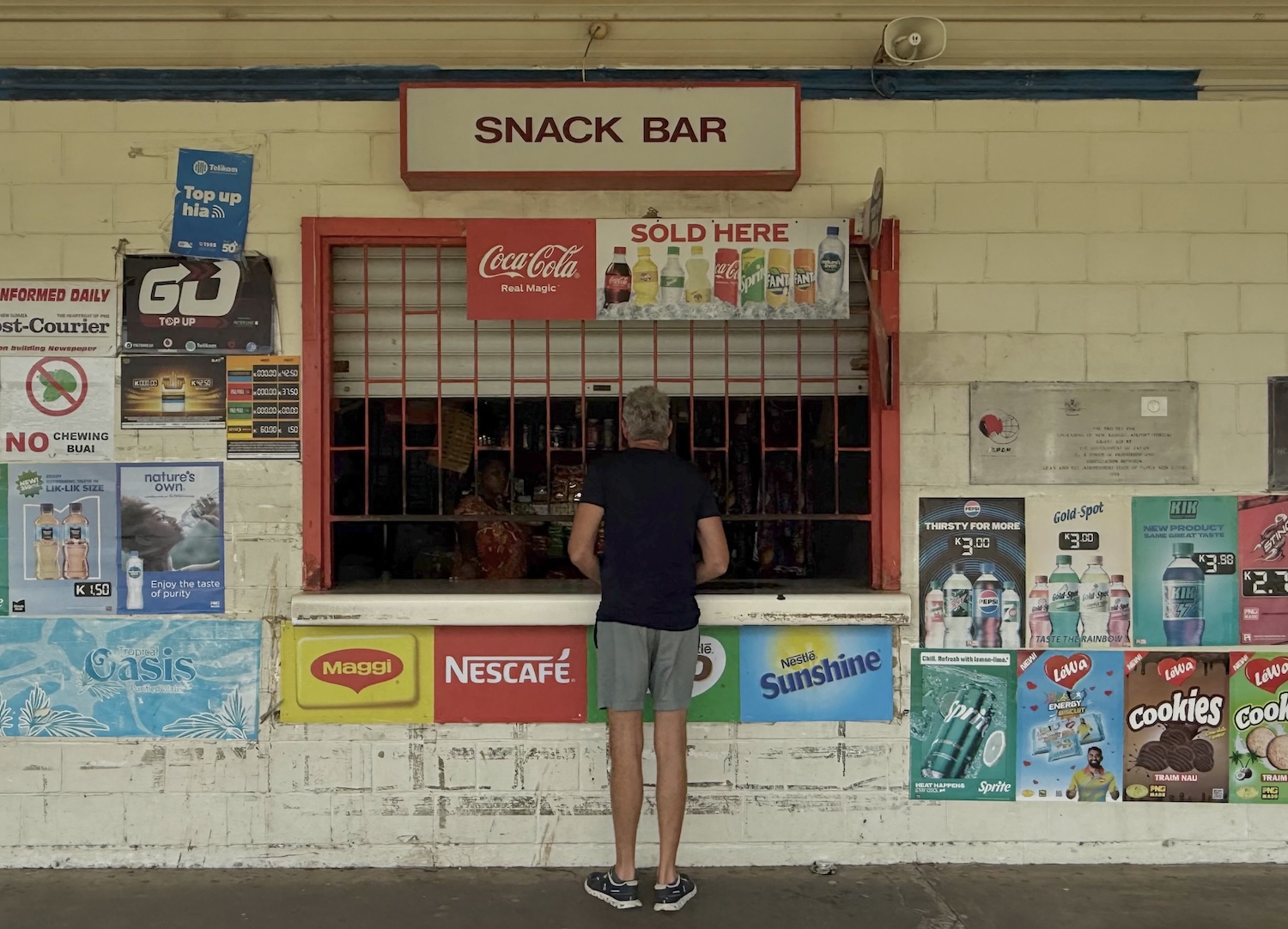
The other popular game, surprisingly, is darts. There are boards on roadsides everywhere, and wherever there are markets or other social gatherings. In return for a tiny fee, the aim to is to get higher than a set score with an agreed number of arrows, which usually wins a bottle of soda. Playing, and passing on the prize to the crowd, is a great way to win new friends.
For historical context, it is worth knowing that humans, probably from Southeast Asia, started settling in the highlands of the main island as much as 50,000 years ago. They were supplemented 3,000 years ago by waves of Austronesia-speaking Lapita-people making homes in the coastal areas and on the smaller islands, which stimulated regional trade, mostly in bananas and sugarcane.
In 1526, a Portuguese adventurer, Jorge de Menezes, named this land Ilhas do Papuas, derived from a local word meaning “people with frizzy hair”. In 1545, a Spanish explorer, Yñigo Ortiz de Retez, added New Guinea as he thought the residents similar to those he had seen along the Guinea Coast of Africa, parallels that were not lost on us.
Europeans introduced sweet potato and tobacco cultivation as well as Christianity. Today, 95% self-identify as churchgoers, split roughly 30% Catholic, 20% Evangelical Lutherans, 15% Seventh-Day Adventists, 10% Pentecostal, 10% United Church, plus several smaller denominations, though many mix this faith with ancestral beliefs, animist practices and tribal rituals.
Colonisation was complete by the 1880s, when the eastern portion of the main island was divided between Britain and Germany. Britain annexed the southern half plus its nearby islands in 1888, passing those to Australian authority in 1906 as the renamed Territory of Papua, ruled from Port Moresby. Germany had grabbed the northern equivalents in 1884, but at the end of the First World War, Australia took control of those under a League of Nations mandate, renaming it the Territory of New Guinea, run from Rabaul.
All of it fell to Japan between 1942 and 1945, though after the Second World War the northern segment was placed under United Nations Trusteeship, administered by Australia, while the southern portion was returned to direct Australian dominion.
PNG in World War Two
In the days after Japanese bombers attacked Pearl Harbor on 8 December 1941, they launched lightning strikes across the Pacific that quickly established dominance as far as Indonesia and the Territory of New Guinea. To eliminate Australia as a possible springboard for an Allied fightback, they needed to capture Port Moresby, which would bring Queensland withing bombing range, while seizing New Caledonia, Fiji and Samoa to block access from the sea. Hence, in July 1942, overstretched Japanese forces attempted a land march through the Kokoda Track over the Stanley Owen Range to take Port Moresby, a campaign that finally ended with a crucial Japanese retreat after four brutal months.
Meanwhile, the Imperial Japanese Navy was checked in the west at the Battle of the Coral Sea in May 1942, and a month later they were halted in the east at the Battle of Midway. This enabled the Allies, under Supreme Commander Douglas MacArthur, to forge a successful two-pronged counter-offensive, primarily with Australian soldiers, through the Solomon Islands to the east and PNG to the west. That was key because Admiral Isoroku Yamamoto, Commander-in-Chief and mastermind of Pearl Harbor, had set up his headquarters at Rabaul in New Britain. He was killed there in April 1943, though Japanese troops were not completely evicted until their surrender in September 1945.
PNG victims of the War are honoured each year on Remembrance Day, 23 July, the date on which their forces were first actively engaged, in 1942. The day the Allies retook Kokoda, 3 November, is also recognised, in the annual magnificently named Fuzzy Wuzzy Angel Day. Fuzzy Wuzzy Angels were thousands of local citizens who carried stretchers for the Allied wounded, earning legendary status for their bravery.
In 1949, Australia merged the territories of Papua and New Guinea into a single administrative unit, though they retained distinct legal statuses, until it was all named Papua New Guinea and became self-governing in 1973. Independence was finally achieved through peaceful negotiation on 16 September 1975. The founder of pro-independence party Pangu Pati, Sir Michael Somare, became the inaugural prime minister, and he is revered to this day as the Father of the Nation and the one-and-only Grand Chief.
There is a shameful coda to this story, showing that imperial powers can find it hard to let go. In 2012-13, the Australian Labor governments of Julia Gillard and Kevin Rudd implemented an abhorrent “Pacific Solution” policy of preventing asylum seekers from arriving on their land by transporting them instead to detention centres on Manus Island to the west of New Ireland in PNG. Thankfully, the PNG Supreme Court ruled in 2016 that this was unconstitutional, leading to the gradual closure of the camps over the next few years.
The pride and passion for this sovereignty is palpable today. Celebratory T-shirts and flags and billboards are visible for weeks in the run up to Independence Day, when the whole country is jumping. Yet the past five decades have proved how hard it is to unite and govern a nation of more than 1,200 tribes who share over 850 separate tongues, about 12% of the total number of known living languages on the planet.
English is used among the educated people visitors encounter, thanks to the Australian influence. In addition, Tok Pisin is some kind of lingua franca shared by many, a creole in which English words are adapted phonetically, which is how “New Guinea” becomes “Niugini”, for example.
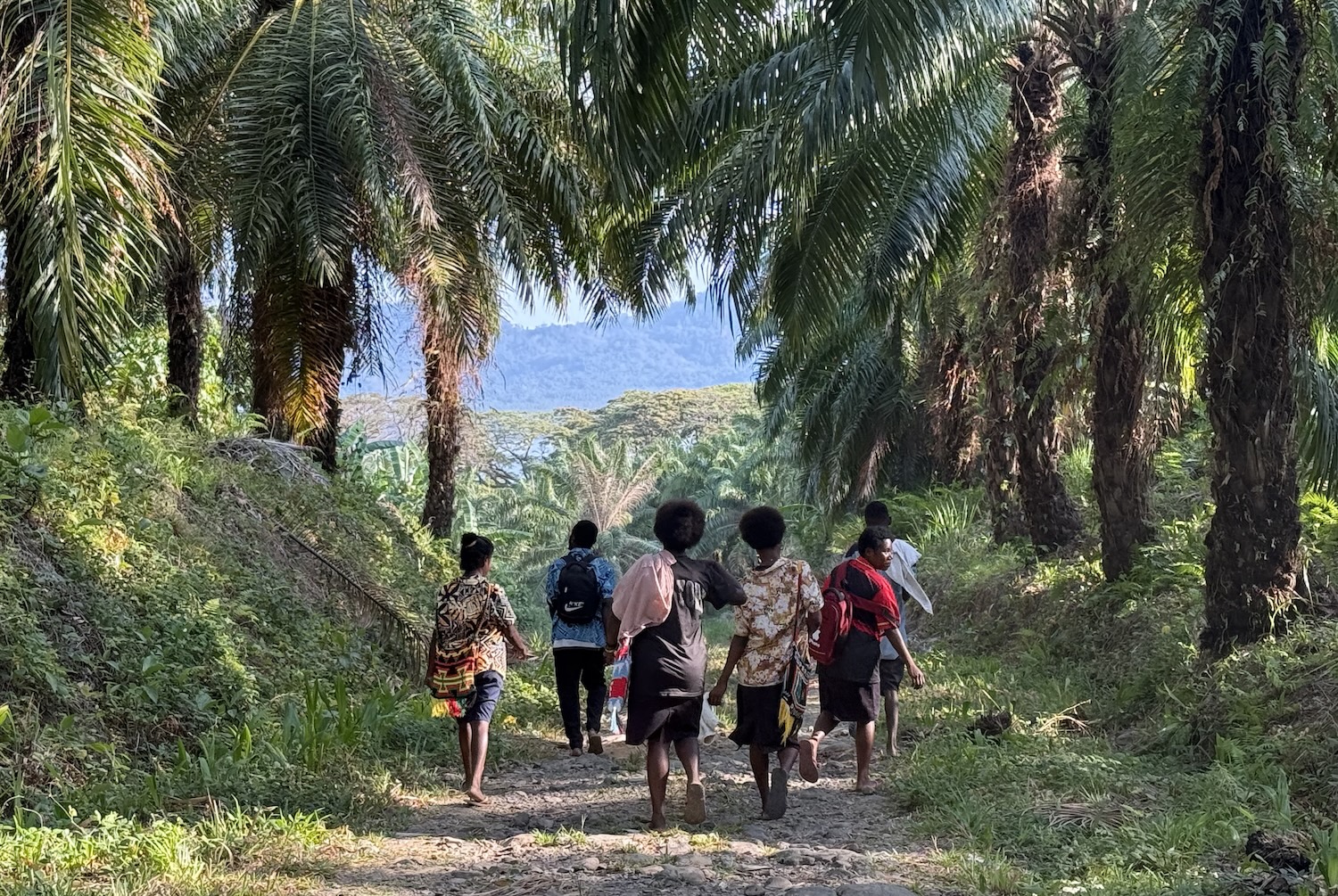
It is hard to discern a common project. Despite being rich in copper, gold and natural gas, PNG suffers from mismanagement and corruption by elites who siphon off public funds, and dependence on foreign-owned conglomerates that spirit away profits from local communities. Meanwhile, everyone tells us that traditional structures are breaking down as chiefs and churches lose a power struggle with the internet, social media and dating apps. It is hard, too, to find much hope for nation-building or tourism. But for pioneering travellers there is the opportunity to come and experience for ourselves the thrill of this land and these people, and tell others about it, as I aim to do here.
Port Moresby
Port Moresby sits on the eastern shores of the Gulf of Papua, a big bay that creates a natural anchorage, called Fairfax Harbour, and spreads out east on land for 15 kilometres as far as the international airport. It is the largest city in the South Pacific outside ANZ, and its population has doubled in the past twenty years to almost half a million, largely as villagers in poverty have migrated to the big city looking for work, work unlikely to exist in a town with unemployment at 60%.
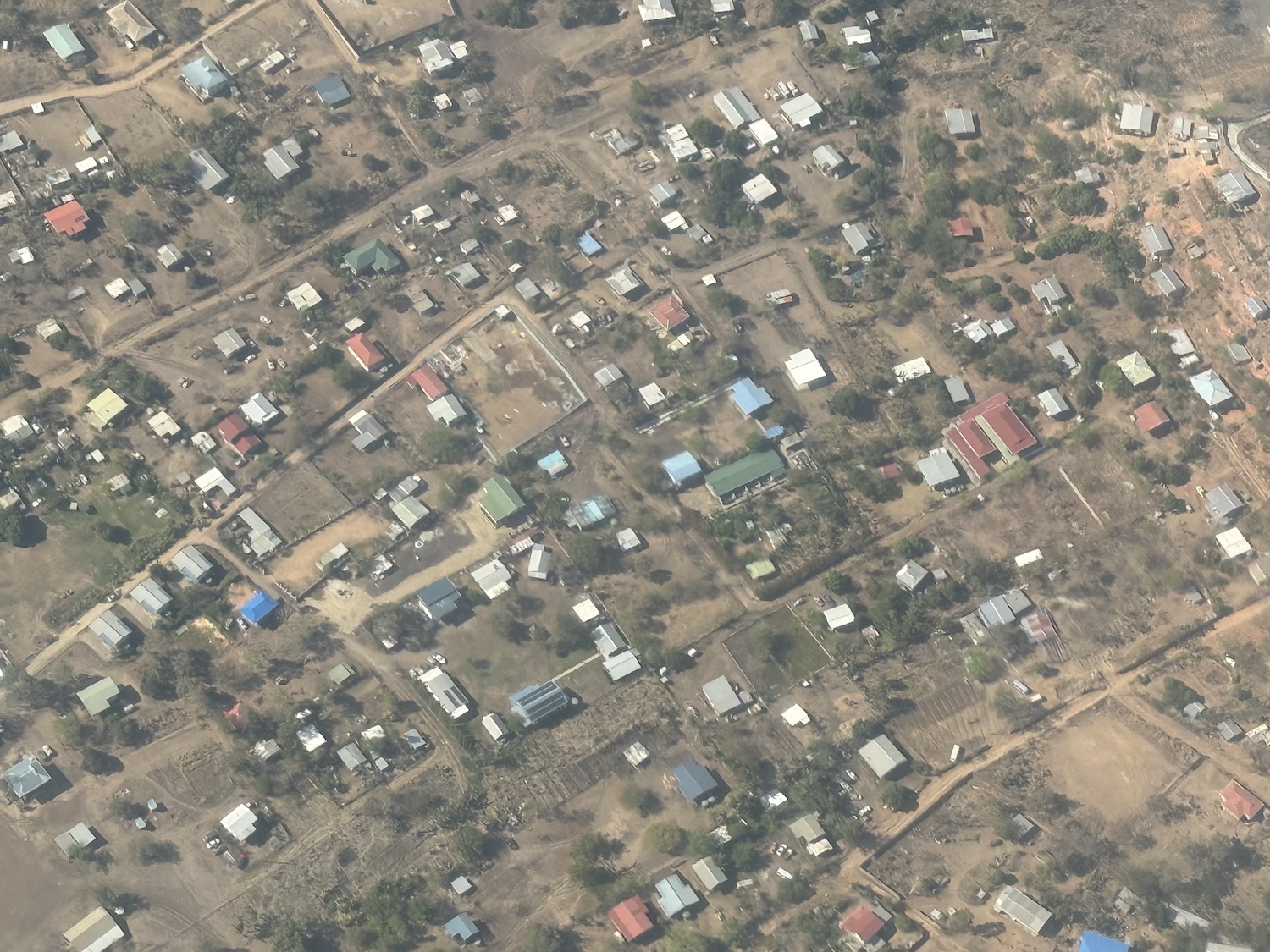
Port Moresby, or POM, as people call it, is horribly poor. Many people live in stilted wooden shacks in township suburbs that have tracks for roads, go about barefoot, and spend their time just sitting on the street with little to do. The Economist Intelligence Unit ranks it 167th of 173 global cities for liveability.
There is also an influx of refugees who have fled the civil war in West Papua, which is fighting Indonesia for independence. They are confined to Rainbow suburb, where they are not entitled to education or employment and survive solely from farming gardens.
On top of this destitution, there is an epidemic of crime. The shadow over the whole city is cast by Raskol Gangs, packing machetes and assault rifles since the 1960s. This Underworld Podcast gives useful background, though you might prefer to hear it when you come back. And Raskols is a landmark book by Stephen Dupont of black and white intimate portraits of gang members posing with their homemade guns and knives.
They are not targeting foreigners, and their carjackings and assaults are largely confined to districts you would not want to go to anyway, especially near the squatter camps on the outskirts, such as notorious Six Mile. There is always the tiny possibility of a chance encounter they would seize, and when you add in widespread delinquency, it is hard for foreigners to go anywhere without being accompanied by a guide-cum-security. That said, we started off repeatedly asking our chaperones, “is it safe?” wherever we went, but soon stopped that when we found no trouble whatsoever.
Reflecting a light on this poverty and despair is gross inequality. There are some areas, notably downtown and by the beaches, in secured swanky compounds, where expats and wealthy locals live in three-bedroom houses bought for PGK10m, more than US$2m, and two-bed apartments rented for PGK20k or US$5k a month.
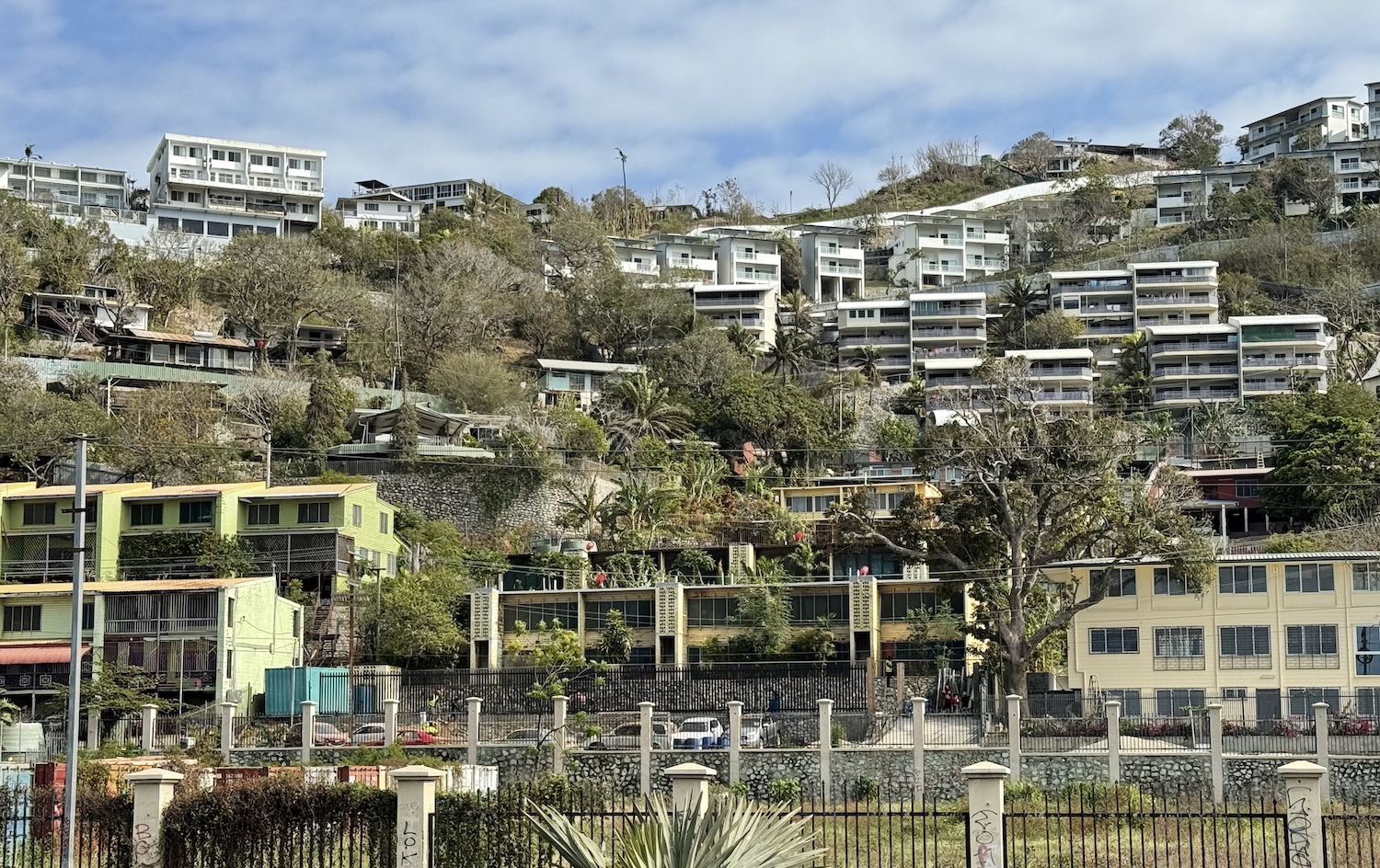
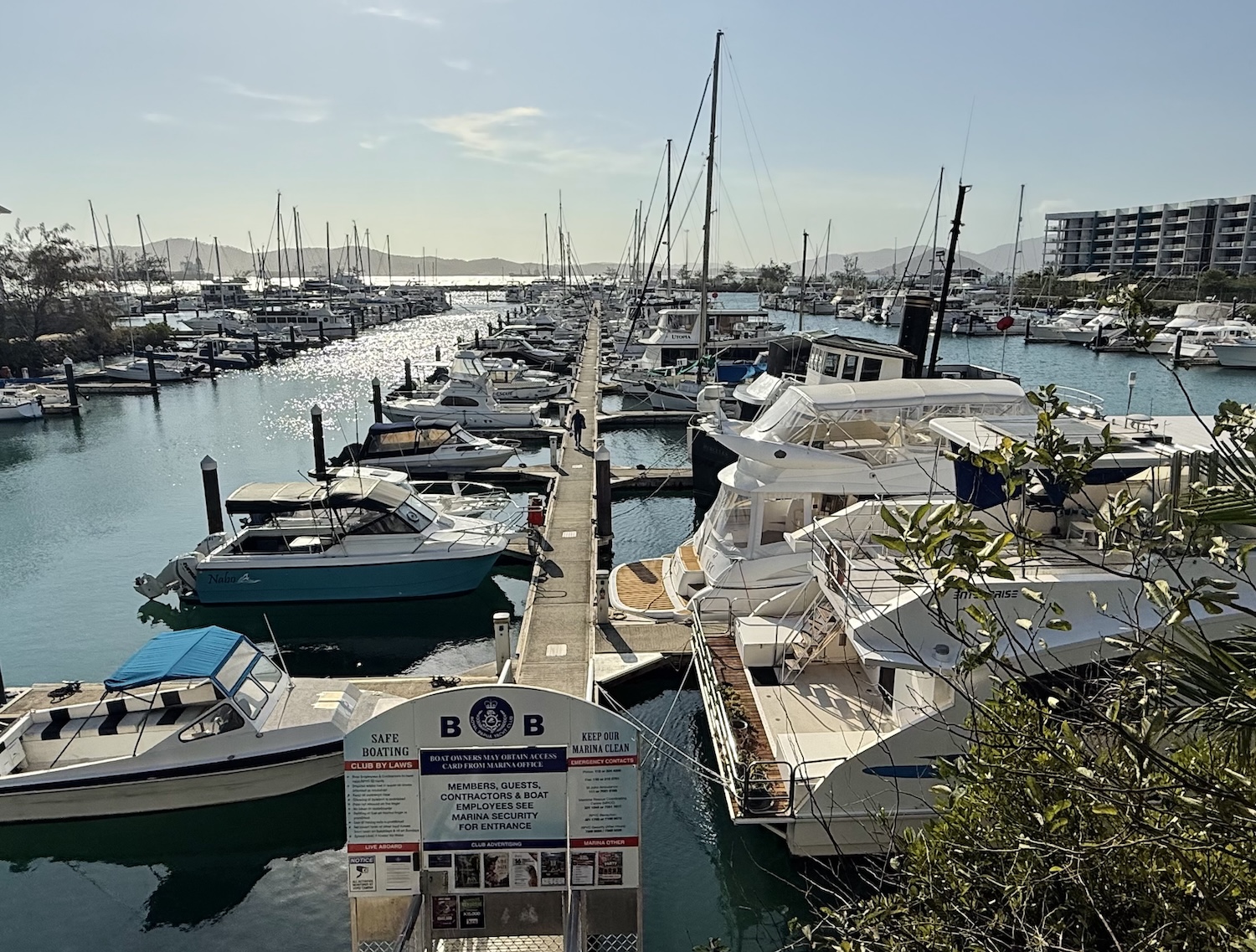
Around here, there is an F45 fitness studio and several excellent restaurants. Mumu in the Hilton offers a modern version of the national dish, and Port Terrace at the Crown Plaza has an international menu. Royal Papua Yacht Club, which is more than a hundred years old, and has some surprisingly expensive boats as well as top notch merch, allows foreigners who show a bit of chutzpah to access its lovely bars and restaurants. Waterfront Place is a little mall for groceries, alcohol and so on, while Vision City Mega Mall is worth a look to see what must be one of the least globalised retail outlets on earth.
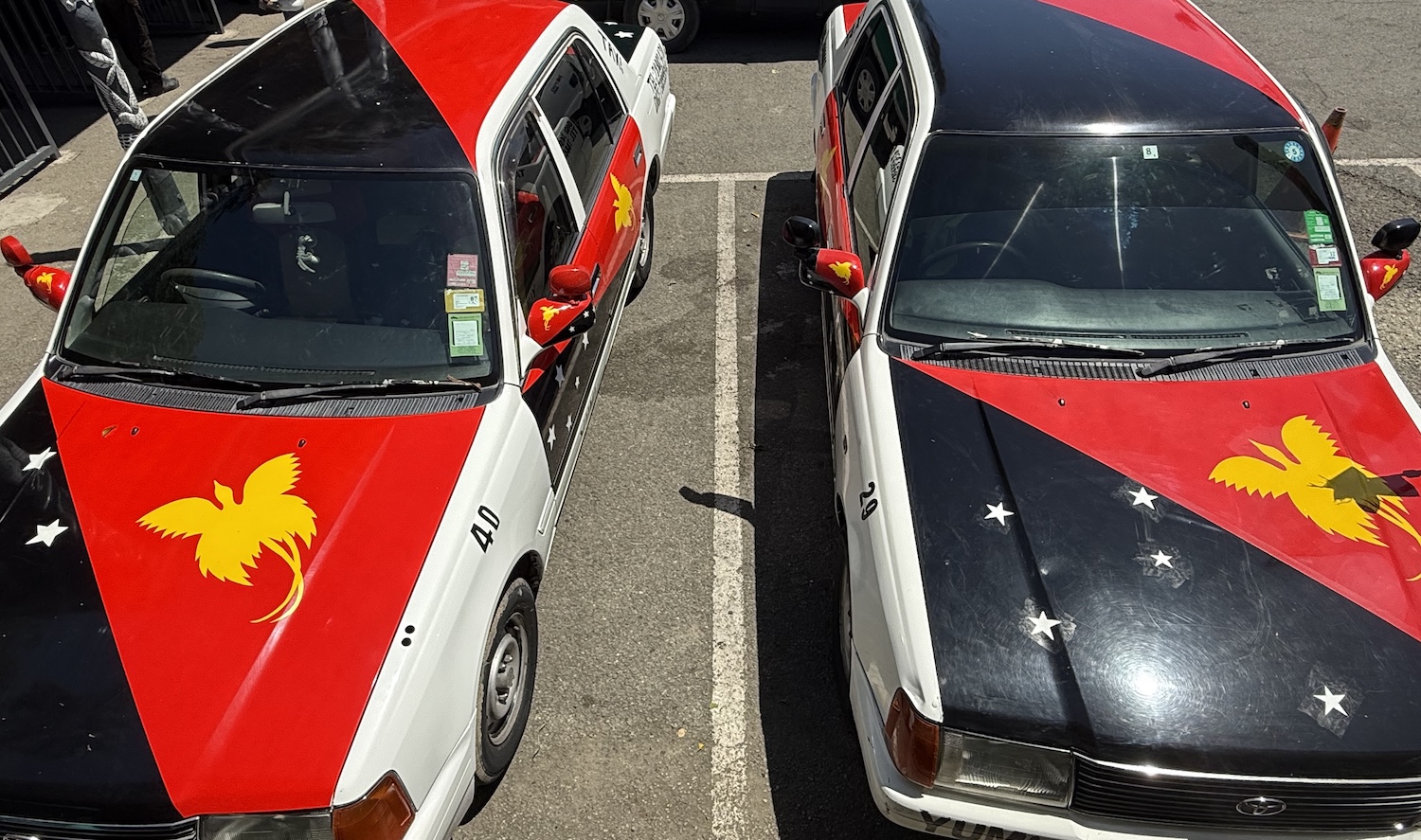
For simple trips to these places, mostly no more than ten minutes from where you are likely to stay, it is fine to take a regular taxi, which are often painted in the national flag. For longer journeys, the best way to avoid trouble is to ensure you are guided and protected, a service offered by the major hotels, which will certainly be your safe haven. If you are here for just one night, it is worth choosing the excellent Airways Hotel, which sprawls up the side of a hill overlooking the runway. However, POM is a fascinating city and it deserves two or three days of your time, and for such stays the traditional hotel used by foreigners is the Hilton, though a brash Sheraton has recently opened nearby.
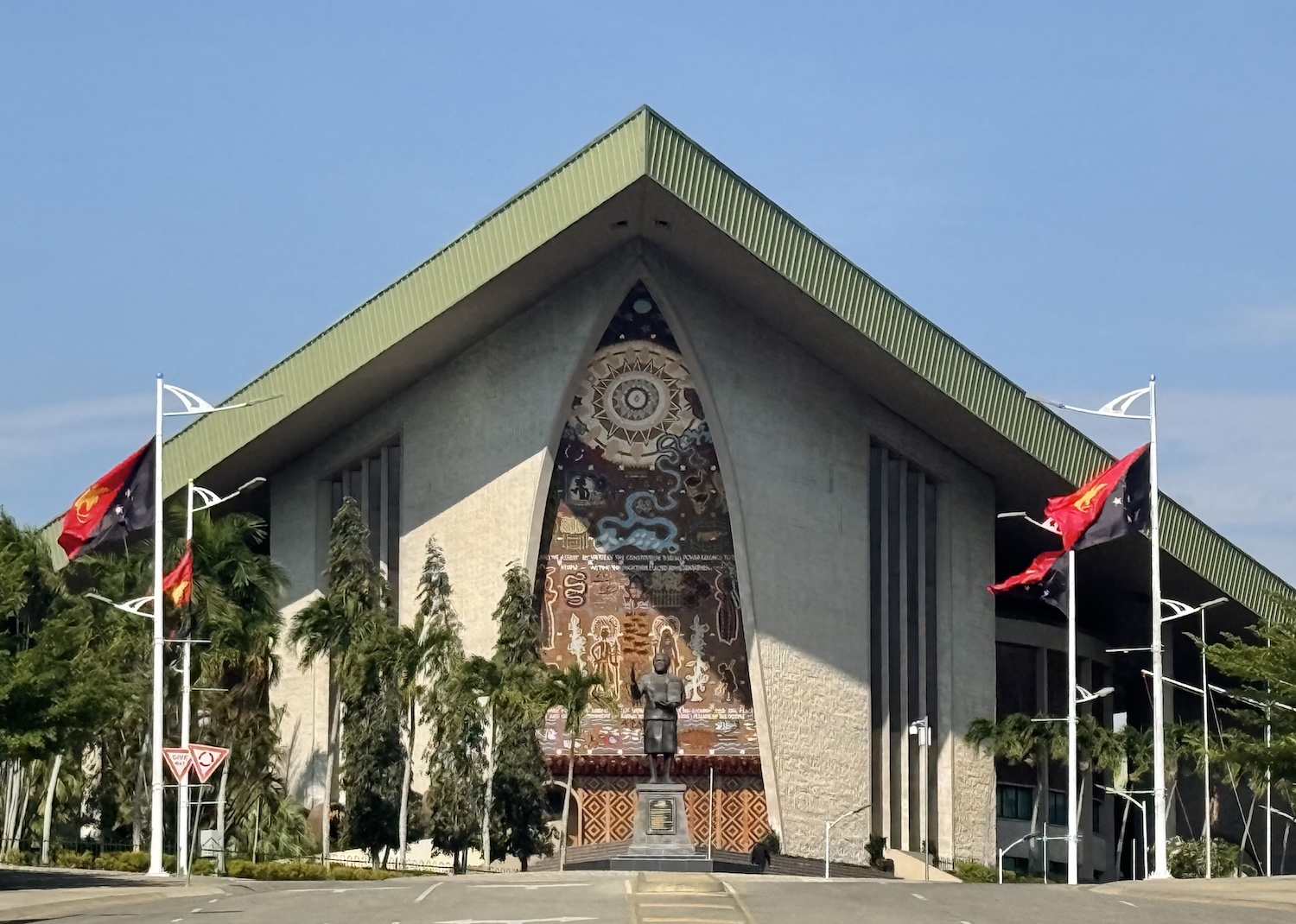
A good way to ease into the city is to start at the government precinct of Waigani. This is where you will find the Parliament Haus, unveiled in 1984 by the then Prince of Wales, as the ultimate historic colonial ruler from Britain. The exterior is in four parts, drawing on traditional regional architecture, such as a spirit house from Sepik River. The interior is modelled partly on the leather and wood of Westminster, with a central Speaker in a wig, and partly on modern EU-styles, with its 111 members, who are elected for five-year terms in single seat constituencies, in chairs set out individually in a horseshoe.
You do not need an appointment to look around. A guard at the door will show you into the chamber, and stand next to you to make sure you take no photos. Outside is a statue of Michael Somare, erected on the fiftieth anniversary of independence. It is noticeable he is wearing a sarong, apparently his usual attire, called a “Zulu skirt”, emphasising again the PNG link with Africa.
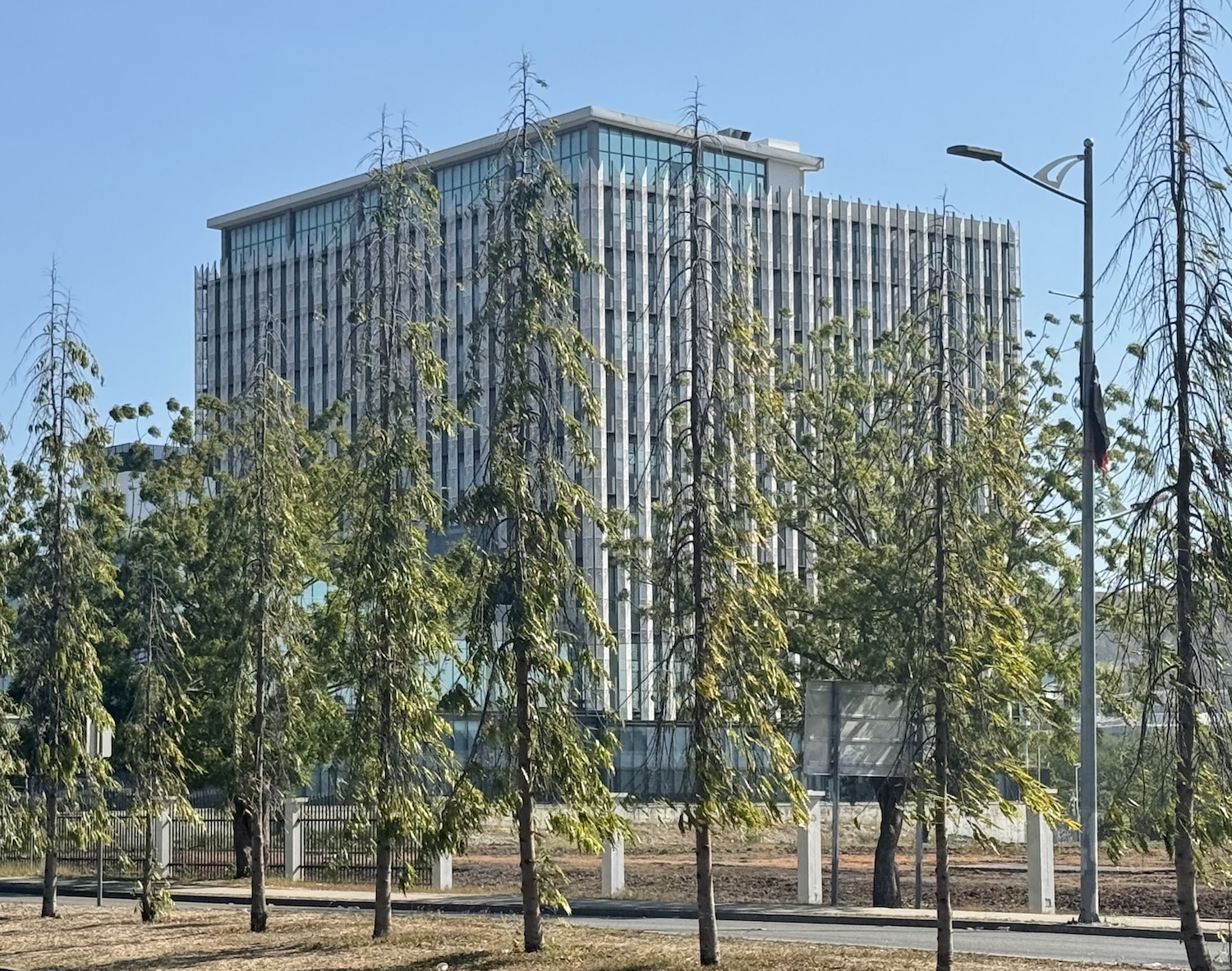
Opposite the Parliament is the contemporary design of the Department of the Prime Minister and National Executive Council. It is not far from the equally flash National Court Complex, amid various government ministries and foreign embassies.
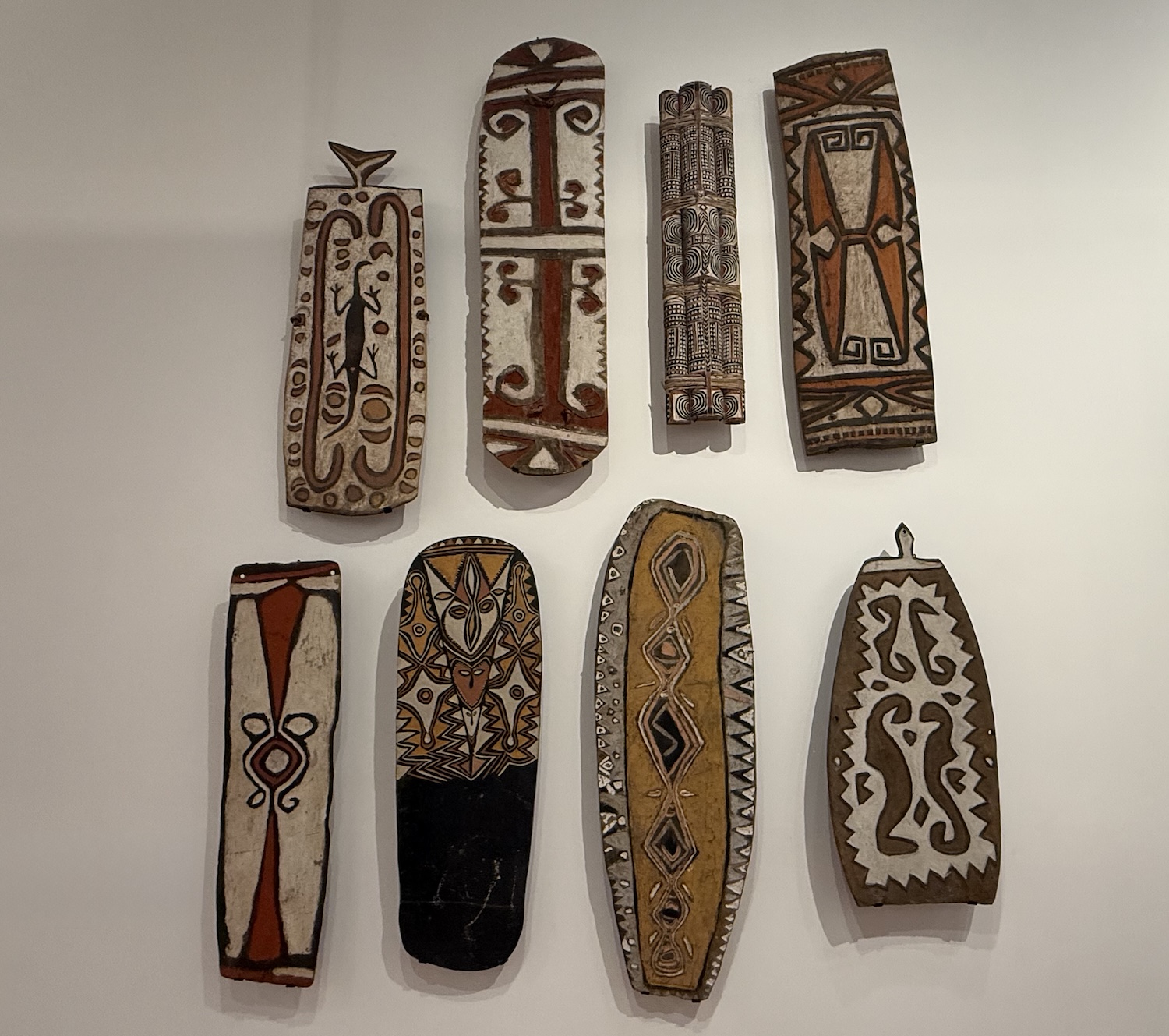
Next door to the Parliament is the National Museum & Art Gallery, founded upon independence through funding from the Australian government. Part is devoted to telling the story of PNG in World War Two. Part is an awesome display of tribal art that offers insights into local culture. Take the “Pay-Back Dolls” of the Kewapa people. These effigies, which are still used today, are placed on the grave of any murdered tribe member, to signal an intention to avenge the death; they are removed only once compensation has been claimed, either financial or in the life of a rival clan member.
Headhunting and cannibalism largely ceased in PNG in the 1960s, after decades of pressure from Christian missionaries. The Kerewo people believed these practices were an important part of initiation into manhood. In shrines in their Men’s Houses they kept agibas on which to hang the skulls of those they decapitated.
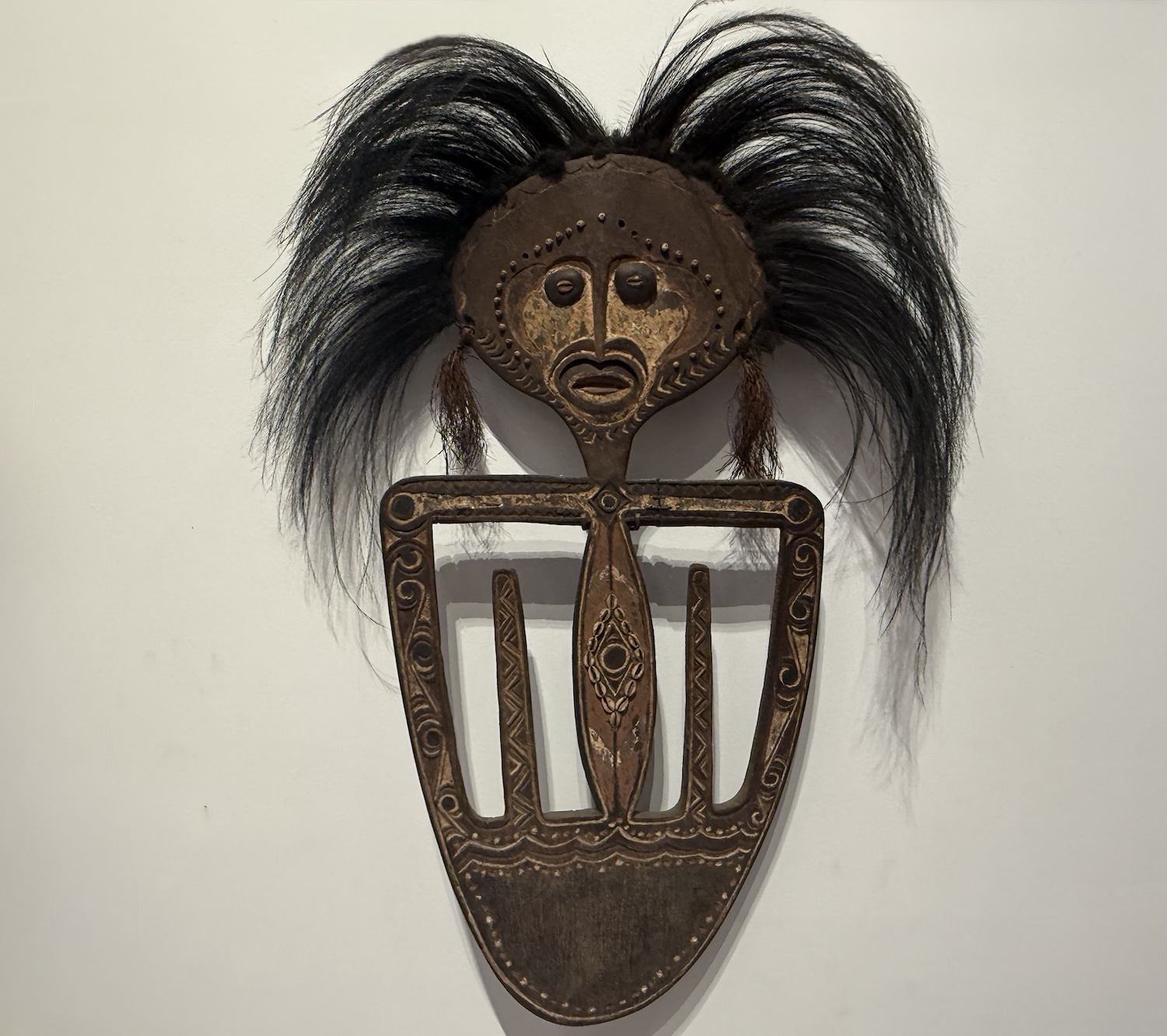
The Kiwai people were also headhunters. To help them identify which rival village to raid, warriors consulted gope boards, which are 2.5m long, ornately carved, often from canoes captured from enemies.
Down the coast from Waigani are several local markets, including Four Mile’s Boroko, with stalls of fruit-and-veg and clothing. There are also two important houses of worship that have influence over local people.
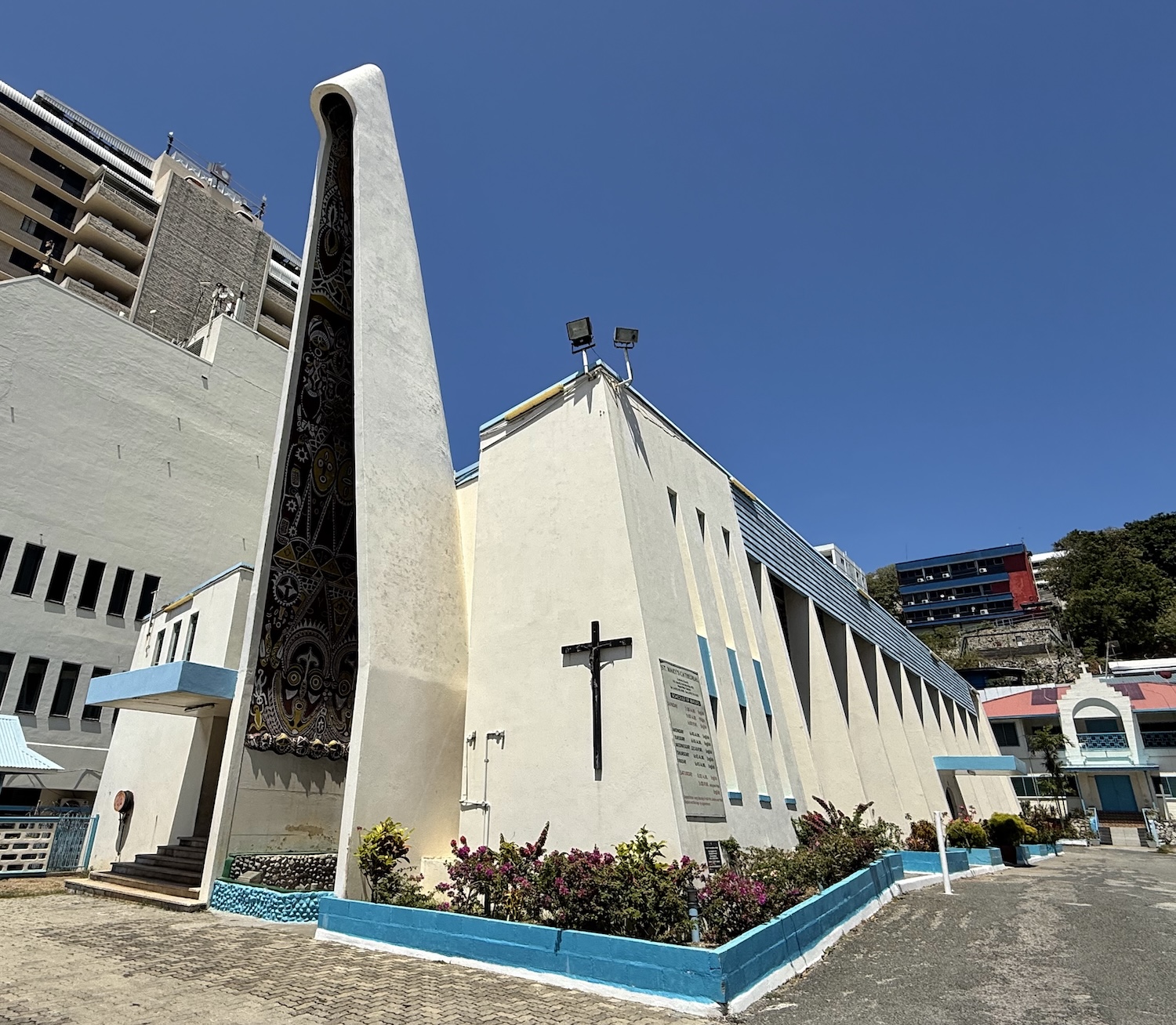
The main Catholic shrine is St Mary’s Cathedral, which has unusual 1960s architecture. I was pleasantly surprised to find an address on the notice board honouring the victims of Hamas’ attack on Israel on 7 October 2023.
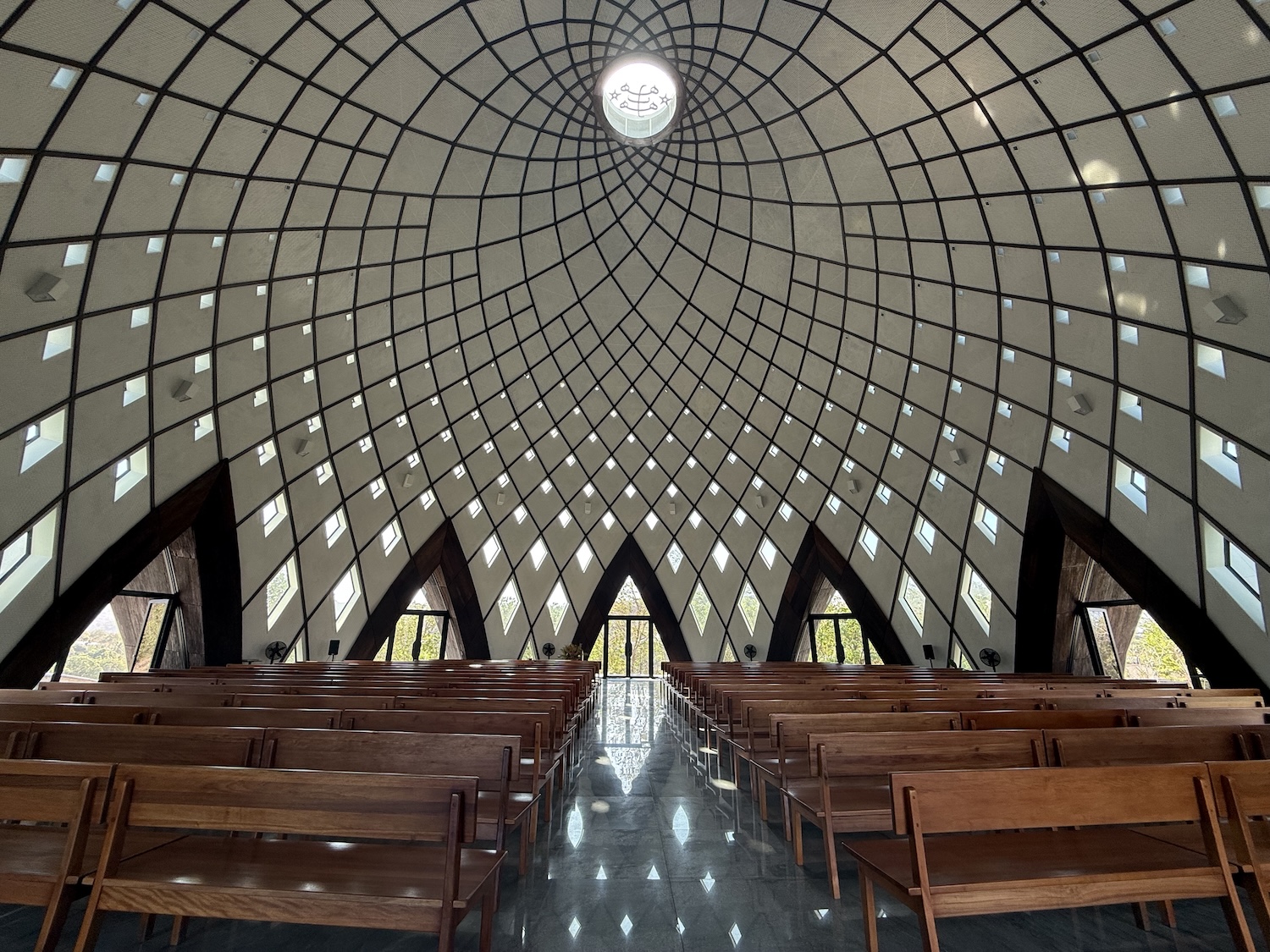
The impressive golf ball structure on a hilltop is the home of the Baha’I faith, which was established in Persia in the nineteenth century and seems to profess the essential worth of all religions and the unity of all people. Amen to that.
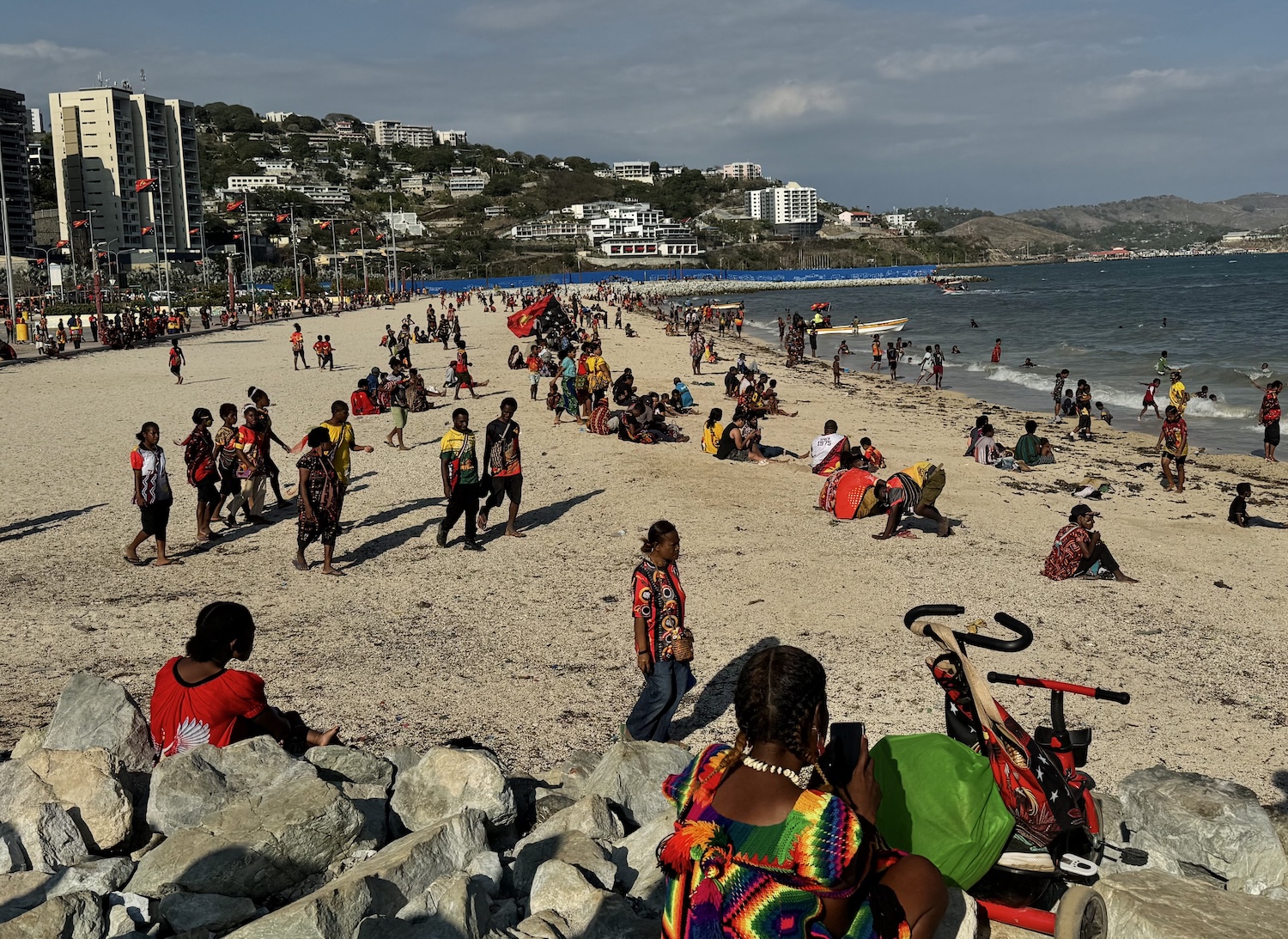
The part of POM that is most normal and most pleasant is Ela Beach, a long stretch of urban sand that attracts locals and foreigners to promenade at sunset.
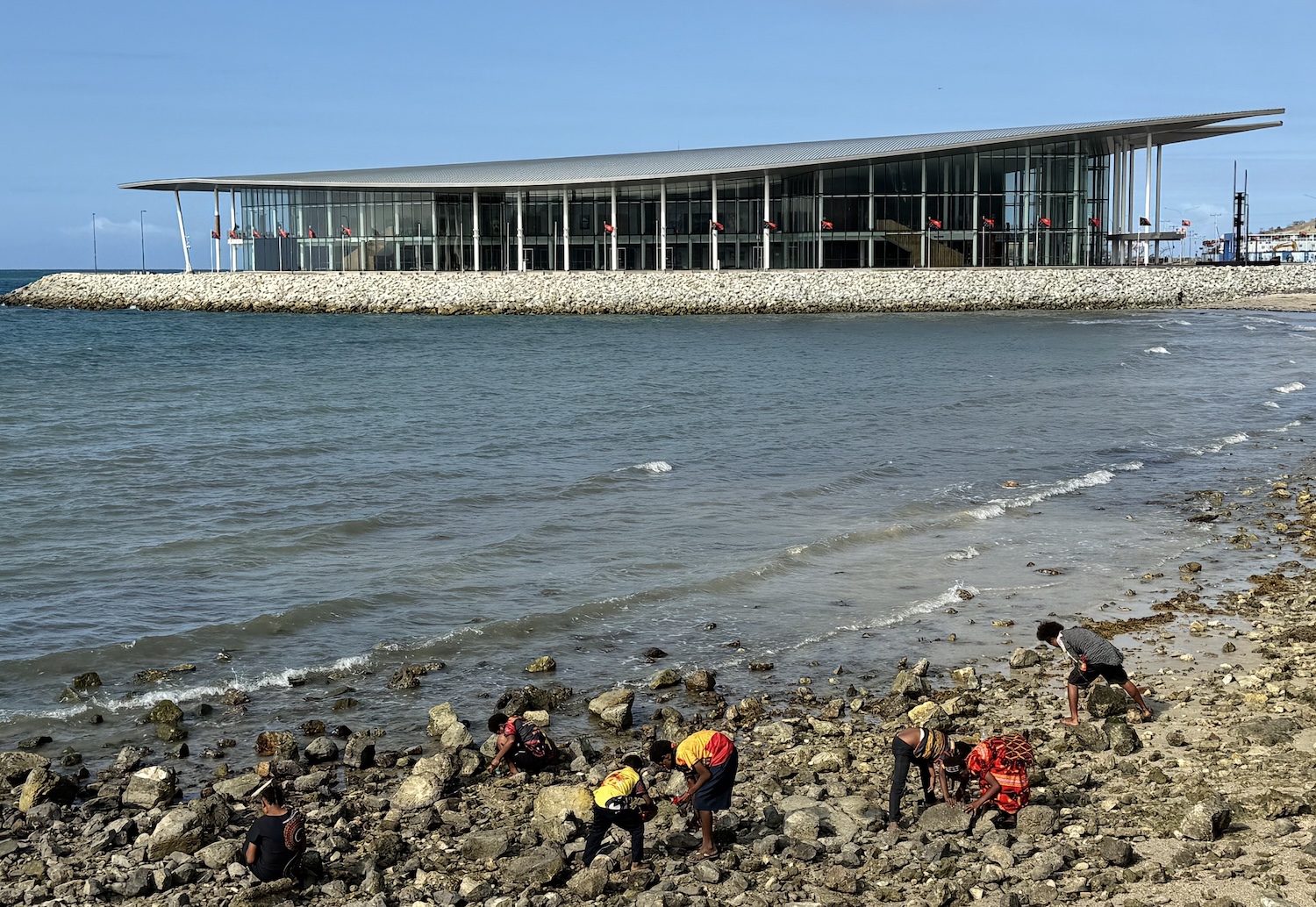
At the west end of the beach, where kids look in the rocks for shells to eat, is APEC Haus, a shiny convention centre that would be at home in any global city.
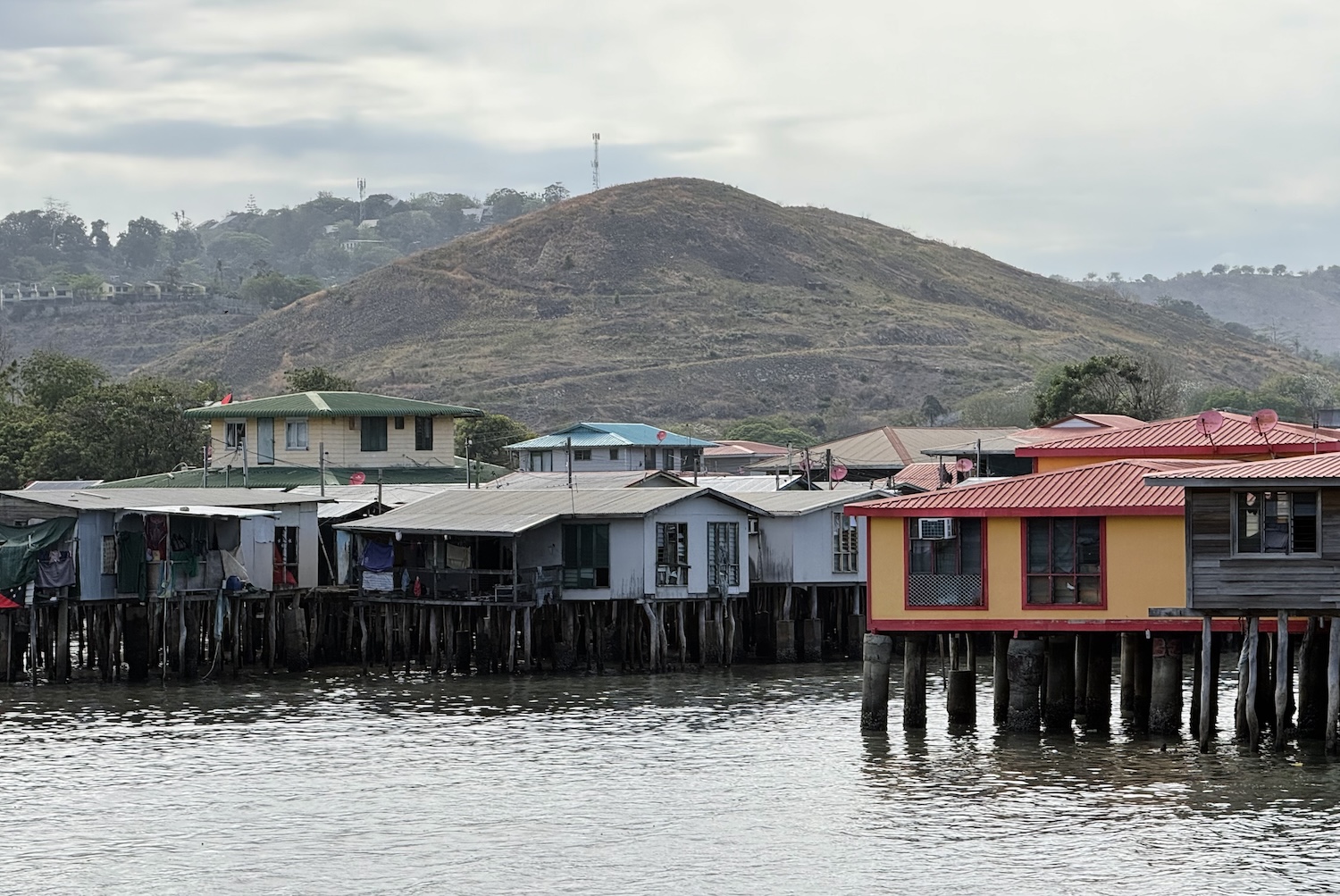
At the east end, neighbouring this wealthy suburb, is Koki, one of two distressed townships built on stilts over the ocean.
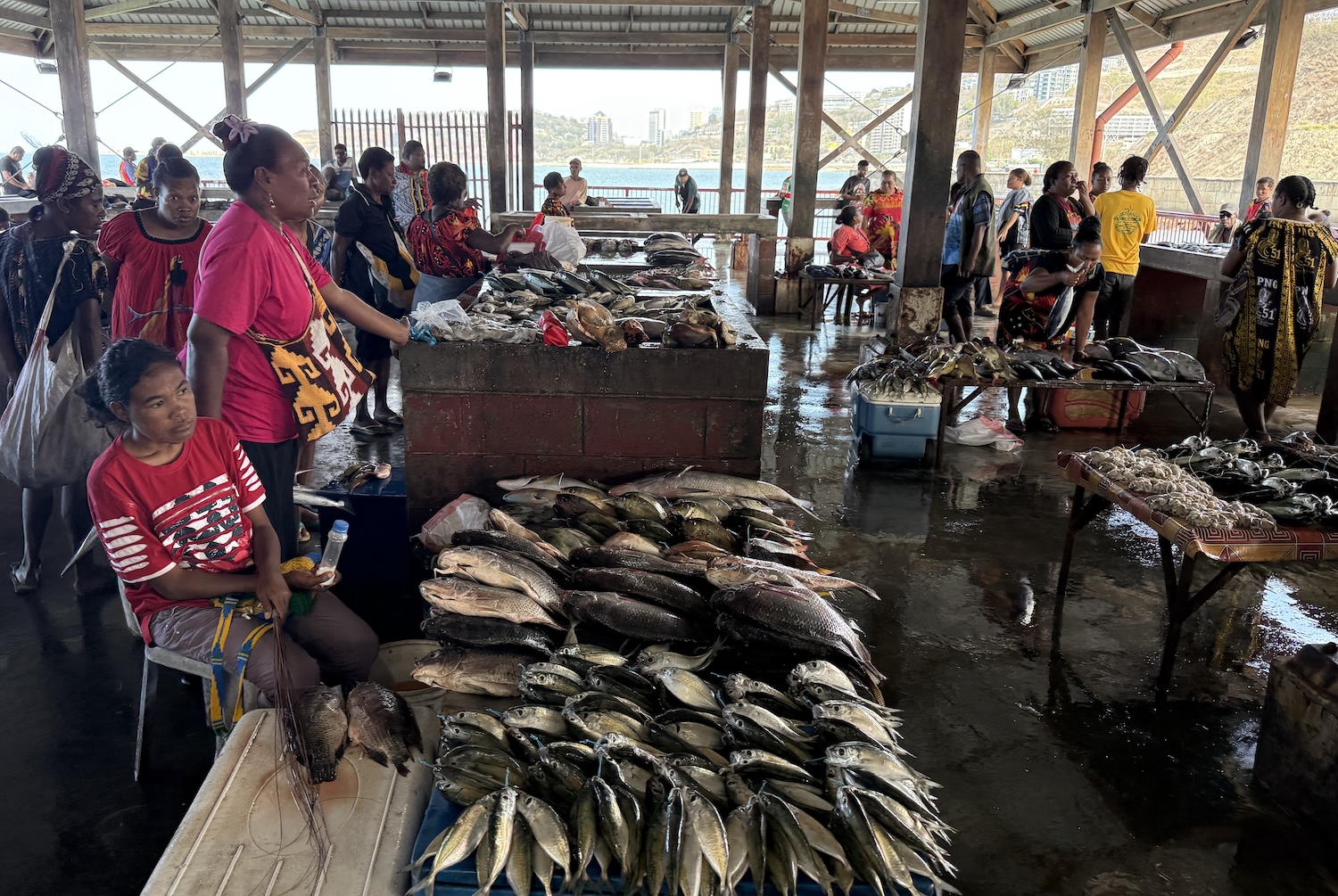
People here make their living from fishing, catch which is then sold at the nearby Koki Fish Market.
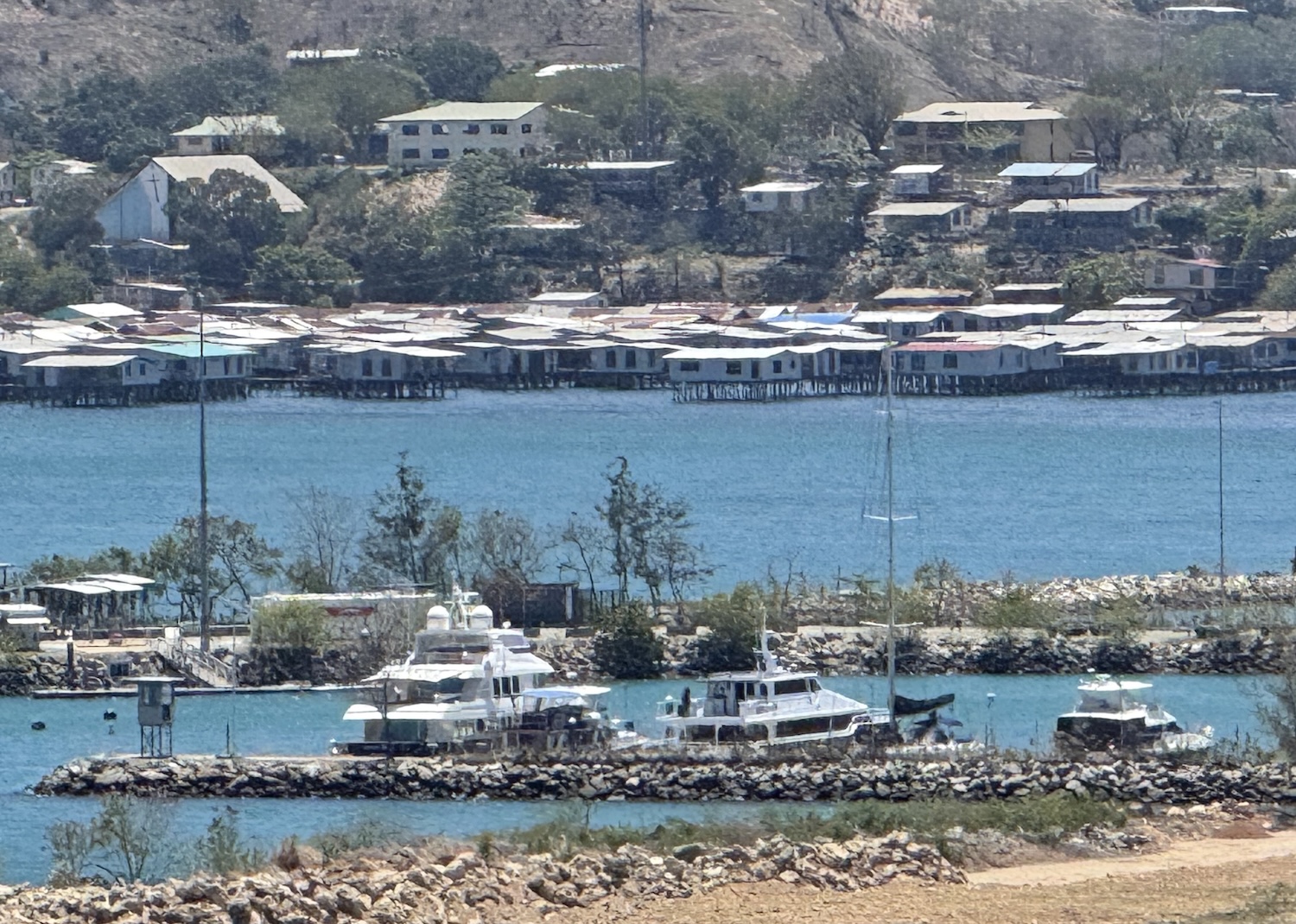
The other overwater township is Hanuabada, just north of the Yacht Club, more or less next to the boats of the rich. It is possible to visit it to understand more of life here.
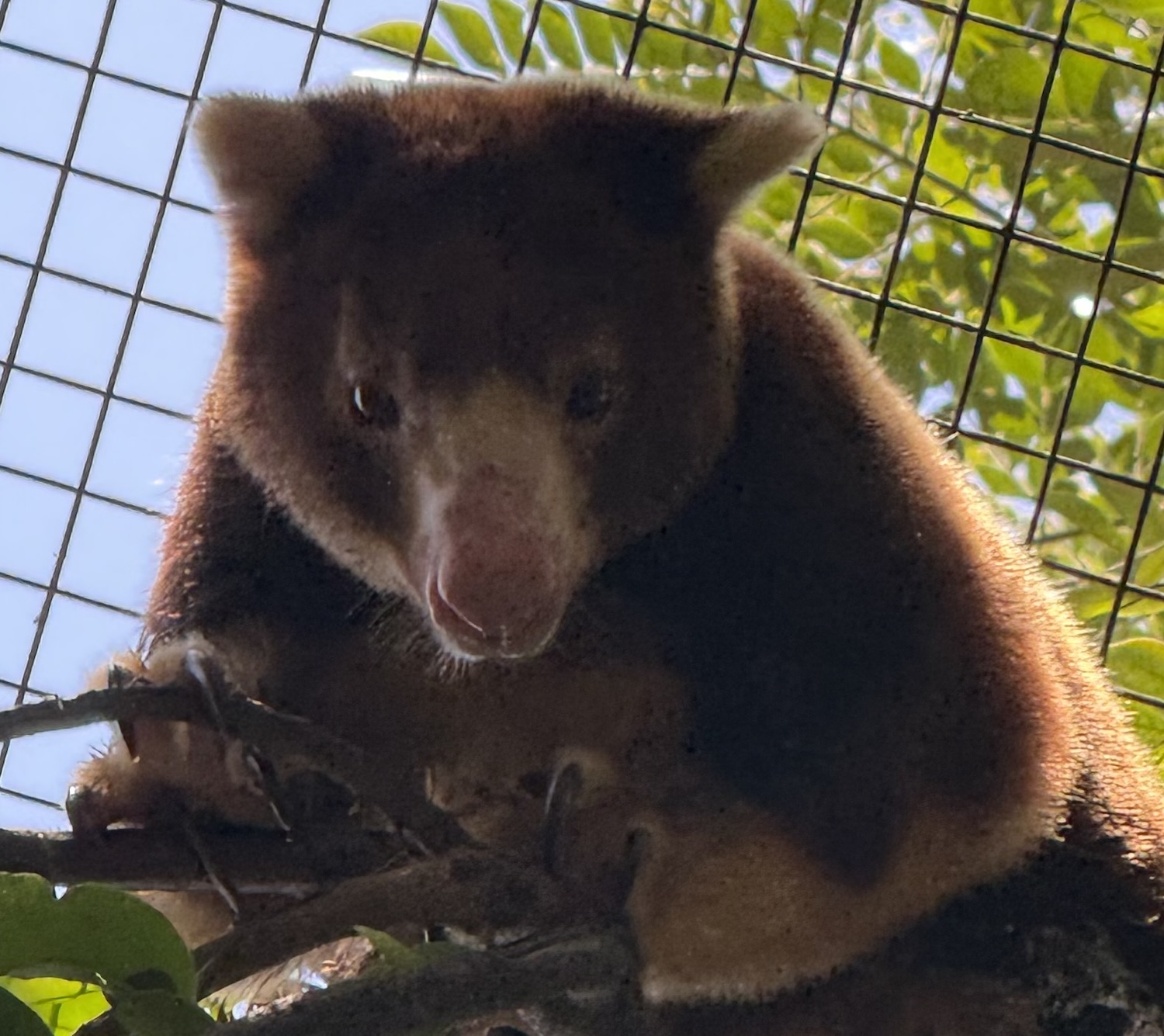
To the north of the city is the Nature Park, where fruit bats hang in the trees. One reason for coming here is to meet the indigenous tree kangaroos, which evolved into an arboreal lifestyle to escape predators. So cute and cuddly.
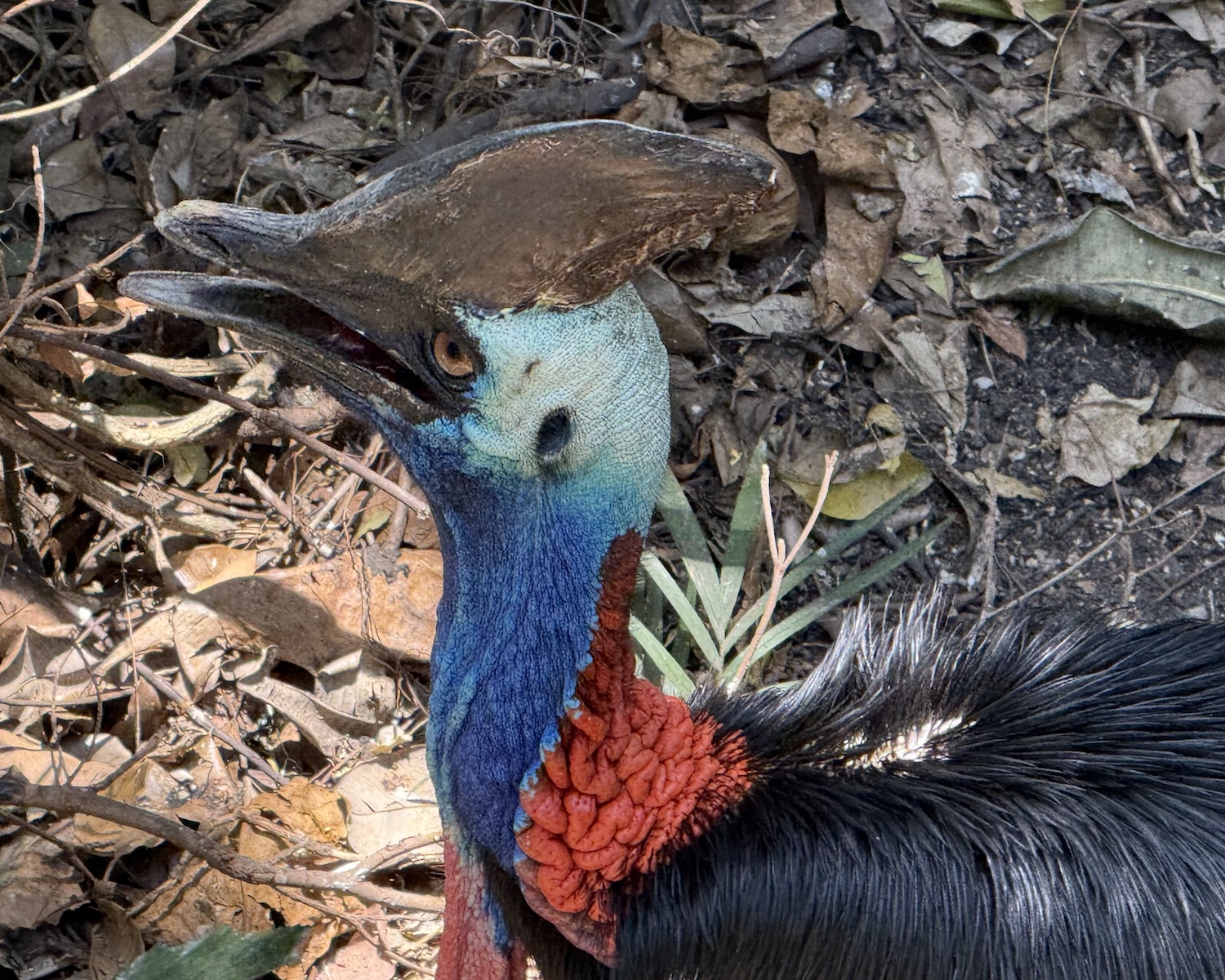
You do not want to get too close to the cassowaries, however. Flightless and fiercely territorial, they grow to almost 2m and weigh up to 70kg, aggressively deploying their 10cm-long claws to attack if they feel at all threatened.
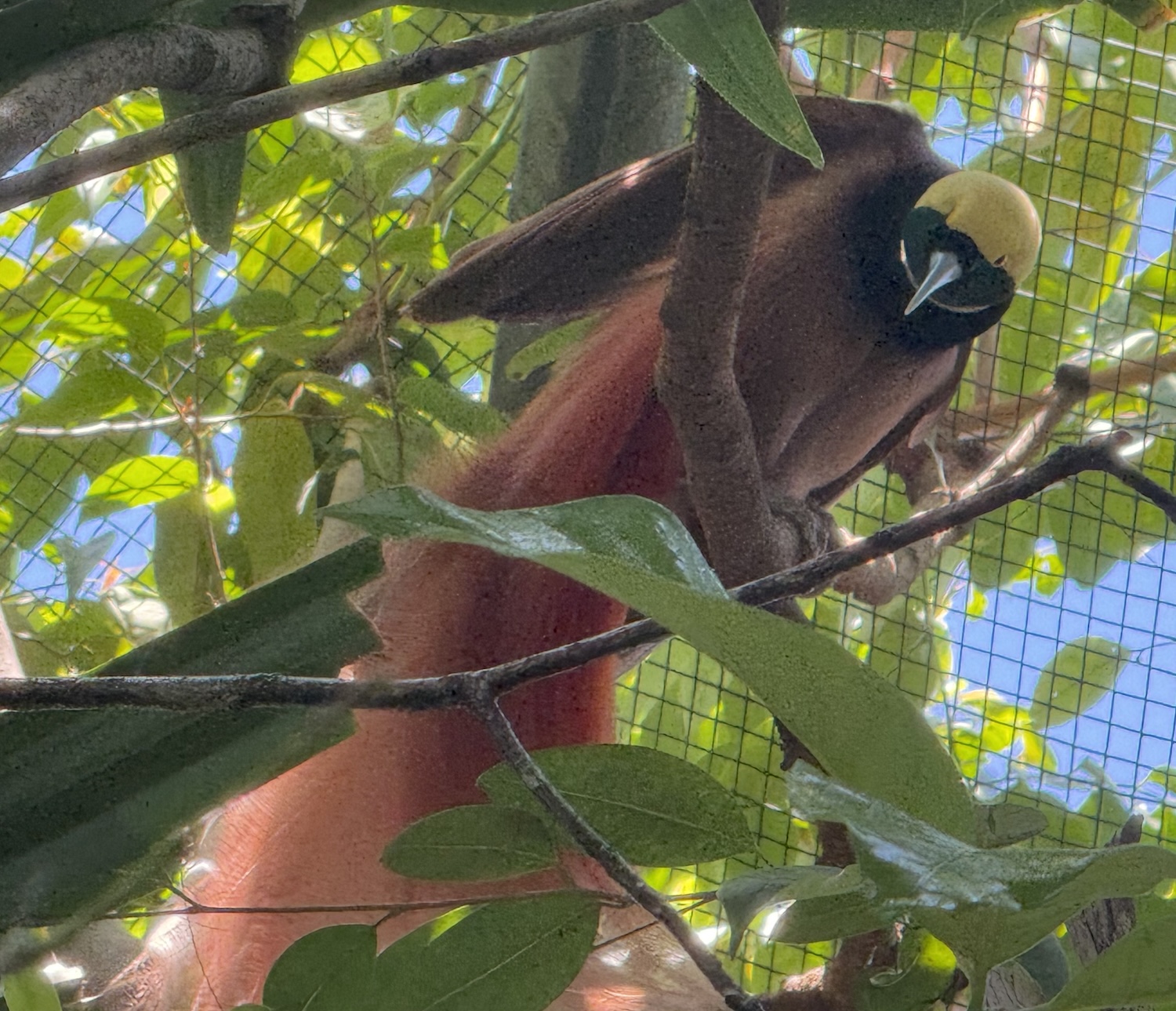
There are also several species of birds-of-paradise, kumul, which are of course easy to see here though not in the Highlands jungle where they come from. In 1971, the Raggiana, with red tail feathers, was anointed the national emblem and included on the national flag, along with five yellow stars, representing the Southern Cross. Since independence and the introduction of the kina currency, the National Crest – a stylised bird-of-paradise sitting on a kundu drum and a spear – has appeared on the back of all coins.
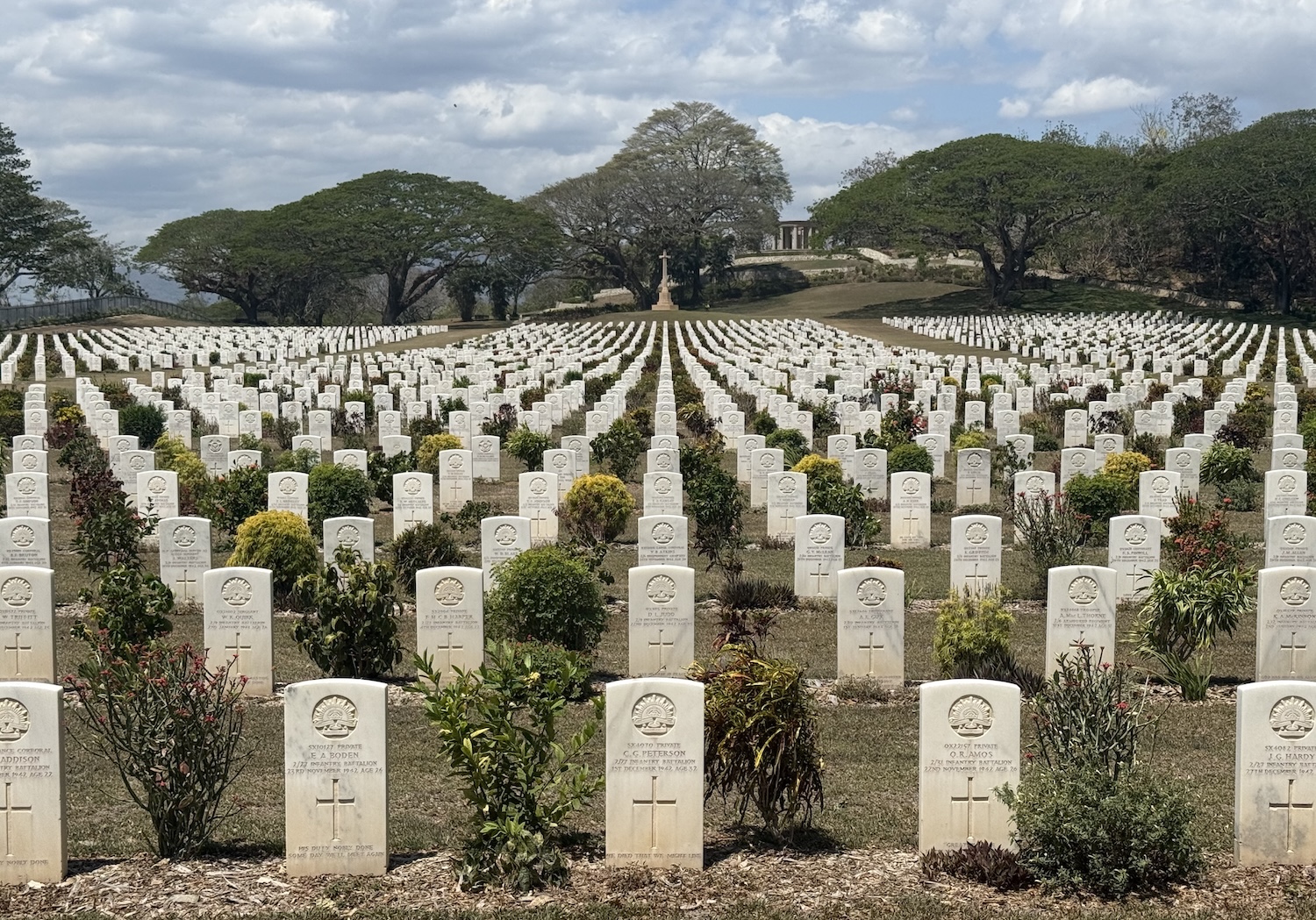
About 12km northeast of downtown is Bomana War Cemetery, maintained by the Commonwealth War Graves Commission, and by far the best kept bit of real estate we found in the whole country. There is just one woman – Marie Craig, an Australian Air Force Nurse, killed on 18 September 1945, aged 37 – among 3,823 men, of whom 699 are unidentified.
Port Moresby is located at the south end of the Kokoda Trail, a 96km-long route through the rugged Owen Stanley Range. This is where Australian forces sought to hold the Imperial Japanese Army to prevent an assault on their homeland. These days, it can be trekked, a challenging expedition even without being shot at that takes more than a week to complete.
Just south of POM is Bootless Bay, in which is Loloata Island. Attempts are being made to turn this into a luxury destination for tourists, who can stay at the Loloata Island Resort.
There is also diving here, with rare and bright red rhinopias, with carpet crawling epaulette and wobbegong sharks, and at the MV Pacific Gas, the wreck of a cargo ship that sits upright and intact at 40m. There are two shops: Pro Dive PNG is run in POM by John Miller (+675 7202 1200), and Dive Adventures is operated by the Loloata Island Resort.
In addition to all that, Port Moresby is the place to be on 16 September, Papua New Guinea Independence Day. We have been to numerous such celebrations around the world, but none that can compete with the pride and the passion we found here. It is a public holiday, when every single resident must have been on the streets, every single one of them in face paint, carrying national flags, and wearing loud red, black, yellow and white shirts or meri blouses. (These were originally invented by Christian missionaries to cover up the bare female flesh they found everywhere, and have since been adopted as the national uniform for women.)
For the festivities, there are several venues around the city where representatives from each of the twenty-two provinces present their unique traditional culture. The biggest are at Sir John Guise Stadium, a rugby ground honouring the first Governor-General after independence, and at the university playing fields, where we went. They get going a bit before midday, and after the performers start to melt away, around 4pm, the crowd takes over in an afterparty, called a wipa, involving mass copies of the routines they have just seen.
In the centre of the field, the crowd forms a square behind ropes, which creates a stage on which performers do their thing one after another. Meanwhile, thousands of people throng around the edges of the field, buying food and drink.
While preparing for their appearance in the ring, the tribes create a fabulous energy everywhere.
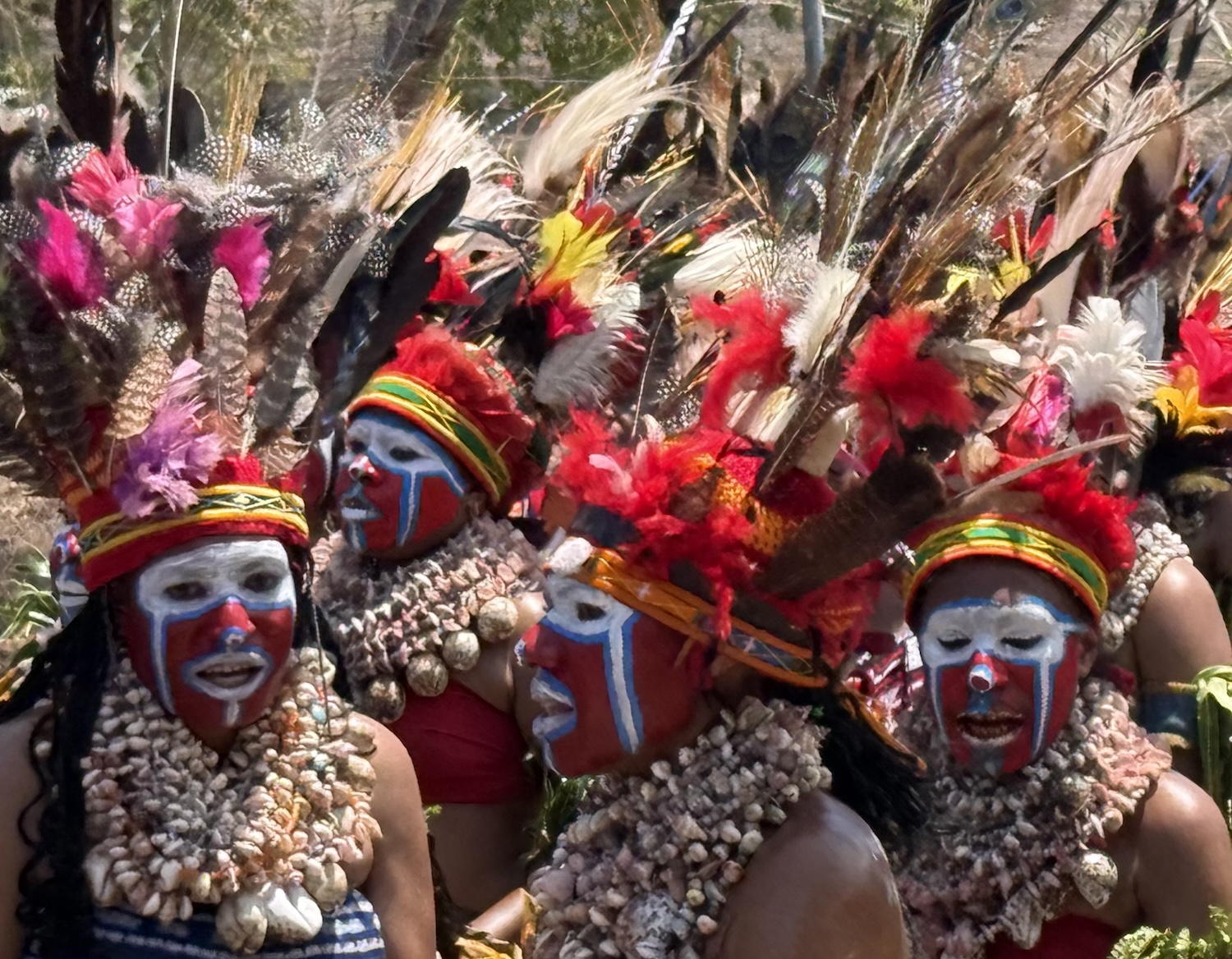
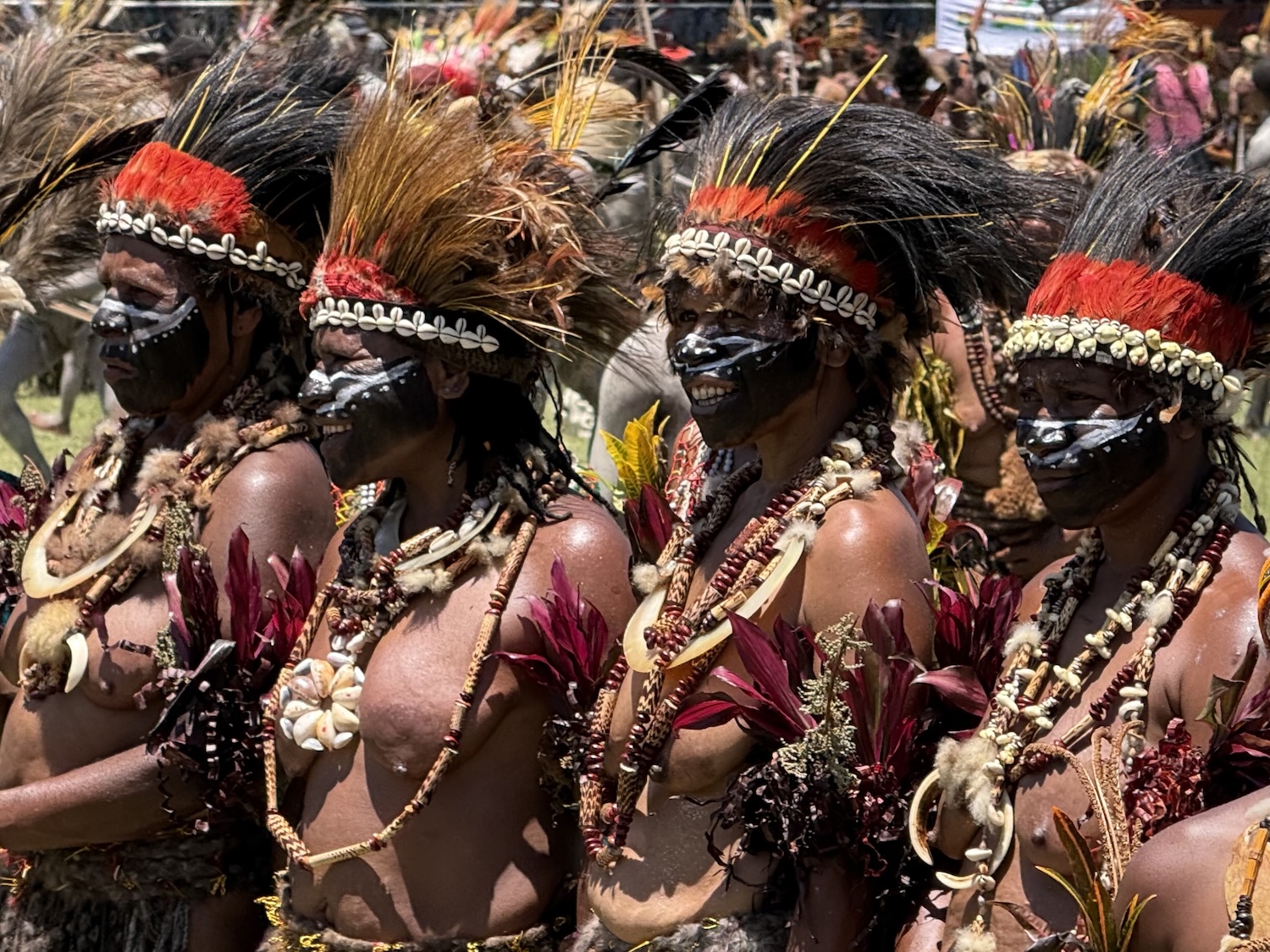
Each province, and each tribe, has their own historic and distinctive bilas, a combination of face paint and body art as well as traditional costumes, songs and dances.
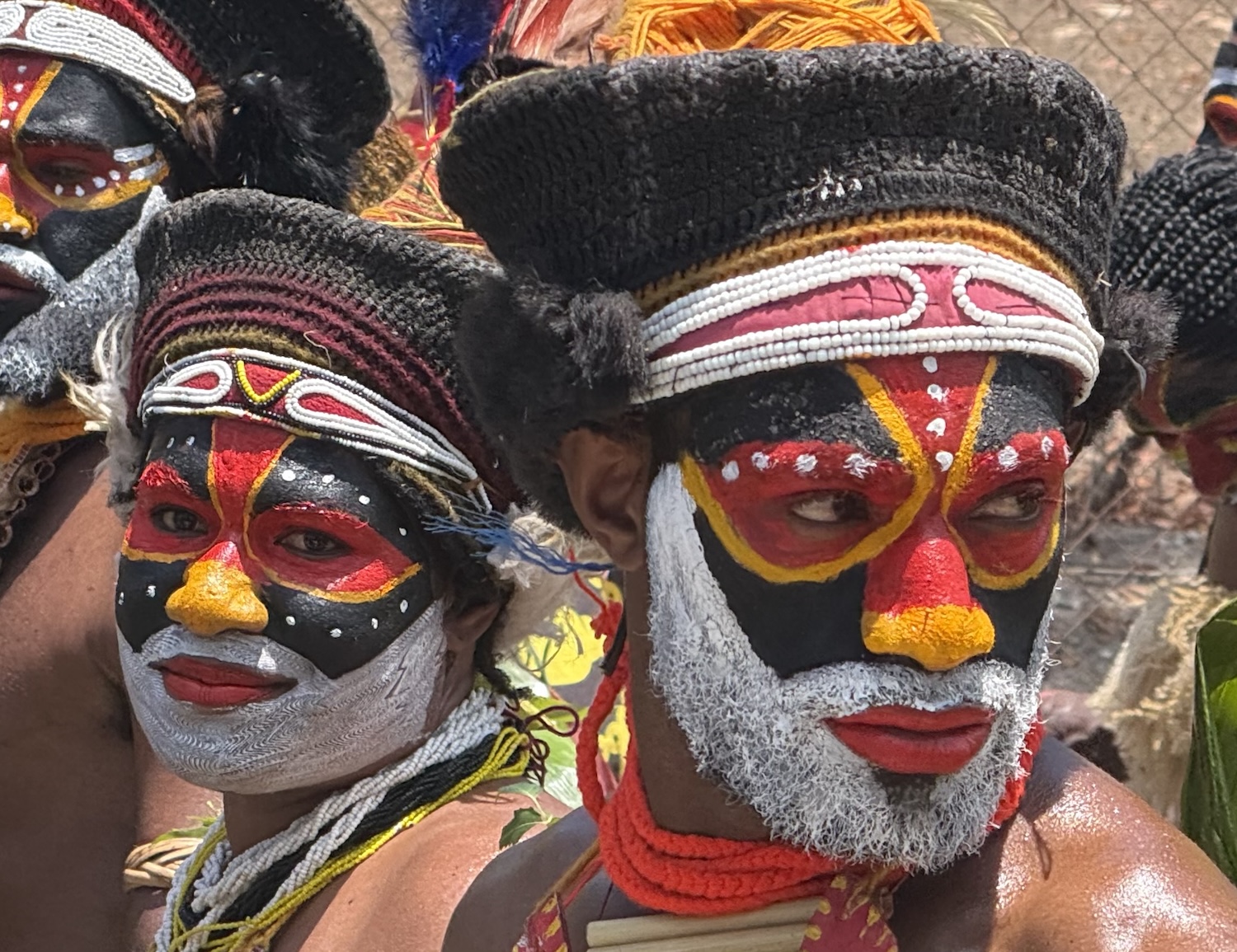
We saw only one other white face in the crowd of thousands all day, probably because tourists are too scared to join in. But we bought the relevant shirt and meri blouse and wandered around chatting to everyone quite happily. As we took photos of performers, the crowd took photos of us. And every time we tried to take a picture of clan members off stage, they immediately insisted on getting everyone from the tribe in on the shot.
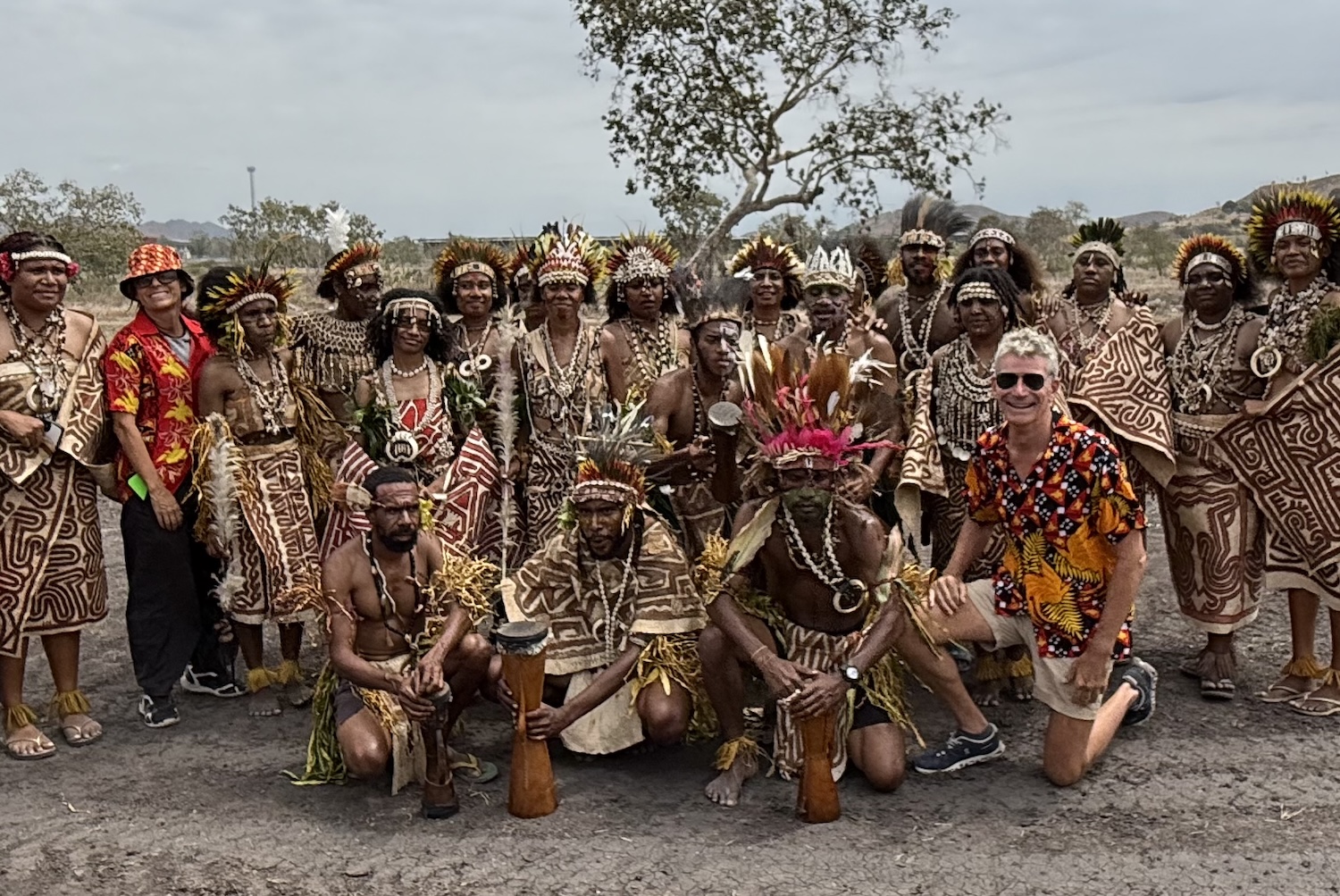
Not only did it feel completely safe and friendly, but this turned out to be the greatest cultural festival we have ever attended, although that was a title it held for just three days.
The Highlands
In the Western Highlands, there is so much tribal conflict over land and mineral rights that they are out-of-bounds to visitors. The Eastern Highlands, however, where there is nothing worth fighting about, are safe, accessible and the pinnacle of our visit to Papua New Guinea.
It is easy to arrange trips to villages, and to attend one of the massive annual festivals, known as Sing-Sings, which feature hundreds of tribal groups showcasing their culture. The largest and longest-running is at Goroka, held in September, usually on the weekend soonest after Independence Day, which is where we came. Other big ones include those at Mount Hagen, Sepik River and Wabag in Enga, all held in August.
It is fine to travel alone here, though I recommend arranging access through a local guide, partly because they oil the wheels and provide the transport, and partly to support the development of this embryonic industry. We booked through PNG Highlands Adventures (the owner, Jenny Gonapa, is on +675 70468746), which sorted our visits to villages and our tickets to the Goroka Show.
There are direct flights from Port Moresby to Goroka, which is the capital of the Eastern Highlands. It is in the Asaro Valley, overlooked by the beautiful Mount Kiss, but it is a desperately poor place, so you need to set your expectations of hotels (certainly compared to the resorts in the Outer Islands, which are much better). The two options are the Bird Of Paradise, right on the main street, and the Pacific Gardens, a bit quieter out of town, both of which book out up to six months ahead of the Show.
Of course, birds-of-paradise also live in the Highlands. There are forty species here, twelve of which are endemic and found nowhere else. However, your chances of glimpsing them in the wild are slim to zero, so you should be sure to see them at the Nature Park in Port Moresby.
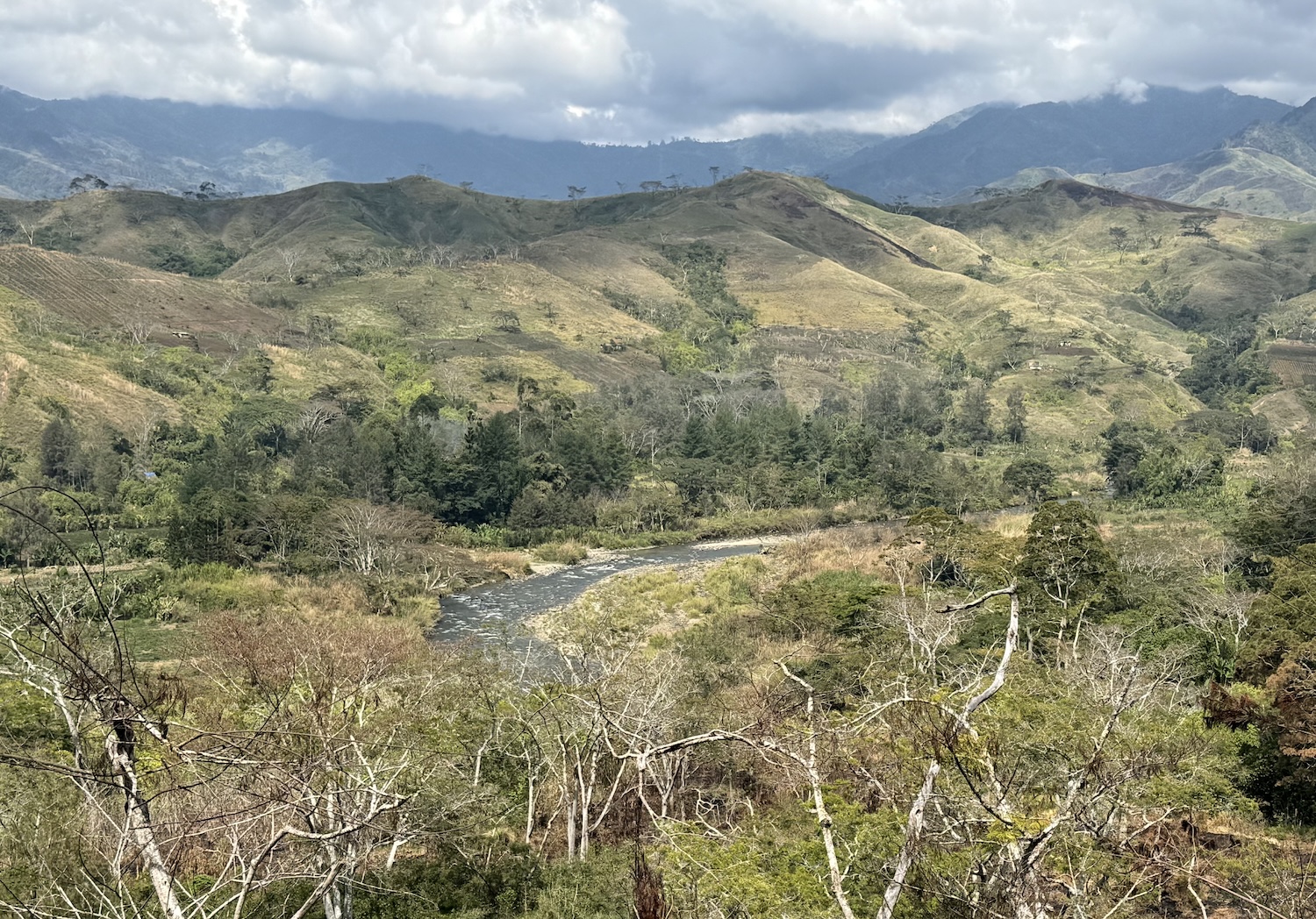
Goroka has a small museum, the JK McCarthy, with some examples of tribal art and World War two relics, but it is not a patch on the National Museum & Art Gallery in POM. The town is better known for its colourful bilum market, which stretches for about half a kilometre along the main street.
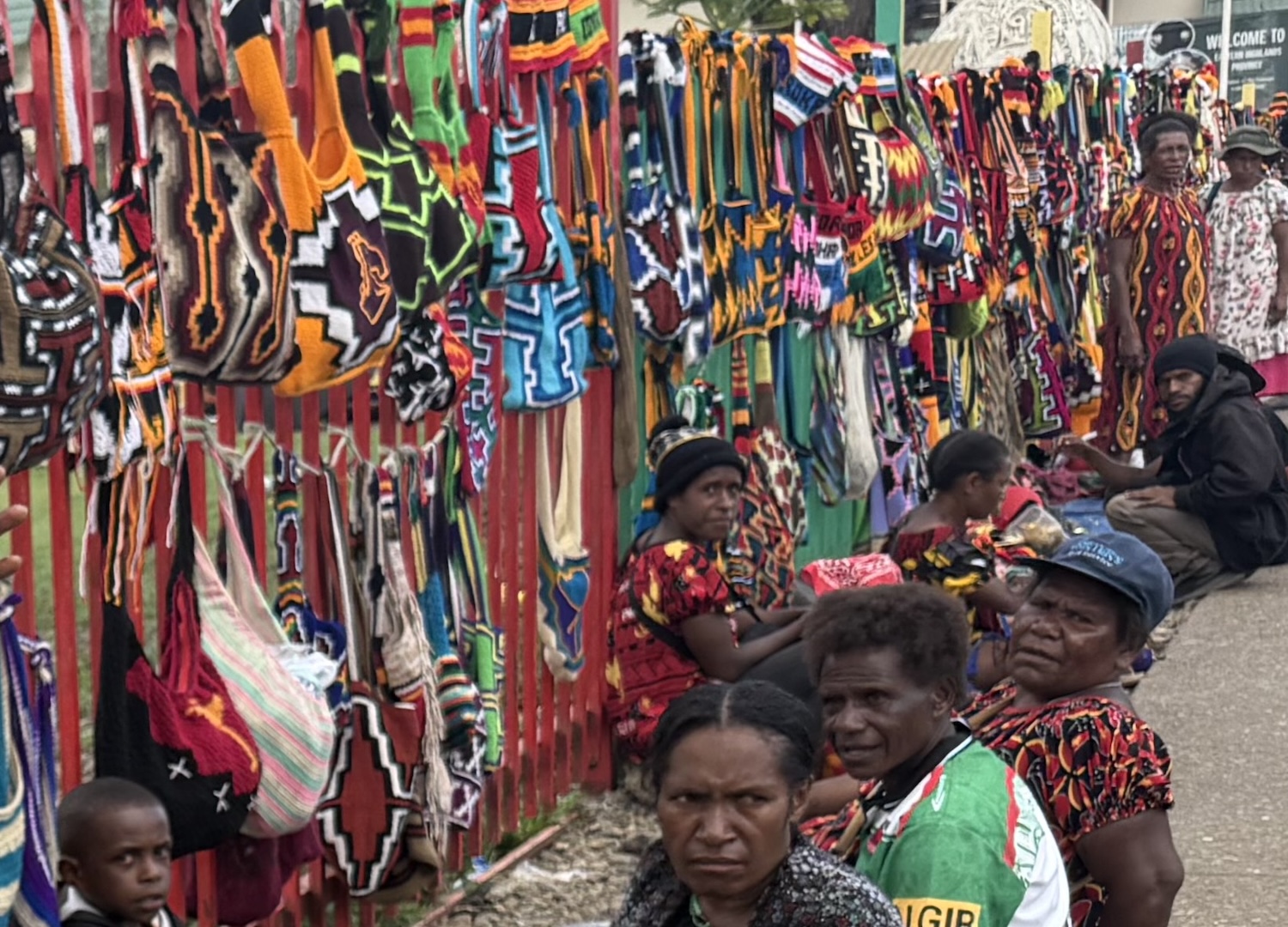
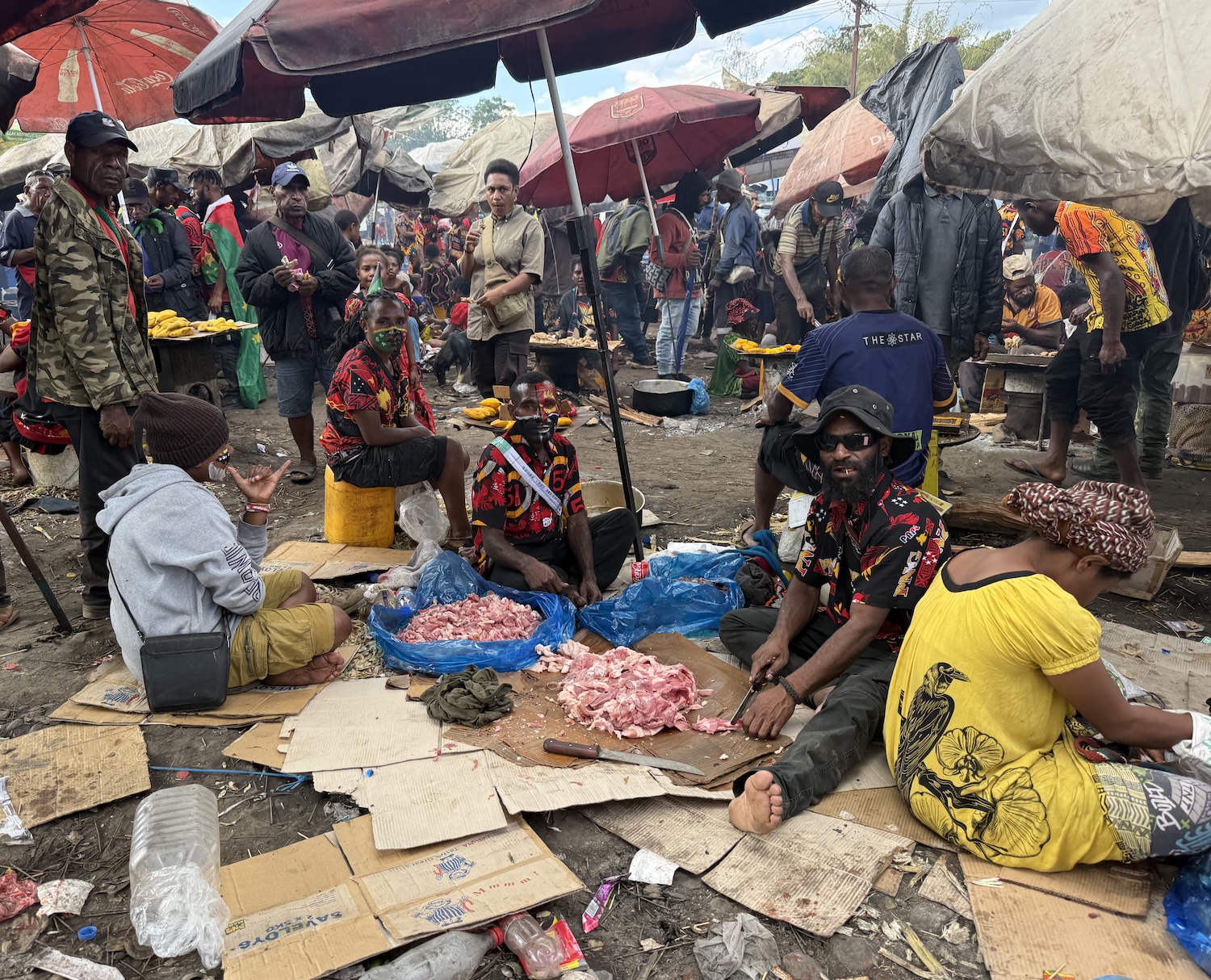
The central market is an explosion of colour and squalid poverty. It is also a great place to join a darts game.
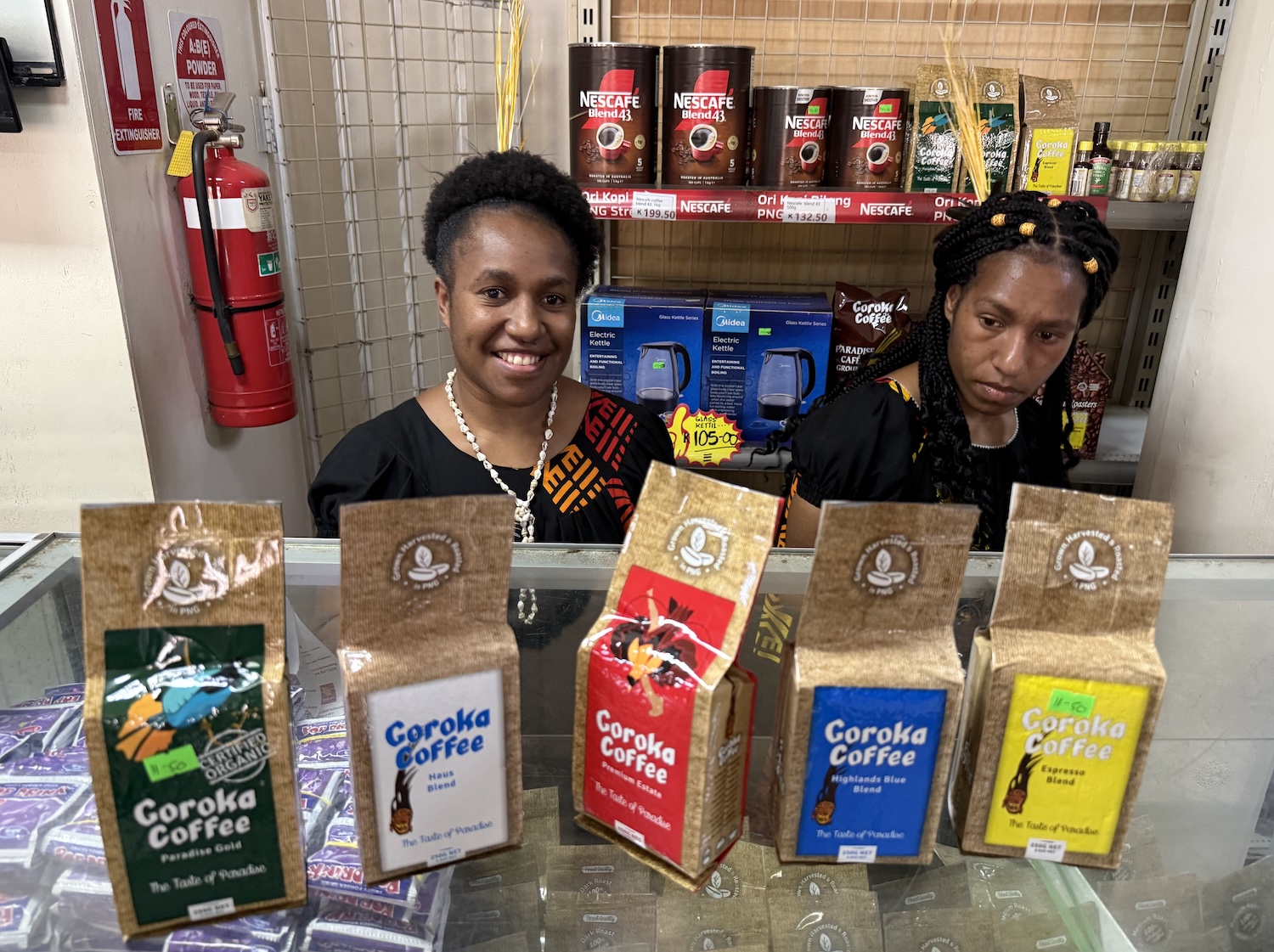
There are coffee plantations all around, so there are excellent coffee shops in town. There are also mamajuana fields, and you can sample the Mary Jane with villagers out in the forest.
People in the Asaro Valley live a hand-to-mouth existence, growing what they can of banana, sweet potato, taro cassava and sugar cane in their own vegetable gardens. Most they consume themselves, but those who live near the highway try to sell anything spare to passers-by to generate a minimal cash flow.
To learn more about this life, we set up a visit to Nipuka village, 20km northwest of Goroka. To be honest, I was not all that keen, thinking this would be one of those typically contrived and awkward reconstructions. In the end, however, I found this experience overwhelming and one of the best things we did.
We came here to see for ourselves the distress of people in rural poverty, and it is heartbreaking. We also found new friends for life, people like Stan and Rose Gareke. Stan is one of the most charming and intelligent people going, a senior villager able not only to explain his circumstances but also to analyse the political context in which he is trapped. He is looking for contact with the outside world to bring a wider appreciation of the plight of Highlanders, and for anyone willing to learn or help he can be reached on +675 72639358.
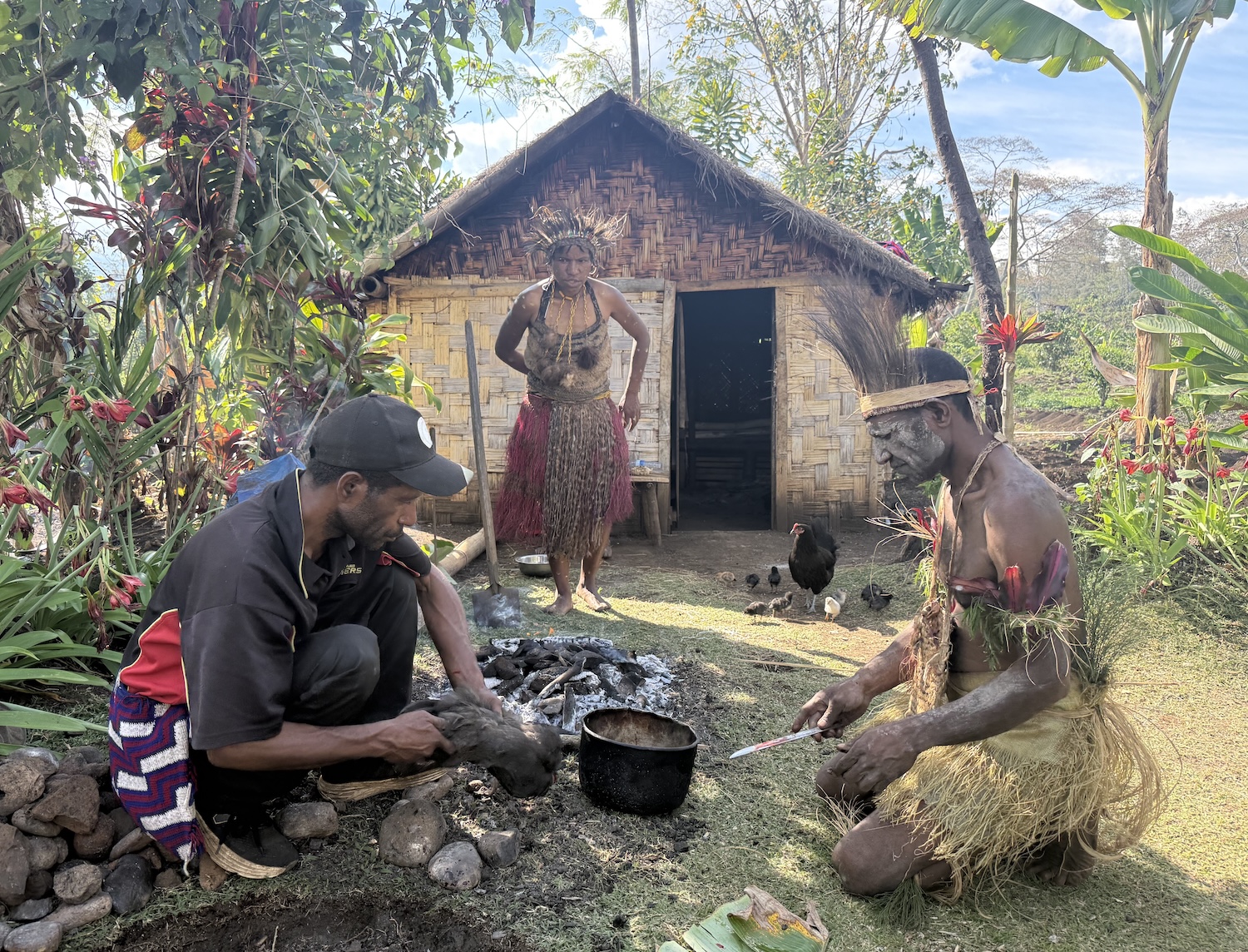
To me, it is a wonder these villagers do not take up arms and revolt against their oppression, but they were so stoically warm and welcoming. We spent a moving afternoon with the chief, his family and twenty of his villagers who patiently showed us the reality of their lives. We watched them painstakingly care for their banana trees, each of which will yield no more than PGK40, less than €8, in a year. And we watched them dig a mumu pit, cut the throat of a chicken, pluck it and cook it, for us all to share.
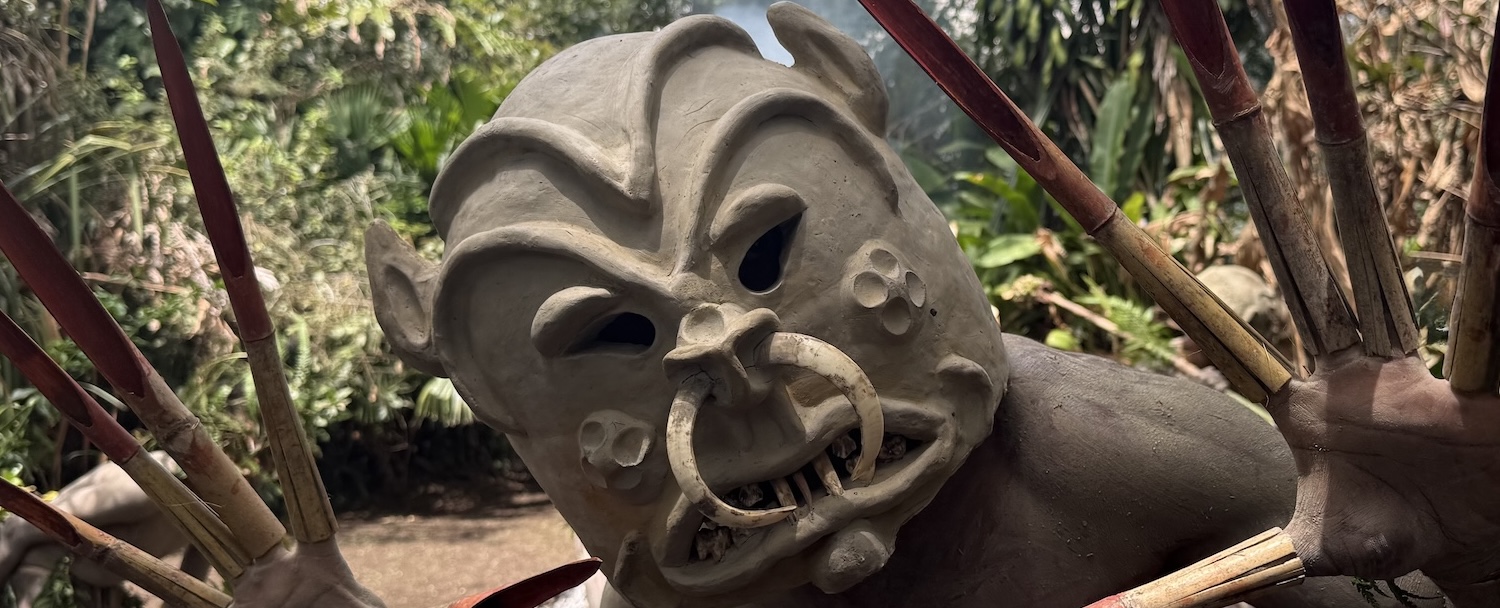
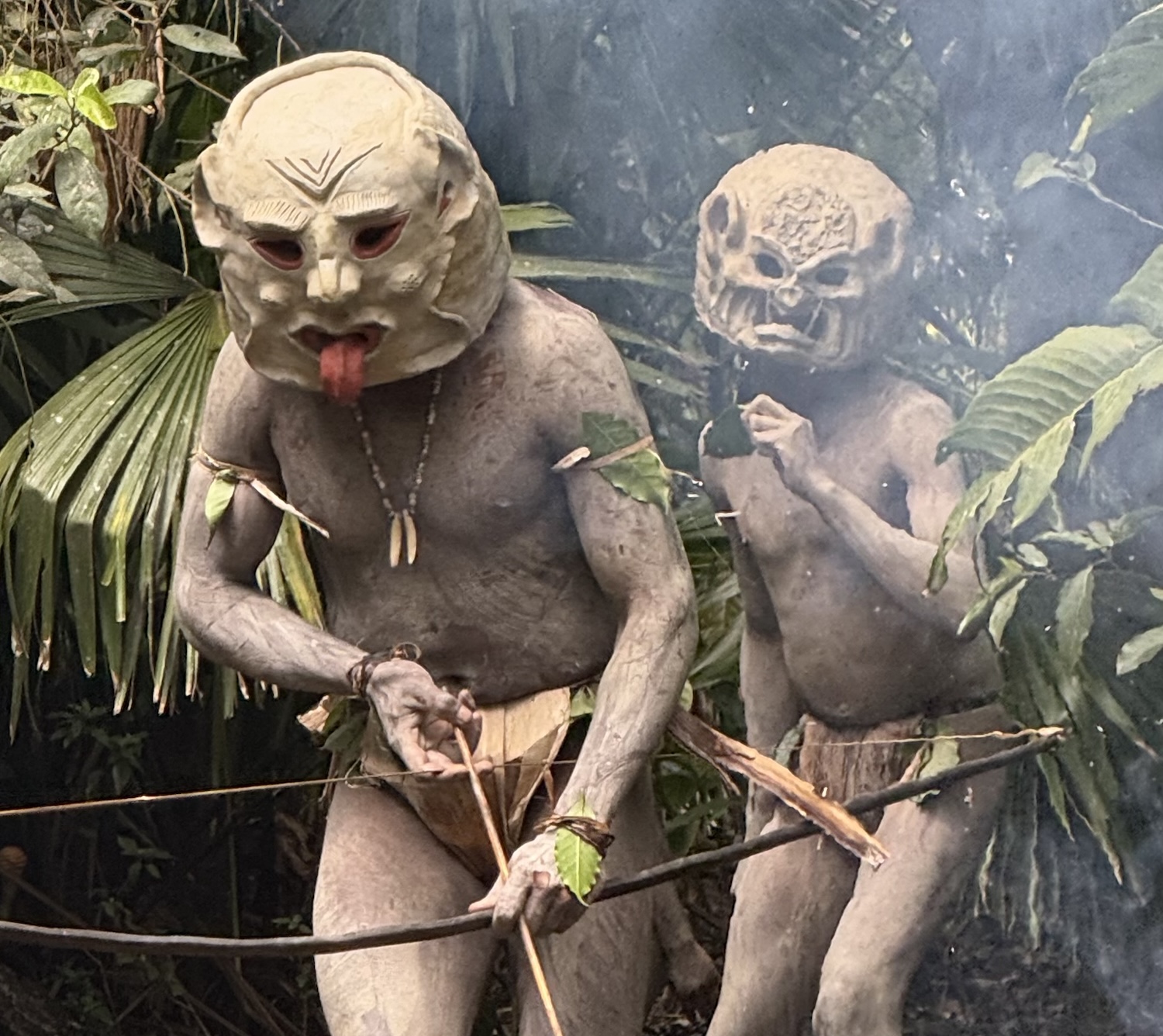
The iconic tribe of the Eastern Highlands is the Holosa, also known as the Mudmen, who have ten villages in the Asaro Valley. Sometime in the nineteenth century they began using white sap to cover their black skin to make them appear frighteningly ghostly to enemies, and since the very first Goroka Show in 1957 they have added a clay-made head-mask and mime-dance to complete their look for ceremonial occasions.
They are still in the Goroka Show, of course, but the day before that we visited them in Geremiaka village, not far from Nipuka, where they gave the two of us a private performance and another mumu. These guys have a chance to become the cover stars of any PNG tourist industry if it were ever to get going, and their masks are essential souvenirs, though you need to get them cured to stop them deforming over time. If you want to arrange tours directly, or purchase and ship any of their masks, you can contact Tonny Lowave on +675 72940010.
We have been to cultural festivals all over the world, and quite simply we have never been to one to compare with the Goroka Show. It was started seventy years ago by Australian patrol officers in an attempt to bring rival tribes together in a space they could use to resolve conflicts and build mutual understanding. Over time, it has morphed into a showpiece for tribes, mostly across the Highlands but also from coastal areas and islands too, to display their bilas.
It is a world class event, exhilarating and great fun, but not without moral complexity, as we shall see. For starters, it is now sponsored by Coca-bloody-Cola, though thankfully it remains a highly authentic not a corporate or commercial occasion in any way, and one wonders how much of their money actually makes it through to the performers.
It is held over Friday to Sunday (Friday is for kids) at the National Sports Institute, a local playing field with a couple of stands near the airport runway that is PNG’s premier high-performance coaching and training facility.
The Minister of Culture told me that almost 150 tribes attended this year, and the organisers say there were as many as 20,000 locals and 500 foreigners in the crowd. The numbers all sound inflated to me, but there is no doubt the town is buzzing with visitors as participants and spectators descend for the weekend carnival. I have no idea where they could all possibly sleep.
It kicks off around 10am. Unlike at the Independence Day festivities in Port Moresby, the tribes do not come on one at a time. They are in groups spread all over the field all day, performing for a while then resting and picking it up again. As the crowd is not behind a fence, we also mingle on the field, forming a temporary circle to watch one act right in front of us before moving to the next.
This obviously creates an incredible energy. At Independence Day I was entranced by the crowd, but here it is the performers themselves who capture me, over the two days becoming like favourite characters in a novel, making it so sad to leave them at the end.
Until lunchtime on both days, only VIPs are allowed. These turn out to be foreign tourists. On the one hand, I can understand the need to attract people with money from abroad, who need reassurance they will be safe and secure. But, on the other hand, surely this event should primarily be for local people, and it is hanging around with them that creates the magic for foreigners to enjoy.
The heartbeat of the Goroka Show, and tribal life, is the energy and message conveyed through chanting and dancing.
The traditional face and body paint was originally used to intimidate enemies in battle but is now worn on ceremonial occasions, such as these Sing-Sings. The costumes and headdresses represent the uniqueness of each tribe. I will pick out three to illustrate.
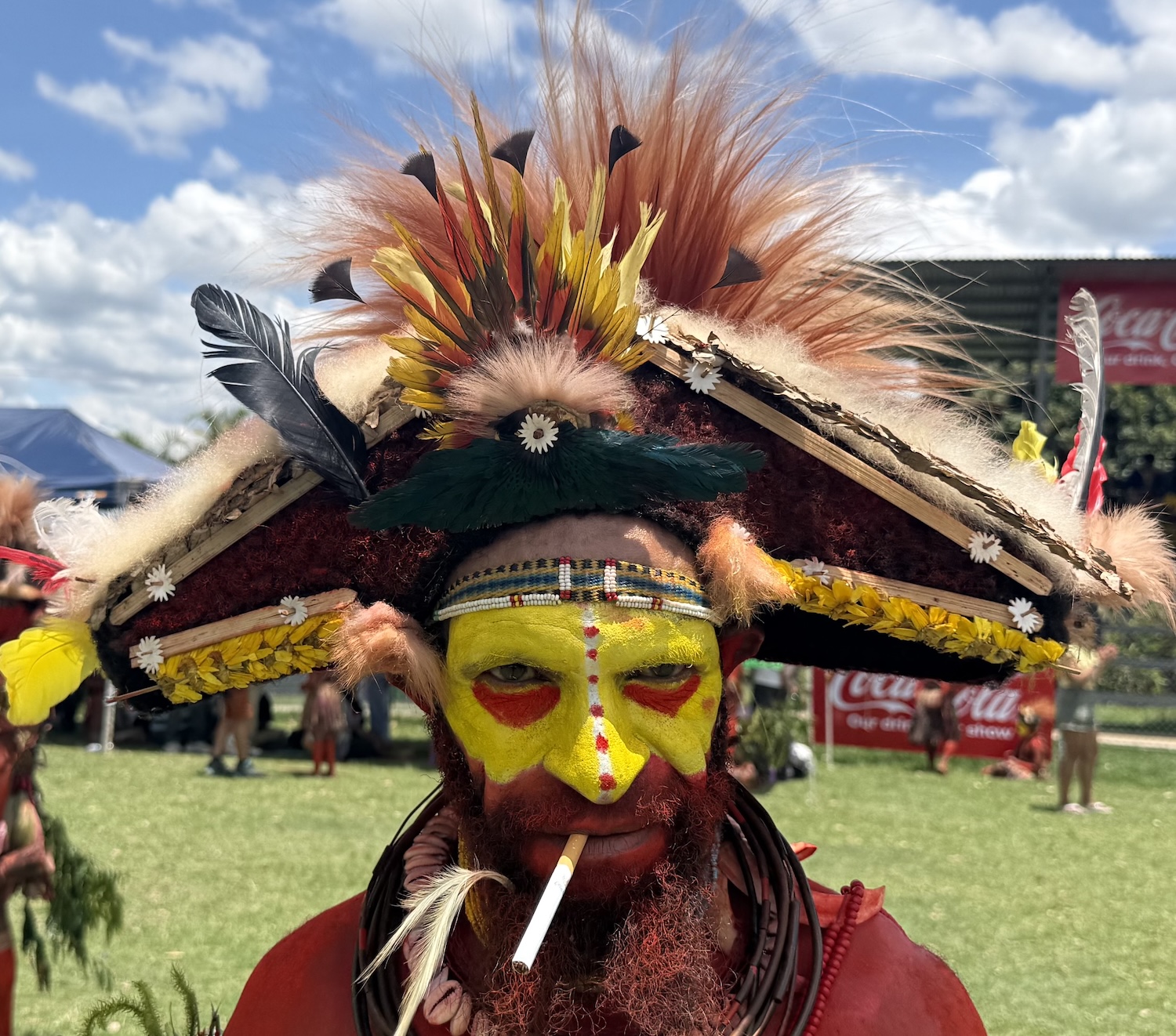
The Huli Wigmen, from Hela Province, are renowned for their tradition of creating hats from their own hair. Adolescent boys are sent for eighteen months from their villages to attend wig schools, overseen by wig masters, a time when they are not permitted to interact with women while they grow out their hair, which is then cut, shaped, and dyed red or black. The Wigmen, who chain smoke with aristocratic arrogance, know their worth, because their wigs are a highly prized souvenir. We ended up paying PGK2,700, more than €500. They are of course hard to transport, and I would advise against the DHL office on the main road in Goroka, partly out of uncertainty they would ever arrive home, and partly because their costs make the wigs look cheap. We dismantled the feathers and took them handheld into the cabin on planes without any trouble.
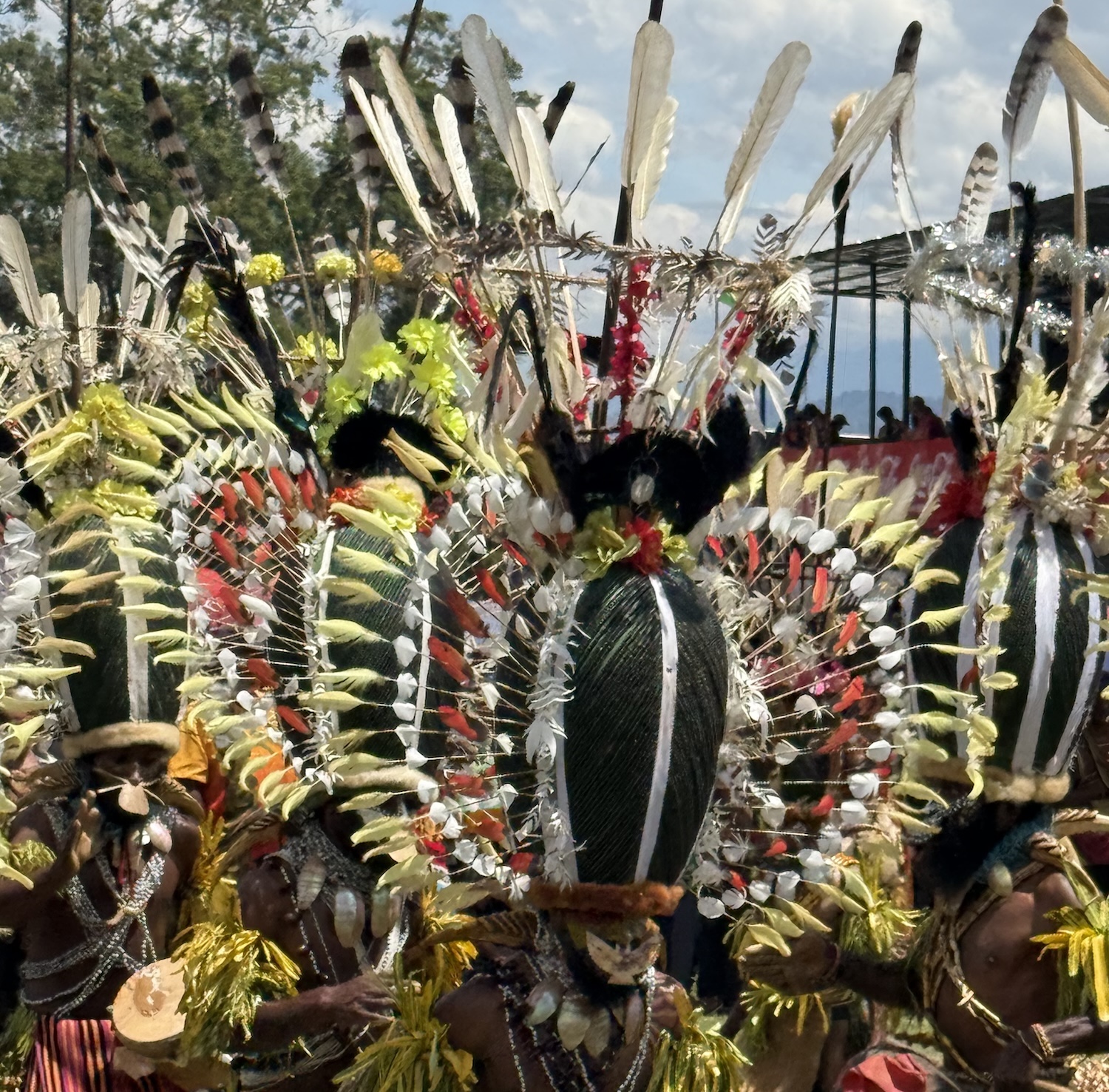
Some of the most striking headdresses are worn by the Simbai, from Madang Province, whose 1m-high green hats are made to resemble betelnuts. Sadly, they are crafted from thousands of iridescent green beetle shells, and enlivened with feathers from birds-of paradise and parrots as well as the tails of sugar gliders.
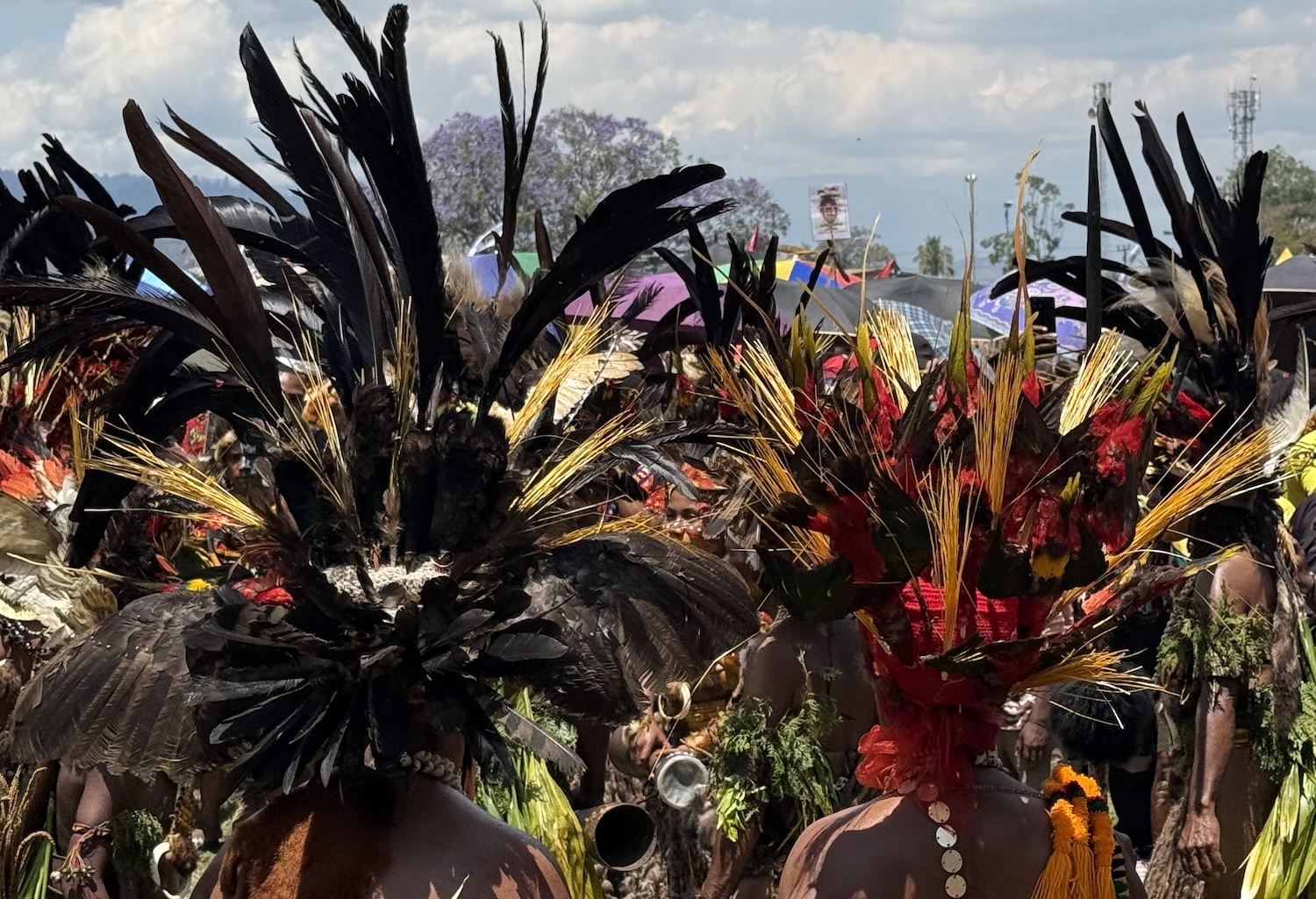
The Simbu tribe from Chimbu Province, whose creations are in the National Museum, have shocks of feathers from birds-of-paradise.
As the field thins out in the afternoon, the whirl of wipas in the crowds begin. For foreigners, the organisers are trying to add what they call new “products”, such as watching performers put on their face paint and costumes early in the mornings, and afterparties where villagers explain more about their everyday lives. This presents another dilemma for those trying to create a tourism industry in the jungle: while it is of course positive to inform foreigners and open contact, this has to be done in ways that do not feel exploitative.
All in all, this is a complex event, but without doubt the greatest culture festival I have ever attended. Sorry, Port Moresby Independence Day.
The Outer Islands
Papua New Guinea, along with the Solomon Islands, Timor Leste, Indonesia, the Philippines and Malaysia, share what is known as the Coral Triangle, between the Pacific and Indian oceans. Covering only 1.6% of the planet’s seas, these waters have three-quarters of all known coral species and more than half of all Indo-Pacific reef fish. That explains why what are (rightly) consistently rated as the world’s top three dive sites – Palau, Sipadan and Raja Ampat (though that has dropped a bit recently) – are all located in this space. It also explains why the diving in PNG is almost in that league, though it rarely features on lists such as Scuba Travel simply because so few people come here and vote for it. Yet PNG alone has more than 500 coral species and over 3,000 types of reef fish.
In addition, there are wrecks of ships and planes. The standouts are Japanese hardware sunk or downed when the Allies fought to reclaim control of these waters in the Second World War.
Together, this biodiversity and these wrecks, coupled with a lack of divers, makes this one of the greatest under-explored underwater locations on the planet, and one of the principal initial reasons to come to PNG.
There are two main spots on the coast of the main island, and they are in the southeast corner: Milne Bay (for muck and macro diving as well as some World War Two wrecks) and Tufi (tropical fjords packed with hammerhead sharks). The diving season there is from October to May.
There are also world class sites on some of the 600 islands that sit on the Ring of Fire, above active tectonic plates in the Bismarck Sea. The two biggest are New Britain and New Ireland, which were also bases for the Imperial Japanese Navy. The season here is from May to June, and September to December, which was ideal for us.
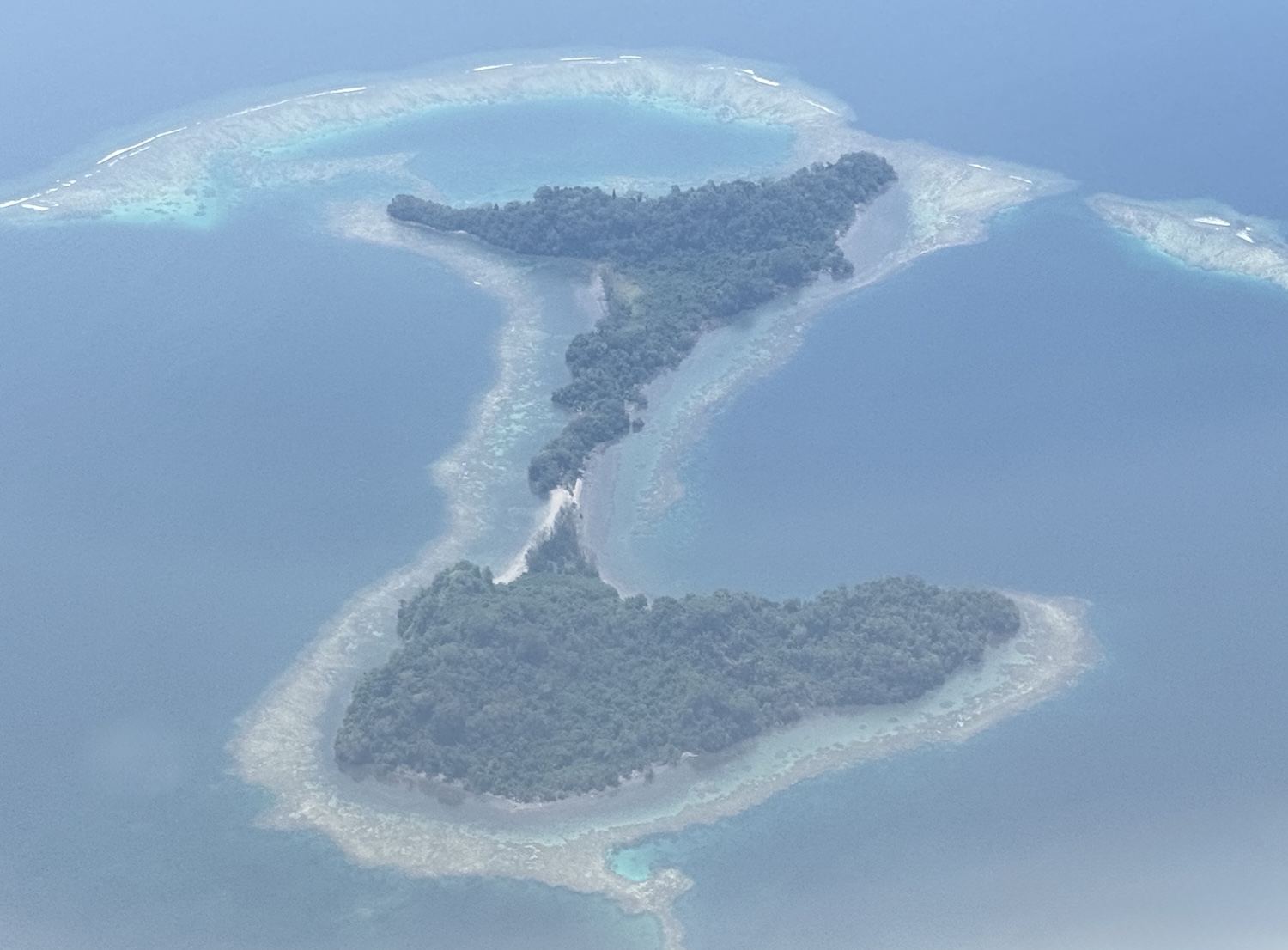
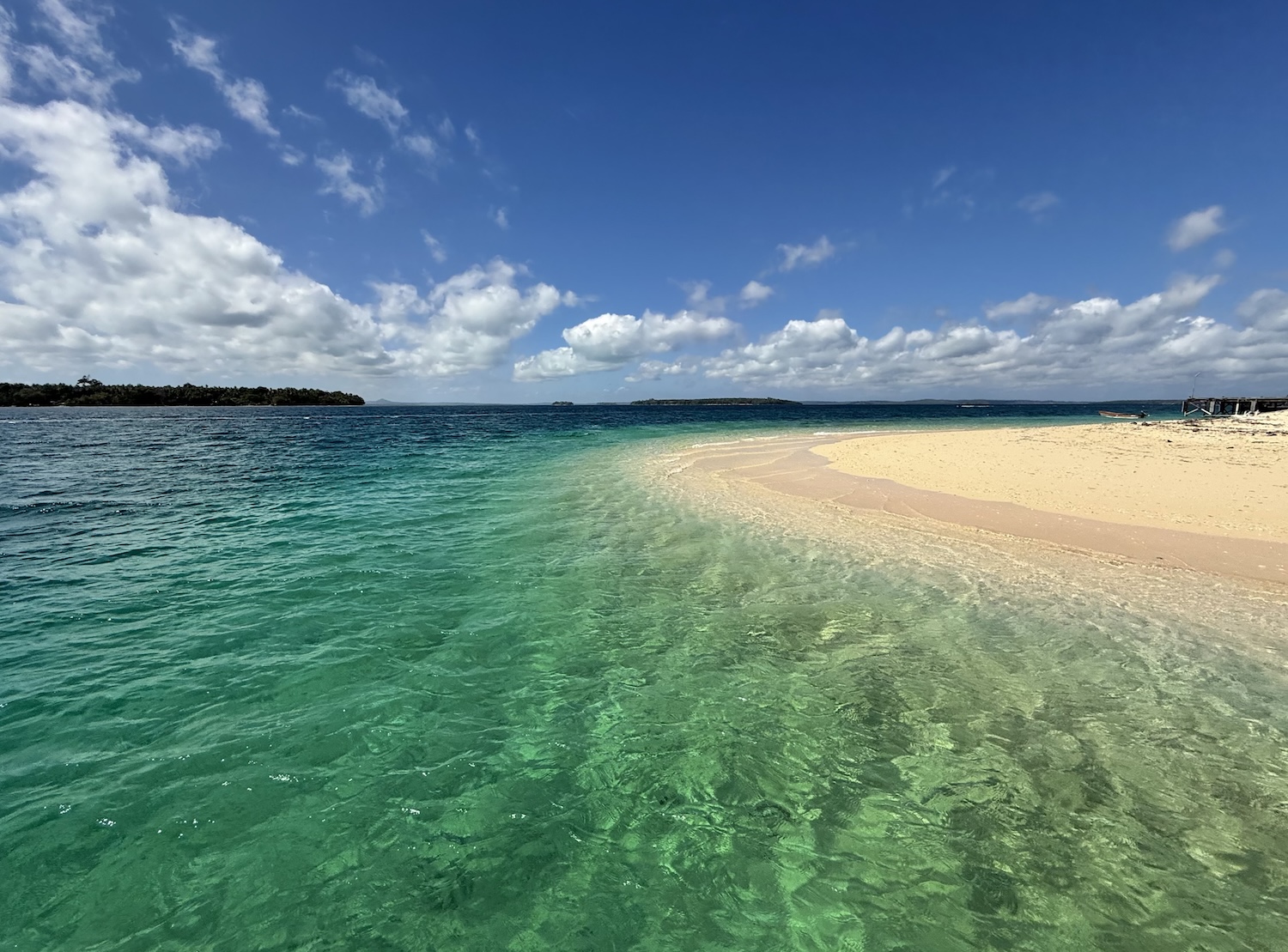
These dive spots are off beautiful islands and atolls. In addition, the Outer Islands offer World War Two relics on land as well as white sandy beaches gently lapped by azure waters, backed by volcanoes and jungle, along with insights into a different kind of rural life.
New Britain
When British explorer William Dampier proved in 1700 that the largest of these satellite islands was not in fact connected to the main Papua Island, he called it Nova Britannia. Although it was renamed Neupommern in 1884 at the start of the period of German rule, it reverted back again when Australian and British forces took control in 1914.
New Britain, roughly the same size as Taiwan, arcs like a banana up to the northeast. Off the curve of its north coast are the main towns of Kimbe in the west and Rabaul in the east.
Kimbe, West New Britain
It takes about an hour to fly from Port Moresby to Hoskins, a place with nothing but a small airstrip, near the vertex of the concave arc of New Britain. From Hoskins there is a badly pot-holed asphalt road heading west. It was built, but never since repaired, by the European Union in the 1980s. After 35km through the palm tree jungle, it reaches Kimbe, by far the biggest town in West New Britain, with a population of 25,000.
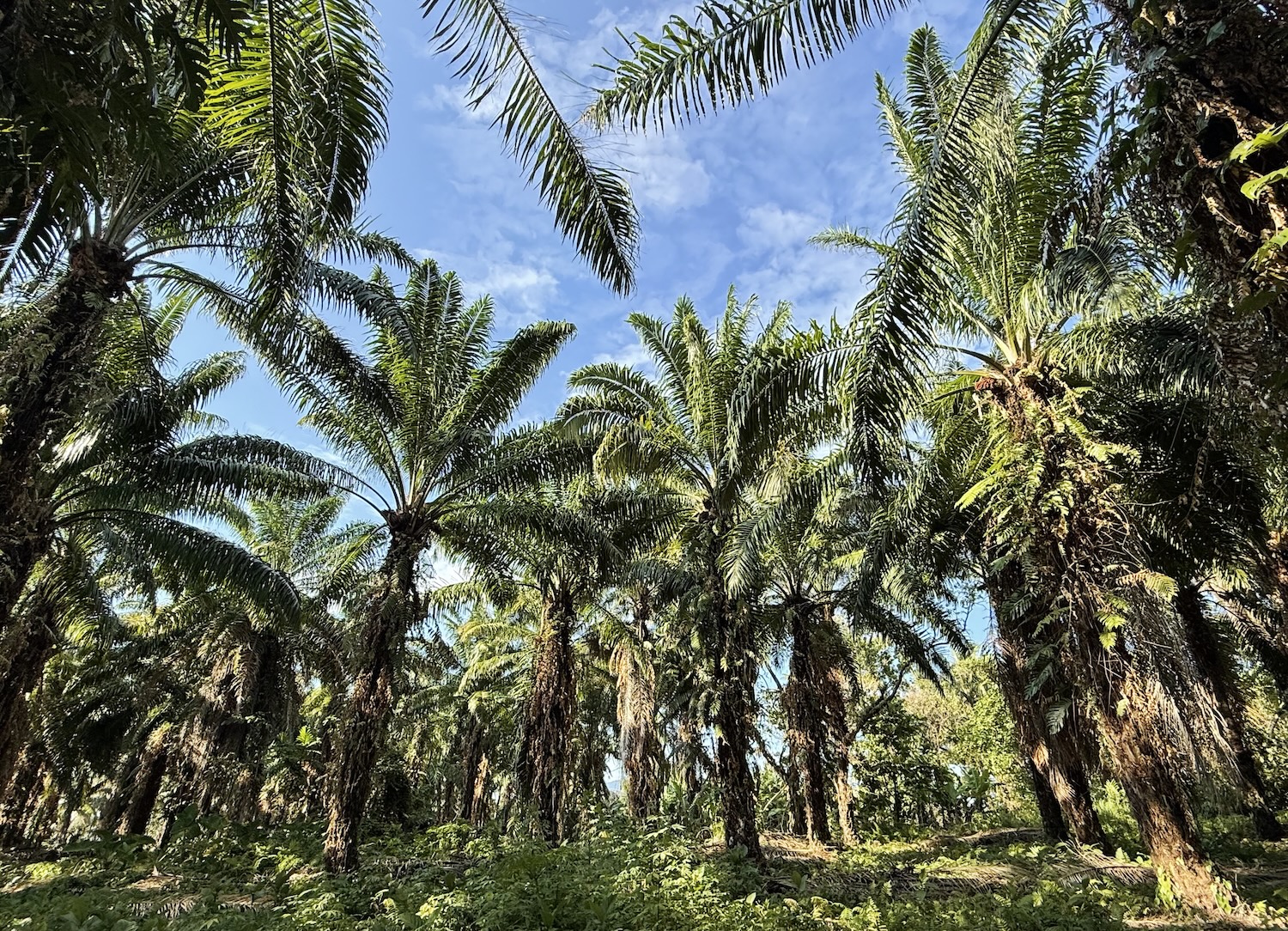
It is another 20km on to the only dive shop in the area, which is at the Walindi Plantation Resort. I cannot praise this place enough. Originally a palm oil farm, thanks to the commitment of an Australian couple over the past forty years it is now a 40-bed isolated hotel with a warm atmosphere, terrific service (including great meals both on land and boat, plus free daily laundry), and friendly staff who clearly love what they do.
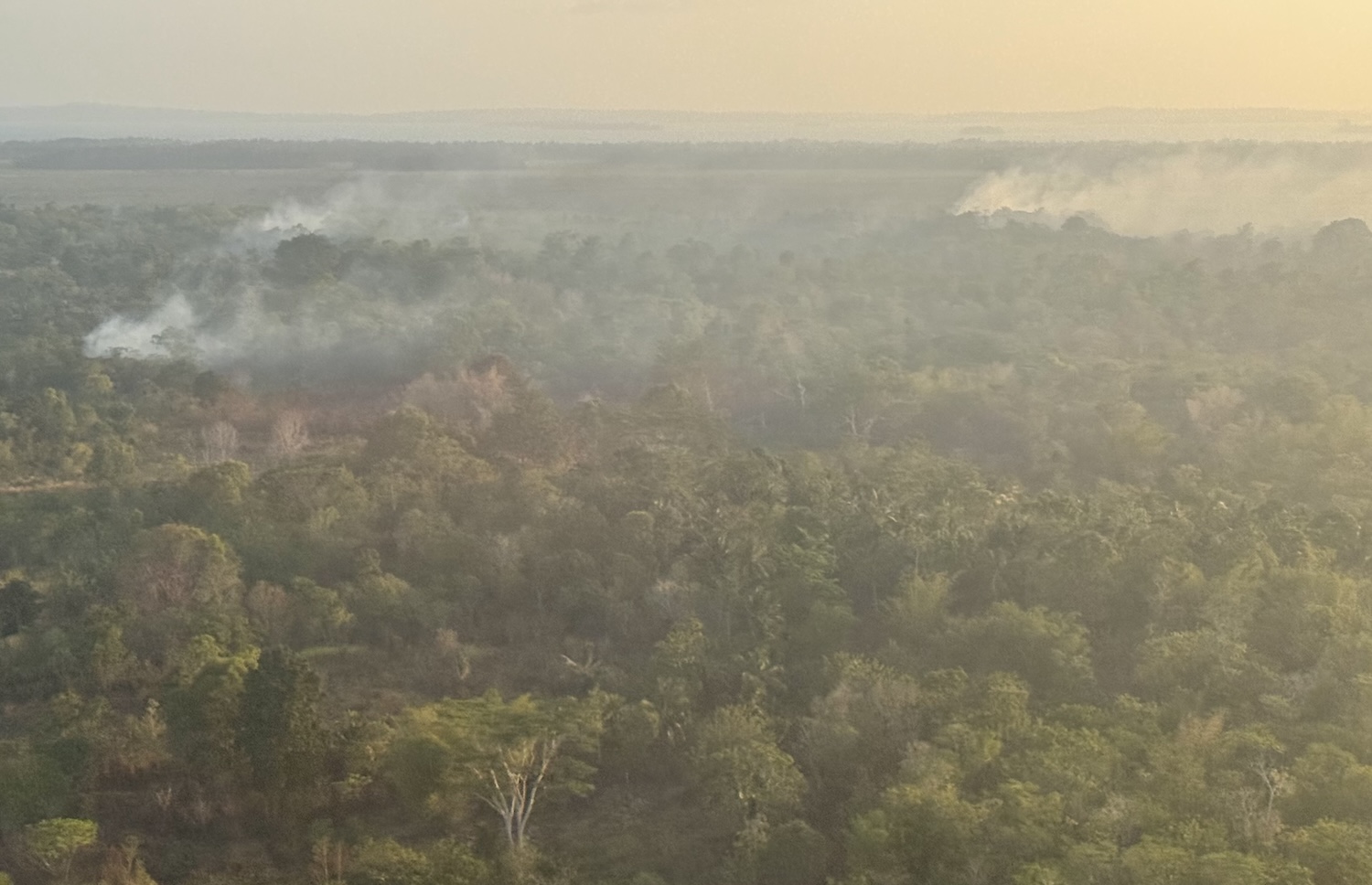
The backdrop to this part of Kimbe Bay are the silhouettes of Mount Garbuna, an active volcano that last erupted in 2005, and the surrounding hills, often with smoke from village mumus floating across the jungle. They are stunning, especially as the sun rises and sets.
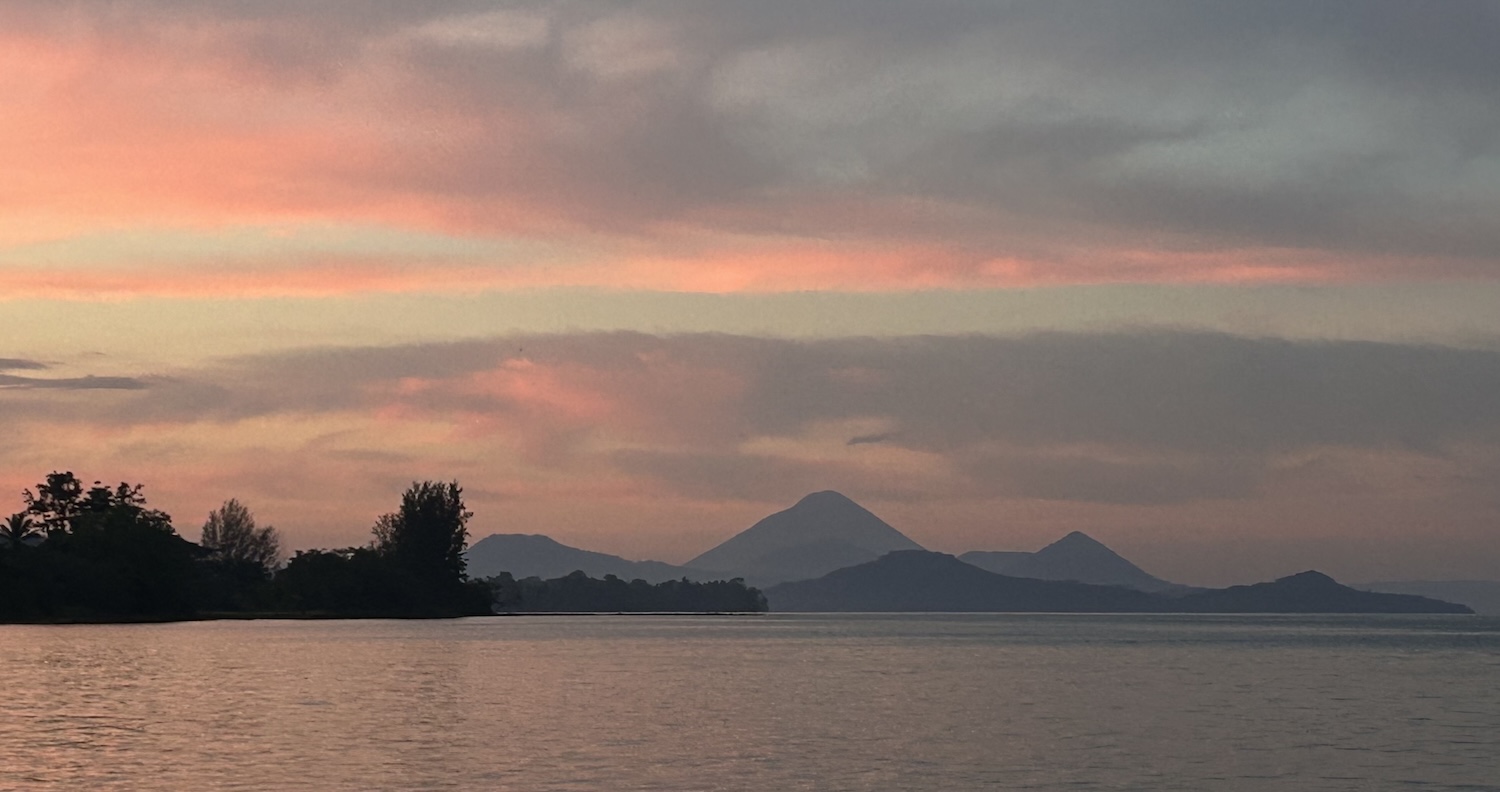
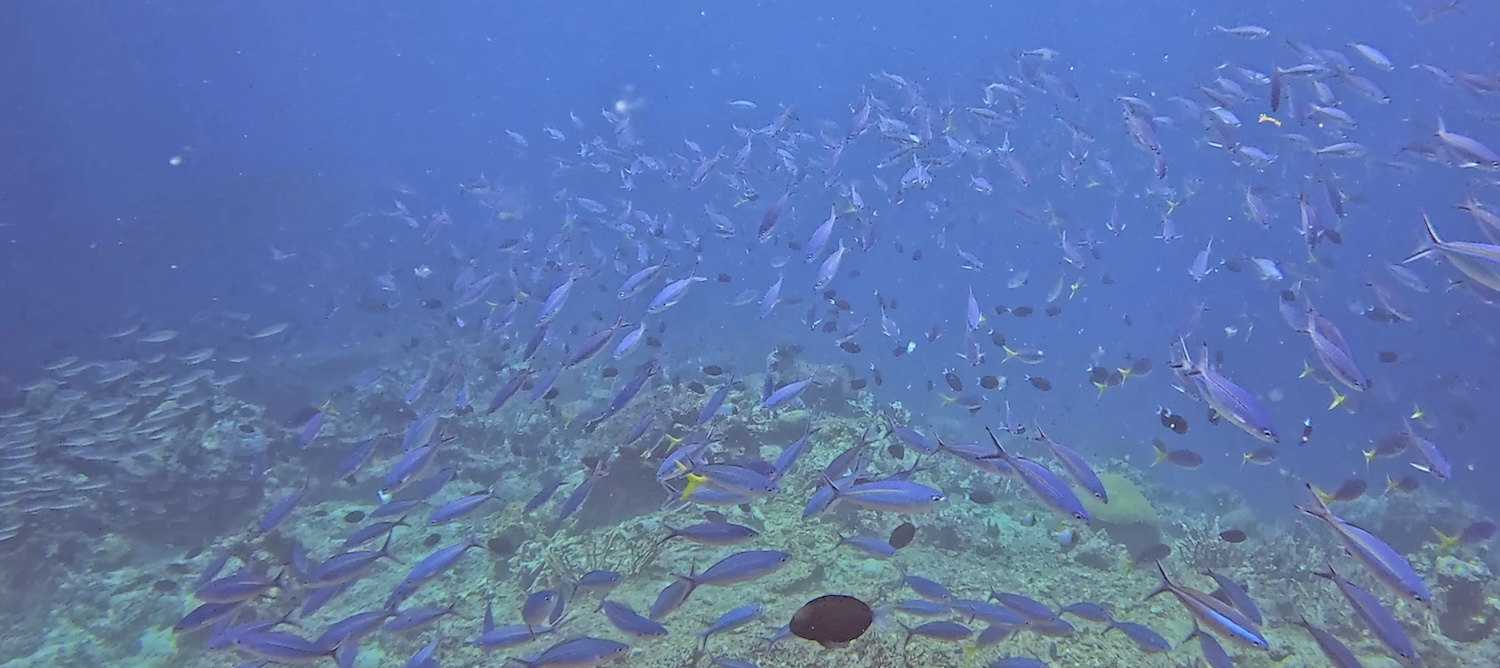
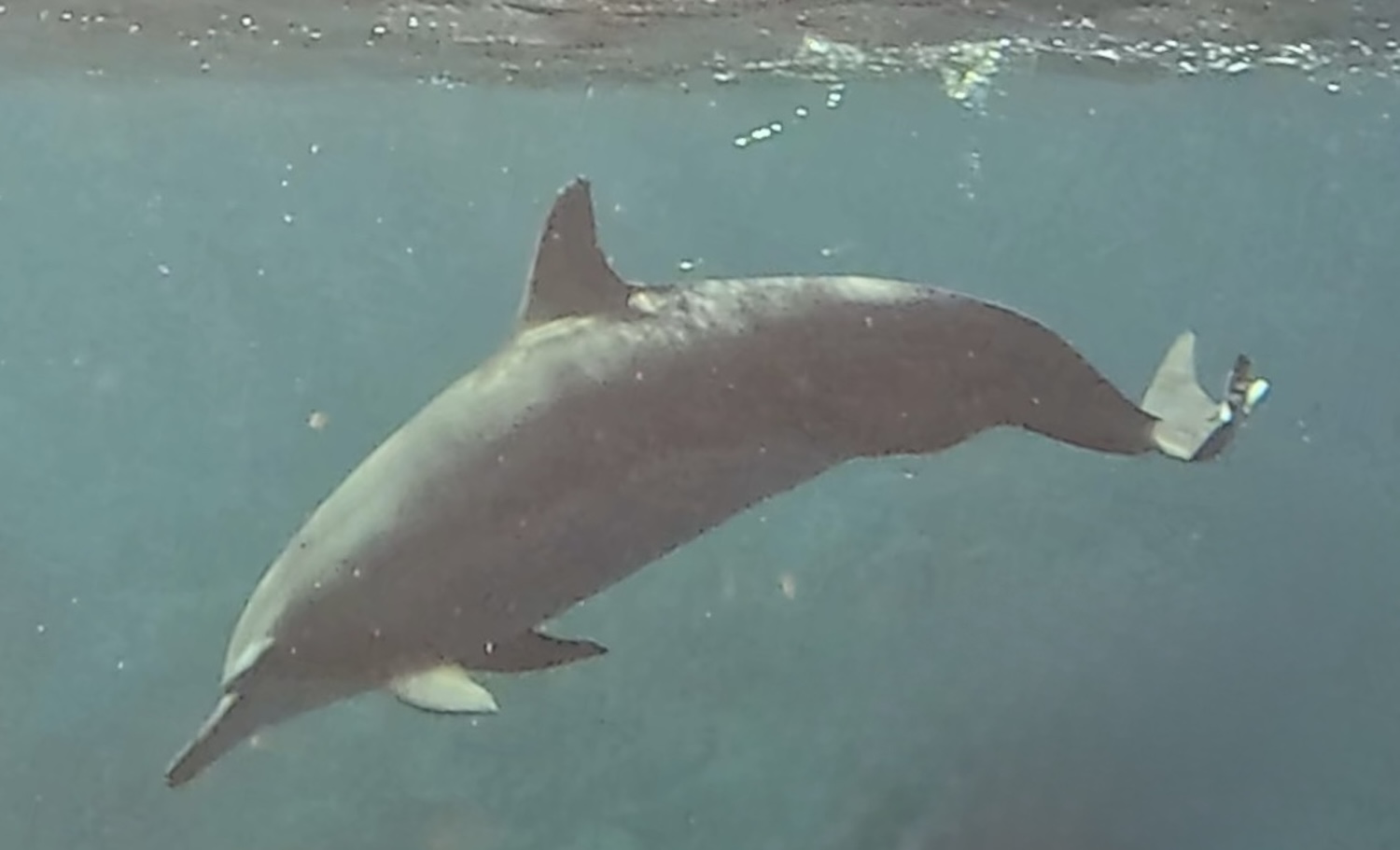
There are more than thirty dive sites within an hour or so of the dock, usually involving rides with scores of bottlenose and spinner dolphins playing alongside the boat. These are the jewels in the crown of Bismarck Sea diving. They include vast drop-off walls, such as Otto’s Point, smothered in blue-and-yellow fusiliers as well as schooling jacks and trevallies. The outstanding sites, such as Inglis and Joelle, are sea mounts, volcanic pinnacles, crowned with sea whips, red soft corals that grow in wavy bushes. Meanwhile, seahorses are easily spotted in the sandy shallows, you can hardly move for octopus in the rocks, and napoleon wrasse meander among the giant sea fans.
The signature location is probably Bradford Shoal, a pinnacle that rises from the seabed 1,500m below to within 20m of the surface. Isolated on an outer ridge of Kimbe Bay, it attracts numerous pelagics, including orca whales, whose calves are frequently sighted in March to May and again in July to October, though there are no recorded attacks on humans. Along with swarms of big-eye jacks and dog-tooth tuna, the stars of the show are the batteries of thousands of metre-long chevron and blackfin barracudas that constantly circle in columns up to 30m high.
In addition to all this, Walindi operates two liveaboards – MV Febrina and MV Oceania – which are needed to reach the Witu Islands, Lolobau Island and Fathers Reefs, though some of these have reportedly been damaged in recent years by bleaching from climate change.
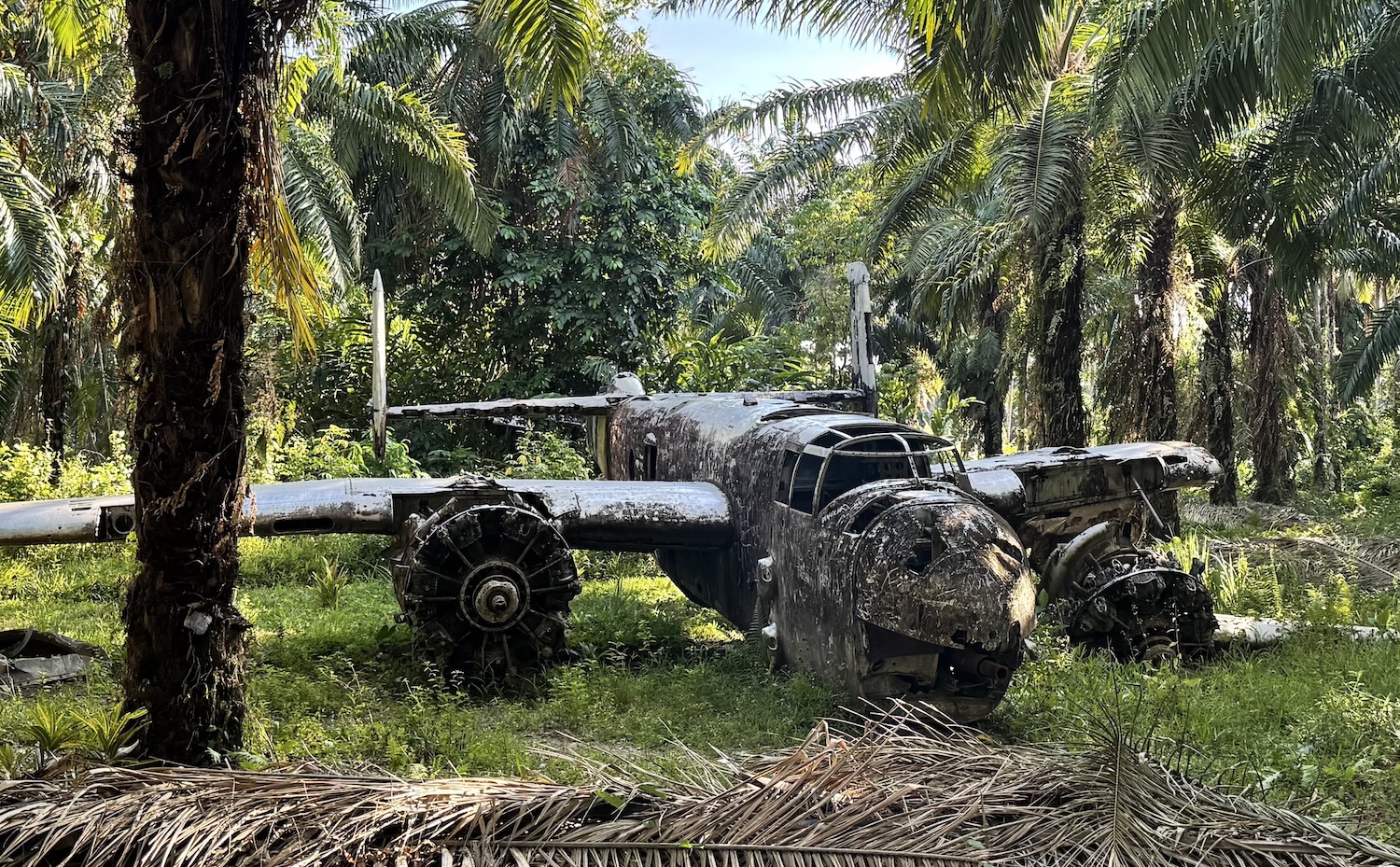
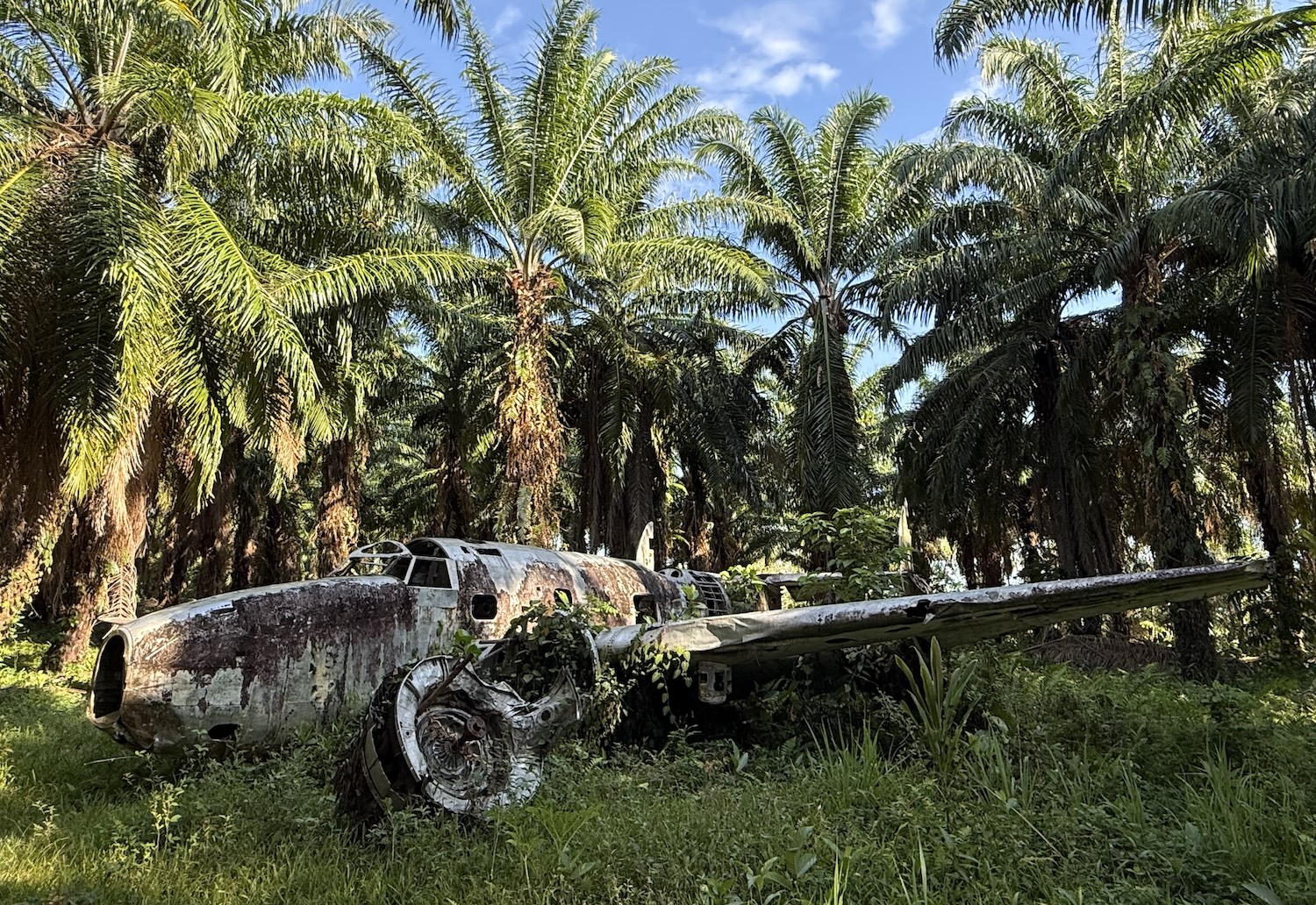
While we can dive a Japanese Mitsubishi Zero, which lies close to the boat dock at 17m, it is two other World War Two aircraft – on land – that draw more attention. Within a week of each other in September 1944, these Allies’ planes went down no more than fifty metres apart while trying to reach the old wartime airstrip. They have since been overgrown by jungle, which makes them a haunting expedition.
To visit them, permission is needed from the local chief who owns the land, and we had to go to pay homage to him. He frequently withholds that, if for instance there is a local festival, but if you are lucky enough to be allowed access it is a nice little adventure. The planes are a forty-five-minute drive west from Walindi, past streams of uniformed school children dawdling along. All around is ideal for birders too. Although there are no birds-of-paradise on the Outer Islands, there are cockatoos, hornbills and various rare parrots.
The first down was a US Mitchell bomber. After sinking a string of Japanese supply barges (one of which is still partially visible, rusting away in the nearby shallows), it crash-landed with engine failure.
The other is a New Zealand Lockheed Ventura bomber, which was ditched after it was holed by Japanese anti-aircraft fire.
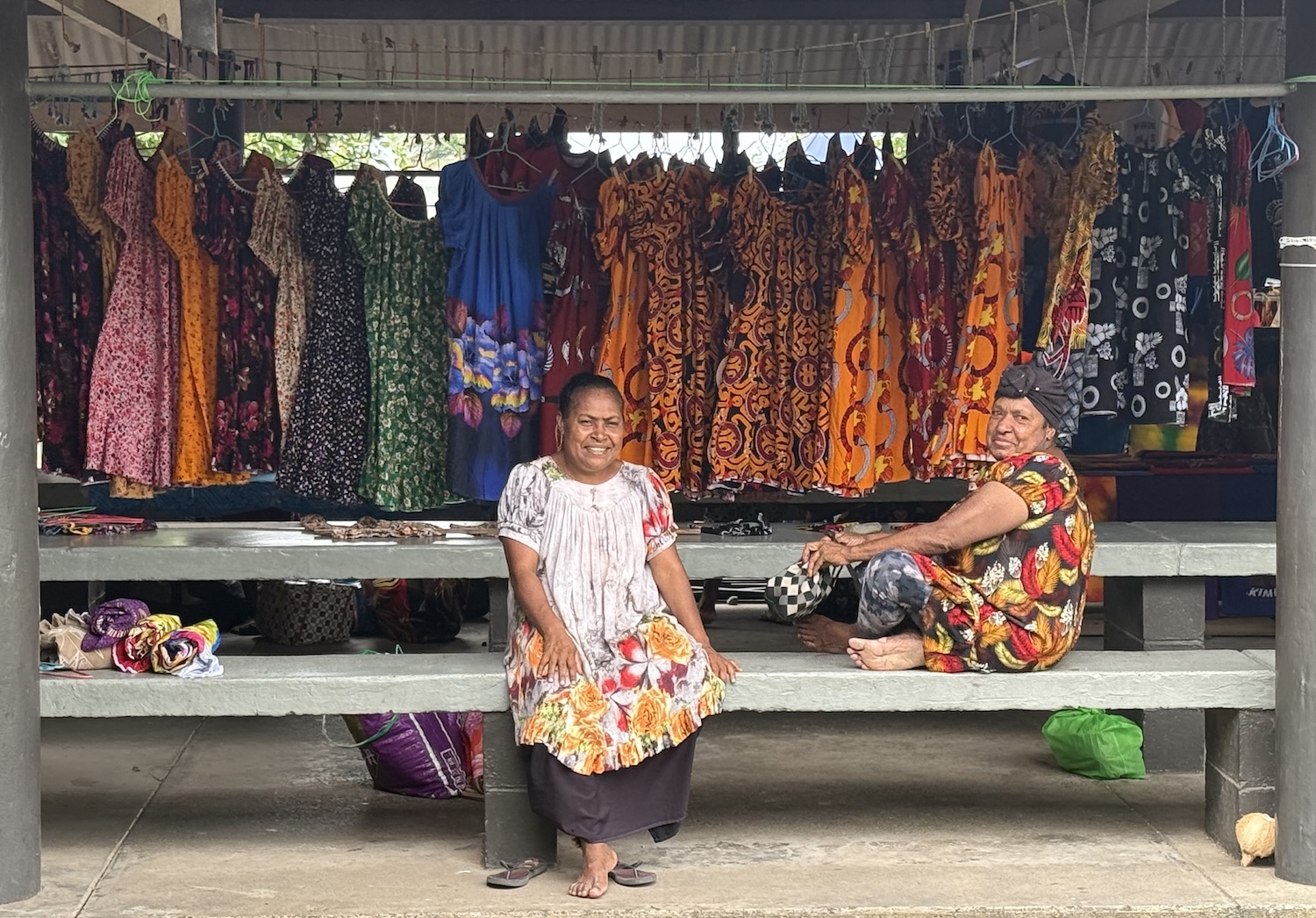
It is also worth visiting the town of Kimbe itself, a small place of wooden huts on stilts. In particular, it has a vibrant example of a typical PNG rural daily market. There are scores of fruit-and-veg stalls, and dozens of stands selling betelnuts, lime powder and mustard sticks for mashing together. However, the most popular are those offering ubiquitous meri blouses.
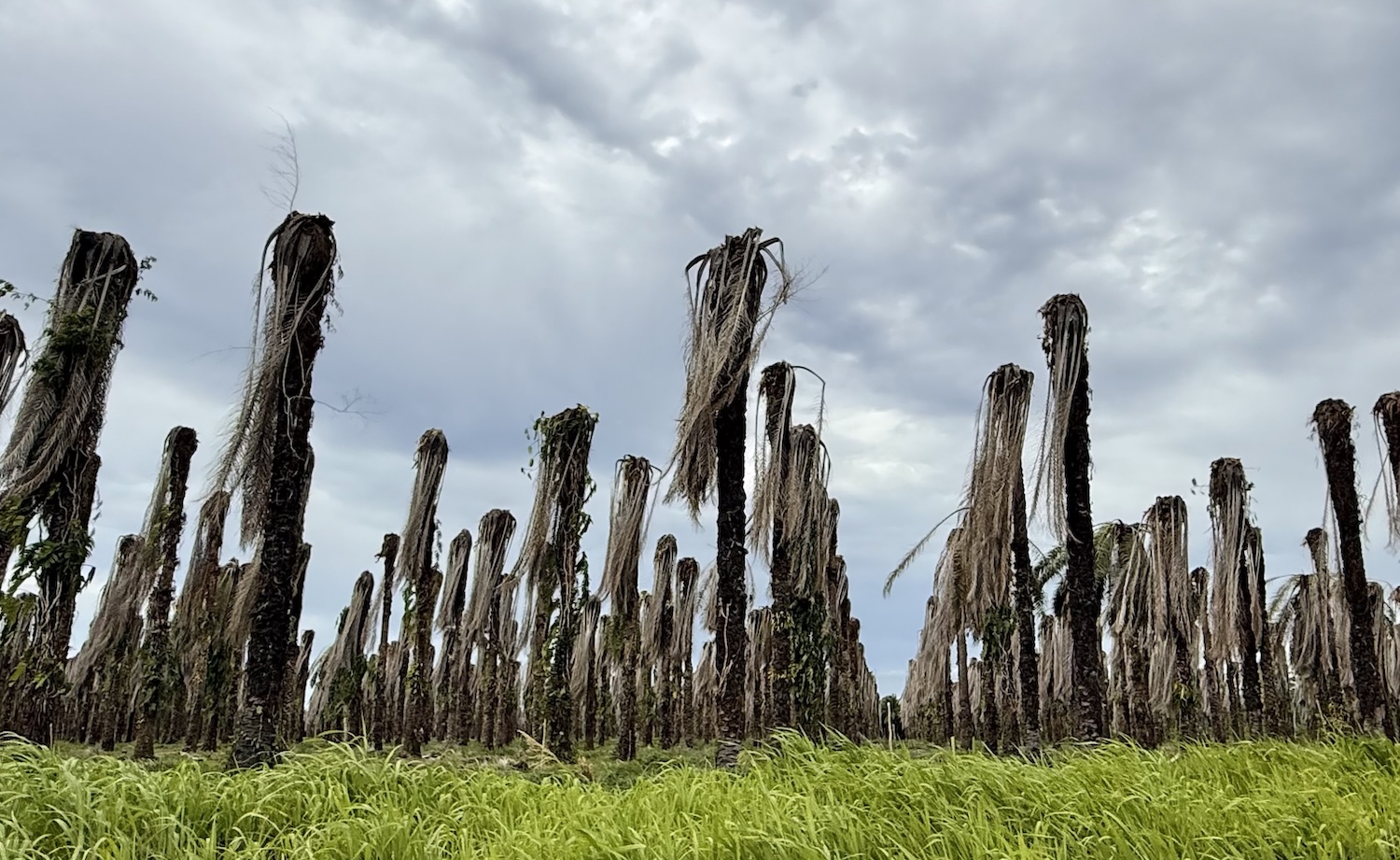
West New Britain has fertile land thanks to minerals spread by centuries of volcanic activity. Apart from balsa wood, banana, cocoa and coconut plantations, there is also palm oil. Sadly, little of the revenue generated from any of these stays in PNG, as most seem to be owned by Malaysian conglomerates.
All along the road between Hoskins and Walindi are stumpy little palm trees with clusters of nuts near the top, dead palm trees waiting to be chopped down, and flat areas where the forests have already been cleared. Palm oil trees are too spiky to climb to collect the ripe red nuts, so farm hands pull them down with a tool. When the branches grow too tall to reach, after twenty years or so, they are cleared to be replaced. This is controversial because natural habitats are damaged irreparably.
The conglomerates pay a tiny fee to the chiefs who own the land to be allowed to grow the trees, and then a tiny fee to the villagers to harvest the nuts. The road is dotted every few metres with berries they accumulate every day, waiting to be transported to huge vats and oil mills near Kimbe. The skins are used for diesel oil and the insides for cosmetics and skin care products.
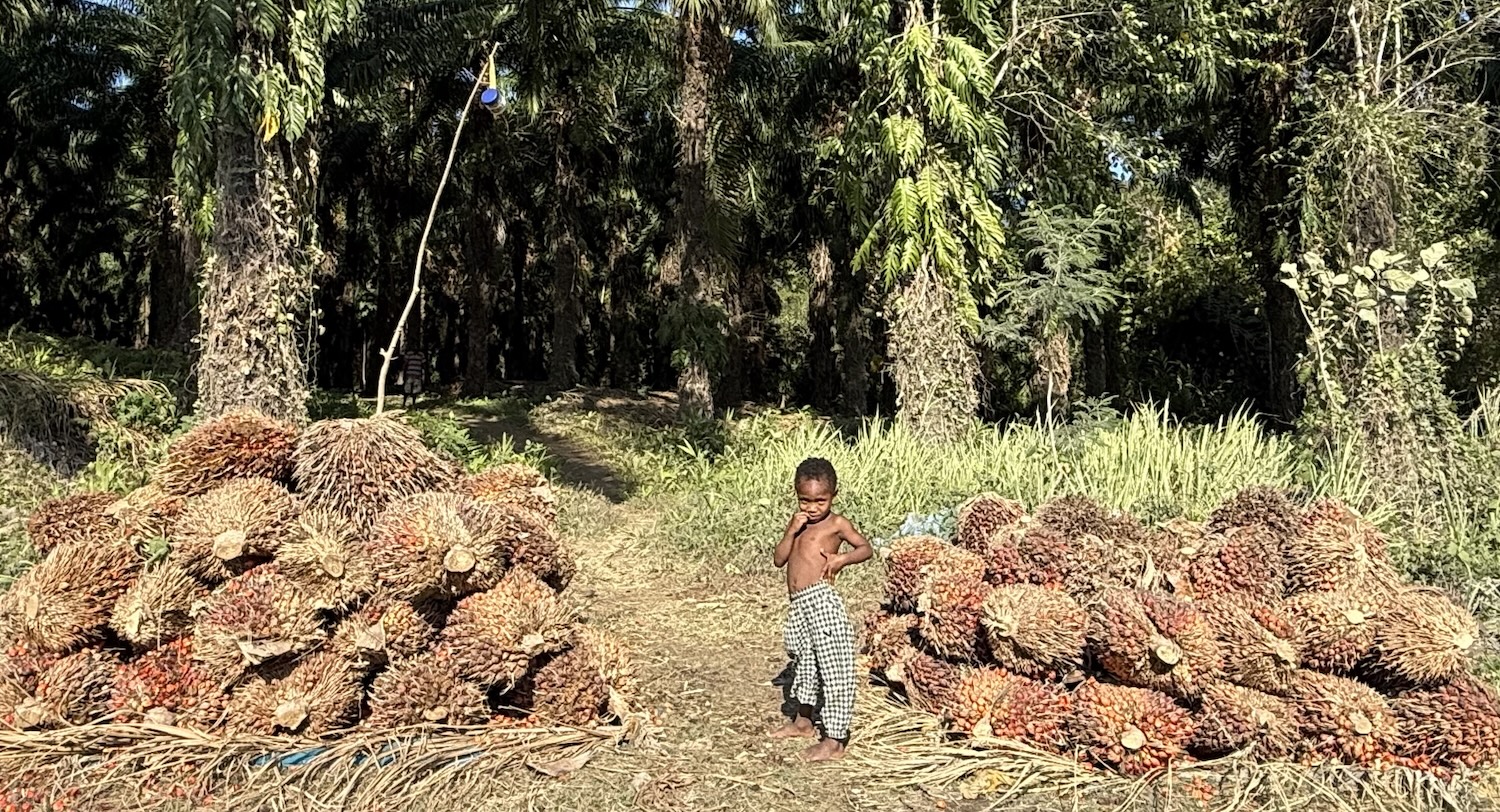
This explains why there is an unusually large population of immigrant workers here who have come from other provinces in a desperate search for work.
Rabaul, East New Britain
There is no road from Kimbe to Rabaul, roughly 400km east on the far tip of New Britain. There is an occasional overnight ferry, though its safety has been questioned since the MV Rabaul Queen tragedy of 2012, in which at least 150 people lost their lives. That leaves the plane to Tokua airport, which takes about an hour from Hoskins, as the most reliable way here, despite all its untrustworthiness.
Although this end of New Britain is formally called the Gazelle Peninsula, named in 1875 by Prussian explorer Georg von Schleinitz after his ship, this region is popularly known as Rabaul, despite the fact that the town of Rabaul hardly exists anymore.
It had been rebuilt after volcanic eruptions in 1937 destroyed it, and it was rebuilt again after it was a colossal battleground in the Second World War. However, after further lava flows flattened it in the 1990s, only industrial plants that service the deep-water port, which is still here, have been restored. Just five people were killed then, thanks to research and monitoring at the Observatory, but 50,000 residents were displaced. Many moved along the coast to a dozen or so villages, especially Kokopo, 30km east, which is where Tokua airstrip is now. There is a high road up the hills and a low road along the coast between Kokopo and Rabaul, and both have decent tarmac.
A good place to start exploring the area is to drive up to the Rabaul Observatory for great views of what is left of the town, and Simpson Harbour beyond. Today, that is full of moored large fishing vessels waiting to be stocked by local little boats so they can send high-grade tuna for export as far as Taiwan and Japan.
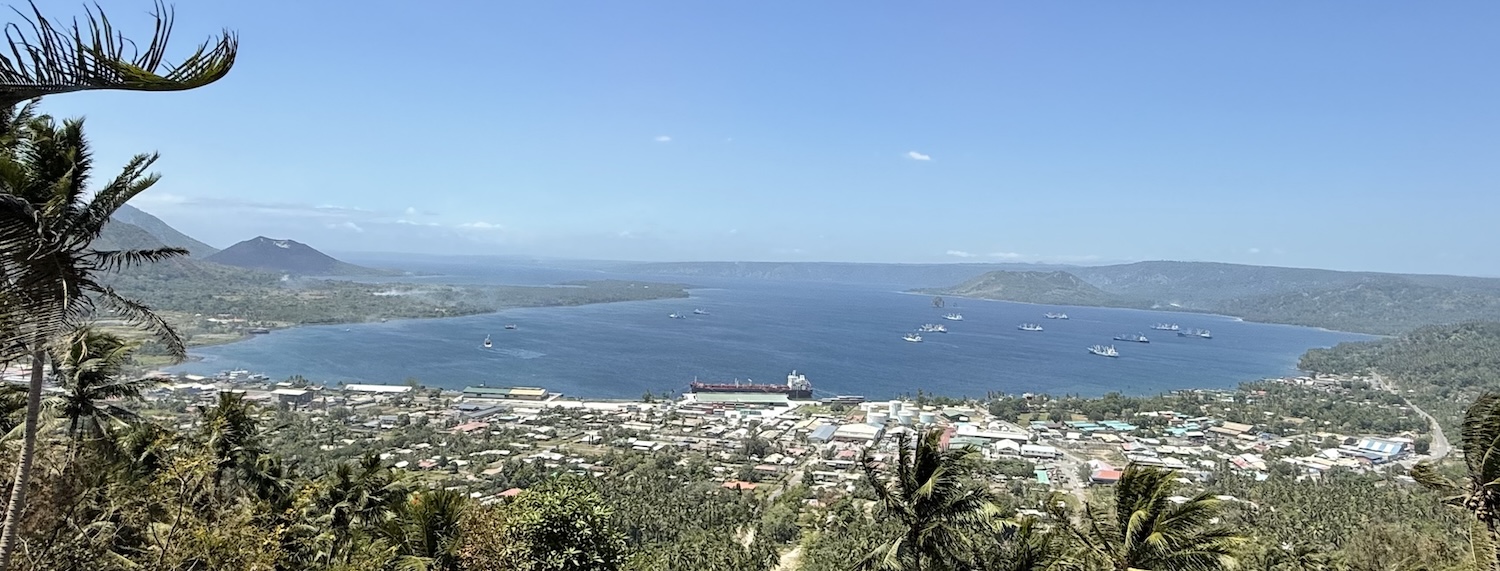
It was on 19 September 1994 when there were simultaneous eruptions at the volcanoes on either side of Simpson Harbour. Tavurvur and Vulcan together blasted massive clouds into the atmosphere, where heavy rain mixed with hot ash to form a substance like wet cement that smothered a wide area. More than thirty years later, the local market still sells T-shirts with the defiant slogan, “Dust over Rabaul, but still surviving through God’s grace”. Although Vulcan has lain dormant ever since, Tavurvur had lesser explosions in 2006 and 2009. There are great views of Tavurvur from the Observatory.
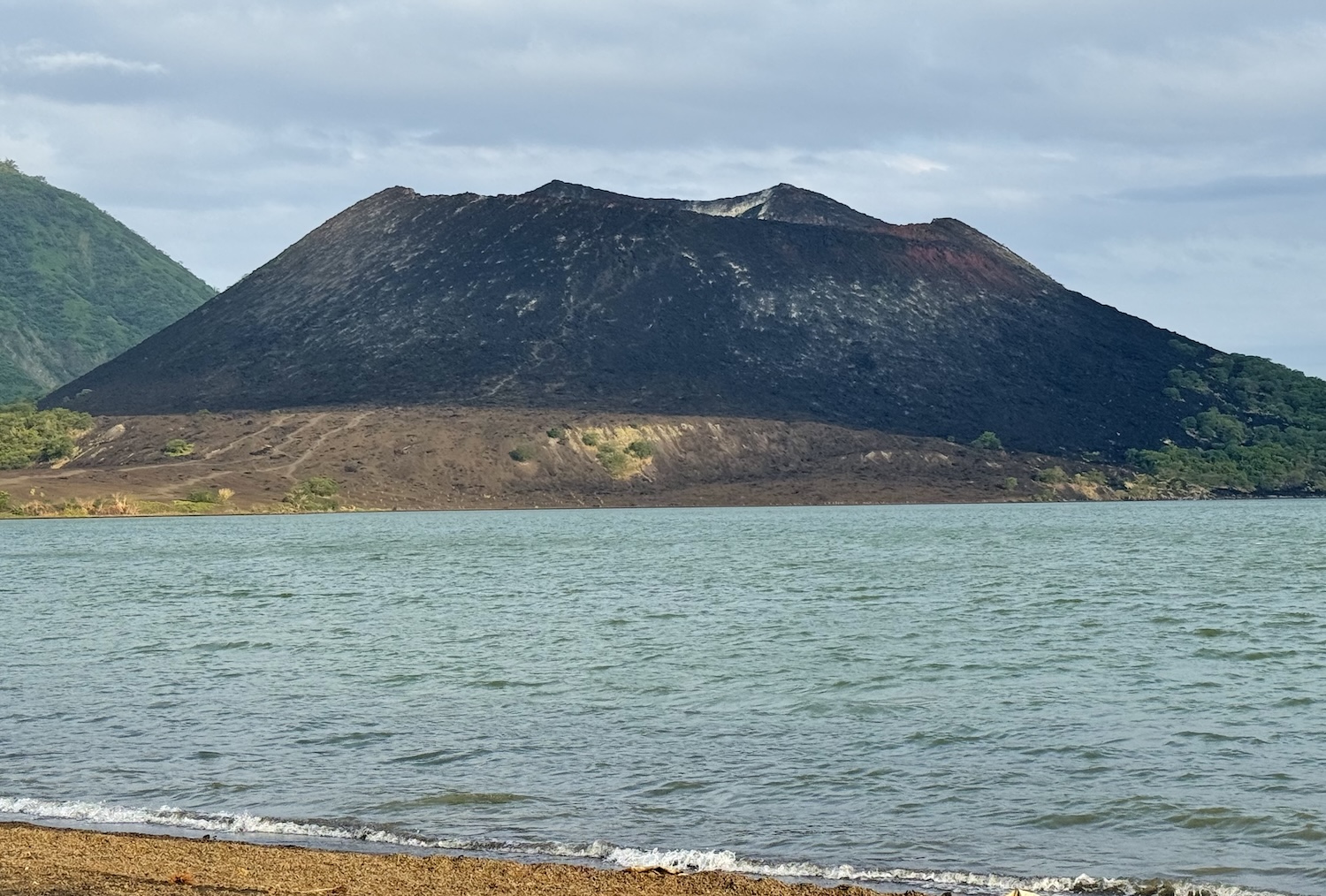
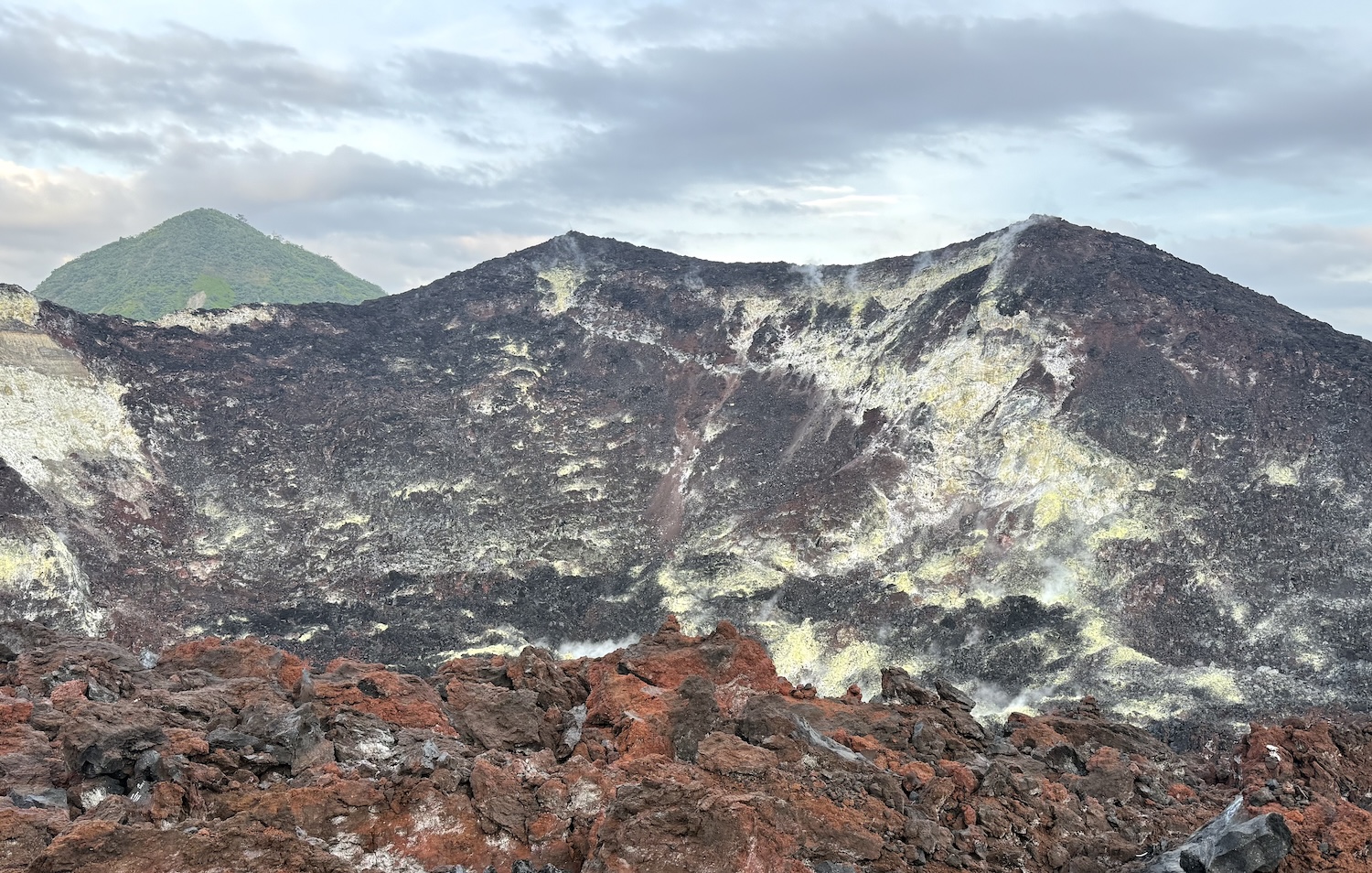
Climbing Tavurvur is essential. It is a half-hour scramble up the shale of lava to the lip, and a bit more to slide down again. At the top, we can see into the smoking caldera.
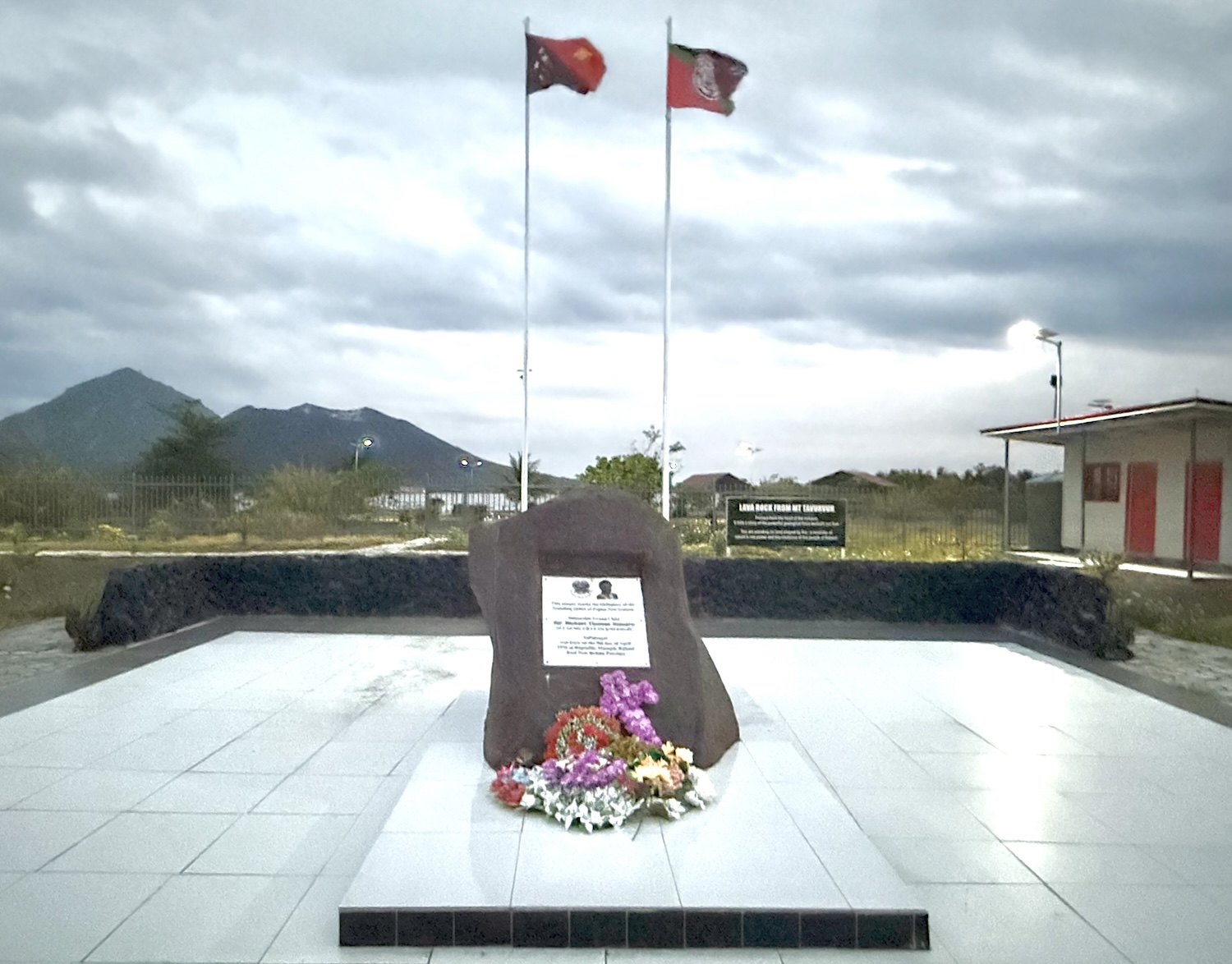
Incidentally, at the bottom of Tavurvur there is a simple memorial to the Father of the Nation and Grand Chief, Michael Somare, who was born around here in 1936.
Kokopo, with a current population of 25,000, is now much more developed not only than Rabaul but also than Kimbe. There are two main resorts to choose from, both with heavy security details. The better maintained is Kokopo Beach Resort, which has a particularly strong collection of tribal art, and a little cruiser called Tamo that can be converted into a private liveaboard for a few days. The other is Rapopo Plantation Resort, a lovely former coconut and cocoa farm, with a spectacular beachfront and homemade banana bread to die for, which (in a sign of the times) was recently sold by an Australian to a Chinese (who needs to put in some money). There is also the Gazelle, pitched as a business hotel, improbably located above the Ralum Golf Course, which has a fine restaurant.
Although there is a variety of dive sites around Blanche Bay, the waters between Rabaul and Kokopo, none of the dive shops have been replaced since they were all wiped out by the Covid-19 pandemic, due to lack of demand. We were here for four days, when it was clear there were no other divers at all, while rumour and raw data suggested we were two of only a handful of foreign tourists. In fact, when I asked if there were ever many British visitors, I was told they come through here all the time, most recently seven months earlier, which revealed a lot about local perspectives on the travel market.
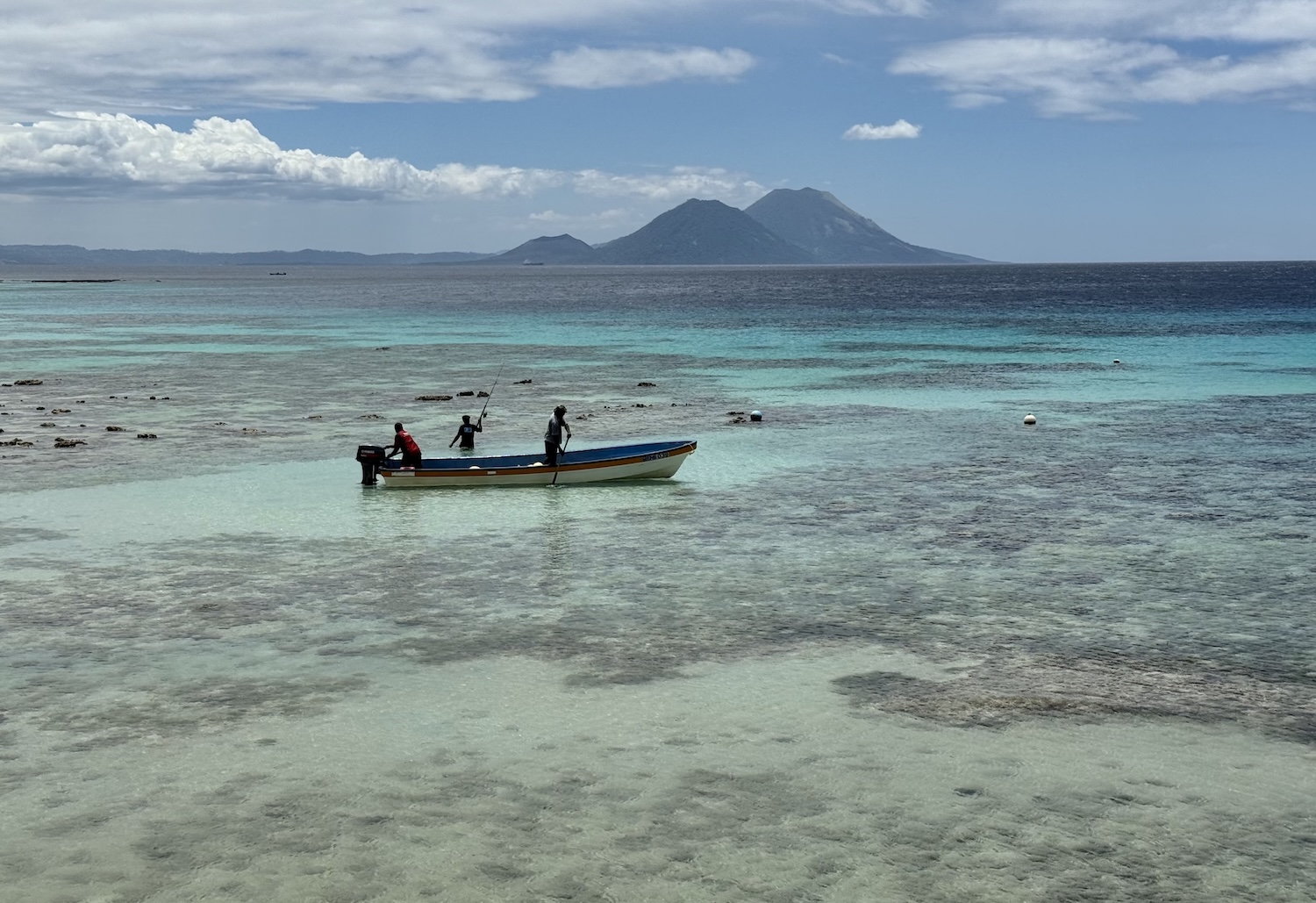
The only way to get a dive guide these days is by booking a freelancer. I know of two local outlets that can find one, and which also arrange fun swims with dolphins where you hang in a net off the side of a skiff while they play along at the surface. They also sort land tours to War remnants and various villages. Salt, an adventure centre at the Rapopo that rents tanks and a small selection of gear, is run by Leonard and Anthony, who do a great job and seem to work around the clock. And PNG Tour Guide is a reputable outfit owned by Dominic Tulo (+675 70009316) that started by organising days out for cruise shippers. Our dive guide was Andrew Lome (+675 70567658), who I highly recommend.
In the 1940s, Rabaul was a strategically significant dot on the map, where the Imperial Japanese Navy set up its main base while it controlled the waters around PNG after January 1942. At its height, 100,000 men were garrisoned in Rabaul until they were forced back, largely by British Empire forces from Australia and India.
There are thought to be as many as sixty-five Japanese wrecks in Simpson Harbour, most notably the cargo ship Manko Maru. However, the eruptions of Tavurvur and Vulcan in 1994 poured so much ash into the water that many of them were buried, and local divers seem reluctant to go to the others, claiming it is hard to get permission from the local chiefs and/or harbour police. In fact, the only regular dives to World War Two hardware are a couple of Japanese Mitsubishi Zeros, one of which, on the south side of the entrance to Simpson Harbour, is at least somehow still in excellent condition.
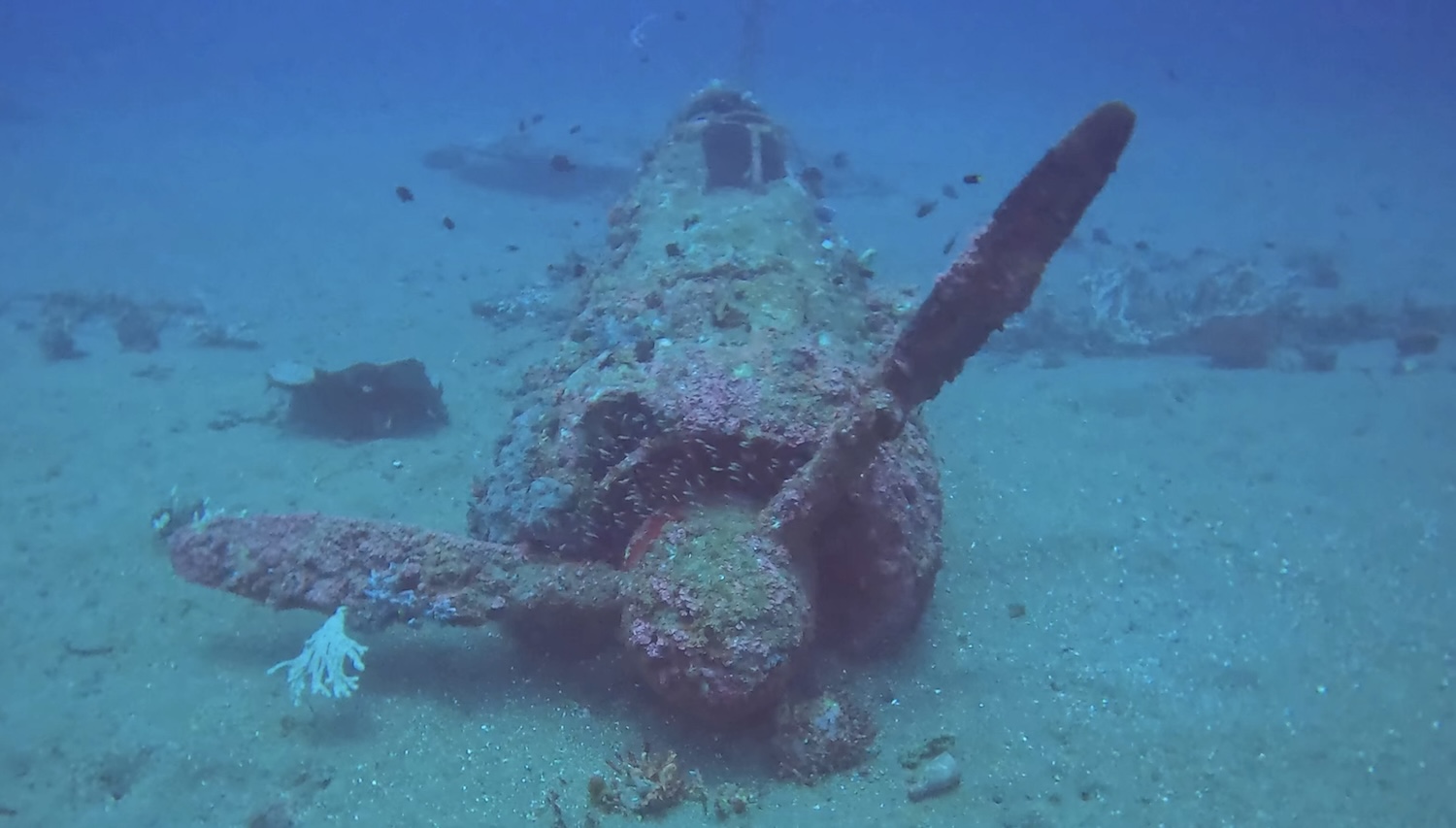
Beyond Simpson Harbour, there are a couple of fishing vessels deliberately scuttled to create artificial reefs, and there are some excellent wall dives, all in visibility that reached about 30m while we were here. Good spots include the Pidgeon Islands (where there is a guesthouse) as well as around the little cluster of islets called Duke of York (on which there are homestays), about 25km north of Kokopo. Near Tokua airport we found tremendous drifts that whip along the walls 30m deep at breakneck speed for up to a kilometre.
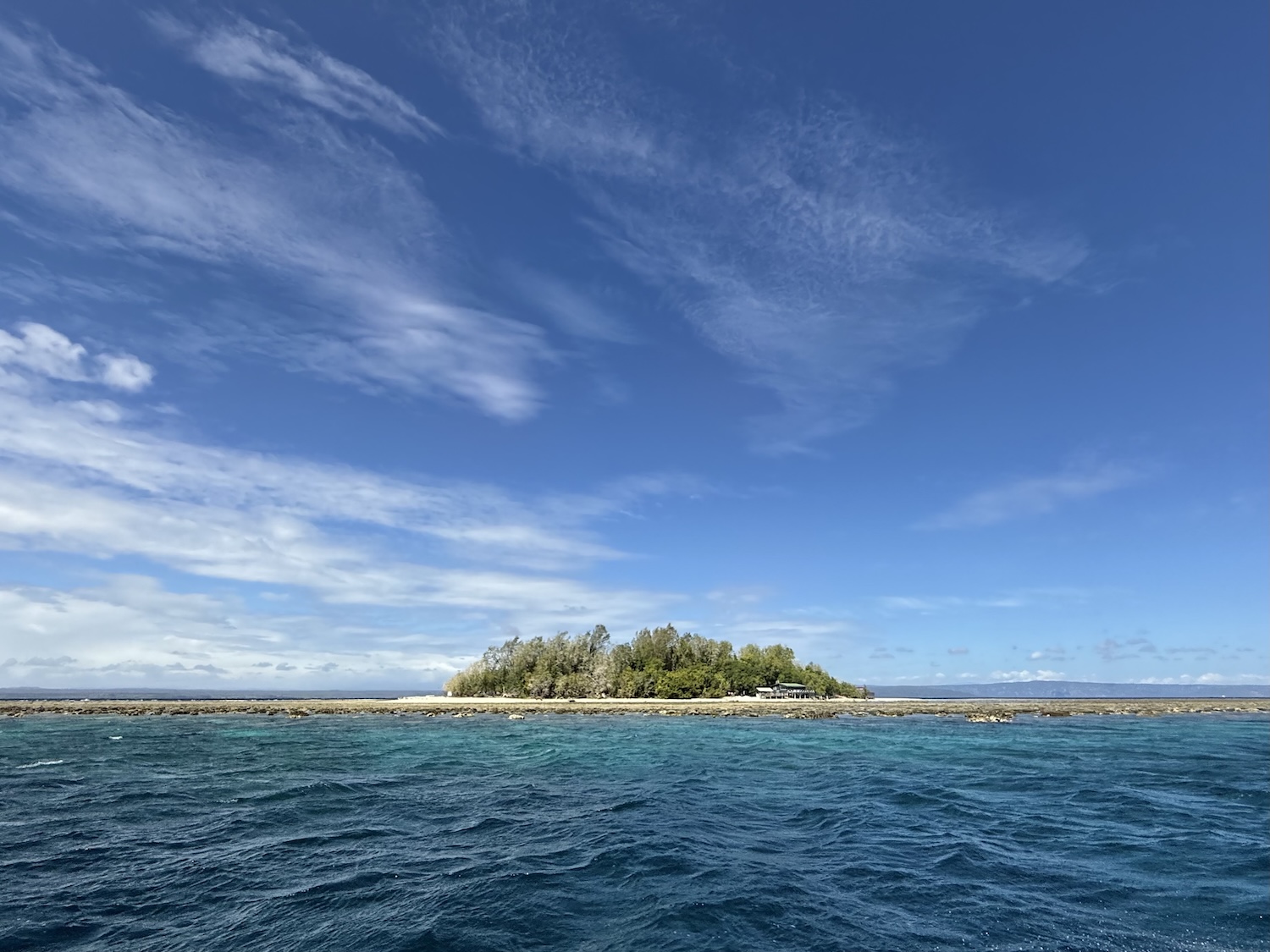
On land, there are of course a number of important War relics. In developed countries, these would have been repaired, secured behind ticket offices, and widely advertised as tourist destinations. Here, they are rusting away in village precincts, and you need to grab a local resident to show you around.
Admiral Yamamoto, architect of Pearl Harbor, had an underground bunker in Rabaul, with maps scratched onto the walls. To visit it, you have to get the key from nearby Rabaul Hotel. The bunker is right next to the New Guinea Club, a thriving members’ club until 1994, which now has a tank and anti-tank guns along with other rusting military ordnance decorating its gardens in the shade of gorgeous frangipani trees. As an epilogue to the Yamamoto story, he was killed by the US in April 1943 while undertaking an inspection flight from Rabaul.
There are several networks of wartime tunnels in the hillsides, part of a wider regional labyrinth, mostly used for secretly transporting and storing essential supplies brought up from a small submarine base by the foot of Tavurvur. The largest, Hospital Tunnel, was a command centre more than 400m long, spread over four levels, with fifteen entrances. Barge Tunnel is where little supply boats were hidden, and there are five still here. Spy Tunnel did what it said on the tin. These were all dug by the forced labour of local villagers and Indian PoWs captured in Malaya, many of whom died of disease, starvation or execution. They are now used by kids as a playground.
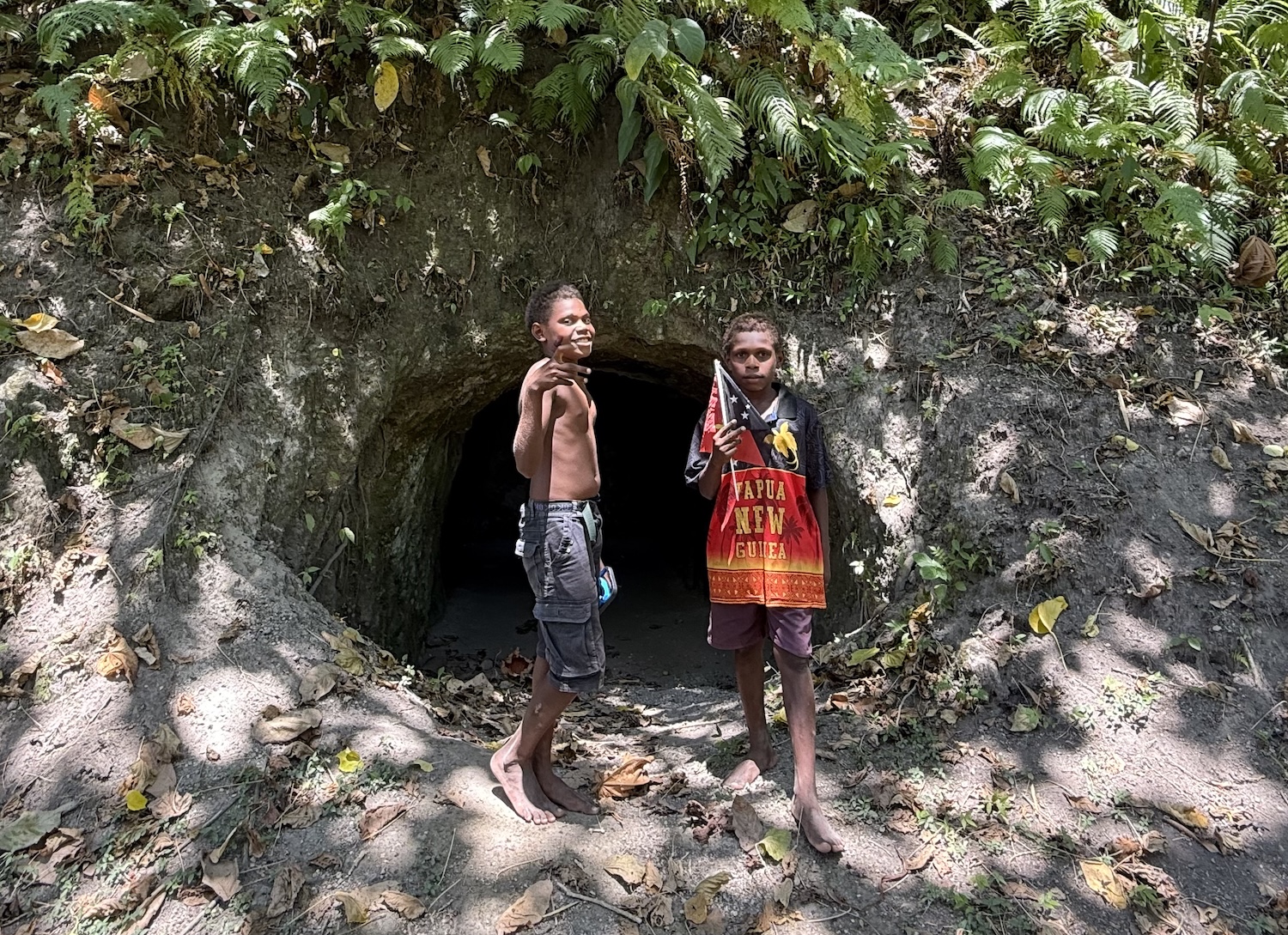
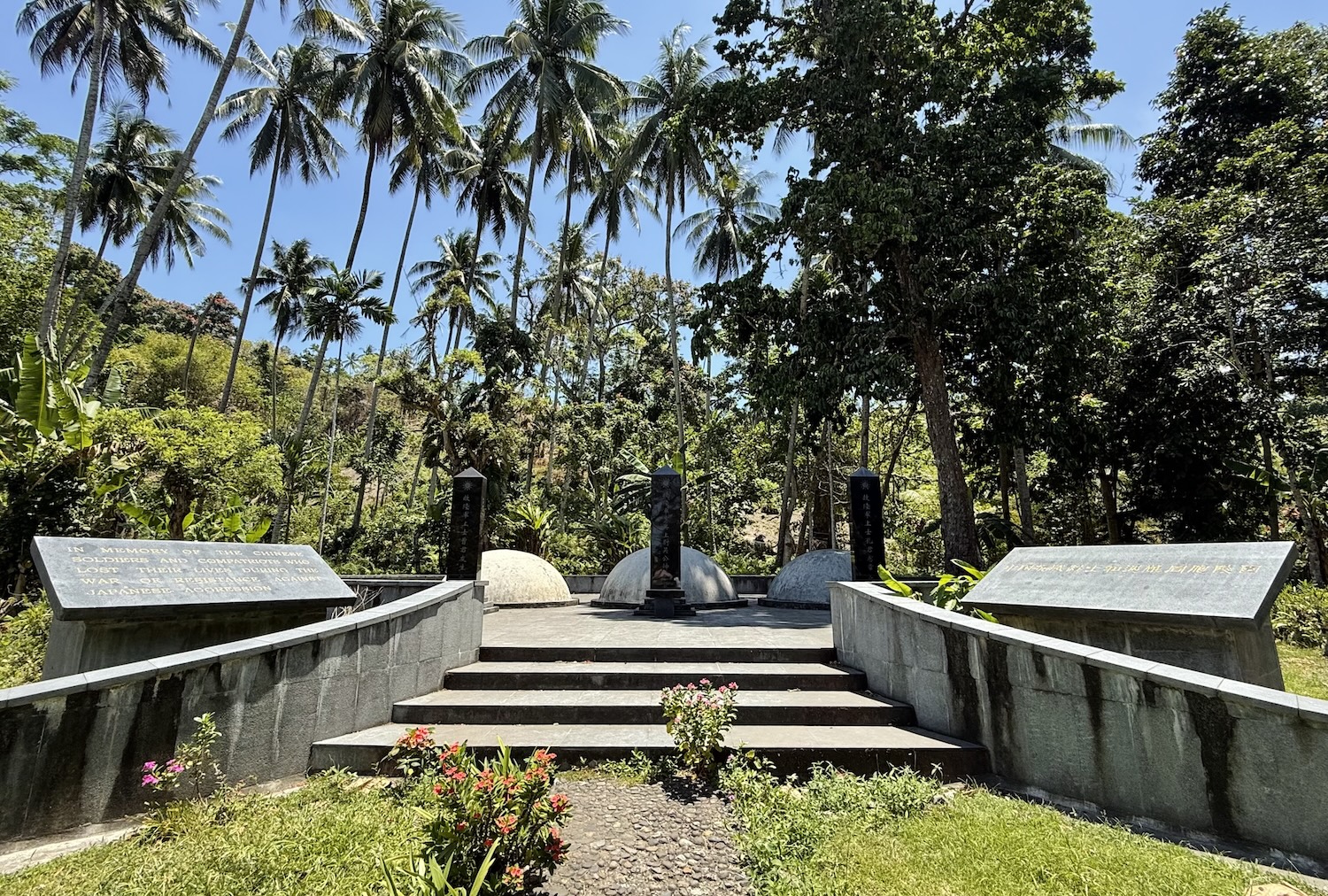
Most of the hardware is crumbling and sinking into the land. We were told there is no interest from Japan in helping to create memorials, as it hopes these stories will just drift into the past and be forgotten. By contrast, in a reflection of contemporary geopolitics, China has built a classy monument to the three of its citizens who happened to be in Rabaul at the time and lost their lives during “the war of resistance against Japanese aggression”.
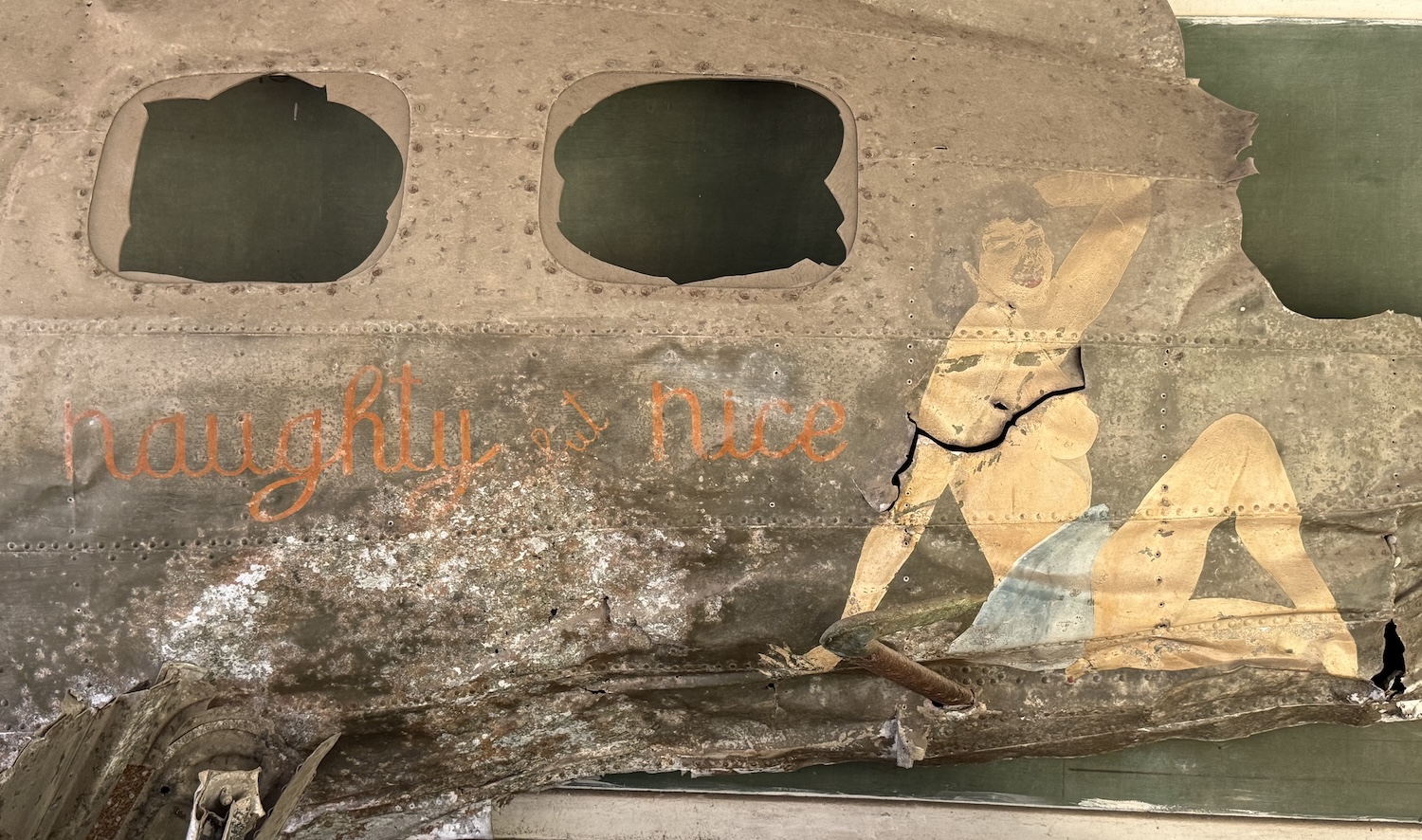
Most of the portable artefacts are now kept in the Historical and Cultural Centre in Kokopo. On top of all the bits of tanks and planes in the garden, the highlight here is one of the only known surviving painted US aircraft noses in the whole Pacific region.
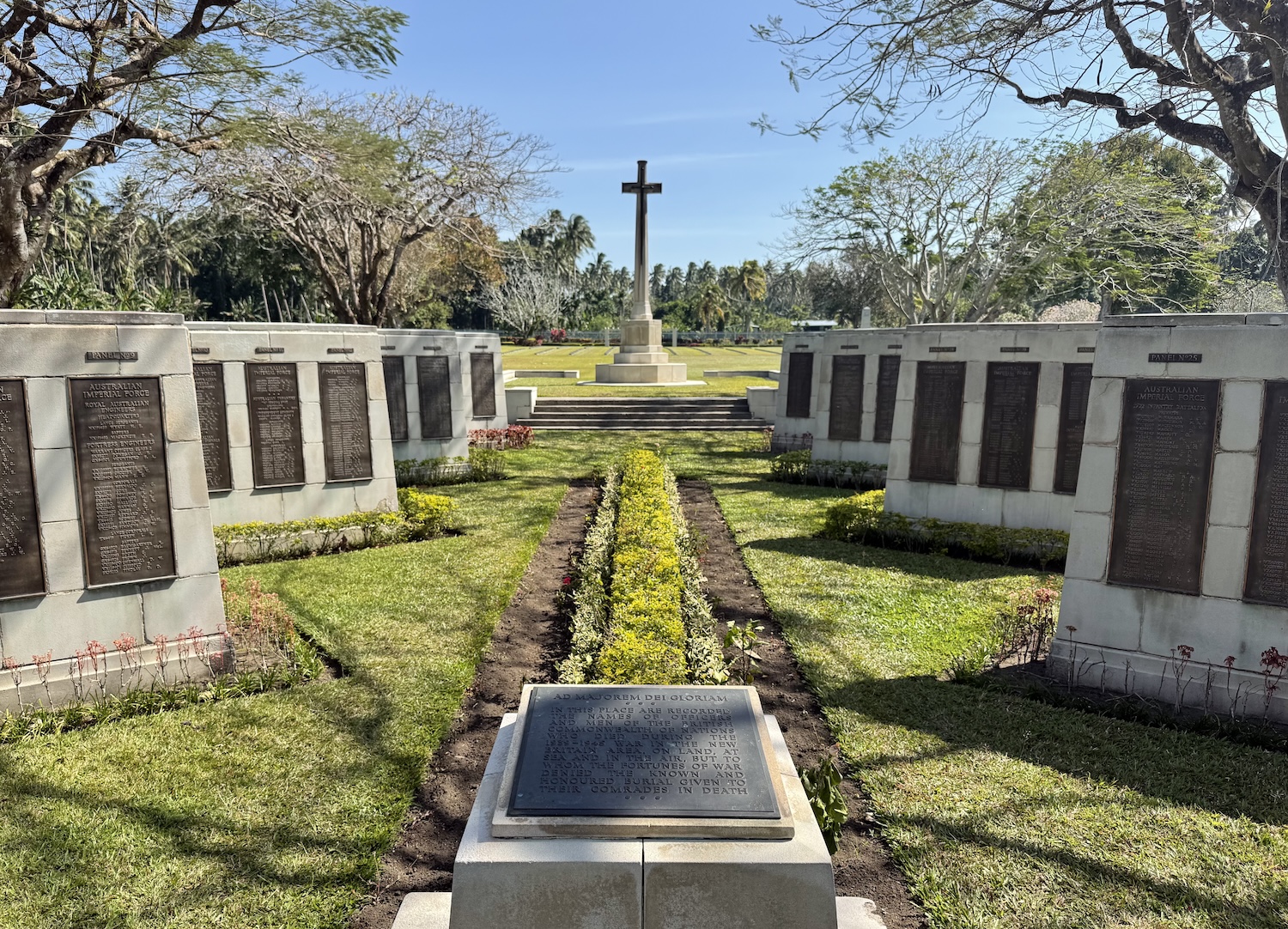
Also now in Kokopo, moved from Rabaul after 1994, is the Bitapaka Cemetery, created and maintained by the Commonwealth War Graves Commission. Sadly, there are no graves to any PNG citizens who died in the war, but these are to some of the 7,000 British Empire soldiers lost their lives in the Pacific battles. Precisely 1,111 of them, from Australia, New Zealand, India and various Pacific Islands, are recognised on headstones and inscriptions around a central monument.
There are two main tribes on Gazelle Peninsula, the Baining and the Tolai. The Baining specialise in Fire Dances designed to ward off the evil spirits that are believed to be strongest in the dark. These dances, which also feature pythons used as skipping ropes, are central to initiation ceremonies such as the coming of manhood, and form the centrepiece of their annual National Mask and Warwagira Festival every July. They can also be put on by appointment for visitors, a thing that in other countries would surely be tacky but here feels thoroughly authentic, not least as the whole village turns out to watch. As it is nighttime, we had three burly security guards plus the driver in our little minibus for the hour-long ride back to Kokopo.
The Tolai are known for using seashells as a form of money, called tabu. The tips of shells are removed and strung on cane strips to use as currency, as well as for looping into bracelets and necklaces to display wealth. This tabu is always used to pay a bride-price, called warkukul, the fee paid by the would-be husband’s family for the right to marry a daughter, compensating her family for redirecting her labour and service until her husband’s death.
New Ireland
In 1767, British explorer Philip Carteret was the first foreigner to sail through the passage separating the two largest islands off the northeast of the main island of Papua New Guinea, which had previously been thought to be joined together as a single land mass. He named the waterway St George’s Channel and the island Nova Hibernia, a formula followed by James Cook seven years later when he saw what became New Caledonia. Germany called it Neumecklenburg while they ran profitable copra plantations from it between 1884 and 1914, when Australia seized control and changed it back again.
It is about a fifth the size of New Britain, which is to the west, and its main town is Kavieng, on the northernmost tip. There are frequent saltwater meris that take a couple of hours to cross from Kokopo to Namatanai, in the middle of the island, but we were told they have a terrible safety record, and we would still then need to take a five- or six-hour minibus across New Ireland to reach Kavieng. So, we were advised to fly as there are direct connections from Rabaul.
Kavieng is a small town of about 15,000 people, looking out over turquoise waters to several dozen islands scattered around. The closets are Nusa Lik (Big) and Nusa Lawa (Small), no more than 500m out to sea.
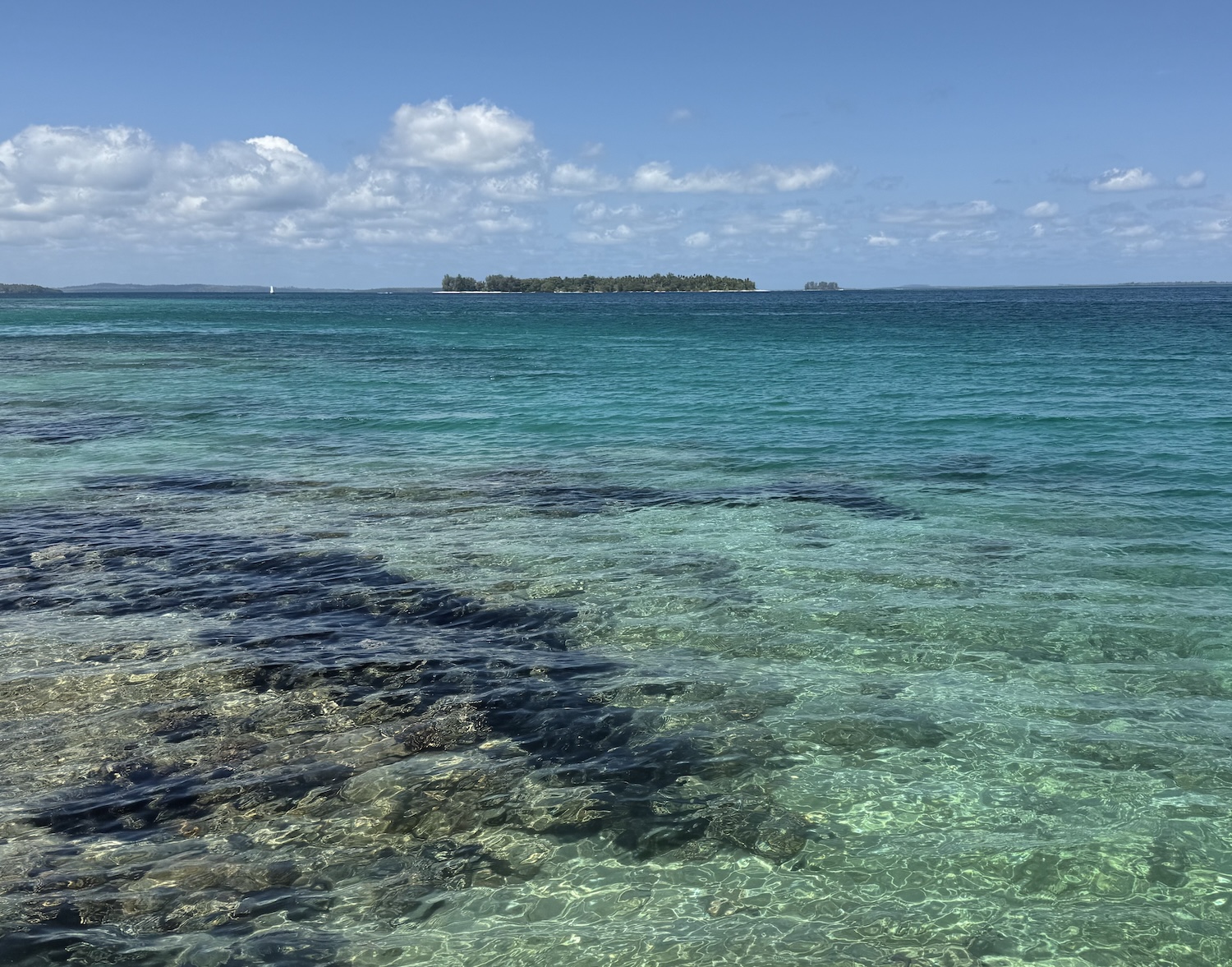
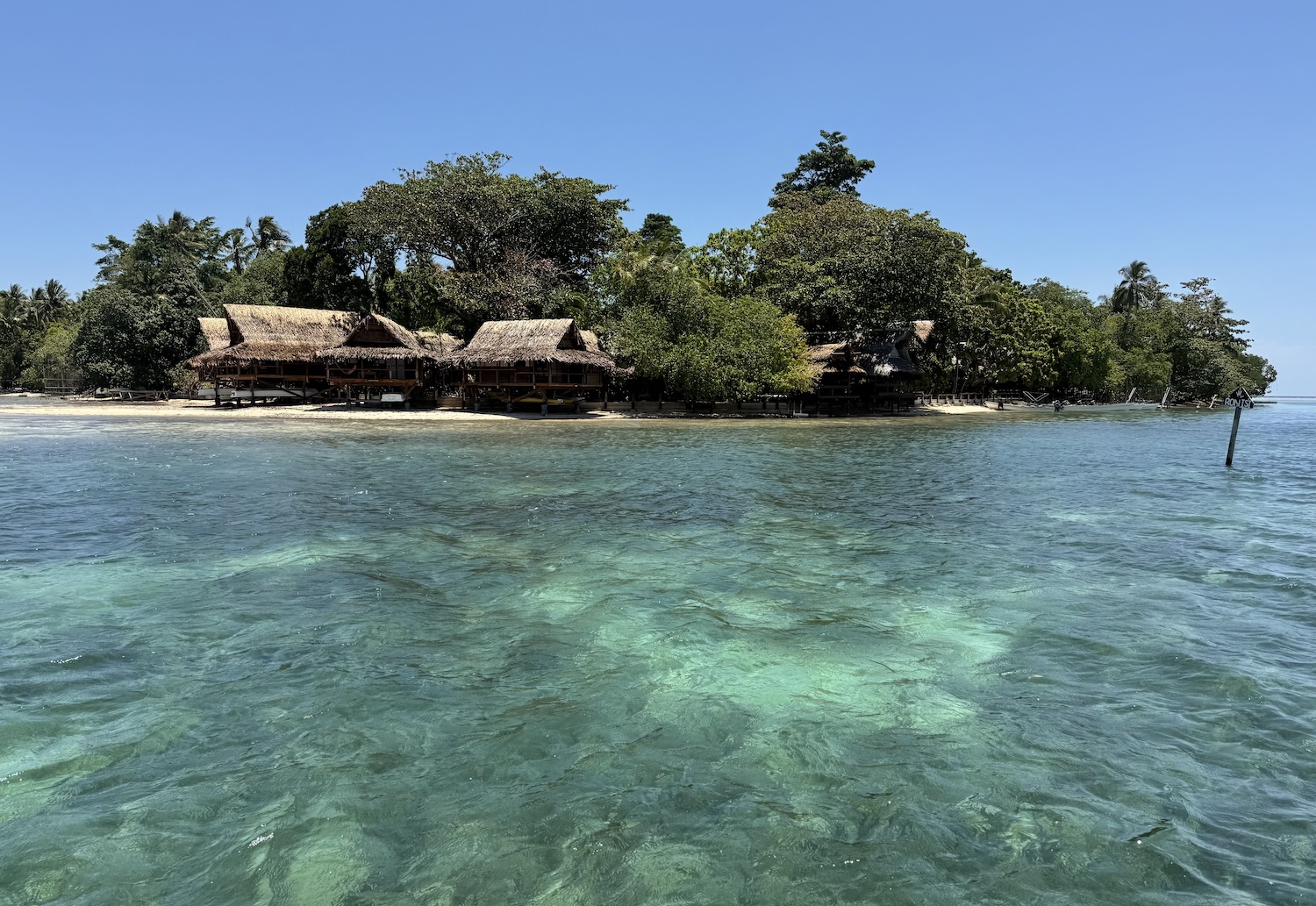
Just a bit further out is spectacular Nago. This is a magical tropical paradise that anywhere else in the world would have luxury resorts and cruise ships all over it. Here, most villagers have a subsistence living from copra and fishing, while the chances are you will be with a handful of other visitors on one of only two rustic but beautiful resorts. Nusa Island Retreat is the higher end, while Lissenung Island Resort is 10km away.
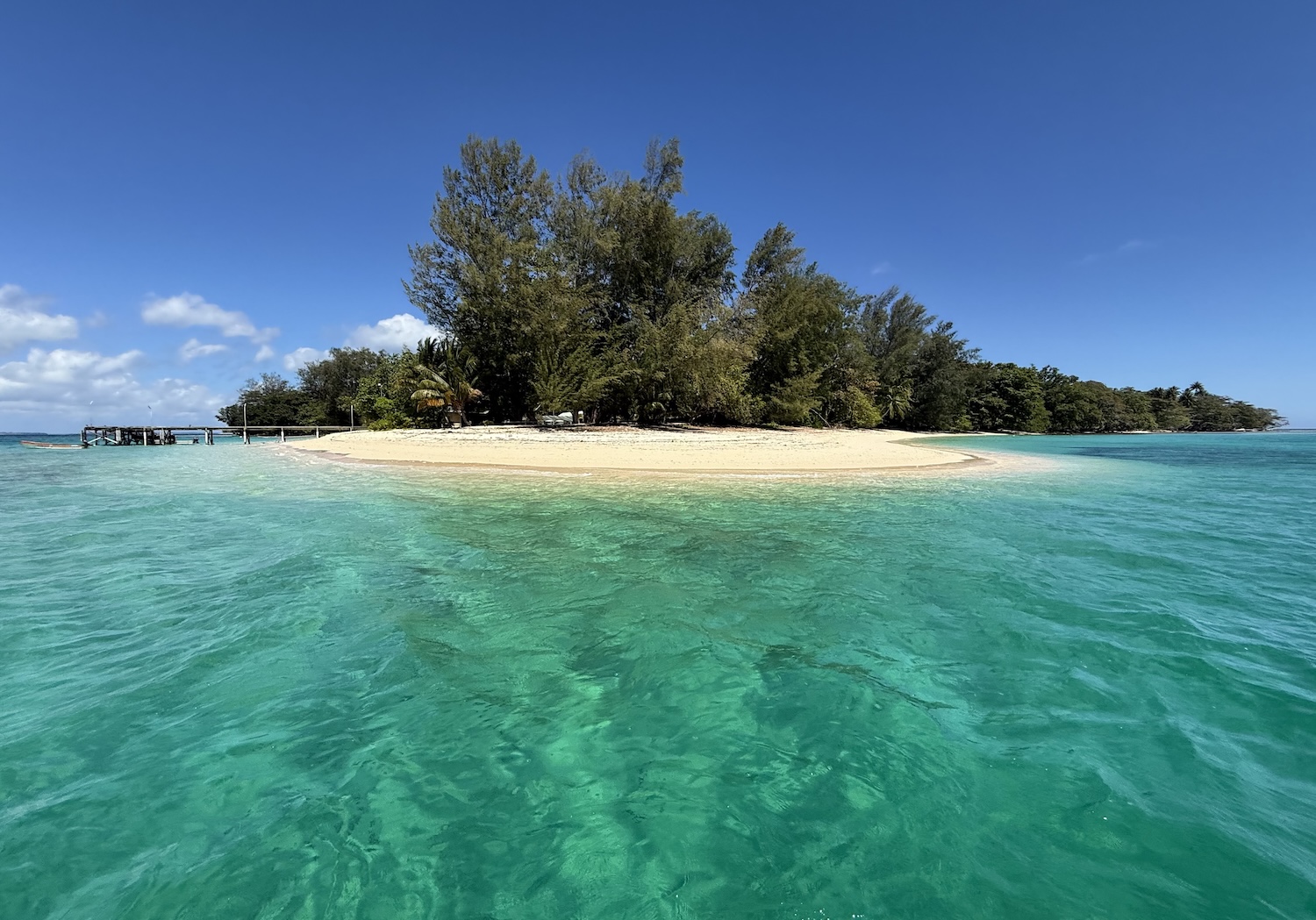
This is the only place we have been in the Outer Islands where people come for beach holidays. They also come between November and April for the surfing. And we came, obviously, for the diving. Since Covid, there are only two operators, each connected to one of the two resorts. We used Scuba Ventures Kavieng, run by Dorian Borcherds (+675 72520885), based on the mainland but working primarily with NIR. This is basically a one-man-band, and Dorian is fine, but be warned he is extremely expensive, with kit hire alone coming in at €70 per day, and he has no nitrox, whatever it says on the tank. Lissenung Resort has its own dive shop with three boats.
Kavieng also had a key role in the Second World War. It was the scene of a particularly gruesome war crime in March 1944, known as the Wharf Massacre. Japanese naval forces executed through strangulation about thirty civilian internees, mostly Australians and German Catholic missionaries, before dumping their bodies at sea.
It is in a strategic location, only 500km south of Truk Lagoon, which during the War supplied food, medicine, munitions and so on through here to Japanese naval bases across PNG and the Solomon Islands. Surprisingly, there are not many shipwrecks from that period, though there is an unidentified cargo ship that has been broken up over the years for salvage and is now a haven for batfish and lionfish.
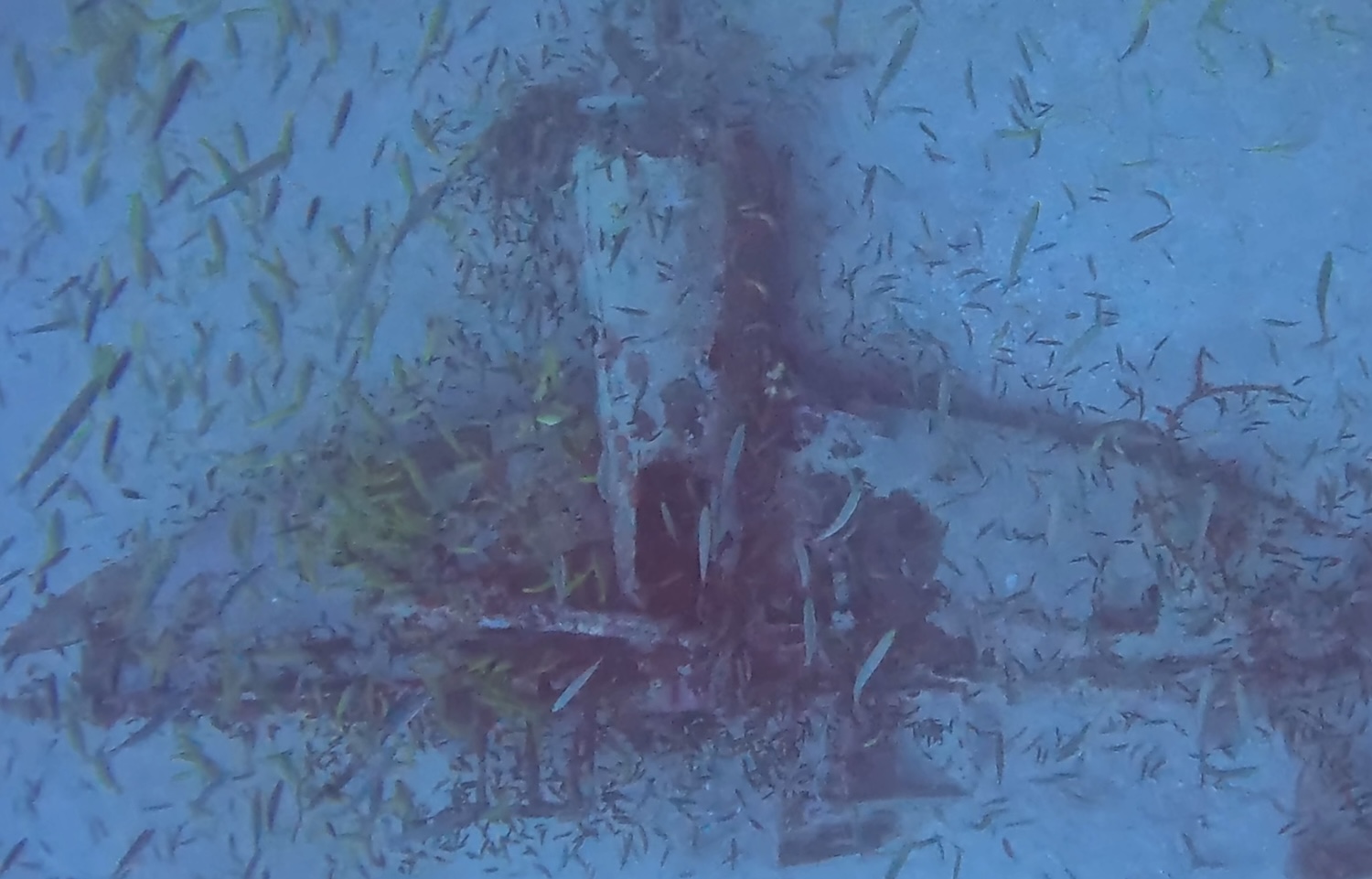
There are three Japanese reconnaissance seaplanes, which were given nicknames by the Allies for ease of identification. The standout is a Mitsubishi F1M biplane floatplane, now called Deep Pete. It is in 40m of astonishingly clear water, upside-down and smothered in yellow sweetlips. The other two, mono-wings nicknamed Jake, are in less good condition but much shallower water.
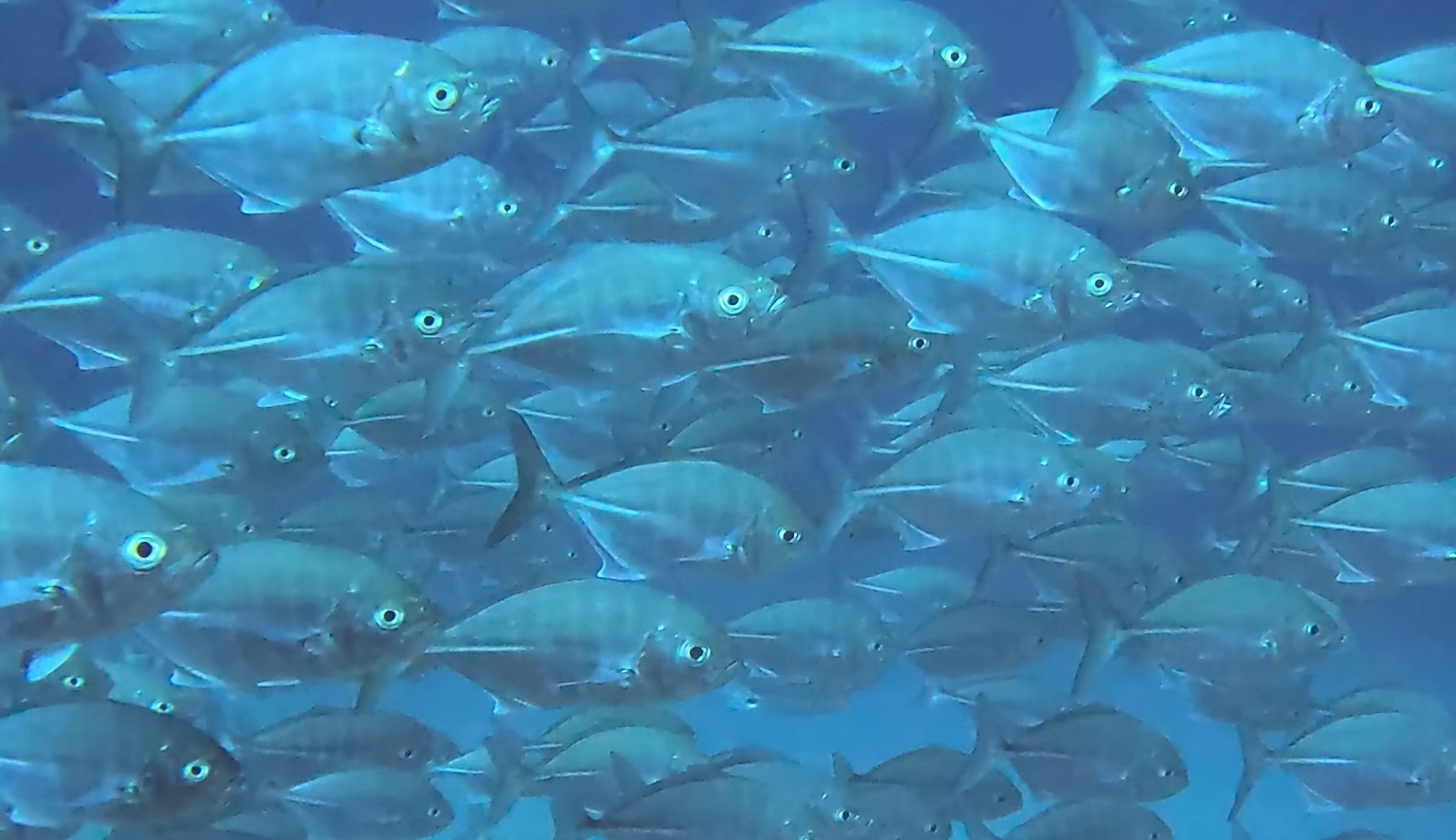
The top site is Albatross Passage, named after the gunship used to establish German rule in New Ireland. It is a 500m-wide channel from the open ocean that flows between the mainland and Manne Island, and the dive is along a coral wall that drops to 30m across the entrance. When the tide and current are incoming, there are white-tip, black-tip and grey reef sharks, many sleeping on the sandy bottom, as well as schooling barracudas, jacks and tuna. Access is often prevented thanks to tribal fighting over the rights to it. When we came here, it had been closed for two months, but we decided to give it a go anyway. While we were on our first dive, a chief paddled his canoe to our boat and told the captain we needed to move. So, for the second dive we went out into the middle of the passage and dropped in there, with no trouble at all.
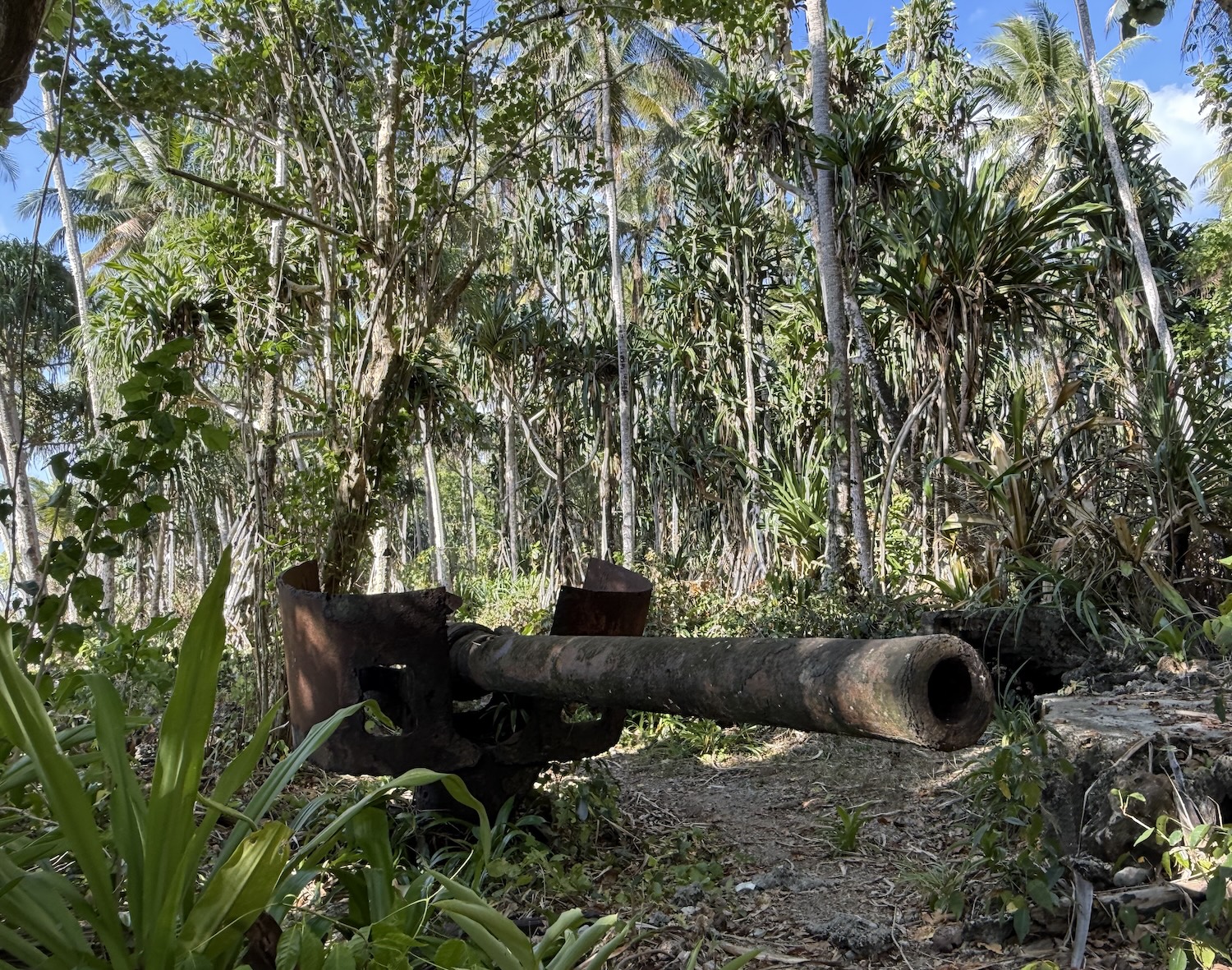
There is of course some Japanese armaments on land too, though nothing like in Rabaul. There is a lookout shelter above the market in Kavieng, and on Nusa Lik, across a gorgeous 20m-wide channel from Nusa Lawa, there is a pill-box bunker and a couple of heavy-calibre cannons, all completely swallowed by the jungle.
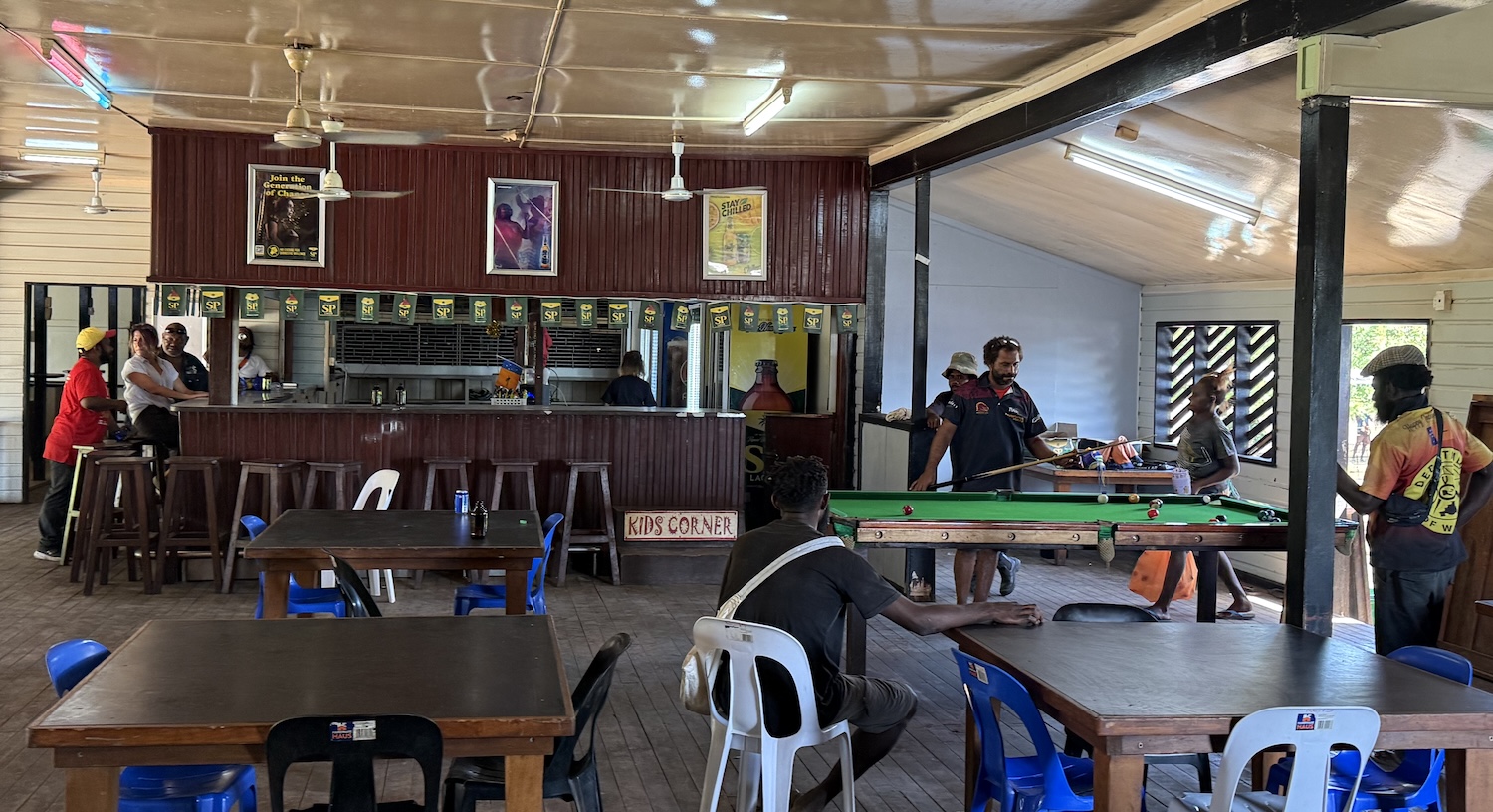
Kavieng is the least threatening place we found in PNG, the easiest place to wander the streets unaccompanied and unprotected, at least in the daytime. There is not much to see in the town, though the supermarkets are interesting, not least revealing prices much higher than we assumed, but a beer in the Kavieng Club is essential. This is the only bar in town, a members’ club that allows access to the very few foreigners who venture here. The locals, chilling out, playing pool, and singing along to US hits from the 80s on the sound system, could not have been more friendly and welcoming, providing one of our favourite moments from three weeks packed with beloved memories. That said, we went on a Saturday afternoon and were advised that later in the evening a “dark element” would likely turn up.
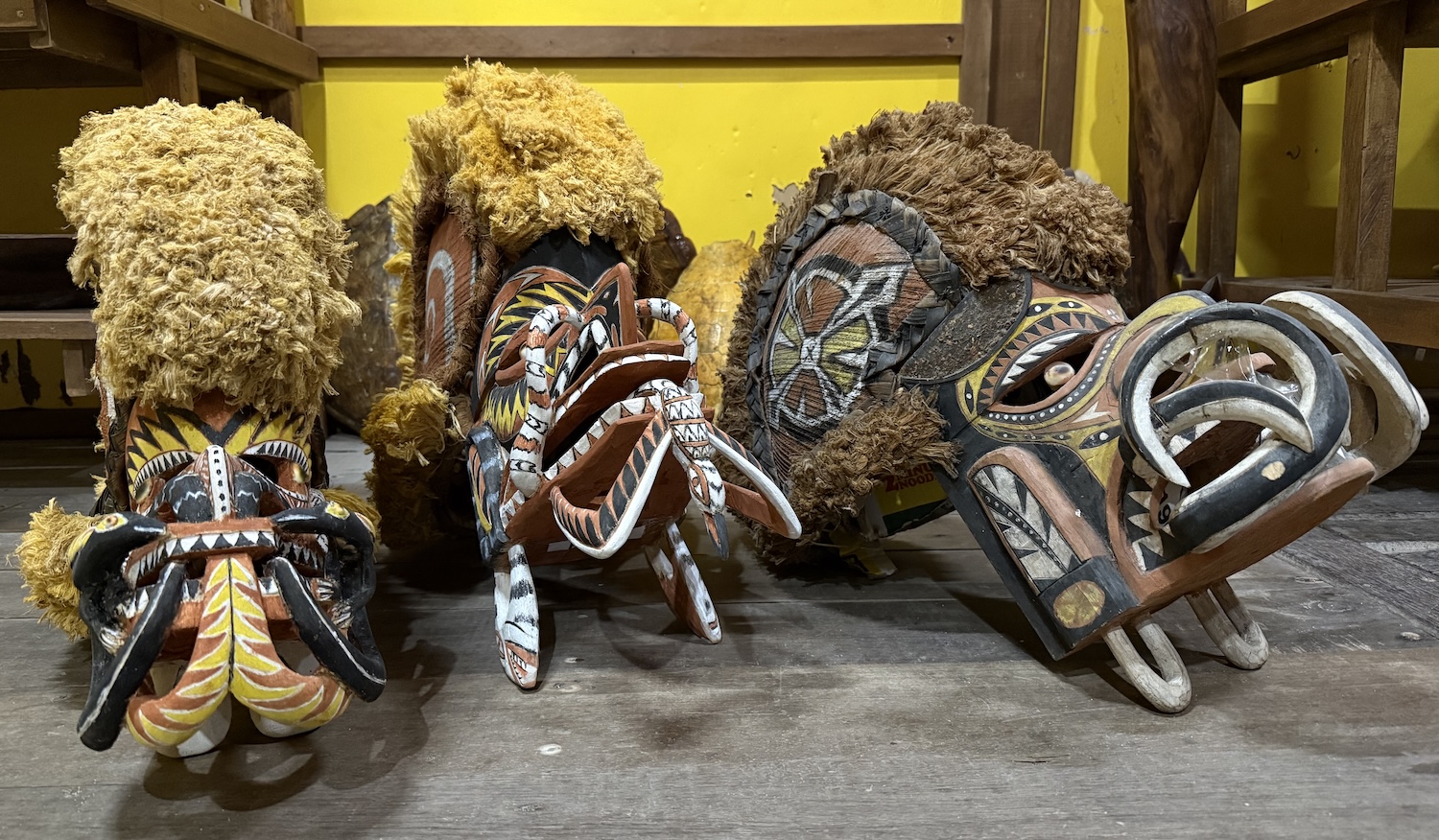
About 150km east along the Boluminski Highway are several villages, including Konos and Langenia. Here, Malagan craftsmen carve highly prized wooden masks, which have been collected since the first Europeans came here and can be seen in museums across the world. They are used in tribal ceremonies, and are displayed at a festival in Kavieng every August. We can buy them there then, or from the resorts anytime.
Tenkyu so much PNG and lukim yu until the next time, which there will surely be.
We leave with the conviction that it is a great blight on the developed world that we have turned our backs and allowed the people of Papua New Guinea to suffer in isolation. That is not even down to the ignorant nationalists of today, but to the global liberal elite who were in the ascendency from the 1950s.
If there is a purpose to adventure travelling beyond personal thrill-seeking, it is to learn to argue harder for a common good in which the global rich assume better their responsibilities to those who by chance have fewer resources. Something has to be done.
02/10/2026 @ 23:11
My friend, this is such a powerful and honest reflection of Papua New Guinea. 🇵🇬
Having had the opportunity to meet you during our Independence celebrations, I’m not surprised that your time here has left such a deep impression on you. PNG is a country of remarkable contrasts — breathtaking landscapes, incredible cultural diversity and some of the warmest, most welcoming people you could ever meet, yet at the same time, communities continue to face very difficult realities.
What you have captured so well is that Papua New Guinea cannot simply be understood through statistics, headlines or the challenges we see from the outside. To truly appreciate PNG, one has to meet its people, listen to their stories, experience their cultures and walk among the communities.
Our country may have its struggles, but the resilience, humour, generosity and strength of our people remain something very special. Beneath the challenges is a nation with enormous potential, extraordinary traditions and a richness that cannot easily be measured.
Thank you for seeing PNG not only for what it is today, but also for the beauty and potential that exists within its people and its land. It was a pleasure meeting you during the Independence celebrations, and I’m glad your journey through our country has given you memories and experiences that will stay with you.
Papua New Guinea is not perfect — but it is unique, beautiful and unforgettable. 🇵🇬❤️